Investments in airports, trawlers, and aircraft have sent the debt among the self-governing companies skyrocketing.
The Greenland Government has just completed the annual report that provides a status of the self-government-owned companies, based on the latest annual accounts relating to 2024.
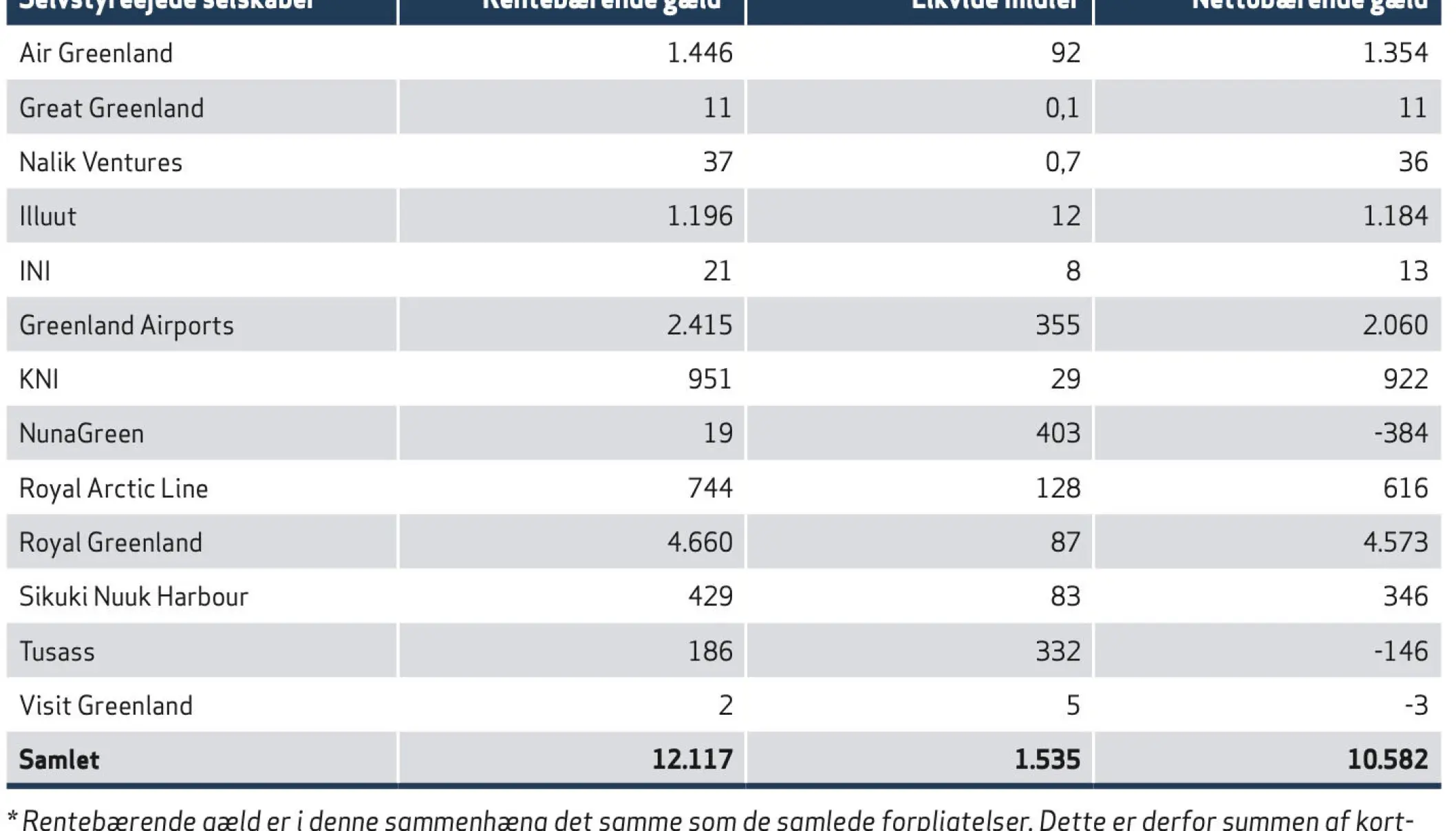
The interest-bearing debt – short and long-term – is calculated at 12.117 billion kroner. If the liquid funds that the companies have in their bank books are deducted, the debt burden reaches 10.582 billion kroner.
The annual report on the self-government's joint-stock companies has just been distributed to the politicians in Inatsisartut.
In the foreword, written by the Chairman of the Greenland Government, Jens Frederik Nielsen, it is emphasized that the report does not necessarily provide a current picture, but is solely based on the latest annual accounts for the year 2024.
Focus on the five biggest
As usual, the annual report has placed extra focus on the five largest companies: Air Greenland, KNI, Royal Arctic Line, Royal Greenland and Tusass. For these companies, the total debt obligation has increased from 6.2 billion kroner in 2020 to 8 billion kroner in 2024.
The net interest-bearing debt, where the liquid holdings in the five companies are deducted, reaches 7.4 billion kroner, which is 300 million kroner higher than the previous year.
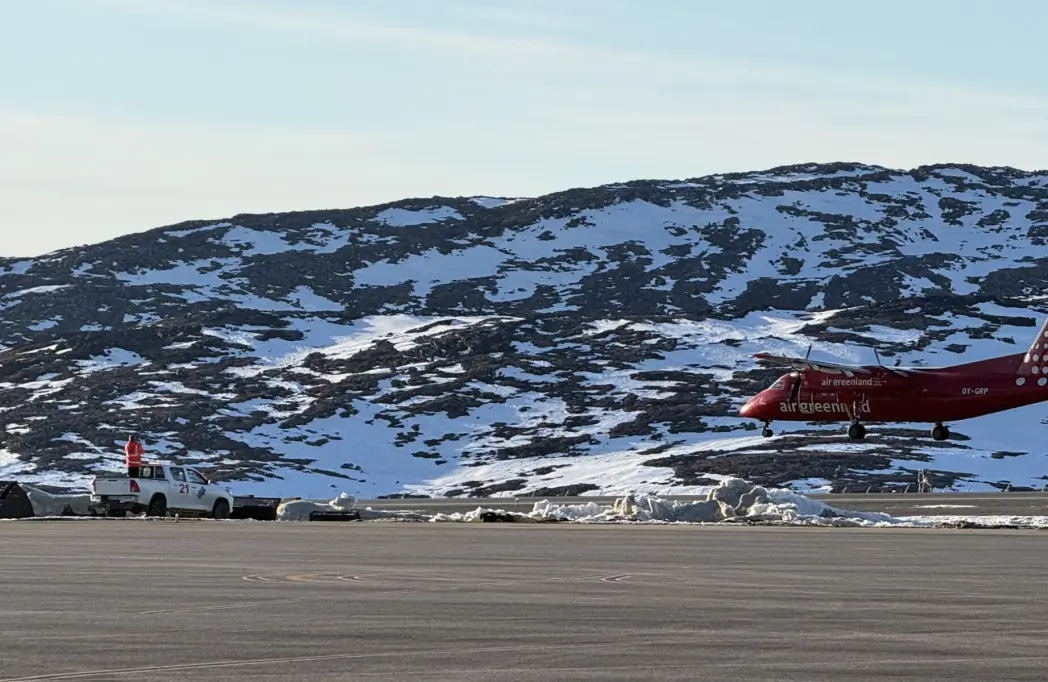
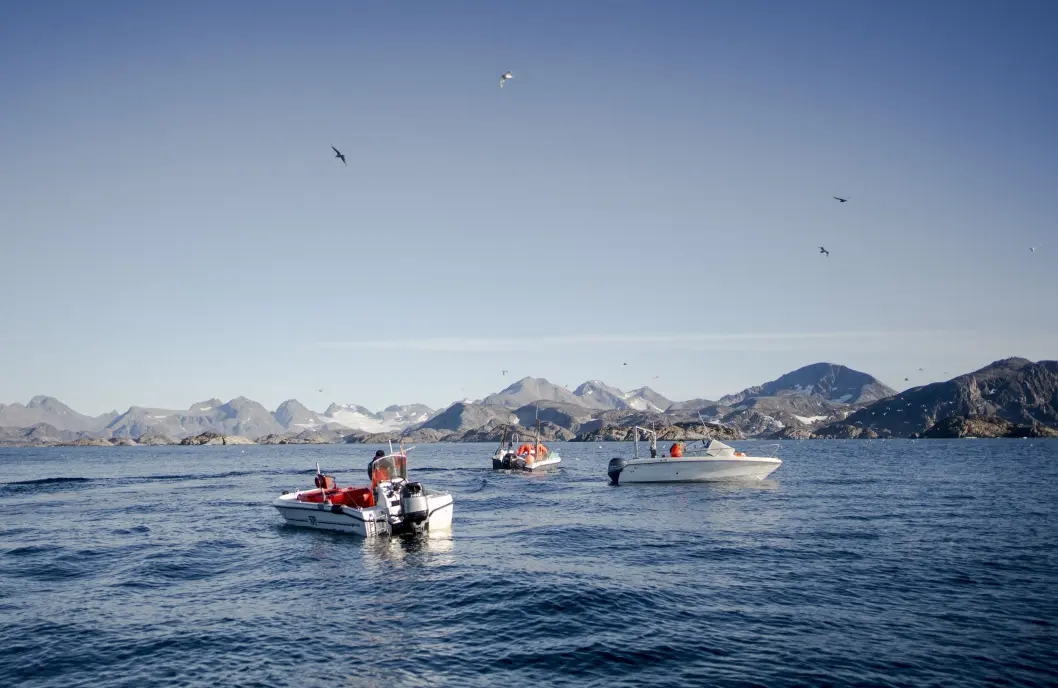
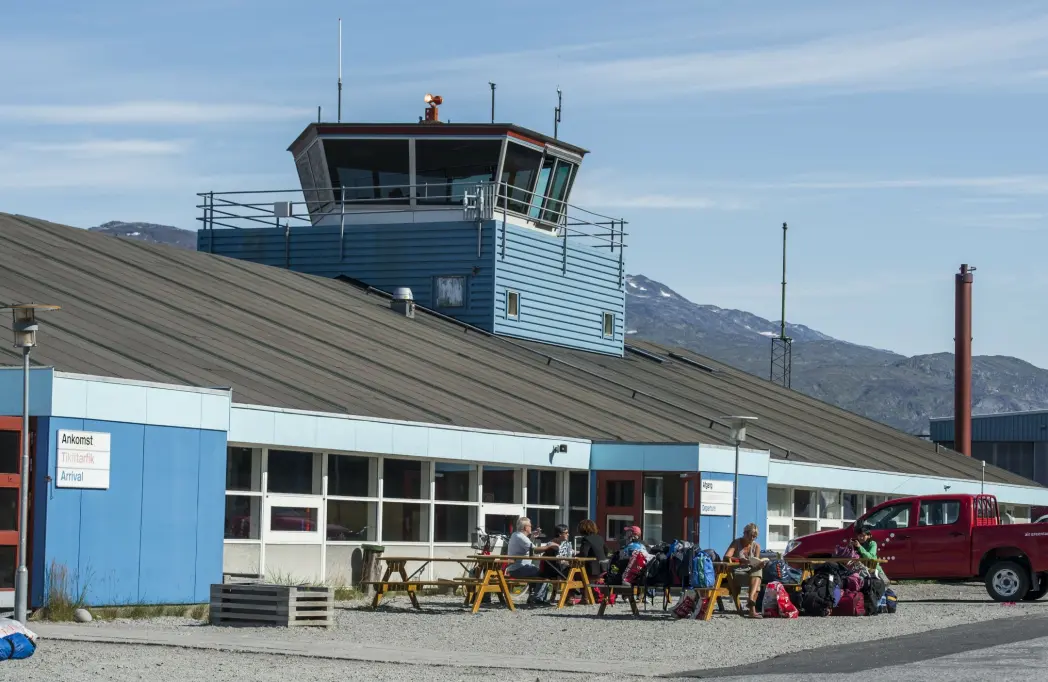
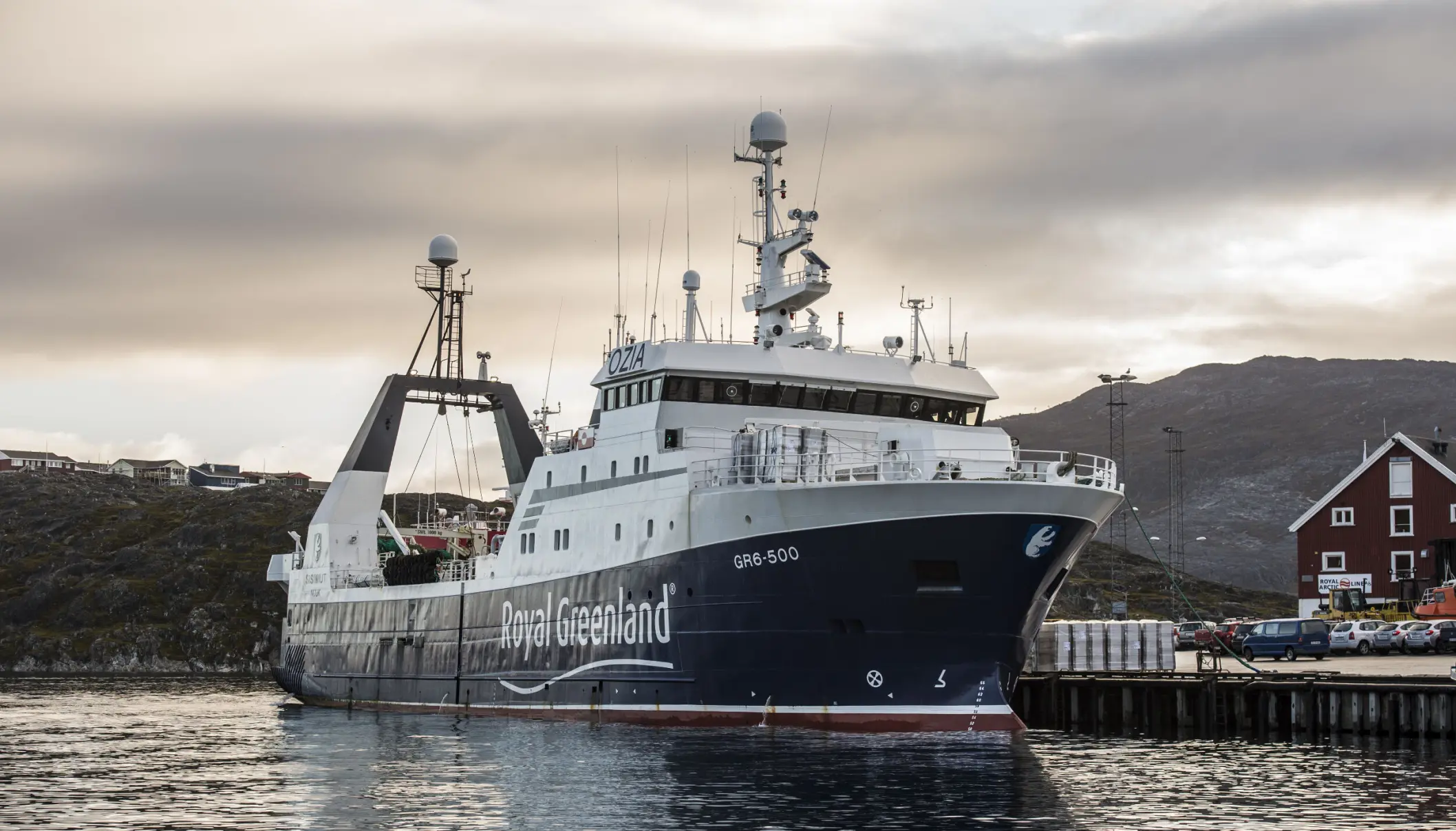
The debt has been built up due to large investments in the aircraft and trawler fleet, it is explained. But as far as Air Greenland is concerned, it is not yet finished, as it has announced investments in, among other things, hangars and other things, it is stated.
Decrease in revenue
When it comes to the total turnover for the 13 self-governing companies, it has decreased compared to the 2023 accounts from 12.798 billion kroner to 12.601 billion kroner. Here, it is KNI and Royal Greenland in particular that pull the turnover figure in the wrong direction, with negative deviations of 258 and 174 million kroner respectively.
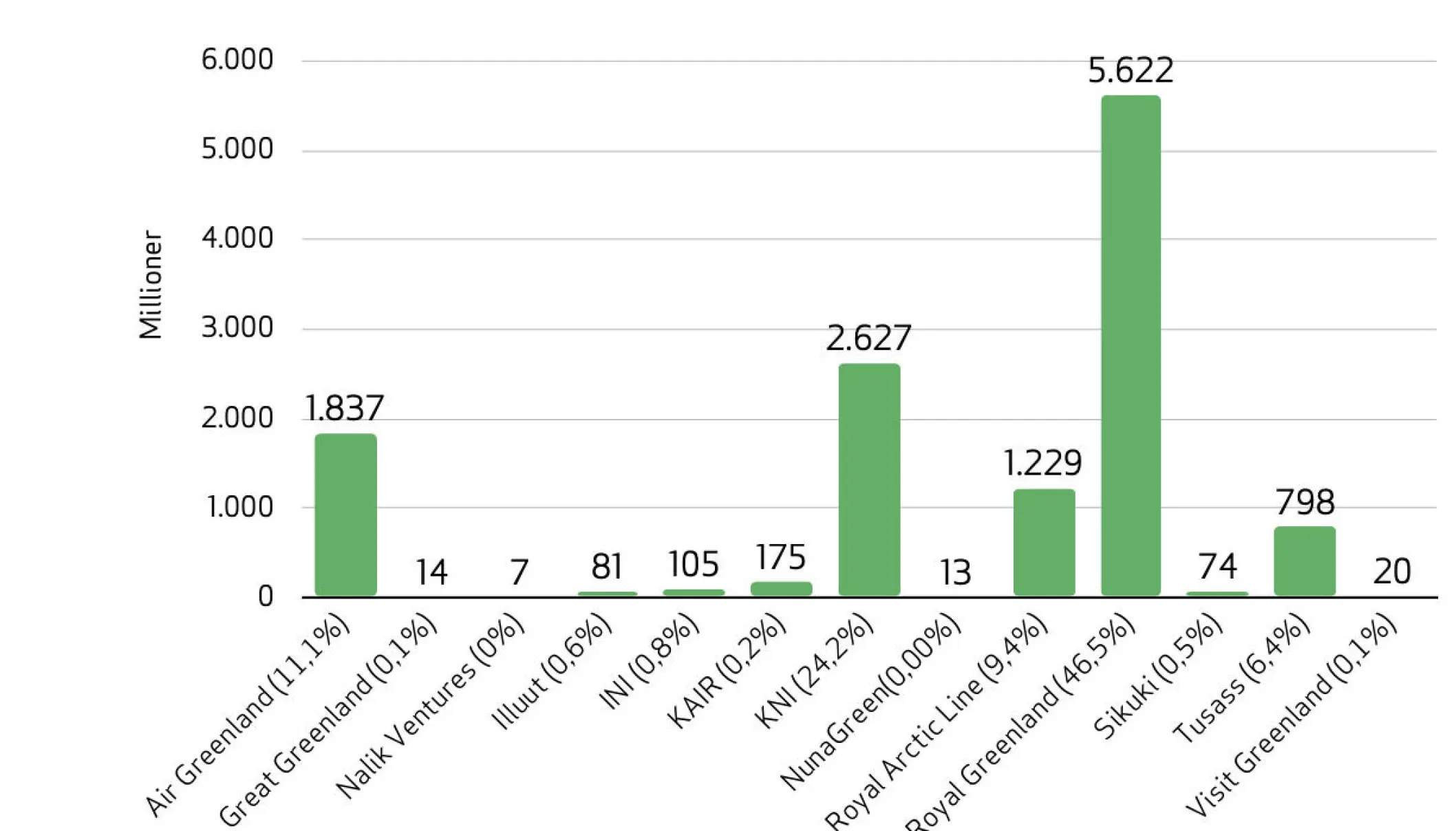
On the positive side, it is noted that Air Greenland increased its net revenue by 87 million kroner, and Royal Arctic Line's revenue was strengthened by approximately 39 million kroner as a result of rate increases and a changed product mix.