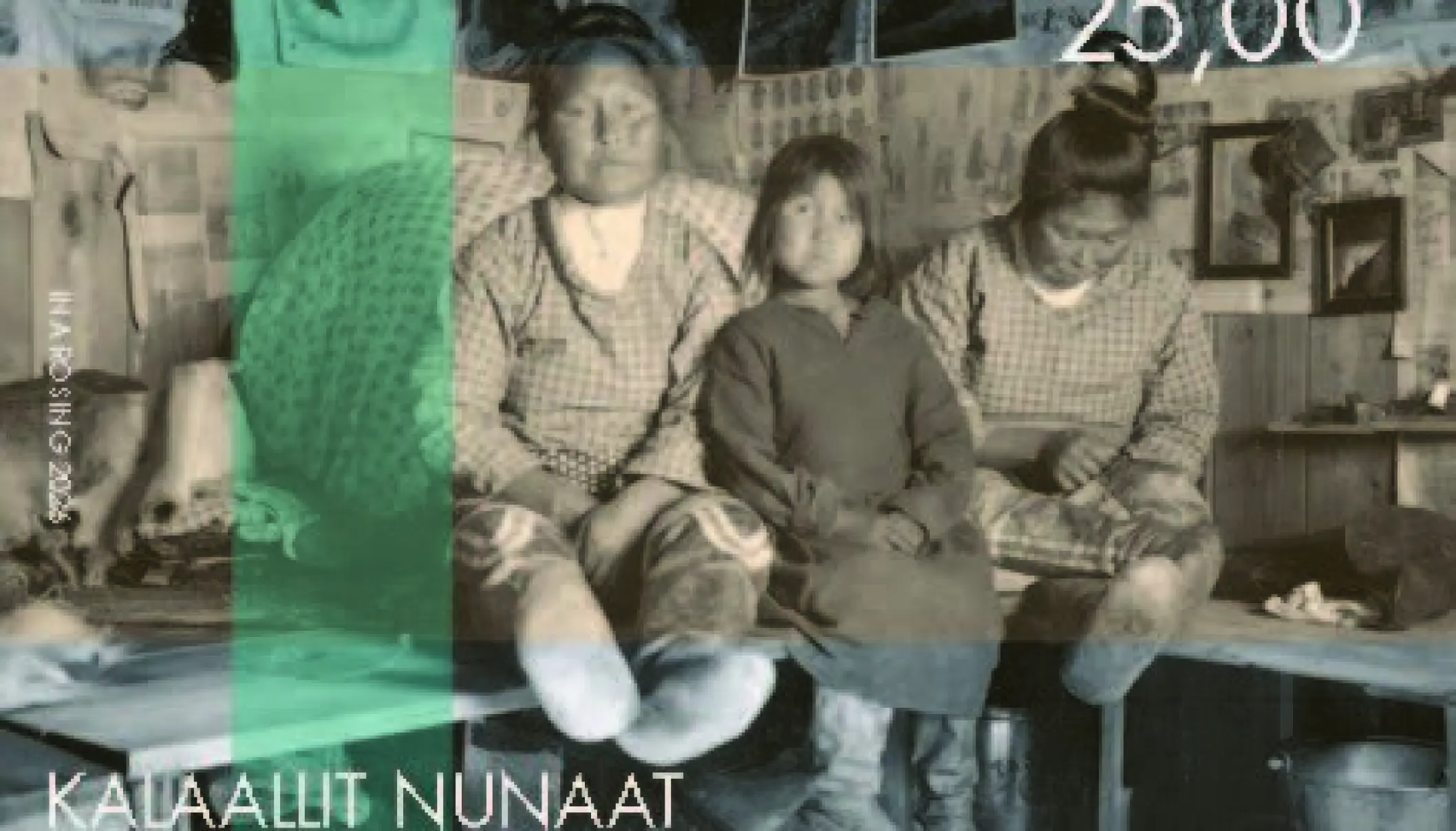
Together with 90 other settlers, two women and a child in 1925 left Tasiilaq for an uncertain future in Scoresbysund to found a new community – our modern Ittoqqortoormiit.
Now they are sitting on the couch in their new home, where the walls are covered with religious images and clippings from Danish weekly magazines. Two of them are looking at the photographer; the third is busy with household chores.
The photograph is part of the Arctic Institute's large collection with a short description:
"Interior from a house at the Kap Hope settlement outside Scoresbysund. Two women and a child are sitting inside on the couch of the house. Note the period-typical wallpapering, including the religious motifs."
The photograph dates from the Scoresbysund Expedition in 1924-25 and the years following. The pictures probably belonged to Captain Ejnar Mikkelsen, who in many cases is also the photographer.
We do not know the names of the women and the child, nor their family relationship. We do not know for sure the name of the photographer or the year of the photograph. But we know that the three people on the couch, together with their roommates, played a decisive role in the struggle for sovereignty over Greenland, which continues to this day with ominous strength.
The founding of Ittoqqortoormiit in 1925 was a crucial piece in a Danish/Norwegian game, where the International Court of Justice in 1933 gave Denmark full sovereignty over Northeast Greenland – and thus over the entire country. A Greenland, threatened by life, would today be in a very complex situation if we were divided between two states, as is the case for islands elsewhere in the world.
The inhabitants of Ittoqqortoormiit are aware of the crucial role in the unification of Greenland that grandparents and great-grandparents played 100 years ago.
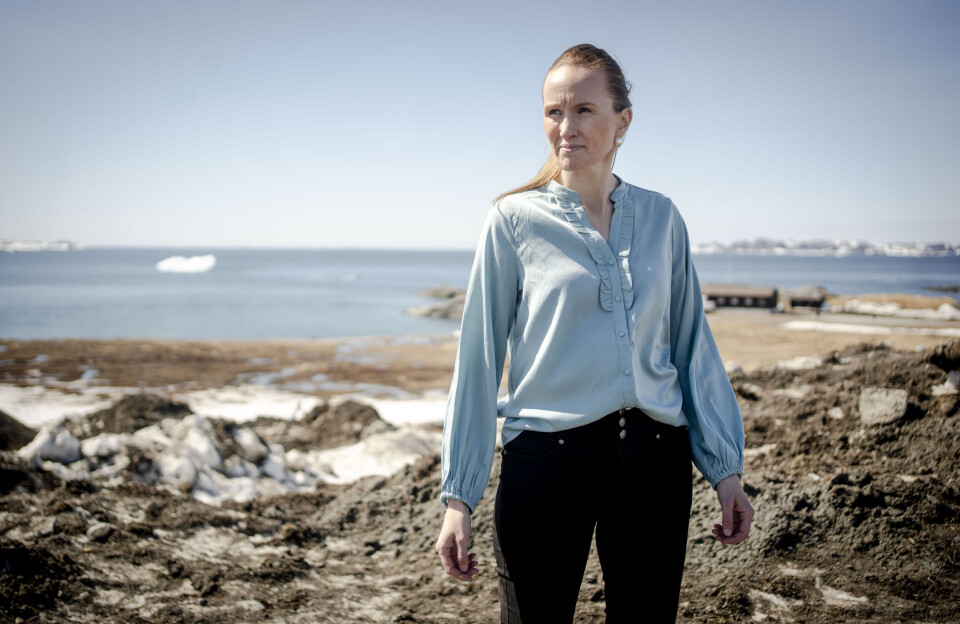
Mette Arqe-Hammeken is the town's only member of Inatsisartut, elected on Naleraq's list: “Our country can call itself a complete unit because 100 years ago, people were moved from Tasiilaq to Ittoqqortoormiit. We were united under a common flag, and therefore we must not forget the population today in this part of our vast country.
The strips of fur embroidery
The Greenland Post Office Tusass is currently issuing a series of stamps with ethnographic photographs.
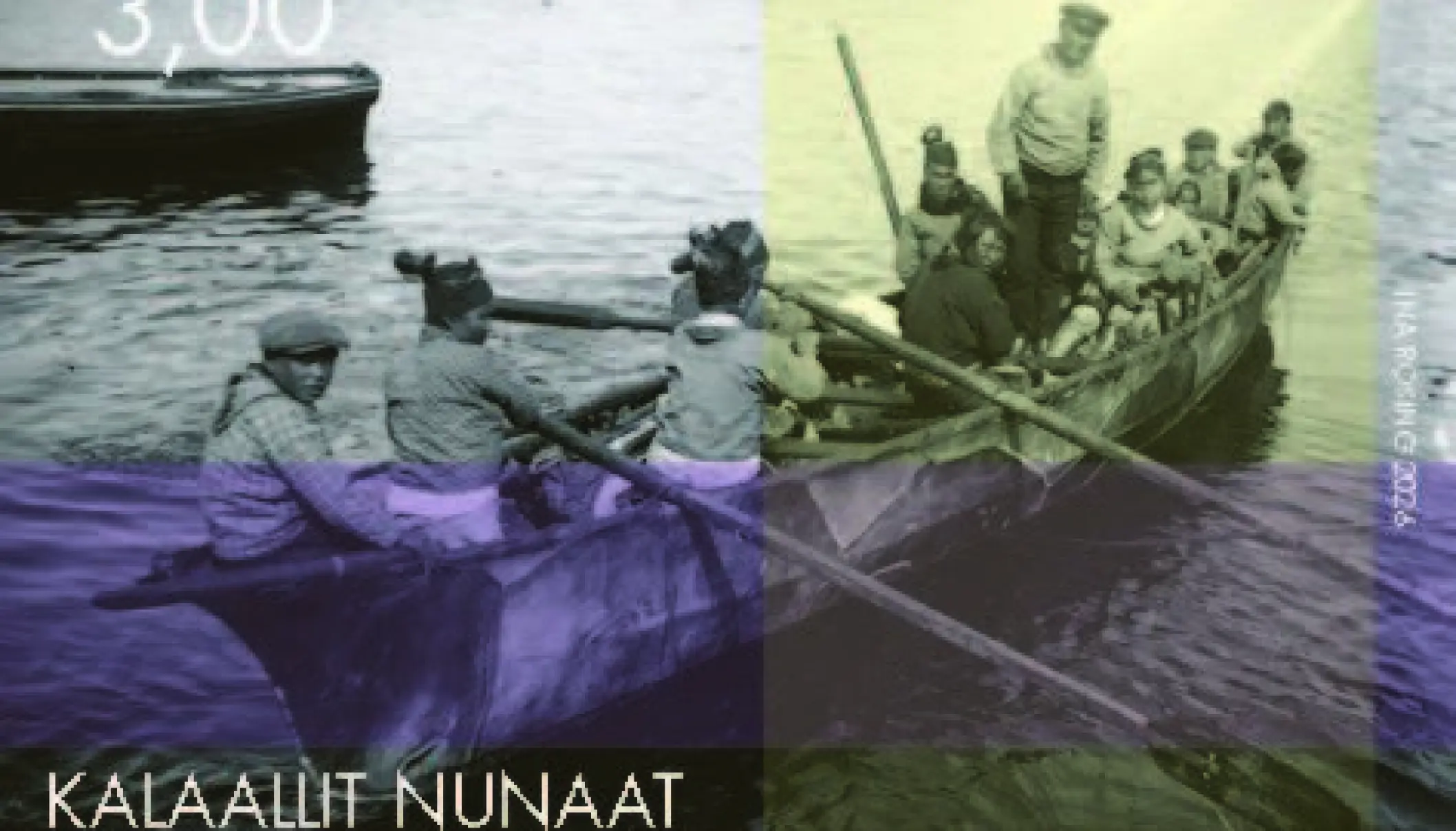
On Monday 16 February, the picture with the two women and the child and the picture of a women's boat will be issued, where we know the photographer, place and year: The women's boat photo was taken by Inger Bugge (1872 - 1954), who told about colonial life in Nuuk in »Diary from a Journey to Godthaab, 1913«.
The visual artist Ina Rosing, born in 1965, selects the old black and white photos that are included in the stamps together with her own colours. The colour layers, which are arranged in a band over the motifs, refer to the coloured strips of fur embroidery that cross each other.
– In dialogue with Tusass, I try to find a balance where the coloring makes the black and white photographs present, almost contemporary, without dominating the very fine works in their own right, Ina Rosing tells Sermitsiaq.
Abonnementer
Sermitsiaq.gl - web artikler
- Adgang til alle artikler på Sermitsiaq.gl
- Pr. måned kr. 59.00
- Pr. år kr. 650.00
Sermitsiaq - E-avis
- Adgang til Sermitsiaq e-avis som udkommer hver fredag
- Adgang til alle artikler på Sermitsiaq.gl
- Pris pr. måned kr. 191
- Pris pr. år kr. 1.677
AG - Atuagagdliutit E-avis
- Adgang til AG - Atuagagdliutit e-avis som udkommer hver onsdag
- Adgang til alle artikler på Sermitsiaq.gl
- Pris pr. måned kr. 191
- Pris pr. år kr. 1.677
Sermitsiaq.AG+
- Adgang til AG - Atuagagdliutit e-avis som udkommer hver onsdag
- Adgang til Sermitsiaq e-avis som udkommer hver fredag
- Adgang til alle artikler på Sermitsiaq.gl
- Adgang til Arnanut e-magasin
- Adgang til Nutserisoq.gl
- Ved interesse send en mail til abonnement@sermitsiaq.gl
Kære Læser, Velkommen til Sermitsiaq.gl – din kilde til nyheder og kritisk journalistik fra Grønland. For at kunne fortsætte vores vigtige arbejde med at fremme den frie presse og levere dybdegående, kritisk journalistik, har vi indført betaling for udvalgte artikler. Dette tiltag hjælper os med at sikre kvaliteten af vores indhold og støtte vores dygtige journalister i deres arbejde med at bringe de vigtigste historier frem i lyset. Du kan få adgang til betalingsartiklerne fra kun kr. 59,- pr. måned. Det er nemt og enkelt at købe adgang – klik nedenfor for at komme i gang og få fuld adgang til vores eksklusive indhold. Tak for din forståelse og støtte. Dit bidrag hjælper os med at fortsætte vores mission om at levere uafhængig og kritisk journalistik til Grønland.