A wave of pride and joy washes through him. Nikolaj smiles wider than the Ukkusissaq mountain. A few moments ago, his teacher Torben has praised his acting talent, especially his ability to improvise on stage.
We are in Tybjerg on South Zealand in the early 1980s. Nikolaj is in fourth grade at the town's small school, which is putting on a theater performance for the town's 40 residents that day.
On a daily basis, he is not the one who wins fights with the strongest in the class, but he carries a big heart - shaped by both love, stubbornness and an underlying form of unrest.
In the play, Nikolaj and his classmates play children on a camping trip. With the whole town's eyes on the stage, the tent suddenly collapses. The children's eyes widen, panic spreads, and the play comes to a halt. Except for Nikolaj. He won't let himself be stopped. While the others freeze, he continues, seizes the moment and starts telling a story instead.
It is a moment that - without him knowing it - points towards the path he will later choose.
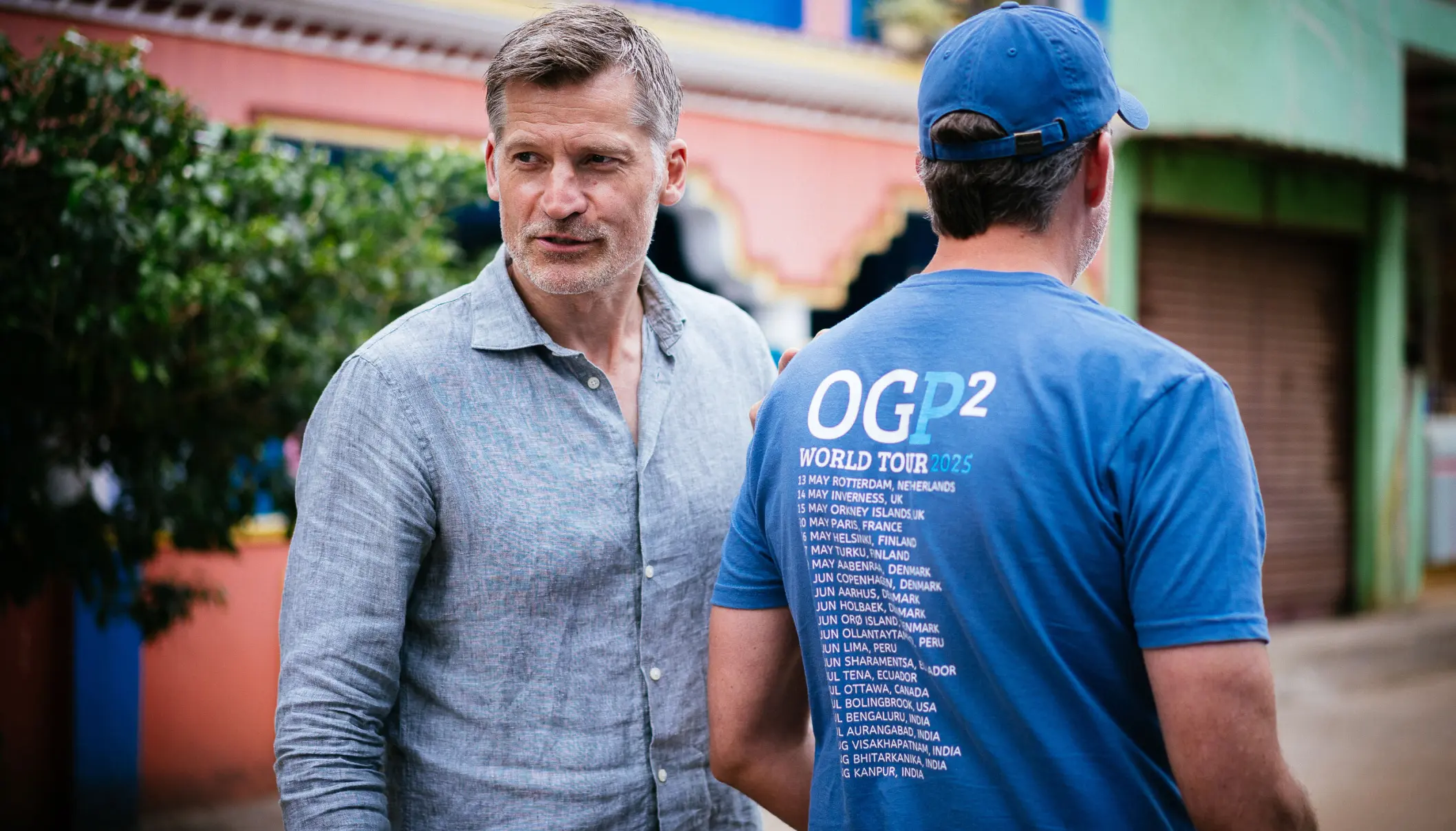
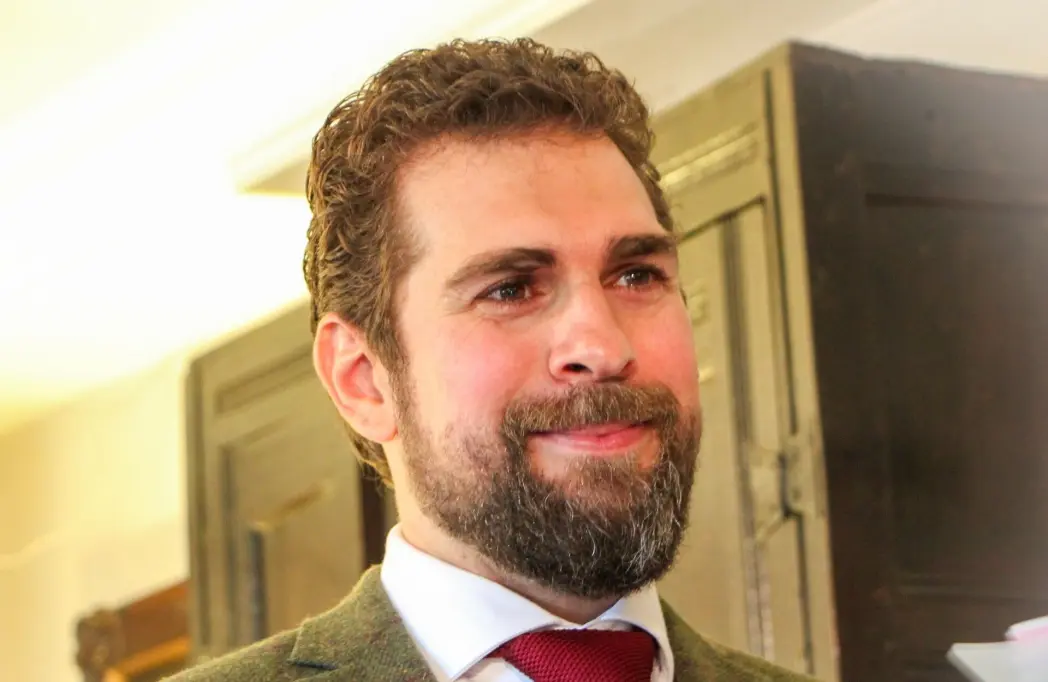
AG has had the pleasure of meeting the world-famous actor Nikolaj Coster-Waldau, who had his breakthrough in Ole Bornedal's horror film "The Night Watch" and later achieved international fame for, among others, the role of Jaime Lannister in the drama series "Game of Thrones".
In addition to acting, Nikolaj Coster-Waldau is known as a dedicated climate activist and UN Goodwill Ambassador. But most importantly, he is a father and ningaarput, "our son-in-law". A title he has received through his marriage to Nukâka Coster-Waldau, and which for him encompasses both responsibility, respect and a deep personal connection to Greenland.
- I am very, very honored by my title, says Nikolaj Coster-Waldau.
Greenland through pictures
Nikolaj Coster-Waldau was born on July 27, 1970 in Rudkøbing. Most of his childhood was in Tybjerg in South Zealand.
- A tiny town with 40 people. It's actually quite funny, because when I later met Nukâka, who grew up in Uummannaq, I experienced it almost like a big city. That's how small Tybjerg was, he says.
Nikolaj Coster-Waldau lived in Tybjerg with his mother and two older siblings.
- My parents divorced, remarried - and then divorced again, says Nikolaj Coster-Waldau.
His father, Jørgen Waldau, worked most of that time in Greenland, first in Maniitsoq and later in Pituffik.
- I was never in Greenland as a child, I only got pictures and it was very exotic, and very exciting. I really wanted to go there, but I couldn't really afford it, he remembers.
Nikolaj Coster-Waldau's mother, Hanne, was a librarian and raised Nikolaj and his two older sisters, Dorthe and Rikke, as a single mother.
- I had a good relationship with my sisters, but a boy is annoying. I felt a bit like a doll, it wasn't very nice when they made curls on me. It was absolutely terrible and traumatic, laughs Nikolaj Coster-Waldau.
He describes his childhood as good, although the family - like so many others - experienced both ups and downs.
"My mother handled it incredibly well. She was loving, and of course a little overwhelmed," he says.
His father came home every three months from Greenland. The first week was good and then it was less good, as Nikolaj himself says.
- Unfortunately, my father was an alcoholic, he died at the age of 58. It was a bit of a relief when he went to Greenland back then. My parents both liked to drink, and they also liked it when there was some money. When there was no more money, they would argue. It was a mix of 'hurray, now dad is coming home' and 'hurray, now he's leaving', says Nikolaj Coster-Waldau.
When the unrest became too much, he went to his friends.
- The worst thing was that you woke up and they were arguing. And you couldn't really get away from that. I remember several times I pretended to have a nightmare to get them to focus on something else, he says.
Boy hierarchies and hard stomachs
In first grade, Nikolaj started at a primary school in Tybjerg and the class consisted almost exclusively of boys - only three girls attended the class.
- Already in the first break, I was supposed to fight with Tobias. That was the rule, because Tobias was the strongest. I had never tried to fight before. I had no idea what to do, so Tobias put me down, and then it was kind of over, he says.
The boys formed informal hierarchies in the class, where power and physics spoke louder than words.
- There was a lot of "Lord of the Flies" in that class. It was very tough, I was also teased a lot the first few years. I had a few tantrums because I was teased so much. But then a new student came, his name was Thomas, and we became friends, and that all changed because he was really good at fighting, he says.
- Children are the sweetest things ever, but they can also be the meanest, he says.
Nikolaj was the type who played football and was often outside playing with the other children. There was no mobile phone or internet, and television only started in the evening during children's time. Freedom.
- Once I called my mother at work. In fact, I called twice because I had a hard stomach. We had a huge extension cord so I could take the phone around the house. In the end, I was sitting on the toilet and called because I couldn't get the sausage out, as I called it. I was in a complete panic.
- My poor mother went home on her lunch break and drove eight kilometers to get home. When she arrived, I had fallen asleep on the couch on my stomach with half of the sausage sticking out. Then she fixed it, says Nikolaj Coster-Waldau.
The secret dream
At the age of 17, Nikolaj Coster-Waldau moved from home to Copenhagen.
- My big dream was to become an actor, but it wasn't something I said out loud. I was a bit superstitious that if you said it out loud, it wouldn't come true, and I didn't want to say it out loud, so maybe someone would say I could just forget about it, says Nikolaj Coster-Waldau.
But still, he applied to the theater school while living in a collective in Copenhagen.
"I came in, which was completely crazy. I told my mom and my friends, they thought it was a lie. No one would have imagined it," he says.
Nikolaj had four fantastic and magical years – as he himself describes them – at the theatre school in 1989. He was very focused on the school and had many ambitions.
- But I was also just as insecure and confused when it came to everything else. When you go from teenager to young adult, it's a very vulnerable time. Because you constantly feel like you're wrong and think that everyone else has a lot more control over it than you do, he says.
Nikolaj Coster-Waldau graduated from the Danish State Theatre School in 1993 and had his breakthrough as an actor with the leading role in "The Night Watch", which was his first job after school.
- I was very lucky to get that film. I was quite naive and thought: “If I am in a film, and it does well, then a lot of jobs will come.” But it didn't work out that way. It was strange to suddenly be recognized by people. Still, it didn't change my professional life that much - I still had to go out and fight to get roles and create work for myself, says Nikolaj Coster-Waldau.
Love at first sight
For some years, Nikolaj Coster-Waldau traveled back and forth from Denmark to England, as his ambition was to work with English and American actors.
- And luckily I was young, and I really believed that it could be done. So I went to London, he says.
In 1997, Nikolaj was to do a radio play called “The Eagle’s Call” in Denmark, where he would play a helicopter pilot based in Greenland who meets a Greenlandic woman played by Nukâka Coster-Waldau.
"I fell head over heels for her the moment she walked through the door on March 17, 1997," he says.
Four months later, Nikolaj Coster-Waldau proposed to Nukâka in Iceland.
- On top of Snæfjellssjøkull, a glacier on a volcano, 250 kilometers northwest of Reykjavik. We snowmobiled up to the edge of the crater, and then I fell to my knees up there. She said yes because she was afraid I would push her down, he laughs.
The couple today have daughters Filippa Navarana and Safina Niviaaluk, who was born in the years 2000 and 2003.
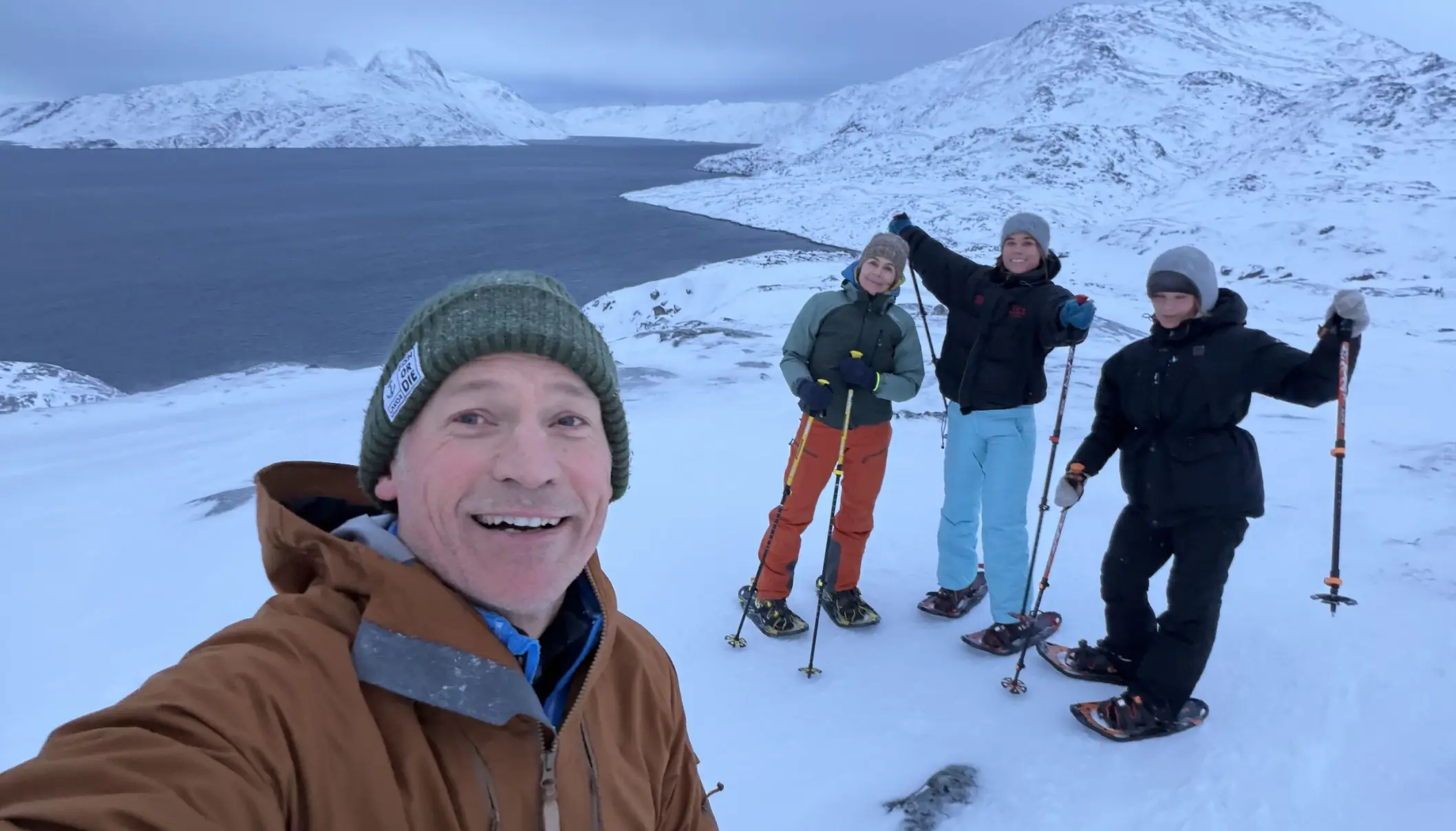
At Christmas 1997, he visited Greenland for the first time. A childhood dream came true. Finally, he would experience the country for himself - not just through his father's pictures.
- It was wonderful and cozy. Once you've been to Nuuk on New Year's Eve, most other places in the world pale in comparison. Fantastic. The following year in the summer we were in Igaliku, which was also wonderful, he says.
Nikolaj Coster-Wadau and his family are in Greenland as much as they can, in their home in Nuuk.
- I have a big family in Greenland. I have two Greenlandic daughters, and I have a Greenlandic wife. We have a home in Greenland. Of course, Greenland means a lot to me, says Nikolaj Coster-Waldau.
For him, it is the people and the country that have made an impression on him.
- Greenland is an absolutely fantastic place with fantastic people. Really. The way in which values such as humanity and love for each other are held on to, I think, is completely unique - and something that one must fight to preserve, says Nikolaj Coster-Waldau.
- It has been very interesting to see in the international media how difficult it can be for others to understand the simple idea that you don't own a country. That the country is something common. It's a fundamentally fantastic idea to have as a society - almost as if the prerequisite for living together has already been laid. It's completely unique, he says.
Stronger in a group
Nikolaj Coster-Waldau experiences that in the midst of the geopolitical crisis that Greenland is in, there is still a sincere love in the Commonwealth.
- Of course, there is also everything else, but there is love and support, and it is important to hold on to that, he says.
At the same time, Greenland has received attention from the rest of the world that the country has never experienced to the same extent before. Attention that is not only well-intentioned.
- Suddenly, there is someone who may not wish us well. I usually never read comments, but Nukâka does from time to time, and sometimes she shows me some terrible, racist things. If you don't know exactly who the sender is, you have to assume it's not real. It could be bots. There are forces out there who are deliberately trying to create conflict, he says.
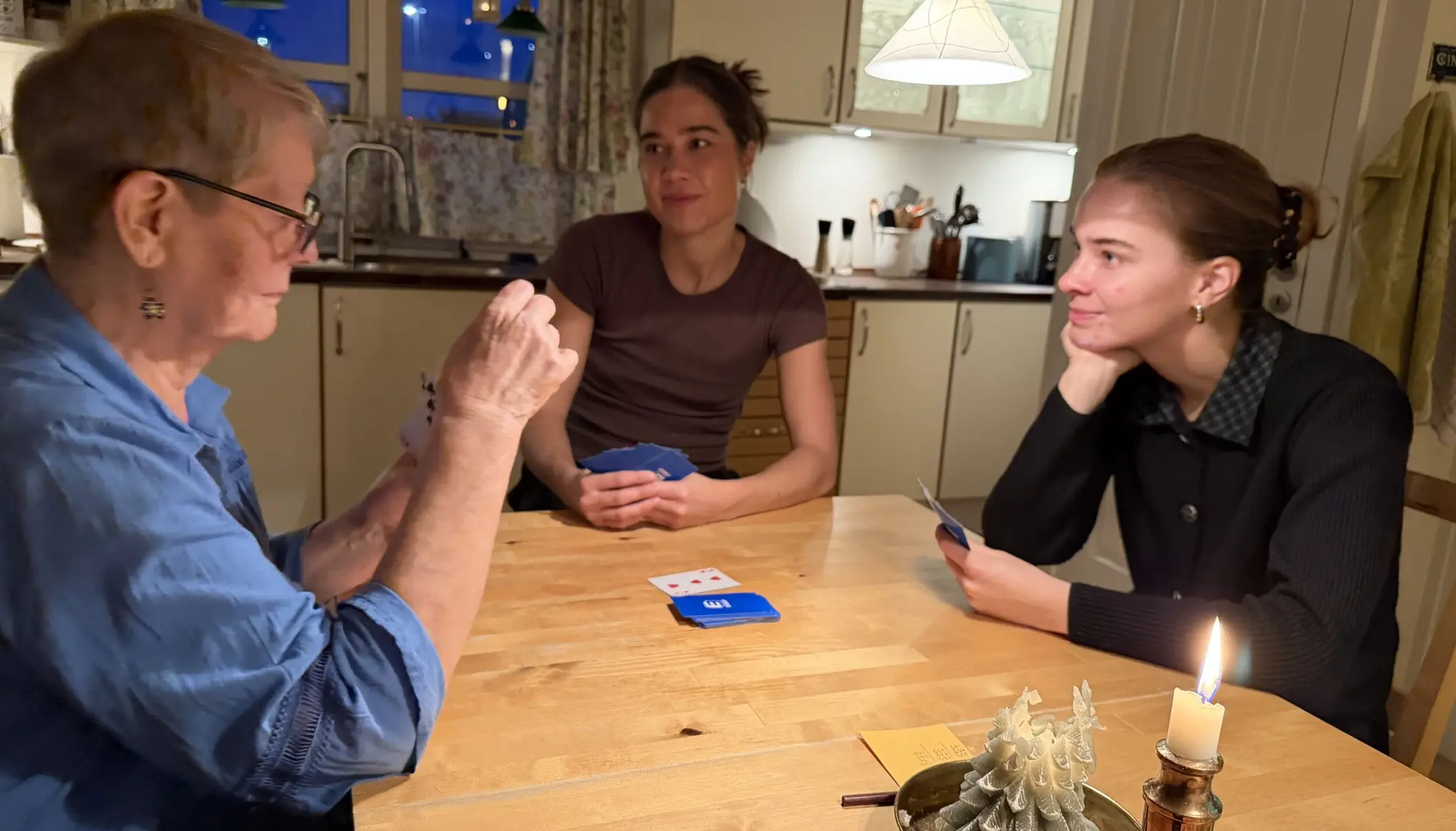
For Nikolaj Coster-Waldau, it is therefore crucial not to be divided.
- Those who fight to divide people and create divisions rarely end well. I have no doubt that Greenland should have full self-determination. It is just a matter of time. But it must be a joint decision made by the Greenlanders themselves, he says.
Amidst the noise, he insists on community. On unity.
- There are crazy challenges ahead of us. But we humans are stronger when we stand together. When we are in a group, says Nikolaj Coster-Waldau.
In his free time, he enjoys spending time with his family. He lives his life between Denmark and Greenland and believes that the way forward lies in cohesion and community - values that are also reflected in his own everyday life across national borders.
He loves long walks with the family dog, Billie, where the world's problems are turned and twisted along the way. When he is in Greenland, he finds peace in nature, among other things, reindeer hunting, and he dreams of being able to spend even more time there. At home, family, closeness - and a freezer full of matak await.
Abonnementer
Sermitsiaq.gl - web artikler
- Adgang til alle artikler på Sermitsiaq.gl
- Pr. måned kr. 59.00
- Pr. år kr. 650.00
Sermitsiaq - E-avis
- Adgang til Sermitsiaq e-avis som udkommer hver fredag
- Adgang til alle artikler på Sermitsiaq.gl
- Pris pr. måned kr. 191
- Pris pr. år kr. 1.677
AG - Atuagagdliutit E-avis
- Adgang til AG - Atuagagdliutit e-avis som udkommer hver onsdag
- Adgang til alle artikler på Sermitsiaq.gl
- Pris pr. måned kr. 191
- Pris pr. år kr. 1.677
Sermitsiaq.AG+
- Adgang til AG - Atuagagdliutit e-avis som udkommer hver onsdag
- Adgang til Sermitsiaq e-avis som udkommer hver fredag
- Adgang til alle artikler på Sermitsiaq.gl
- Adgang til Arnanut e-magasin
- Adgang til Nutserisoq.gl
- Ved interesse send en mail til abonnement@sermitsiaq.gl
Kære Læser, Velkommen til Sermitsiaq.gl – din kilde til nyheder og kritisk journalistik fra Grønland. For at kunne fortsætte vores vigtige arbejde med at fremme den frie presse og levere dybdegående, kritisk journalistik, har vi indført betaling for udvalgte artikler. Dette tiltag hjælper os med at sikre kvaliteten af vores indhold og støtte vores dygtige journalister i deres arbejde med at bringe de vigtigste historier frem i lyset. Du kan få adgang til betalingsartiklerne fra kun kr. 59,- pr. måned. Det er nemt og enkelt at købe adgang – klik nedenfor for at komme i gang og få fuld adgang til vores eksklusive indhold. Tak for din forståelse og støtte. Dit bidrag hjælper os med at fortsætte vores mission om at levere uafhængig og kritisk journalistik til Grønland.