The soft, green carpet of moss contains tiny fragments that are an important tool for solving murder cases and other crimes, according to the researchers behind a new American study.
They describe a number of criminal cases over time where moss has been used in the investigation in, among others, the USA, Finland and Italy. The researchers behind the study believe that there is great potential for the police to use moss as a tool to establish the connection between a person and the crime scene. Therefore, we will delve into some of the researchers' examples where moss has served as important evidence:
1. The unknown body in Stockholm - 2006
In the capital of Sweden, body remains were found that were partially covered by a tarpaulin. At that time, the police could not identify the body's identity. Therefore, it was important to calculate how long the body had been at the site.
This allowed a time frame and a search radius to be mapped out in order to identify the deceased. Different moss species grew on the body and the tarpaulin, which a Swedish botanist was subsequently able to collect and analyze.
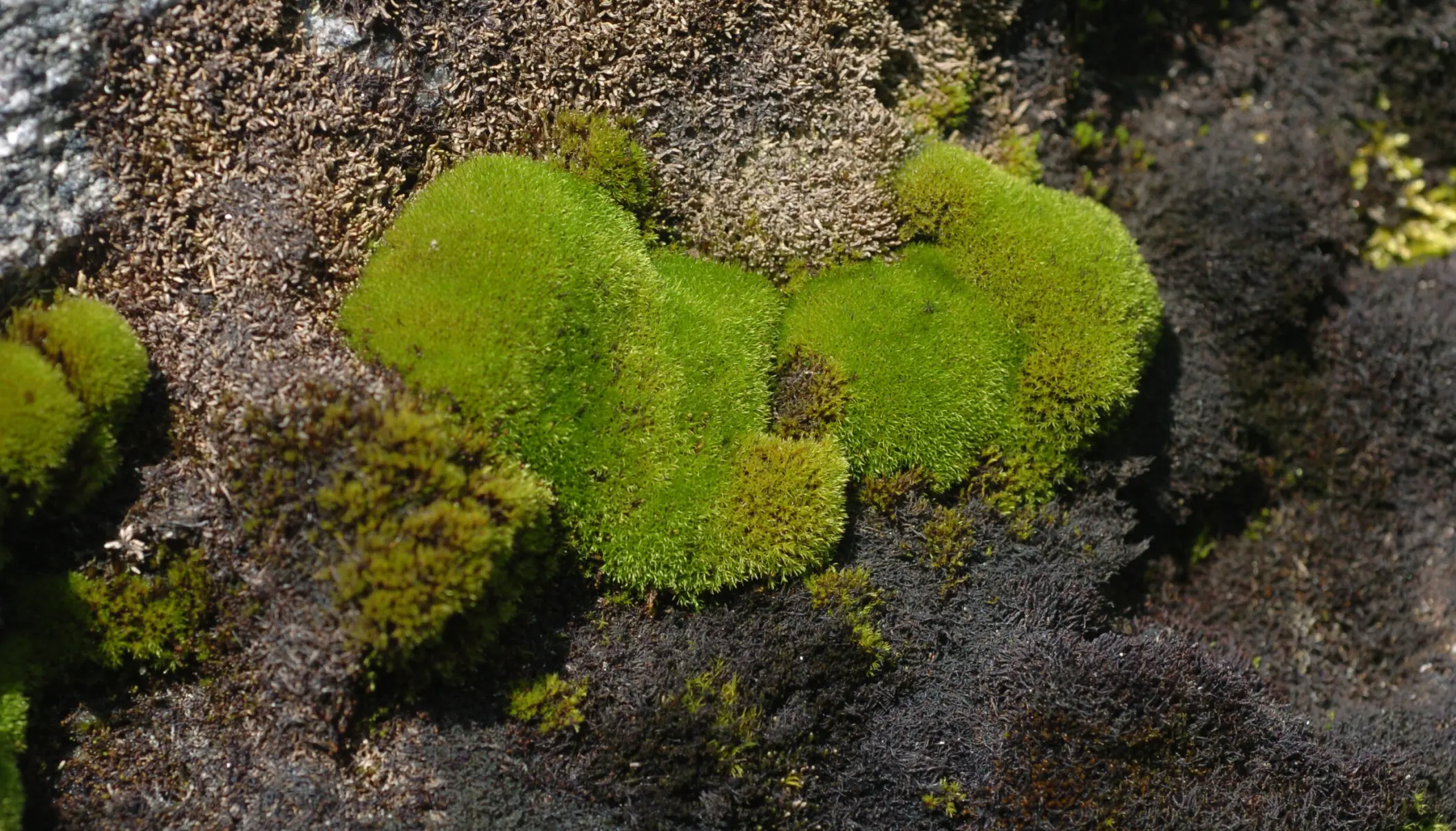
The researcher estimated that the three moss species were respectively 2 years old, 5-6 years old and 8-9 years old. This allowed the police to conclude that the remains probably belonged to a man who had been missing for at least ten years.
2. The Chicago Cemetery Scandal - 2009
17 years ago, a scandal took place that shocked the residents of Chicago. At a cemetery in the city, employees were accused of digging up coffins and dumping the remains so that they could resell the graves.
Police found moss samples buried with the remains, which scientists were later able to date. The scientists determined that the bodies had been buried for no more than two years. The moss evidence therefore provided crucial information to establish a timeline that contradicted the timeline given by the suspects.
The cemetery manager and three employees were convicted in the case, although one of the employees later had his conviction overturned.
3. The man killed in the forest in Finland - 2001
The first example of the use of moss in a murder investigation is found in Finland. The case concerned the body of a man who was found in a forest, five kilometers from the café where he was last seen meeting with three former criminal partners.
The three men were arrested as suspects in the man's death, but investigators found no blood or other evidence. However, investigators found moss fragments on the suspects' clothing, shoes, and vehicle. Using DNA sequencing, the moss samples were compared with samples from the crime scene to see if the genotypes were identical.
In addition, there were no other suitable habitats nearby for the specific composition of moss species. This made it likely that the moss samples came from the forest where the victim was found. This shows that even the smallest, seemingly insignificant plant material can be a decisive piece of evidence, say the Finnish researchers who contributed to the investigation.
4. The murder of baby Kate in the USA - 2011
One of the most sensational cases in which moss has served as a forensic tool is the case of ‘baby Kate’ in the US state of Michigan. The four-month-old baby Katherine Philips was abducted in 2011.
The suspect was her father Sean Philips. A year after her disappearance, the father wrote a letter stating that she had died as a result of an accident and that he had buried her in a ‘peaceful place’.
However, the father could not state exactly where it was, and investigators did not find her body. However, investigators were able to collect moss tissue stuck in dried mud under Sean Philips’ shoes, which became important evidence. Scientists examined the moss samples and were able to identify six different moss species.
Since it was a very unique plant composition, it was possible to exclude large parts of the landscape and narrow the search to an area of 4.5 square meters around a drain called ‘Lemke Drain’.
“The location that would support all of these elements is so rare and specific to the surrounding area that it is only a matter of time before we find the exact location,” Police Chief Mark Barnett said at the time, according to the study.
More than 80 volunteers helped search for the mosses in the terrain. During a police interrogation, Sean Philips' father pointed to an area on a map exactly at Lemke Drain. The moss under his shoes played a crucial role in the evidence, and he was later convicted of the murder of his daughter.
5. The Hanged Man in Taipei - 2005
In the Taiwanese capital Taipei, an adult man was found hanged from a tree. The initial investigation was to determine whether it was a case of suicide or murder. Moss residue was found on the inside of the victim's wrist, which also matched moss on the tree from which the man was hanging.

Investigators concluded that moss residue must have been on him when he tied the rope around the tree. This allowed them to determine that the man had committed suicide and not been murdered.
6. The Woman Who Fell from a Roof Terrace - 2015
11 years ago, traces from moss were used to reconstruct a sequence of events. A young woman in Italy died when she fell from a terrace in a shopping mall. Investigators had to determine whether she jumped voluntarily or was pushed to her death.
They conducted a thorough examination of the path she took to reach the terrace. Moss fragments were found under the victim's shoes, and the same species of moss was found along the paths leading to the site of the fall. Because moss was found under her shoes that matched moss on the edge of the wall, it indicated that she had climbed up herself, rather than been pushed.
If the moss samples had not been compared, investigators would not have been able to determine the cause of death, the American researchers write in the study.
7. The missing woman in Italy - 2010
The remains of an elderly woman were found in a wooded area near the city of Perugia. The woman's identity was unknown. Therefore, it was crucial to find out the time of death and how long the body had been at the site.
A special species of moss was growing on the body's skull. Because there was no data at the time on how fast the moss species grew, a point of death could not be determined. Instead, the researchers compared it with data from another well-documented moss species. By counting the moss's stems, the researchers were able to estimate that the moss was approximately 2 to 2.5 years old. This allowed investigators to focus on looking for people who had disappeared at least 2.5 years earlier.
They were later able to identify an 80-year-old woman who had disappeared in 2007. They did this by comparing X-ray images of the body's skull with images from the woman's medical records.
Abonnementer
Sermitsiaq.gl - web artikler
- Adgang til alle artikler på Sermitsiaq.gl
- Pr. måned kr. 59.00
- Pr. år kr. 650.00
Sermitsiaq - E-avis
- Adgang til Sermitsiaq e-avis som udkommer hver fredag
- Adgang til alle artikler på Sermitsiaq.gl
- Pris pr. måned kr. 191
- Pris pr. år kr. 1.677
AG - Atuagagdliutit E-avis
- Adgang til AG - Atuagagdliutit e-avis som udkommer hver onsdag
- Adgang til alle artikler på Sermitsiaq.gl
- Pris pr. måned kr. 191
- Pris pr. år kr. 1.677
Sermitsiaq.AG+
- Adgang til AG - Atuagagdliutit e-avis som udkommer hver onsdag
- Adgang til Sermitsiaq e-avis som udkommer hver fredag
- Adgang til alle artikler på Sermitsiaq.gl
- Adgang til Arnanut e-magasin
- Adgang til Nutserisoq.gl
- Ved interesse send en mail til abonnement@sermitsiaq.gl
Kære Læser, Velkommen til Sermitsiaq.gl – din kilde til nyheder og kritisk journalistik fra Grønland. For at kunne fortsætte vores vigtige arbejde med at fremme den frie presse og levere dybdegående, kritisk journalistik, har vi indført betaling for udvalgte artikler. Dette tiltag hjælper os med at sikre kvaliteten af vores indhold og støtte vores dygtige journalister i deres arbejde med at bringe de vigtigste historier frem i lyset. Du kan få adgang til betalingsartiklerne fra kun kr. 59,- pr. måned. Det er nemt og enkelt at købe adgang – klik nedenfor for at komme i gang og få fuld adgang til vores eksklusive indhold. Tak for din forståelse og støtte. Dit bidrag hjælper os med at fortsætte vores mission om at levere uafhængig og kritisk journalistik til Grønland.