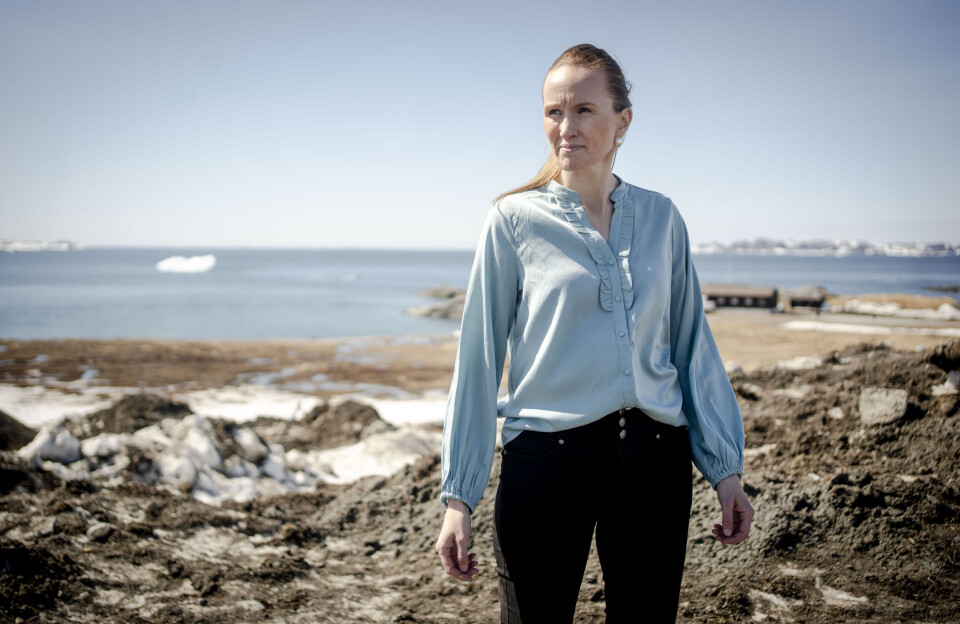

In the office at the Arctic Command headquarters in Nuuk, meteorologists Trine Pedersen and Lene Dolmer from DMI's weather service sit in front of screens with maps, figures and satellite images. From here, they monitor the weather throughout Greenland with a special focus on air traffic and airspace safety.
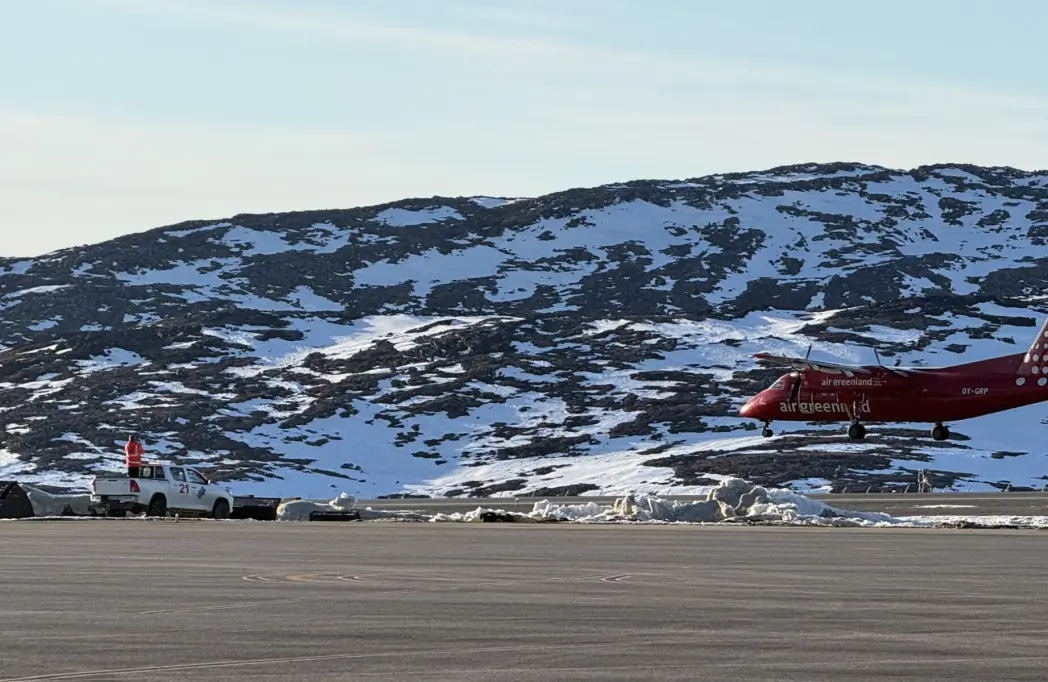
- We primarily work with weather forecasts for the airports and briefing pilots. It is a close collaboration with, among others, Air Greenland, and that means that we have to be staffed around the clock, explains Trine Pedersen.

Data on a long journey
Although the meteorologists are physically located in Nuuk, a large part of the technical work takes place far away. DMI's supercomputer is located in Iceland. From here, data is sent to Copenhagen – and only then to Nuuk.
– Our biggest bottleneck is actually getting data up here. That's why we need to be somewhere with a stable infrastructure where we can work 24 hours a day, says Lene Dolmer
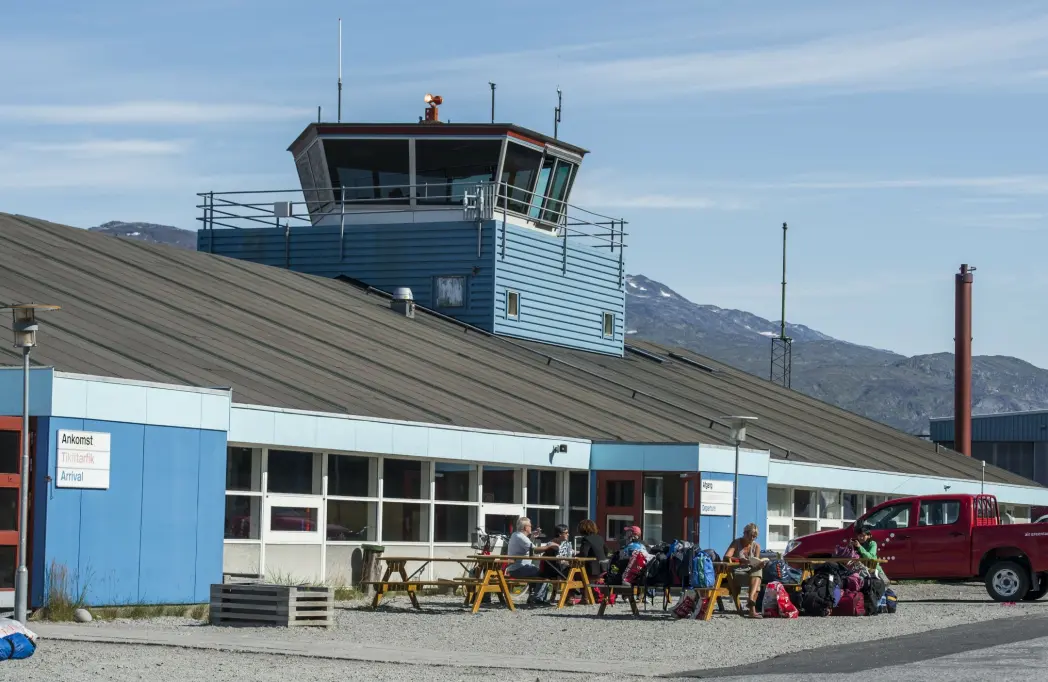
DMI previously wanted to locate the weather service at the airport in Nuuk, but this was not possible. Alternative premises would require the construction of a completely new structure.
Shifts in shifts – and a shortage of meteorologists
There are usually about four meteorologists in Nuuk at any one time. They rotate between working in Nuuk, Copenhagen and Karup in Denmark. Some are in Greenland for a year, others for three months – depending on what fits into their lives.

– It's a bit of a rotation, and it has to do with private life. We would have liked to have more people permanently up here, but it has been difficult to find meteorologists who want to work at DMI in Greenland, says meteorologist Lene Dolmer.
24/7 monitoring
The working day – and night – is carefully planned. In the morning there is an overlap between the night shift and the morning shift, so that all prospects can be dispatched on time.
– We also have international obligations. If dangerous weather occurs in the airspace, warnings must be sent immediately. You can't just shut down at night and continue the next day, says Lene Dolmer.
Satellites, weather balloons and webcam
Meteorologists use many different data sources. For example, observations come from individual airports. And satellite images also play a big role.
– The geostationary satellites hang above the equator, and the further north you look, the worse the quality becomes. That's why we also use satellites that orbit closer to the North Pole. They provide great images, but only intermittently, explains Trine Pedersen.
In addition, meteorologists use webcams from airports – including via YouTube.
– When it's light, it gives us a hugely good supplement. It's one thing to see codes and numbers – it's another thing to see the weather with your own eyes, says the meteorologist.
Unusually warm winter weather
When you look out the window in Nuuk at the beginning of January, the landscape is far from as white as you might expect.
– December has been significantly warmer than the average for the last 30 years, explains Lene Dolmer, who has looked at figures over the last 30 years.

In Nuuk, the average temperature in December was minus 2.5 degrees, while the highest temperature reached as high as 8.5 degrees. In comparison, the average temperature has normally been around minus 5 degrees, and the maximum temperature around minus 3 degrees.
– It is therefore significantly warmer than normal, emphasizes Lene Dolmer.
Blocked weather over the North Atlantic
The explanation must be found high up in the atmosphere.
– There has been a strong high pressure over Iceland and the British Isles, which has blocked the low pressure that normally moves up along Greenland's east coast. Instead, we have had warm air directly up over the west coast, explains Trine Pedersen.
The result is mild and sometimes rainy weather in Greenland – while Denmark has experienced cold and snow at the same time.
– There is an old rule of thumb that when it is cold in Denmark, it is warm in Greenland – and vice versa. This is often true, especially on the west coast, says the meteorologist.
The entire west coast is affected
The mild weather has not only affected Nuuk.
– Several places along the west coast have had temperatures of 5–6 degrees. This morning Upernavik had 4 degrees, and in Ilulissat it is around 6 degrees. This is unusual for this time of year, says Lene Dolmer.
In South Greenland there have been periods of up to 10 degrees and heavy rain, which has melted the snow. On the east coast the weather has been different, with more snow.

Looking ahead only a few days
Although the figures clearly show that the weather is atypical, it is not the job of meteorologists to assess climate developments.
– We primarily look at tomorrow and up to 10 days ahead. It is the climatologists who analyze the long time series, says Lene Dolmer.
The weather is expected to continue on the same track in the coming days, although with slightly colder temperatures and the possibility of snow showers over the weekend.
– But when we are out for more than 10 days, it becomes very uncertain. The weather can easily change, emphasizes the meteorologist.
A weather that locks in
According to meteorologists, the situation is an example of how the weather can increasingly become stuck in certain patterns.
– Instead of the more naturally changing weather, we see periods where one type of weather dominates for a long time. This is not normal winter weather for Greenland, says another meteorologist.
Abonnementer
Sermitsiaq.gl - web artikler
- Adgang til alle artikler på Sermitsiaq.gl
- Pr. måned kr. 59.00
- Pr. år kr. 650.00
Sermitsiaq - E-avis
- Adgang til Sermitsiaq e-avis som udkommer hver fredag
- Adgang til alle artikler på Sermitsiaq.gl
- Pris pr. måned kr. 191
- Pris pr. år kr. 1.677
AG - Atuagagdliutit E-avis
- Adgang til AG - Atuagagdliutit e-avis som udkommer hver onsdag
- Adgang til alle artikler på Sermitsiaq.gl
- Pris pr. måned kr. 191
- Pris pr. år kr. 1.677
Sermitsiaq.AG+
- Adgang til AG - Atuagagdliutit e-avis som udkommer hver onsdag
- Adgang til Sermitsiaq e-avis som udkommer hver fredag
- Adgang til alle artikler på Sermitsiaq.gl
- Adgang til Arnanut e-magasin
- Adgang til Nutserisoq.gl
- Ved interesse send en mail til abonnement@sermitsiaq.gl
Kære Læser, Velkommen til Sermitsiaq.gl – din kilde til nyheder og kritisk journalistik fra Grønland. For at kunne fortsætte vores vigtige arbejde med at fremme den frie presse og levere dybdegående, kritisk journalistik, har vi indført betaling for udvalgte artikler. Dette tiltag hjælper os med at sikre kvaliteten af vores indhold og støtte vores dygtige journalister i deres arbejde med at bringe de vigtigste historier frem i lyset. Du kan få adgang til betalingsartiklerne fra kun kr. 59,- pr. måned. Det er nemt og enkelt at købe adgang – klik nedenfor for at komme i gang og få fuld adgang til vores eksklusive indhold. Tak for din forståelse og støtte. Dit bidrag hjælper os med at fortsætte vores mission om at levere uafhængig og kritisk journalistik til Grønland.