
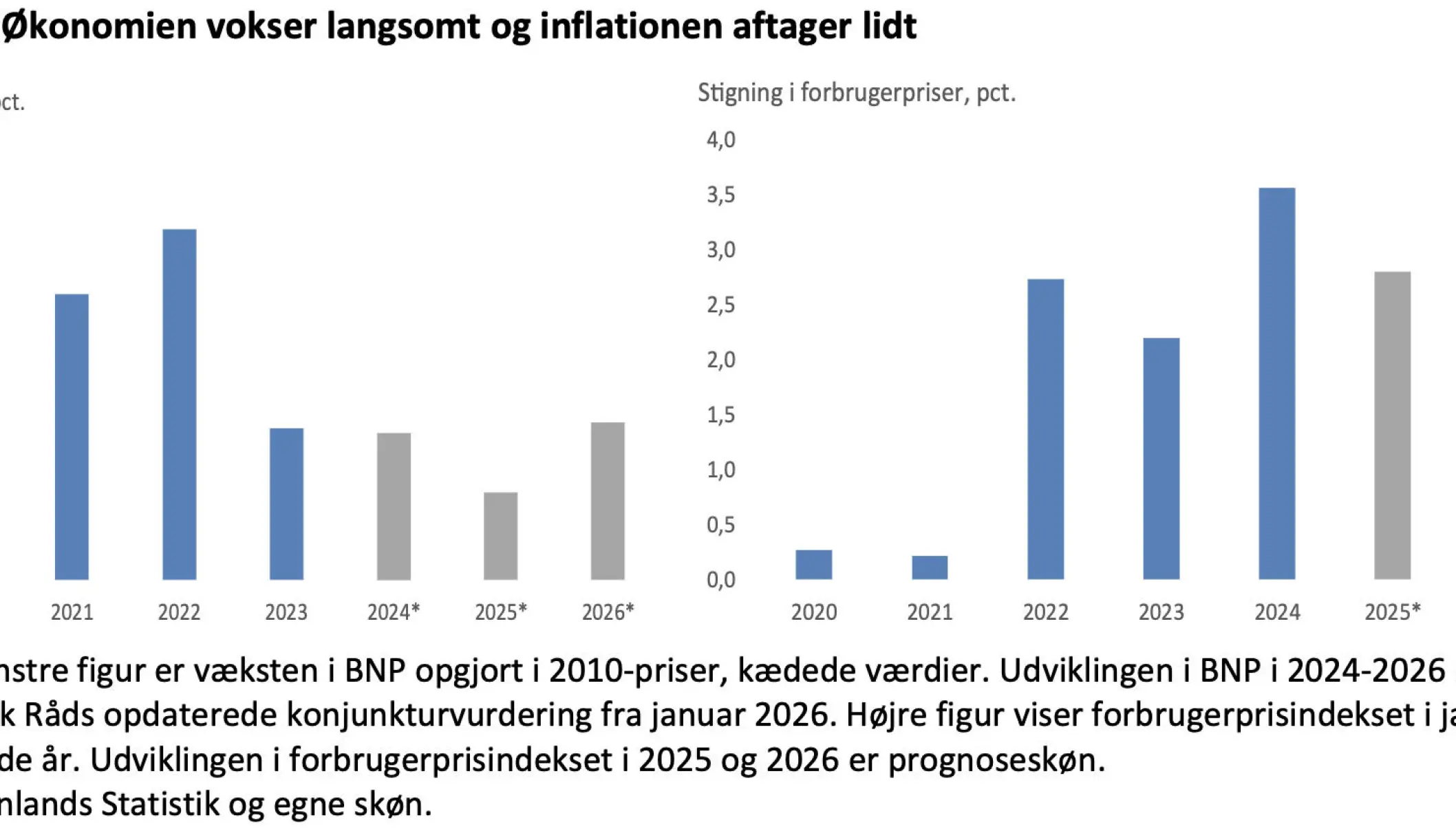
Economists estimate that gross domestic product in 2025 will have grown by only a modest 0.5 percent, which is only slightly more than the challenging corona year back in 2020.
The explanation is that activities in the large airport projects have slowed down, which was expected. In addition, fewer shrimp were caught, but fisheries exports were helped by cod fishing, where catch volumes and prices increased last year, which contributed to an increasing export value of fisheries products overall.
In the tourism sector, there is progress, but concentrated in the few summer months, when the capacity limit is close to being reached.
- There is a need to both extend the tourist season beyond the summer months and to expand flight, hotel and tour capacity so that tourism can contribute further to the economy at the national level, states the report from the Economic Council.
Looking at the country's third revenue stream – the mineral sector – there is still exploration and research, while actual mining activity is limited to the extraction of anorthosite at Kangerlussuaq, it says.
Higher GDP growth this year
However, economic growth is expected to be greater this year, with growth of just under 1 percent. Consumption is thus expected to grow.
- Retail sales were largely stagnant from 2024 to mid-2025, but increased in the second half of 2025. Rising consumer prices have in themselves eroded households' purchasing power, but wage increases will gradually ensure an increase in real wages, just as tax cuts will increase disposable incomes, it is stated.
Inflation is expected to hit 3 percent in 2025, but will ease to 2.5 percent in 2026.
Public finances
The Economic Council has also focused on public finances and economic policy.
The situation for the national treasury deteriorated “significantly” in 2025. In December 2025, it was estimated that the deficit on the DA balance was no less than 386 million kroner.
The large deficit is explained by:
The consequence has been that the liquidity in the treasury in the second half of 2025 reached "a critically low level close to zero". Against this background, the Economic Council welcomes the latest Finance Act, as it contains significant and, as the Council writes, "necessary tightening" if revenue and expenditure are to be balanced again.
Required with shock absorbers
Similar to previous reports, the Economic Council points out that politicians have failed – during good economic times – to set aside money as an economic buffer when the economy goes the wrong way.
The current serious situation for public finances triggers a recommendation from the Council. It is proposed that a balance target be introduced in the Budget Act, to budget with a surplus on the DA balance over the financial years.
-This will contribute to consolidation and building buffers in good times and thus a more stable development in fiscal policy, states the Economic Council.