
It's morning at Nuuk Airport.
Tuukkaq is in the air on its way from Copenhagen, and the terminal is not yet that busy.
Down in Café Sumut, the smell of sausage and cheese fills the air. A man sits with his coffee and looks down at his phone.
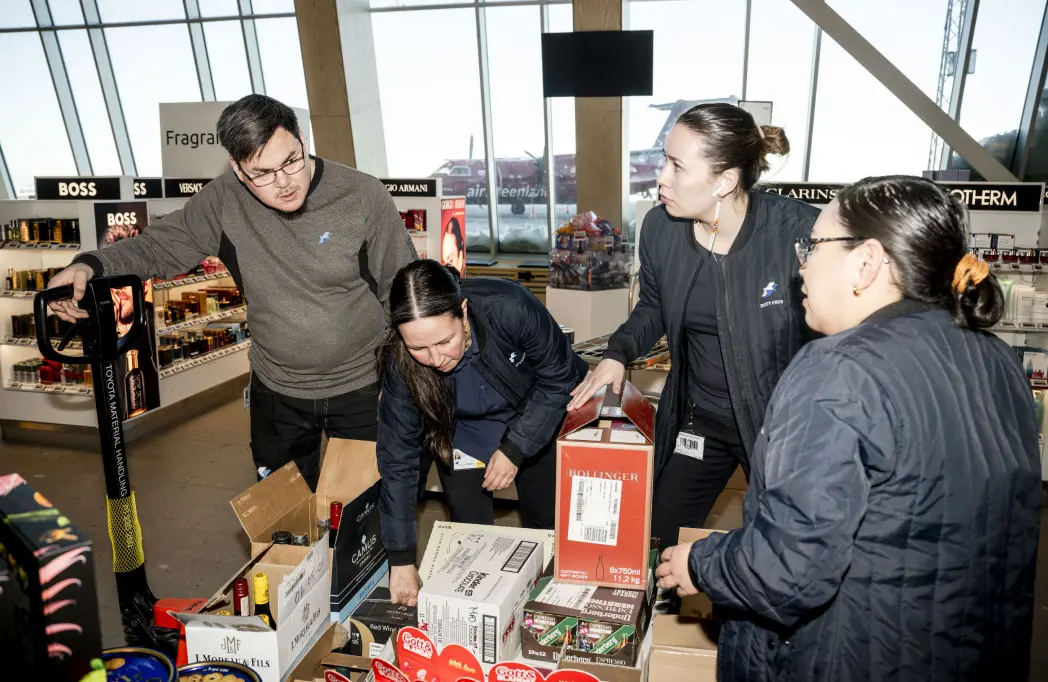
A woman walks around in the Duty Free area, studying the different varieties of English wine gum on the shelves.
- Unfortunately, we don't have any bags.
Melany Belen is checking in a customer with a rolling suitcase. He's going to buy a red heart made of sealskin from Great Greenland.
She has worked in the Duty Free shop for over a year and knows the names and prices of all the products.
- We sell mostly muskrat sausage and cigarettes, she says.
Of the shop assistants who helped prepare for the opening of the new terminal building on November 28, 2024, Melany Belen is the only one left.
- Everyone is new, she says, looking around.
She clearly remembers the time leading up to the opening day.
- Oh my, she gasps.
- It was the most exciting and craziest time. We had to set everything up and fill it with goods. You really had to use your muscles – especially when you had to put the wine in its place, she says.
At the same time, a couple of employees pull up with a cart full of boxes, clinking. They stop and start pulling bottles of wine and Jack Daniels whiskey out of the boxes.
Niels Erik Kristensen helps out. He is the chairman of the warehouse, where there is always something to do, he says.
- We work in the warehouse, even when the weather is bad, he says.
He has – like Melany Belen – been in the new terminal building since the beginning.
- We all work really well together. When they need people up here in the store, I help out, says Niels Erik Kristensen.
Is your work something that your friends and family ask about?
- No, fortunately, he says and laughs.
- We hear a lot of negative things about the airport. But it is just a workplace like any other.
New rules of the game at an international airport
In addition to being a workplace for around 103 employees, Nuuk International Airport has also become the country's traffic hub – and the gateway that tourists, journalists, high-ranking politicians and military personnel from abroad use when entering and leaving the country.
With the new airport terminal and runway, employees have therefore also had to accept that their workplace has often been the center of public conversation. For better or worse – and many times for worse.
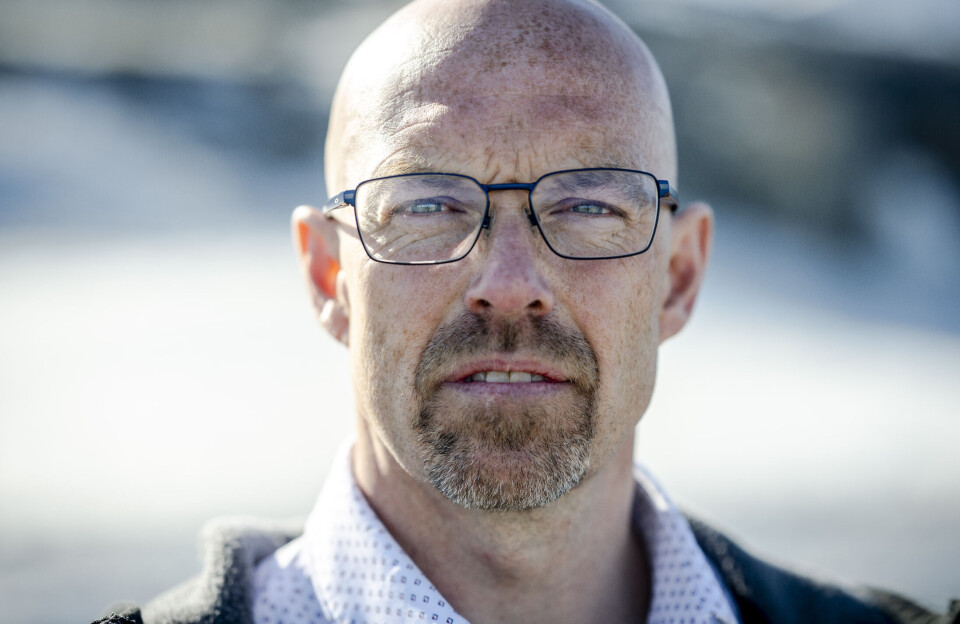
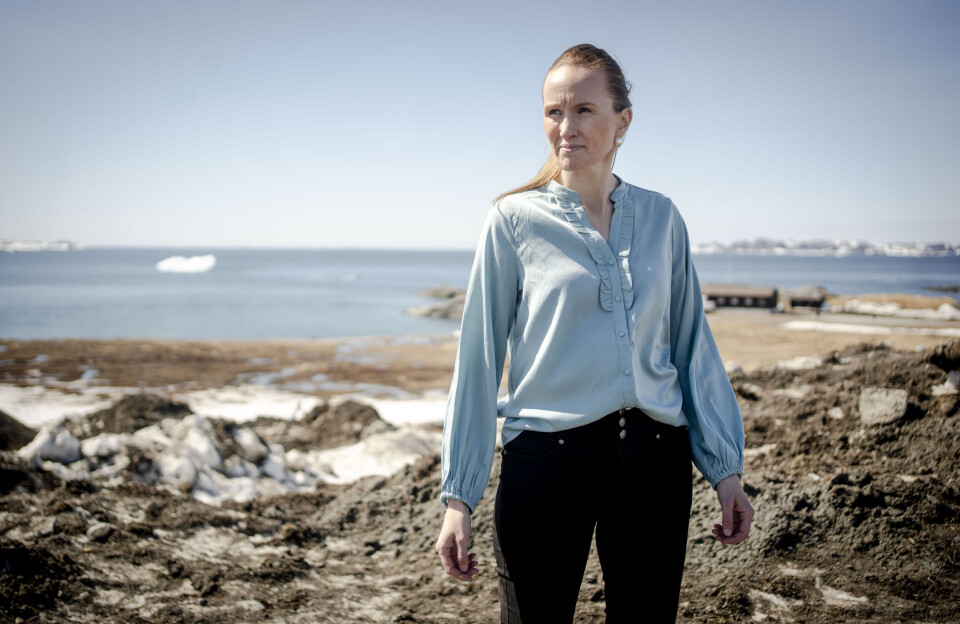
Facility manager René Langholz can attest to that.
- Of course, it has been tough with the negative headlines. Because we are all doing our best, he says.
- But we have kept our spirits high and supported each other and tried to make the best of it.
In contrast to the front-line staff, who you meet in Duty Free or down at security in the terminal, René Langholz and the others in the facility department work more behind the scenes.
When things break or get stuck, they are the ones who make sure they get them fixed. The problem-solvers, you could call them.
And the list of problems they have to solve is long, says René Langholz.
- For example, we have ‘bag drop’ down there. The idea is that people just have to drop off their luggage and then it can be taken in, he says.
But you can't do that on the day Sermitsiaq is visiting. Not if you arrive too early, too late, or if you're overweight.
- We have a meeting today with Air Greenland and another company, and then we'll see who's responsible for getting it resolved so we can get it up and running, he says.
René Langholz's phone rings, and he quickly glances at it.
The facility manager has worked at the airport for two and a half years. He thinks it's been 'exciting' and 'chaotic' to help start the new airport.
- Many things had to be set up, and many people initially had the impression that they could just keep running the old airport. But since it's an international airport, there are a lot of new rules that aren't in regional airports, he says.
- The Norwegian Transport Authority demanded a lot from us right from the start. So things have been really busy, and they still are. We are not quite there yet.
Leaks in the terminal building, problems with the baggage belt and with security were some of the issues that were rife around the new terminal even before the official opening.
However, the criticism has not affected René Langholz' job satisfaction and pride in working at Nuuk Airport and Greenland Airports.
- No, on the contrary. It gives you even more energy and drives you to do even better, he says.
- And building a new company, you don't do that from day one. It takes years.
The fight against slippery runways and bad weather
A few minutes' drive from the terminal building, you'll find the home of the airport's arsenal of vehicles: the garage.
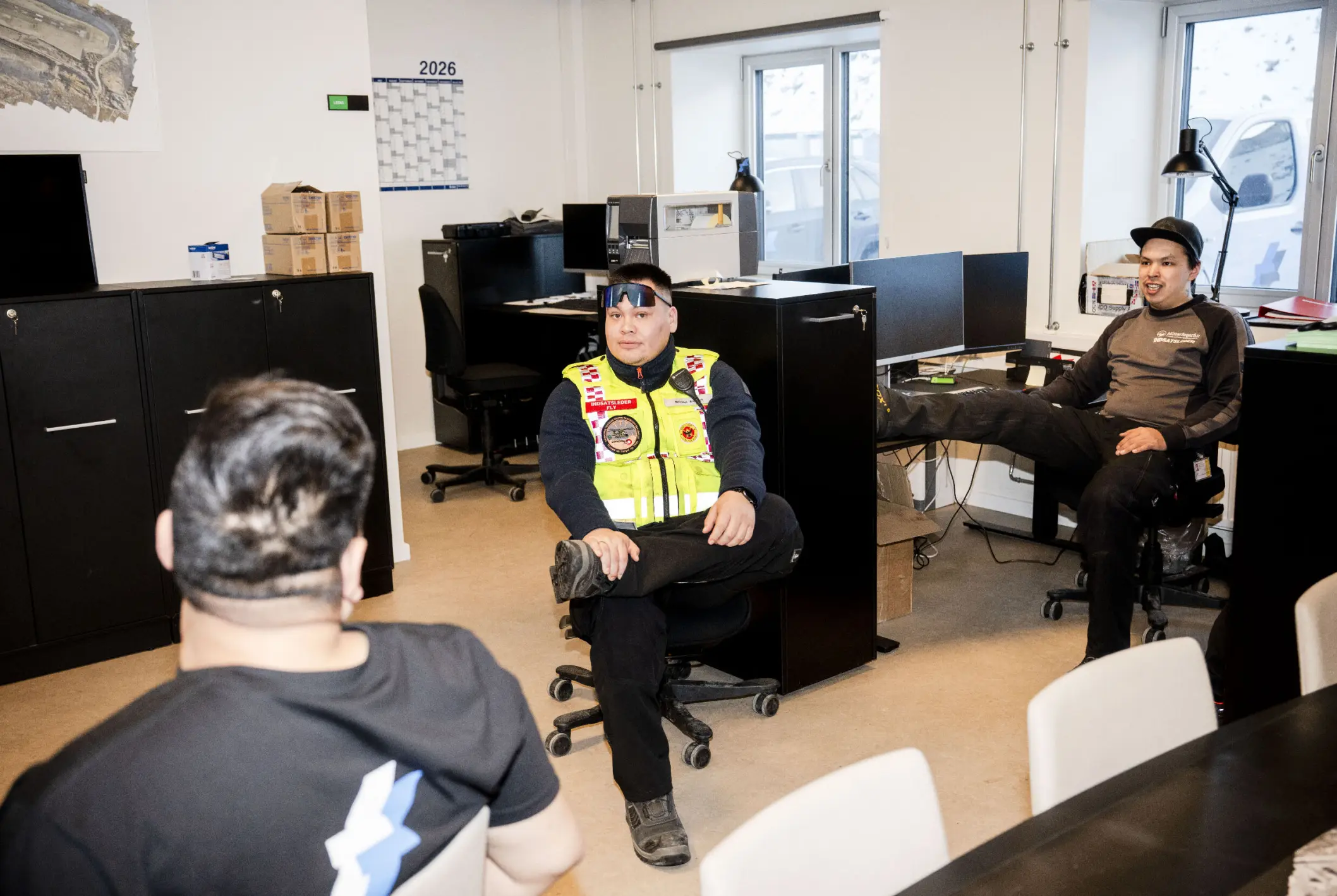
Here, operations manager Nikkulaat Andersen sits in his office, which he shares with the other operations managers, the airport coordinator, and some of the other middle managers who are based in Nuuk Airport's large garage.
He's wearing a neon yellow reflective vest and a pair of large sunglasses on his forehead.
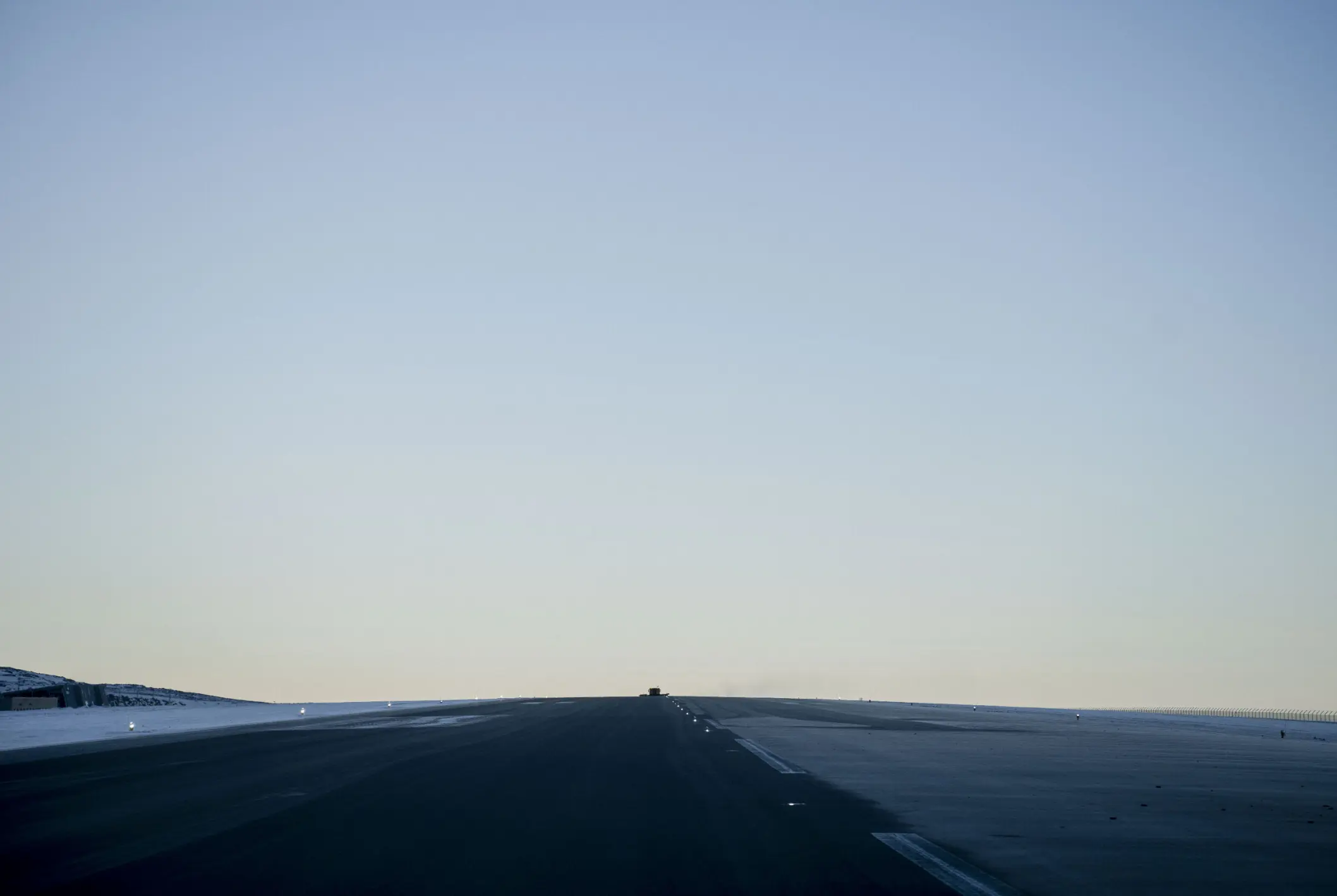
Nikkulaat Andersen arrived at four this morning. Today he is the on-duty emergency manager, and therefore the one responsible for ensuring that the conditions out on the 2,200-meter-long runway are as they should be.
He can typically already tell that it will be a challenging day at work when he has to scrape a thin layer of ice off his car in the morning.
- Freezing rain.
As the name suggests, it covers fine rain that freezes before it hits the ground and makes all surfaces mirror-smooth.
It is also the name of one of the worst weather phenomena that you as an emergency manager at Nuuk Airport can encounter.
- You can hardly fight it, says Nikkulaat Andersen.
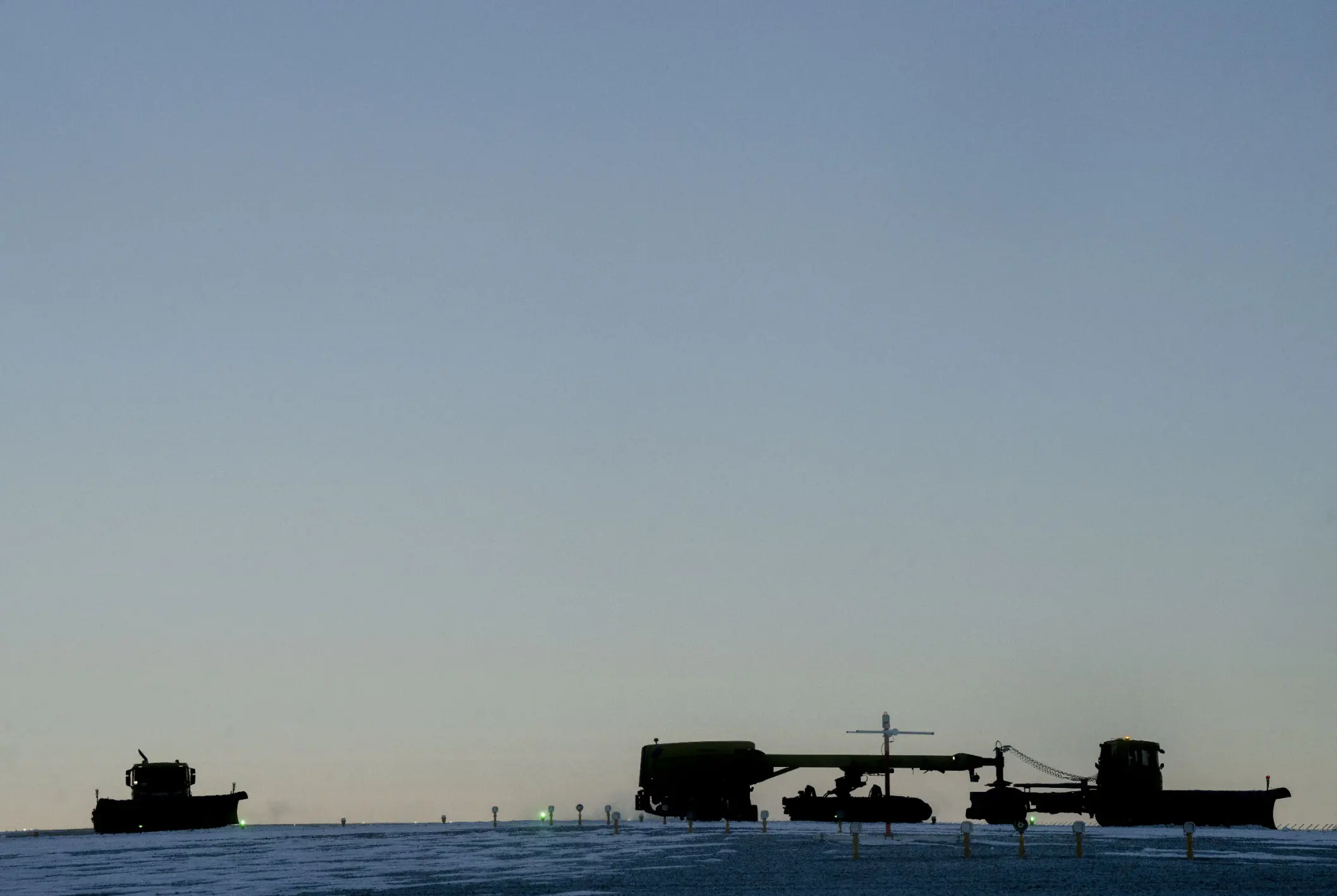
On the wall are three flat-screen monitors showing the monitoring of the runway, and you can see that two large yellow vehicles armed with brushes are about to drive out.
The ‘sweepers’, as they are called, are supposed to brush snow and frost off the runway so that planes can land and take off safely. When the weather is very bad and there is also a thick layer of ice on the runway, it also has to be de-iced with chemicals.
From January 1 to June 30 last year, Air Greenland ended up canceling 59 of its flights across the Atlantic – compared to only three in the same period the year before, when Kangerlussuaq was the country’s traffic hub.
Bad weather and a slippery runway were some of the primary reasons for last year’s cancellations.
In 2025, eight bags of de-icing chemicals were used.
- That's the equivalent of eight tons, explains Frederik Sommer.
He is the airport coordinator and shares an office with Nikkulaat Andersen and the others in the garage.
No one has control over the weather. Not even those who work out in the airport. But last year's many cancellations ended up as fuel on the fire of abuse that the new airport was already suffering from as a result of the many other challenges in connection with the airport construction - and after the opening.
According to Frederik Sommer, the bad publicity about the airport is not something that those out in the garage have taken so seriously.
- Of course you read it. But it's not something that really affects me, he says.
Is it something that colleagues talk about?
- No, it's not. We're just continuing to work, he replies.
On the surveillance video, you can see the sweepers driving down towards one end of the runway. Snow and frost swirl along the sides. The sky is crystal blue and the horizon is pink.
Chemicals will be necessary today.
Being adaptable
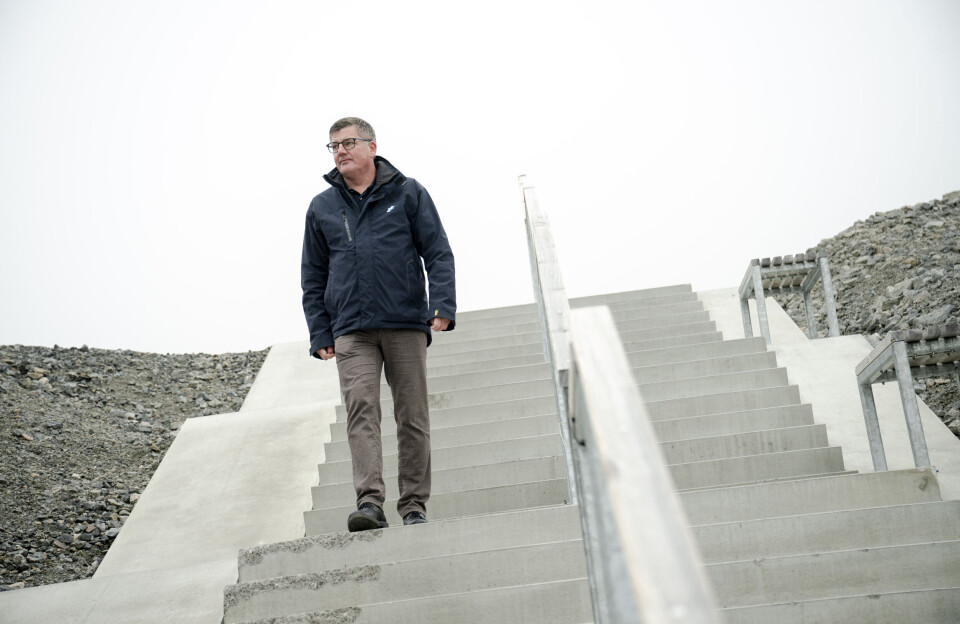
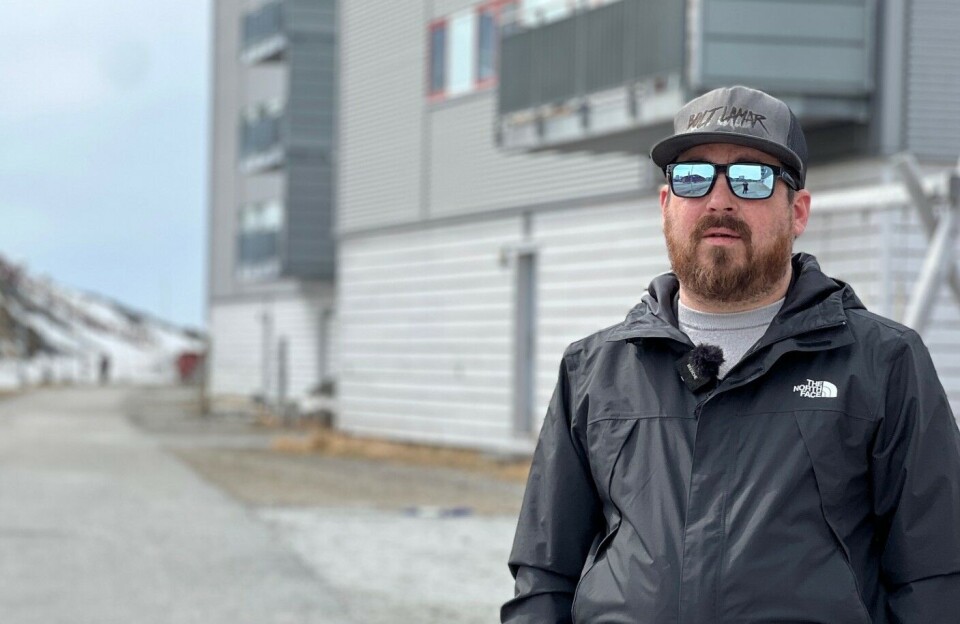
- I think I was the first to move. I flew on a Boeing-737 from Kangerlussuaq. No one could have done it less.
Aron Hauptmann speaks loudly to drown out the speaker from which the 80s hit She Drives Me Crazy blasts out into the garage workshop.
The elevator he is driving up makes a whining sound.
Together with a total of seven mechanics – including two apprentices – Aron Hauptmann fixes the sweepers, the crash tenders – which can put out fires – and various other airport vehicles.
Some of them are almost always in operation – and those that are not, need to be fixed.
- At a regular auto repair shop, you have planned everything according to your repairs and it is all very much on schedule. But we can’t do that here, says Aron Hauptmann.
There is plenty to do, it seems; whether it is changing an axle or all the ‘final drives’ – which is probably another word for brakes.
Several of the employees at Nuuk Airport have a past in Kangerlussuaq. Among others, Aron Hauptmann, who – before coming to the capital in May last year – has worked as a mechanic at Kangerlussuaq Airport since 2008.
When Sermitsiaq asks if working at Nuuk Airport is very different from working in Kangerlussuaq, he replies:
- Yes, it is. It's a new workshop and things, isn't it? Even though the workshop itself is smaller than in Kangerlussuaq, he replies.
He chews on his words a bit and then nods decisively:
- Yes, different, he says and laughs.
It wasn't just Aron Hauptmann who had to get used to new surroundings and new ways of doing things. Those who have been at the airport before the new terminal building and runway were ready also had to adjust.
- It was a big change to go from the small airport to the big airport, says Poul Lorentzen, who is also one of the airport's task leaders.
He has just come from a meeting with some of the other managers and is on his way out to take a smoke break. His walkie-talkie is crackling with continuous messages from the AFIS tower.
- We had plenty to do, he remembers.
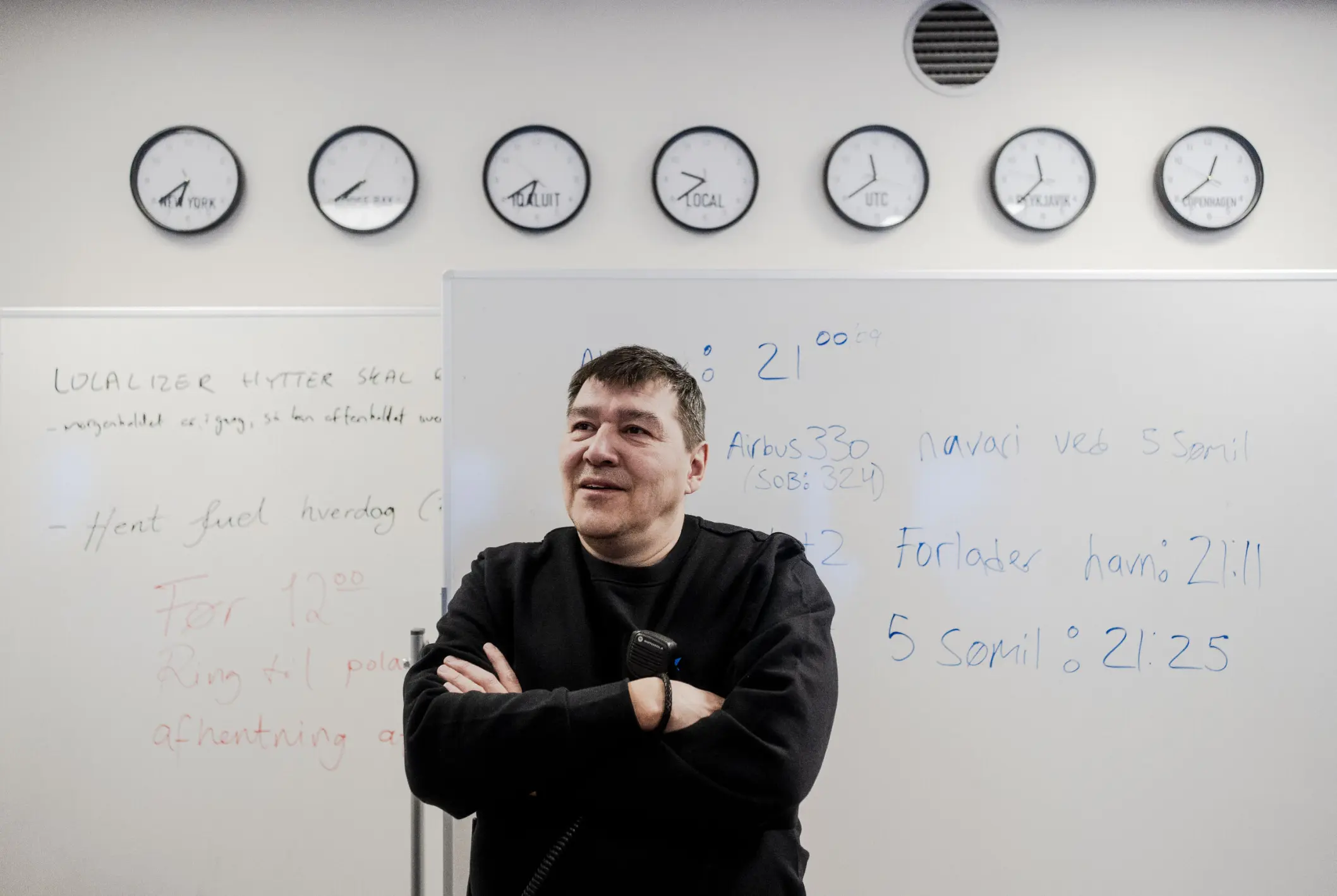
Poul Lorentzen has worked at Nuuk Airport since 2017. When the new international airport opened in 2024, there were fifteen people in the entire garage, he says.
Now, just over 16 months later, the 40 employees are divided into areas of responsibility that cover everything from vehicle repairs and fuel checks to training new staff and enforcing various international rules and restrictions – including those of the Danish Transport Authority.
- We've had some stressful times. But it helps. We're getting into a good routine now, says Poul Lorentzen.
- And when there's not so much snow, it's a bit quiet. Then there's room for a bit of coziness and drinking some coffee.
It'll be easier in May
Out on the runway, a helicopter is taking off. A plane is on its way from Sisimiut and according to the flight plan, Tuukkaq will land in 45 minutes.
With a panoramic view of the entire glory, Ole Hjorth stands at the top of the AFIS tower with a cup of coffee in his hand.
- When I was 20, my plan was to become a pilot. But I didn't get in, so I applied to be an AFIS operator instead, he says.
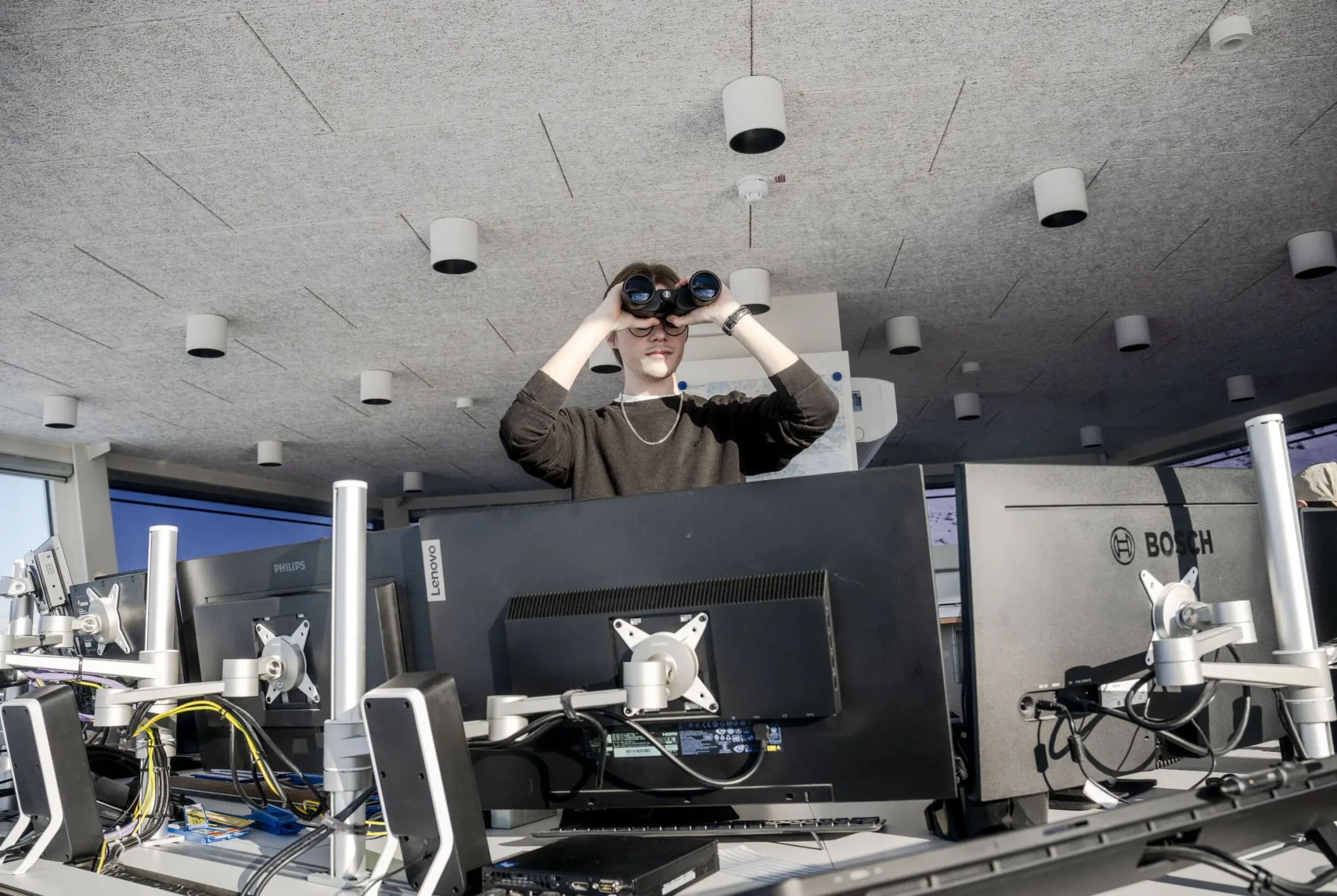
- I thought I could spend a couple of years there. Save up and take a pilot's course. Then I never got any further. I was too happy to be an AFIS operator, he says.
Almost six months ago, the now 28-year-old AFIS manager returned to his hometown, Nuuk, after two years in Kulusuk as an AFIS operator.
- We managed pretty much on our own there. You're a bit out of everyone's sight, he says and continues:
- Where here in Nuuk, you're in the middle of everything. Everyone's focus is on Nuuk airport right now.
Quite practically, the AFIS operators' job is to pass on information about air traffic, weather and runway conditions to the pilots in the planes before they land at the airport.
They are also the ones who communicate with the emergency managers over in the garage, the people in the sweepers and some of the others who move out onto the runway.
Ole Hjorth is looking forward to May.
Although Nuuk Airport has learned a lot from last year's bumps in the road and, according to their director, is ready to put the new experiences and solutions to the test when the tourist season really gets underway this summer, there are still unresolved challenges that are pressing.
Currently, it is the Transport Authority's poor performance from September last year (link) and the subsequent restrictions on the number of departures and landings that are still challenging air traffic in Greenland and the flexibility at the airport.
However, the solution is within reach - in December, Greenland Airports signed an agreement on a new air traffic control system that will increase safety and free the airport from restrictions.
Once the new air traffic control has been established at Naviair down at the Arctic Command premises at the port of Nuuk, Ole Hjorth will be tasked with coordinating the cooperation with them.
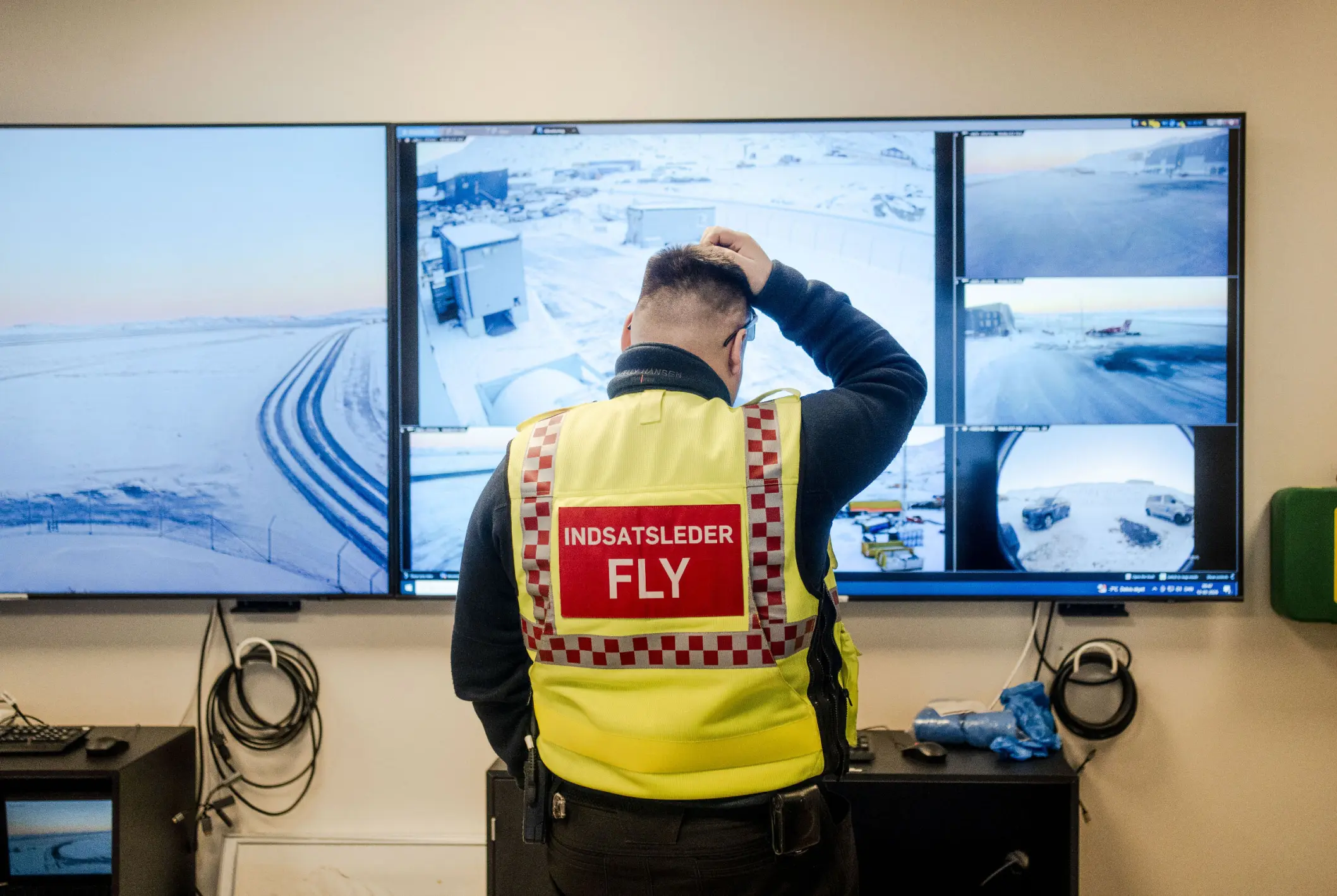
- It will become more manageable, says Ole Hjorth.
Right now it is the pilots themselves who – using common sense and the information they receive from the AFIS tower – decide when it is safe to land at the airport.
The AFIS operators are not allowed to do that.
- We are not trained for that in our position, explains the AFIS manager.
But from May onwards, the air traffic controllers will give permission to aircraft that want to land or take off at Nuuk Airport.
For Ole Hjorth and the other AFIS operators in the control tower, this will mean that they can concentrate on the weather and on ensuring that the final part of the approach goes well – and that no cars enter the runway when Tuukkaq is about to land, for example.
- I think it will be easier.
Abonnementer
Sermitsiaq.gl - web artikler
- Adgang til alle artikler på Sermitsiaq.gl
- Pr. måned kr. 59.00
- Pr. år kr. 650.00
Sermitsiaq - E-avis
- Adgang til Sermitsiaq e-avis som udkommer hver fredag
- Adgang til alle artikler på Sermitsiaq.gl
- Pris pr. måned kr. 191
- Pris pr. år kr. 1.677
AG - Atuagagdliutit E-avis
- Adgang til AG - Atuagagdliutit e-avis som udkommer hver onsdag
- Adgang til alle artikler på Sermitsiaq.gl
- Pris pr. måned kr. 191
- Pris pr. år kr. 1.677
Sermitsiaq.AG+
- Adgang til AG - Atuagagdliutit e-avis som udkommer hver onsdag
- Adgang til Sermitsiaq e-avis som udkommer hver fredag
- Adgang til alle artikler på Sermitsiaq.gl
- Adgang til Arnanut e-magasin
- Adgang til Nutserisoq.gl
- Ved interesse send en mail til abonnement@sermitsiaq.gl
Kære Læser, Velkommen til Sermitsiaq.gl – din kilde til nyheder og kritisk journalistik fra Grønland. For at kunne fortsætte vores vigtige arbejde med at fremme den frie presse og levere dybdegående, kritisk journalistik, har vi indført betaling for udvalgte artikler. Dette tiltag hjælper os med at sikre kvaliteten af vores indhold og støtte vores dygtige journalister i deres arbejde med at bringe de vigtigste historier frem i lyset. Du kan få adgang til betalingsartiklerne fra kun kr. 59,- pr. måned. Det er nemt og enkelt at købe adgang – klik nedenfor for at komme i gang og få fuld adgang til vores eksklusive indhold. Tak for din forståelse og støtte. Dit bidrag hjælper os med at fortsætte vores mission om at levere uafhængig og kritisk journalistik til Grønland.