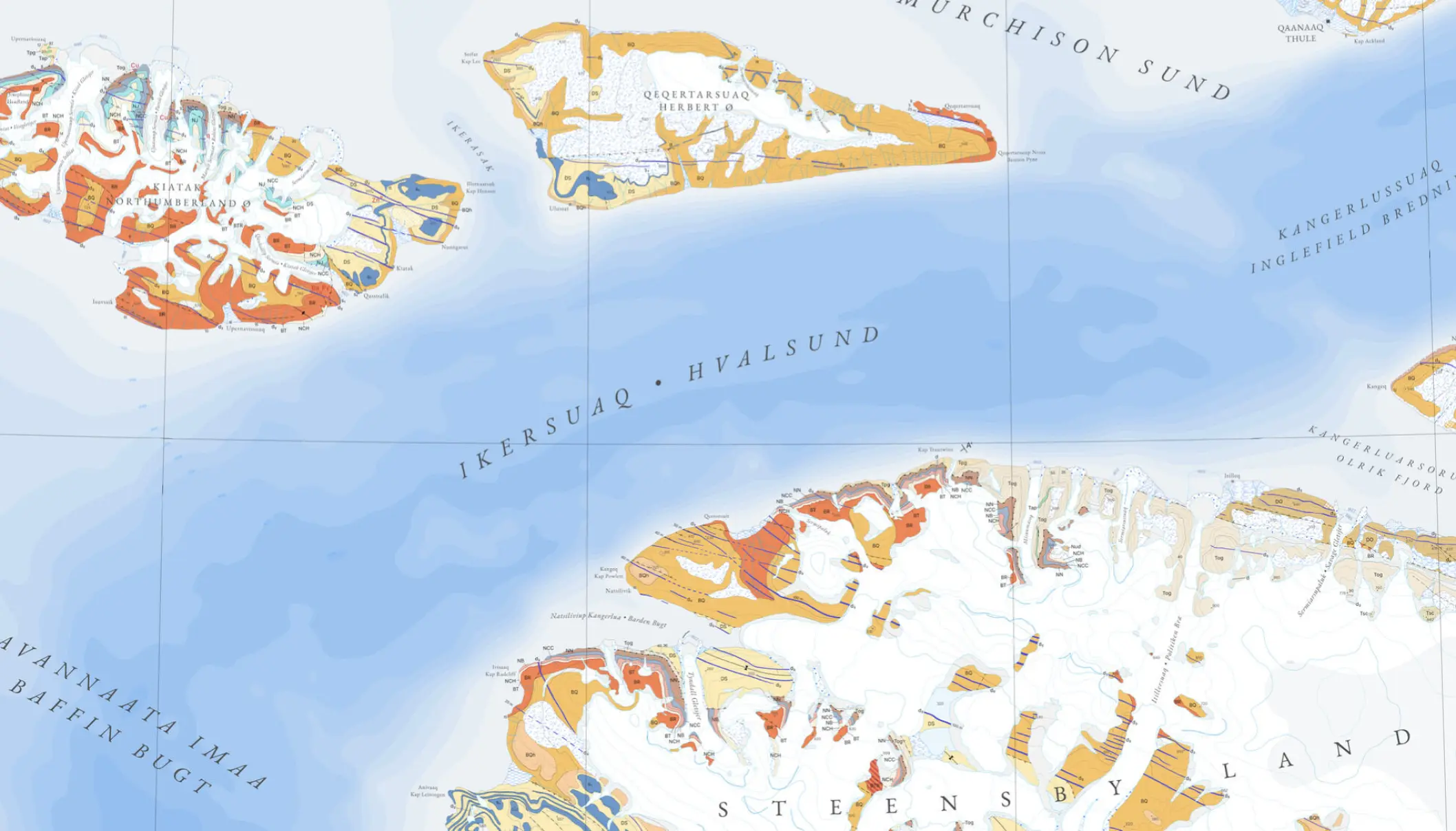
The so-called Thule district has now been mapped in a high-resolution version, based on decades of geological studies and fieldwork.
- The map brings together a very long research history into one coherent presentation and provides a significant boost in the understanding of the area's geological development, says senior researcher Thomas Find Kokfelt from the Geological Survey of Denmark and Greenland (GEUS) in a press release.
The mapped area contains some of Greenland's oldest rocks and is relevant in several contexts:
The geology in the area tells about how the Arctic came to look the way it does, and is therefore considered by the researchers to be a very special key area, where the geology spans a period of 2.5 billion years.
Many minerals
It is stated that the mapped area is known for occurrences of, among other things, copper, ilmenite and iron-containing sulfides, as well as potential for gold and other mineralizations.
The new Qaanaaq map is the third in a series of six that GEUS has and will publish. Together, the maps will "provide an unprecedentedly detailed picture of the geology of northwestern Greenland," states senior researcher Thomas Find Kokfelt.