Why should a business school teach about indigenous peoples’ rights?
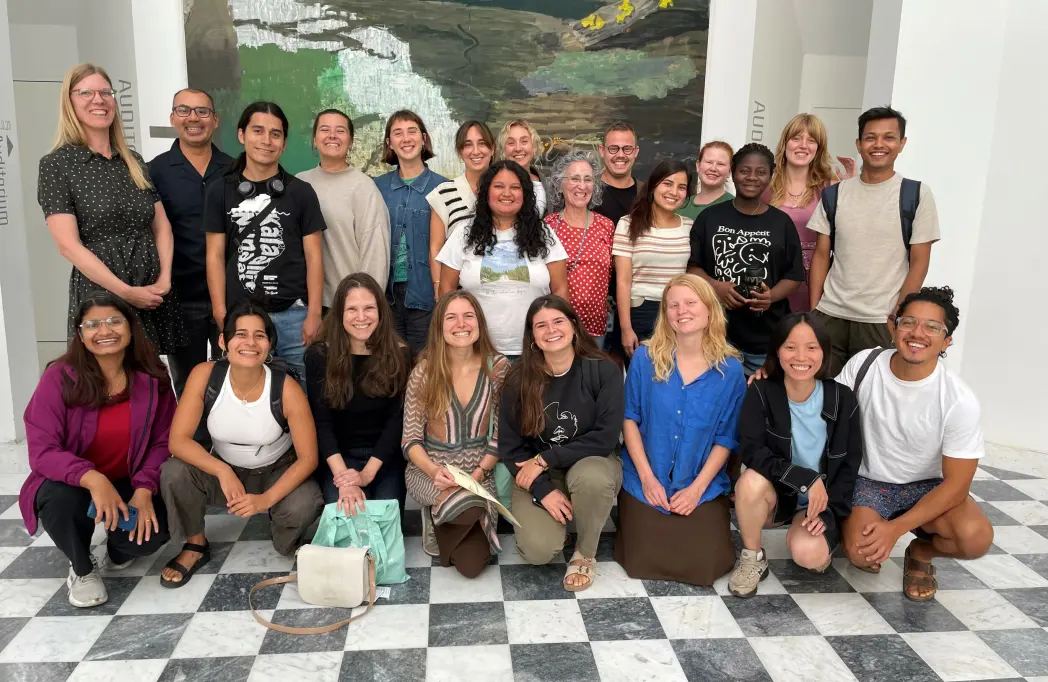
The question may seem surprising. Yet that is exactly what Copenhagen Business School (CBS) is doing when the university is holding a week-long course in August titled Indigenous Peoples’ Rights – What You Have to Know.
The course will take place from 24th to 28th of August and will bring together lecturers from all over the world – from Asia, Africa, Latin America, North America and Europe – with both indigenous and non-indigenous backgrounds. This is the second time that the course has been held.
The content ranges widely: from international legal principles and climate management to territorial conflicts, corporate responsibility and the protection of indigenous peoples’ knowledge and culture.
The course is sponsored by, among others, IWGIA (International Work Group for Indigenous Affairs), which in collaboration with CBS will give students a basic understanding of indigenous peoples rights – and of the dilemmas companies face when operating in areas where indigenous peoples live.
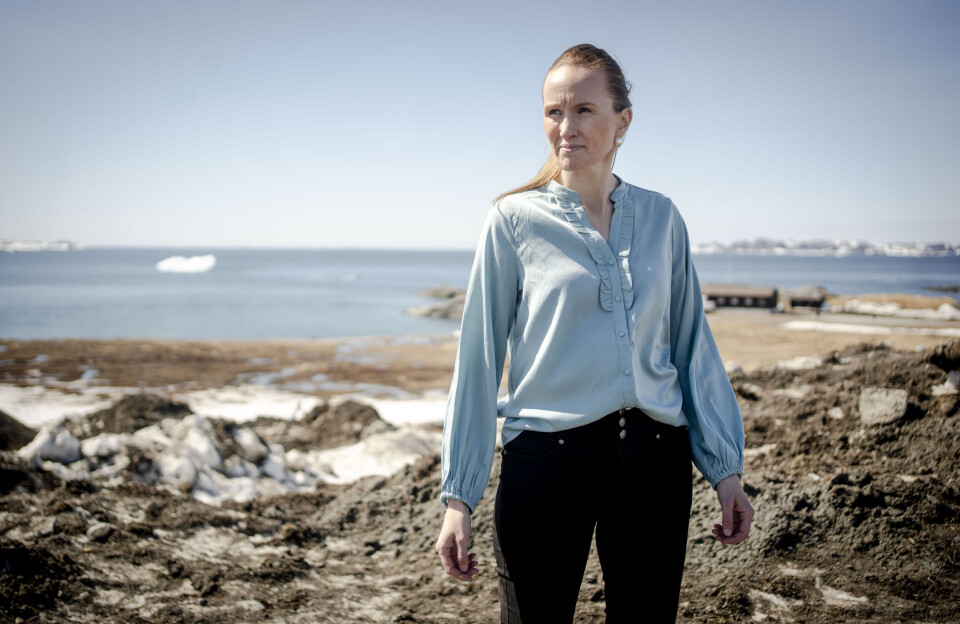
According to the organization's engagement advisor, Helle Løvstø Severinsen, the ambition is to reach students in time:
- The idea is to talk to students before they go out and make a career, so that they become aware that there are rights for indigenous peoples that companies must take into account, she says.
Companies face complex dilemmas
Behind the course is a growing realization: When companies operate in areas where indigenous peoples live or need the natural resources or space to maintain their culture, complex conflicts often arise – especially in connection with raw material extraction, climate projects and major investments in infrastructure and energy.
Projects that on paper are about growth and green transition can in practice have far-reaching consequences for local communities' way of life, culture and access to land and resources.
That is precisely why a central principle in the education is the so-called free, prior and informed consent.
The principle is rooted in international standards and implies that affected local communities should not only be heard, but should actually have the opportunity to understand and take a position on projects before decisions are made.
- It is about involving the people who will be affected in good time and in a way that they understand – linguistically and professionally – and being open about both the possibilities and the consequences, explains Helle Løvstø Severinsen.
For many companies, it is no longer enough to comply with national legislation. They are also expected to navigate a landscape of international rights, local considerations and ethical standards – and that understanding is precisely what the course is intended to give the students.
Greenland stands out
This year, Greenland is explicitly included in the program for the first time – although the form has not yet been finally determined.
This means that the course not only takes a global perspective on indigenous peoples' rights, but also includes concrete examples from Greenland.
At the same time, Greenland differs from many other places in the world. Here, indigenous peoples constitute the majority, and decisions are made politically through the Greenlandic Government, which creates a different dynamic than in countries where local groups often negotiate directly with companies.
According to Helle Løvstø Severinsen, the increased focus is related to Greenland's rise on the international agenda in recent years.
- Greenland is now playing a bigger role in the global conversation, and therefore it is also obvious to include it in the teaching, she says and continues
- It makes sense to work with concrete cases, and Greenland is a relevant place to start here.
According to the advisor, indigenous peoples from different countries can learn from each other.
- Indigenous people often face similar challenges, and there is strength in learning from each other, explains the advisor.
Interest is growing
The course is open to students from all Danish universities – and also to students from higher education in Greenland. However, the number of participants is limited, and although the course is free, transportation and accommodation must be paid for by the participants themselves.
Nevertheless, IWGIA is experiencing increasing interest.
- We don't necessarily have huge teams, but we can sense that there is growing curiosity. This is also due to the fact that we ourselves have become more outspoken, says Helle Løvstø Severinsen.
At the same time, Greenland has moved further up the international agenda in recent years, which is also reflected in the interest in the course.
- We can see that more people are interested in the Arctic and Greenlandic perspectives, and this also affects how we organize the teaching, she says.
Abonnementer
Sermitsiaq.gl - web artikler
- Adgang til alle artikler på Sermitsiaq.gl
- Pr. måned kr. 59.00
- Pr. år kr. 650.00
Sermitsiaq - E-avis
- Adgang til Sermitsiaq e-avis som udkommer hver fredag
- Adgang til alle artikler på Sermitsiaq.gl
- Pris pr. måned kr. 191
- Pris pr. år kr. 1.677
AG - Atuagagdliutit E-avis
- Adgang til AG - Atuagagdliutit e-avis som udkommer hver fredag
- Adgang til alle artikler på Sermitsiaq.gl
- Pris pr. måned kr. 191
- Pris pr. år kr. 1.677
Sermitsiaq.AG+
- Adgang til AG - Atuagagdliutit e-avis som udkommer hver fredag
- Adgang til Sermitsiaq e-avis som udkommer hver fredag
- Adgang til alle artikler på Sermitsiaq.gl
- Adgang til Arnanut e-magasin
- Adgang til Nutserisoq.gl
- Ved interesse send en mail til abonnement@sermitsiaq.gl
Kære Læser, Velkommen til Sermitsiaq.gl – din kilde til nyheder og kritisk journalistik fra Grønland. For at kunne fortsætte vores vigtige arbejde med at fremme den frie presse og levere dybdegående, kritisk journalistik, har vi indført betaling for udvalgte artikler. Dette tiltag hjælper os med at sikre kvaliteten af vores indhold og støtte vores dygtige journalister i deres arbejde med at bringe de vigtigste historier frem i lyset. Du kan få adgang til betalingsartiklerne fra kun kr. 59,- pr. måned. Det er nemt og enkelt at købe adgang – klik nedenfor for at komme i gang og få fuld adgang til vores eksklusive indhold. Tak for din forståelse og støtte. Dit bidrag hjælper os med at fortsætte vores mission om at levere uafhængig og kritisk journalistik til Grønland.