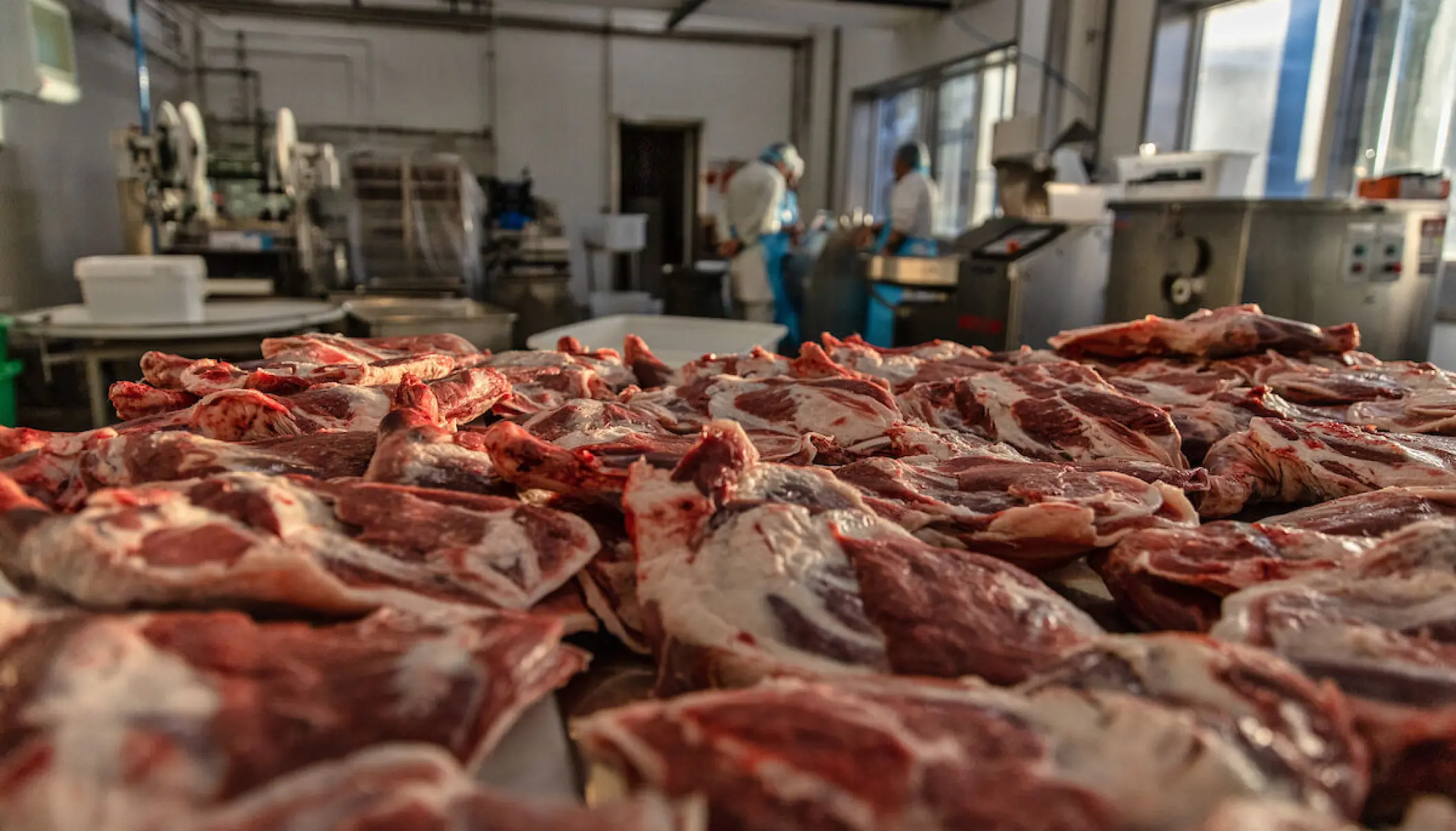
The Neqi slaughterhouse in Narsaq often encounters lambs or sheep that have black or dark livers. This has raised the question of whether this is due to pollution from mining exploration at Kvanefjeld (Kuannersuit).
Researchers now state that black livers have no connection to pollution.
No differences
"There were no differences in concentrations of fluoride, heavy metals, uranium, thorium, polonium, lead, etc., between black livers and normal livers. The measured concentrations reflect natural background levels and not pollution from mining activities," states the Greenlandic Ministry of the Interior, which has published the researchers' results.
It turns out that this is a known condition that is not contagious. Black livers have been detected in lambs and sheep in countries such as Australia, Norway and the Falkland Islands.
It is also stated that there is no radiation risk for people who eat lamb or sheep liver.
Black livers are discarded.
"The estimated radiation dose from consuming normal and black liver was low and below the internationally recommended safety value," it is stated.
Although it is safe to eat lamb and sheep livers from South Greenland from a chemical and radiation perspective, it is reported that these are always discarded at the slaughterhouse because the color deviates from normal.
The researchers cannot fully explain what causes the black livers, "but it is considered to be related to natural biological or nutritional factors - not to pollution."
Major research work
There is a great deal of research behind the study, which was initiated in 2021, and where data from more than 20,000 slaughtered sheep and lambs has been analyzed.
“Around 10.6% of all slaughtered lambs and sheep had black livers. Some herds had no animals with the condition, while others had a very high proportion (around 50%), suggesting that local or herd-specific factors are likely causes.”
Researchers from the universities of Gothenburg, Aarhus and Copenhagen, in collaboration with the veterinary authority in Greenland, have carried out the scientific study.