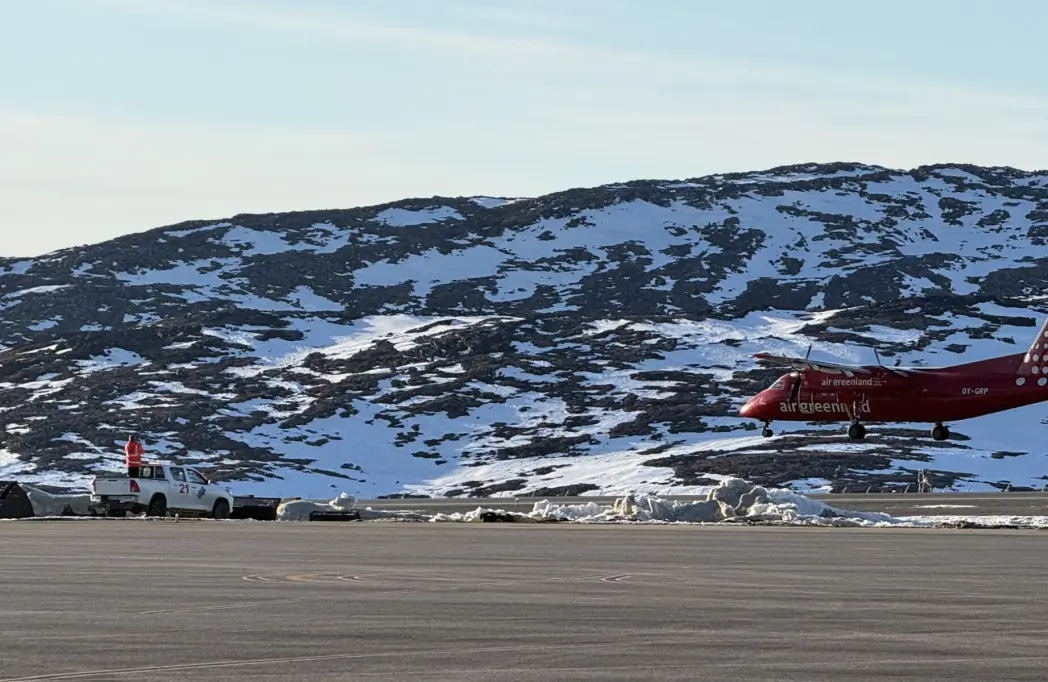
Greenland is helicopter country. Hardly anywhere else in the world have helicopters had such a significant impact on development.
Helicopters have been used everywhere. For research, for construction work and not least for transport in the years before the many airstrips along the West Coast were built. Modern Greenland is created by helicopters.
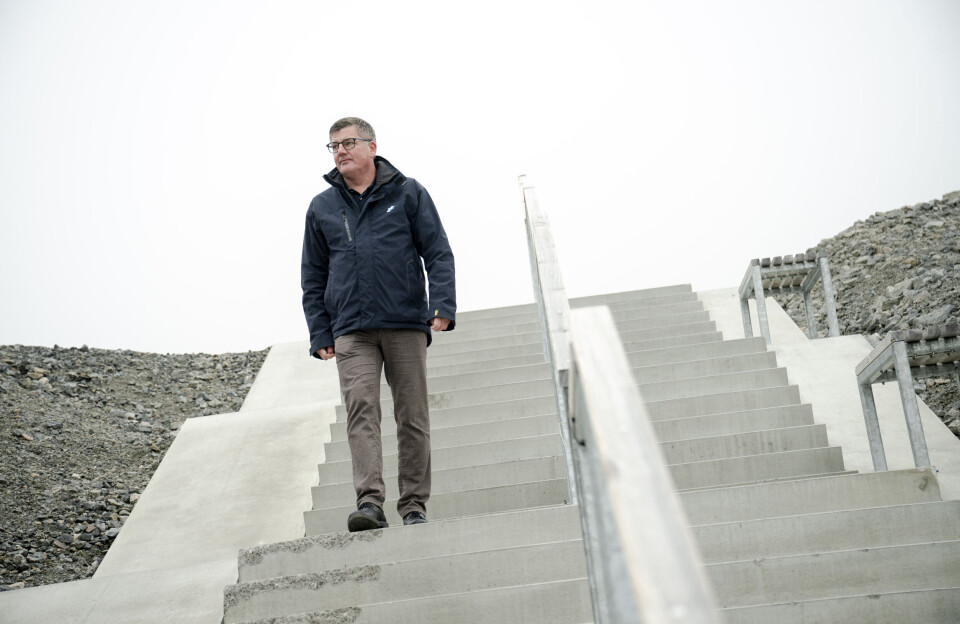
The first two Danish helicopters in Greenland were sent to Ittoqqortoormiit by the Air Force as early as 1953 – only three years after the Air Force saw the light of day in 1950. This is according to retired Brigadier General Steen Hartov, who is the Air Force's historical consultant. He has worked in the Air Force for over 45 years and has, among other things, been Chief of Staff in Air Tactical Command. Hartov is today a senior advisor in the Air Command.
Known from MASH
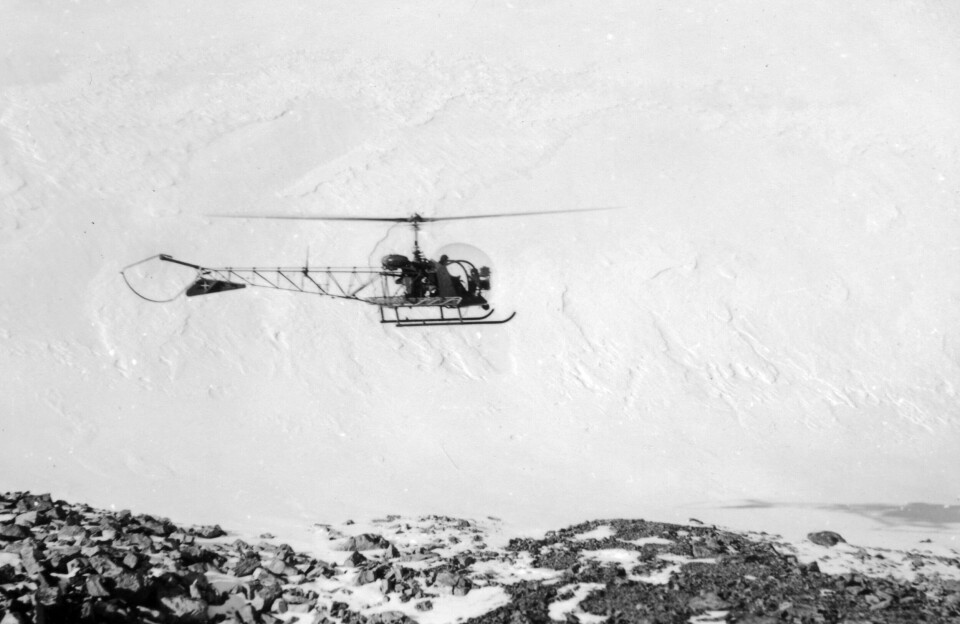
- In August 1952, the Air Force acquired its first helicopters so that it could gain experience with this type of aircraft. The helicopters were American Bell 47 D-1 helicopters, no. 891 and 892. Many people probably know the helicopter type from the TV series MASH, where they appear in large numbers as ambulance helicopters in the Korean War, which took place from 1950 to 1953, says Steen Hartov.
As early as January 1953, it was agreed that the Air Force would provide support with helicopters for the Geodetic Institute's surveys in the fjord area west of Ittoqqortoormiit. Before being sent to Greenland, the pilots were sent for training in the French Alps so that they could learn more about helicopter flying in mountainous areas – and then the trip went to Greenland as ship cargo. But before that, they had to acquire a new helicopter – no. 893 – when 891 crashed.
- Those were different times. The small Bell 47 helicopters were civilian helicopters without special military specifications intended for, among other things, field spraying – so they were an off-the-shelf item that could be acquired almost from day to day. Not like today, where acquiring weapons systems takes a long time, says Steen Hartov.
In the period between July and August 1953, the two helicopters flew around 200 hours with 300 landings around the entire Kangertittivaq fjord complex and dropped surveyors at altitudes of up to 2,000 meters.

Saved many years of research
- Together with the corresponding operations in the summer of 1954, it is estimated that the surveyors completed surveys in two summer seasons that, with traditional transport by boat and mountain climbing, would have taken eight to ten seasons.
- The rapid implementation and deployment of the Bell 47 D-1 helicopters in Greenland illustrates the enormous readiness for change that the establishment of the Air Force in the early years required. Pilots and crew had to quickly acquire the necessary skills to build up the guard. Squadron 721 had considerable experience with flights in Greenland with fixed-wing aircraft, but helicopters were something new, so they had to build up experience in mountain flying, while supporting the Geodetic Institute, Steen Hartov explained last year in the Danish Armed Forces' staff magazine Honnør in connection with the Air Force's 75th anniversary.
Then came the S-61
The use of helicopters in Greenland really took off in the sixties, when Grønlandsfly (Air Greenland) received the first two S-61 helicopters in 1965, becoming one of the world's first airlines to use helicopters for passenger flights. It later acquired five more S-61s.
At the same time that Grønlandsfly acquired the S-61, the Danish Air Force also acquired the helicopter type, which was primarily used for sea rescue and ambulance flights.
- The Air Force's-61 was also in Greenland on two occasions. First in the summer of 1966, when a helicopter visited the naval station in Grønnedal to fly personnel to Narsarsuaq, and second in 1978, when an S-61 was on a longer stay in Northeast Greenland to lay out depots for Sirius and deliver fuel to Station North.

The Danish Armed Forces have also used helicopters extensively aboard the inspection ships in Greenland. First with the Alouette, then the Lynx and finally with the current Seahawk.
In the summer of 2025, the Air Force had two large Merlin EH-101 helicopters stationed in Nuuk for two periods in connection with large Arctic military exercises. The Merlin replaced the Air Force's-61 in 2010 and is used in addition to being a rescue helicopter, for troop transport and deployment of soldiers in the terrain.
Abonnementer
Sermitsiaq.gl - web artikler
- Adgang til alle artikler på Sermitsiaq.gl
- Pr. måned kr. 59.00
- Pr. år kr. 650.00
Sermitsiaq - E-avis
- Adgang til Sermitsiaq e-avis som udkommer hver fredag
- Adgang til alle artikler på Sermitsiaq.gl
- Pris pr. måned kr. 191
- Pris pr. år kr. 1.677
AG - Atuagagdliutit E-avis
- Adgang til AG - Atuagagdliutit e-avis som udkommer hver onsdag
- Adgang til alle artikler på Sermitsiaq.gl
- Pris pr. måned kr. 191
- Pris pr. år kr. 1.677
Sermitsiaq.AG+
- Adgang til AG - Atuagagdliutit e-avis som udkommer hver onsdag
- Adgang til Sermitsiaq e-avis som udkommer hver fredag
- Adgang til alle artikler på Sermitsiaq.gl
- Adgang til Arnanut e-magasin
- Adgang til Nutserisoq.gl
- Ved interesse send en mail til abonnement@sermitsiaq.gl
Kære Læser, Velkommen til Sermitsiaq.gl – din kilde til nyheder og kritisk journalistik fra Grønland. For at kunne fortsætte vores vigtige arbejde med at fremme den frie presse og levere dybdegående, kritisk journalistik, har vi indført betaling for udvalgte artikler. Dette tiltag hjælper os med at sikre kvaliteten af vores indhold og støtte vores dygtige journalister i deres arbejde med at bringe de vigtigste historier frem i lyset. Du kan få adgang til betalingsartiklerne fra kun kr. 59,- pr. måned. Det er nemt og enkelt at købe adgang – klik nedenfor for at komme i gang og få fuld adgang til vores eksklusive indhold. Tak for din forståelse og støtte. Dit bidrag hjælper os med at fortsætte vores mission om at levere uafhængig og kritisk journalistik til Grønland.