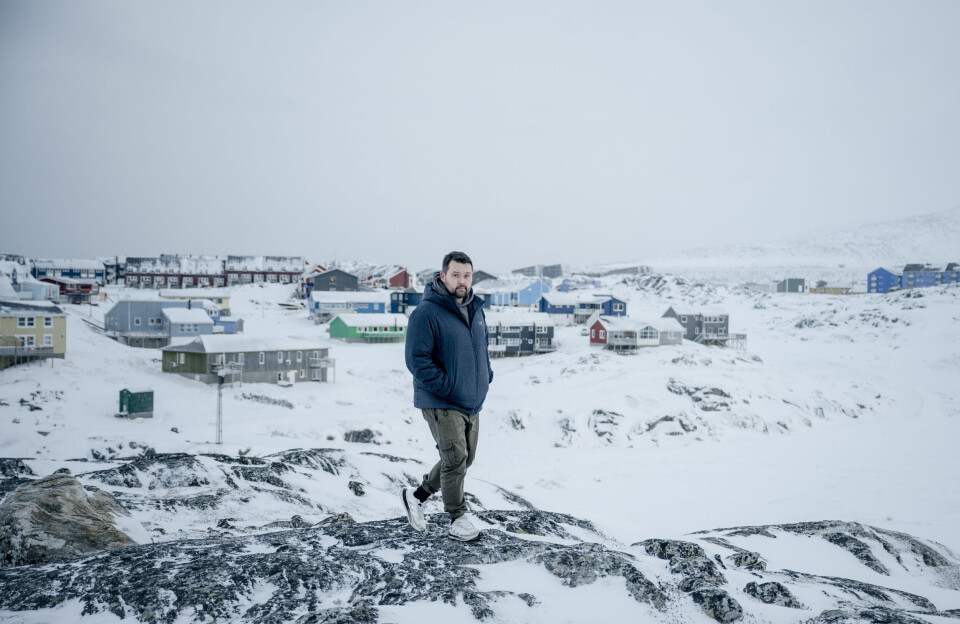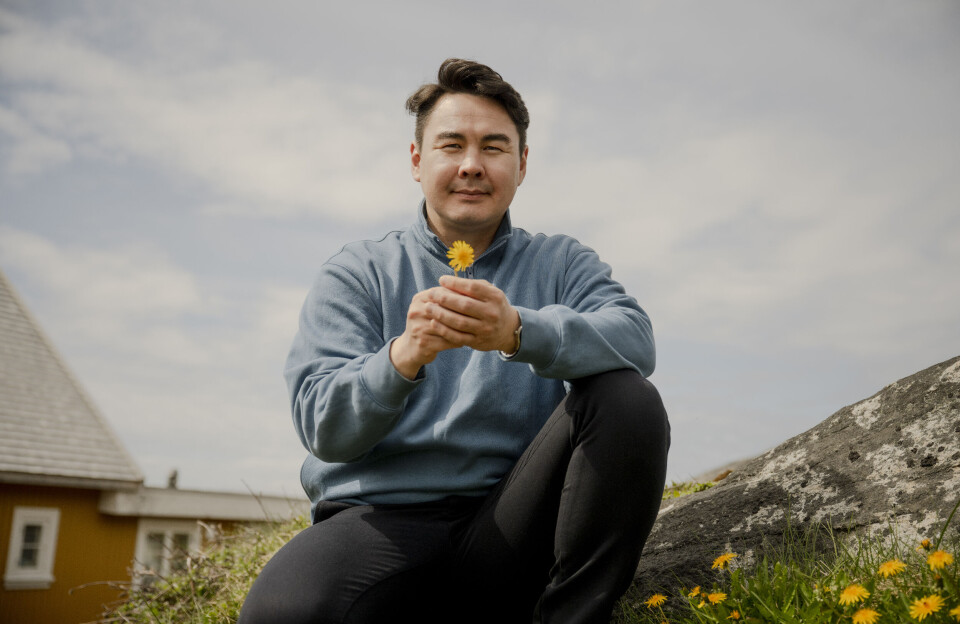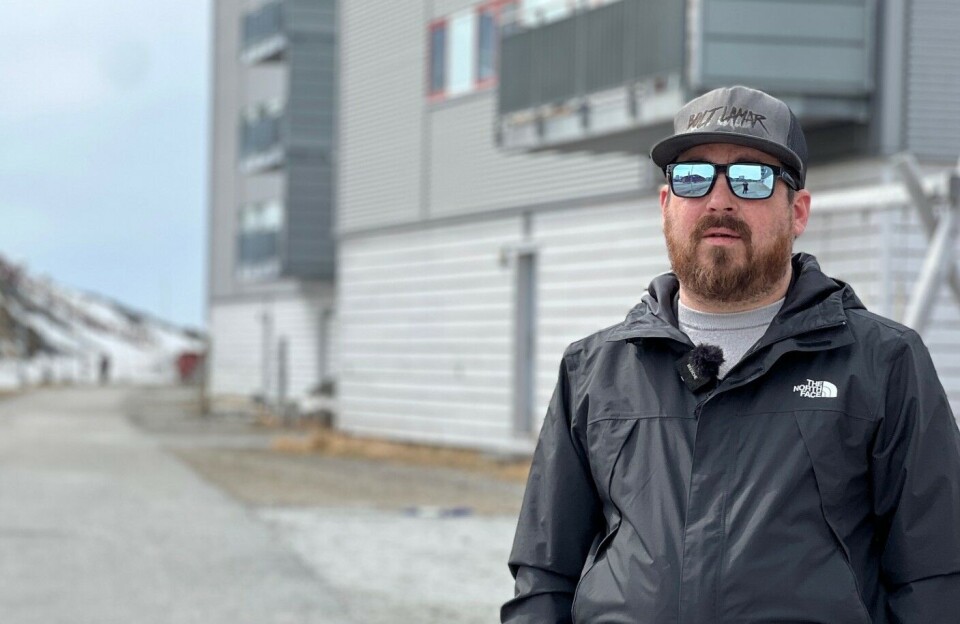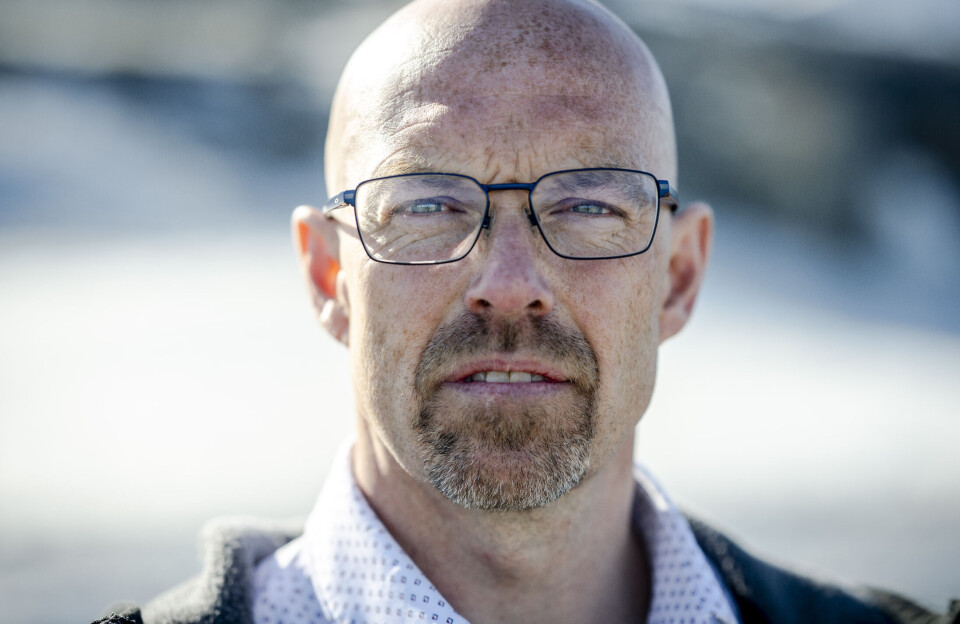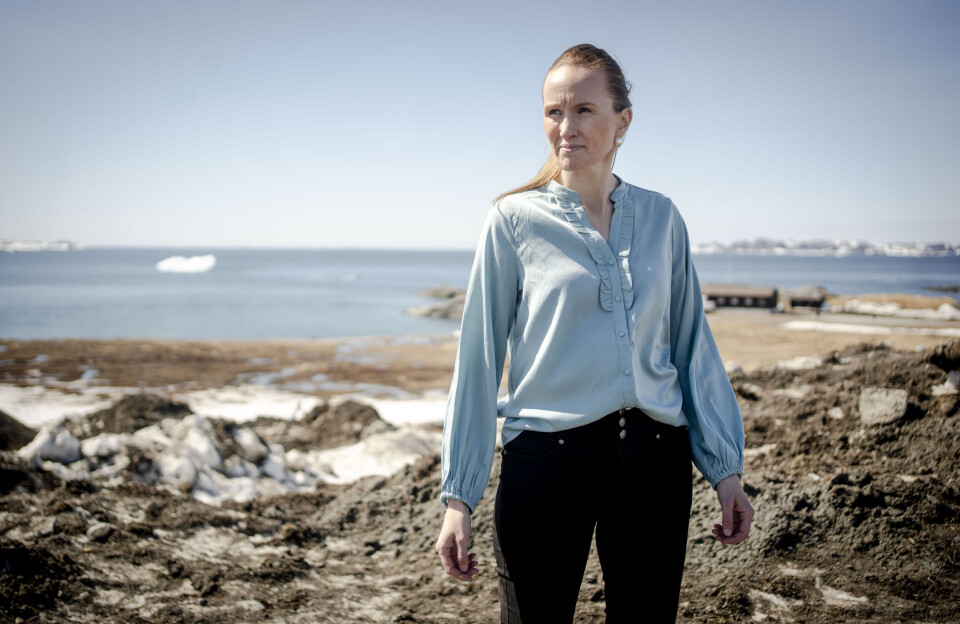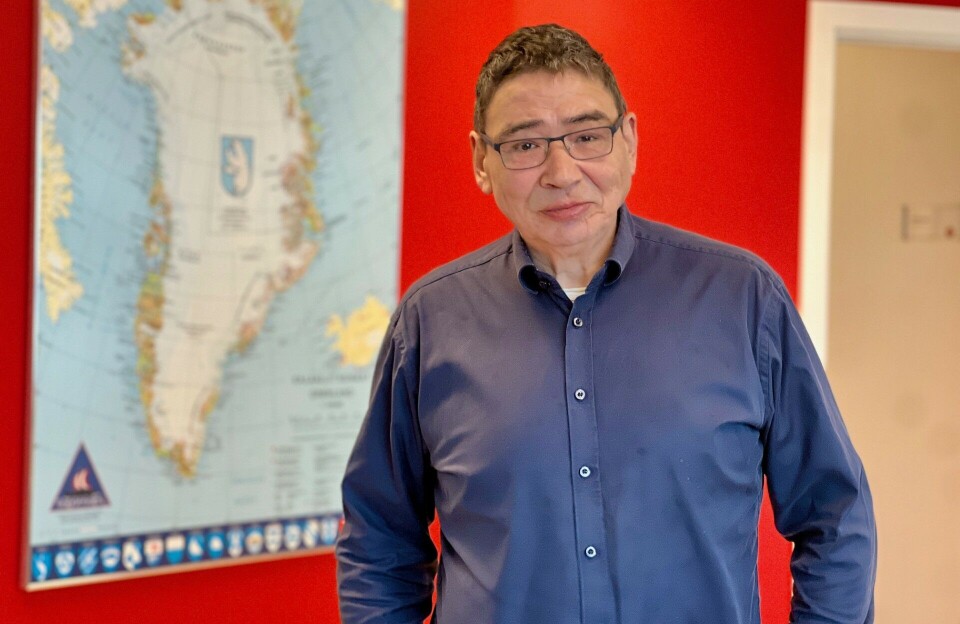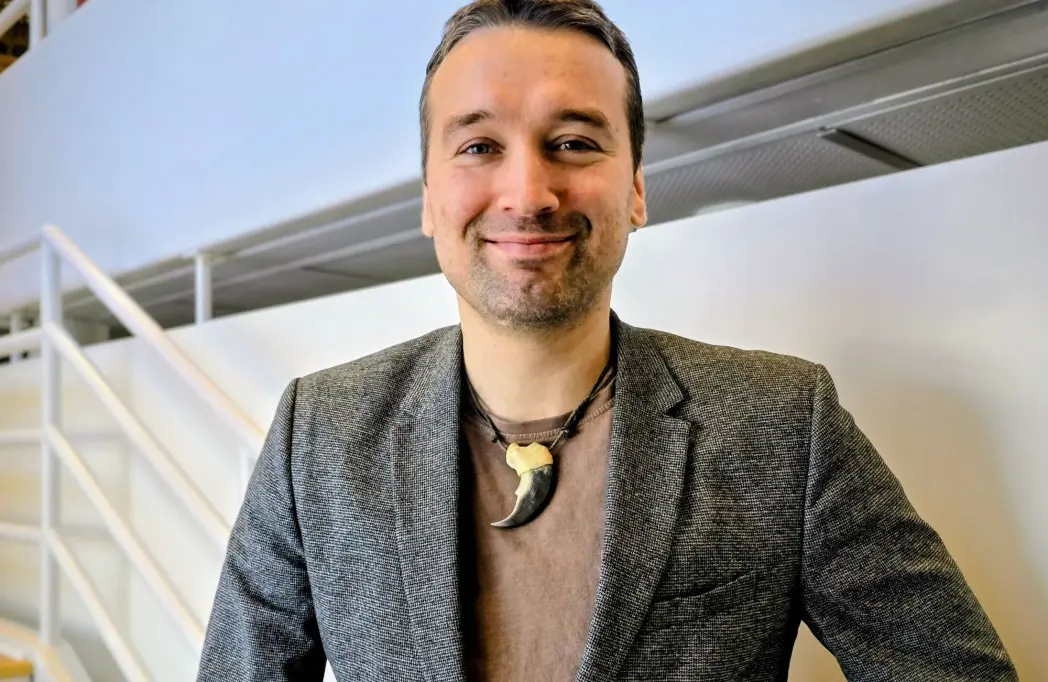

On Friday, Naleraq pulled its election rabbit out of its hat and presented Qarsoq Høegh-Dam as a candidate for the Folketing. On March 24, voters will decide whether the party's 36-year-old political advisor will succeed his sister Aki-Matilda as Naleraq's member of the Folketing.
Like several other candidates, he feels called to serve society in complicated and hectic times for Greenland. Including the relationship with Denmark and the Danish government.
– The essence lies in the fact that power must go to Greenland. No one should abuse the power from Denmark, emphasizes Qarsoq Høegh-Dam.
Sermitsiaq visited Naleraq in Inatsisartut on the day of Høegh-Dam's candidacy and is trying to get into what Greenland will specifically get with a vote for Naleraq next week.
– The Danish areas of responsibility in Greenland are lagging. It must be the ambition that we don't have to talk about it so much when we have to go to the polls again in four years, Qarsoq Høegh-Dam elaborates.
What areas of responsibility?
– Look at the waiting time in the judicial system. I experienced it myself with my case back then … it took four years to process it. Something like that still happens today.
Qarsoq Høegh-Dam received a hashdom in 2015, which six years later prevented him from taking a seat in Inatsisartut, then for Siumut. He continues:
– Police and courts are Denmark's territory and Denmark's responsibility. We also have a prison that is rotten and lacks capacity, and that costs society dearly. There has been talk of equal pay in the police since I was born.
Can Greenland take over responsibility for the whole thing itself?
– Yes, we want to do that too, but Denmark must modernize the areas before we take over. There has been failure for decades, says the Naleraq politician.
Down with the soldiers
The idea was to interview Qarsoq Høegh-Dam based on the party's election program. It turns out to be surprisingly difficult to get one like that. Høegh-Dam suggests that we just name an area. The military seems like an obvious choice, and the answer comes immediately:
– We need to get the soldiers out of Nuuk and other inhabited areas, and they must of course also respect hunting areas. Our country and society must not be turned into targets. That is Naleraq's position, and it is also a matter close to my heart.
However, Qarsoq Høegh-Dam is more open to the military's presence in Kangerlussuaq, which has historically been designed for that purpose and also serves other community purposes.
But a naval dock for the military in Nuuk or similar places is far beyond the bounds of Naleraq. The military is fundamentally anti-Kalaalite, emphasizes Høegh-Dam.
– Our rifles are only used for hunting, he says.
The Danish soldiers are there to protect Nuuk and Greenland. So maybe you should accept that they are here after all?
– No, I cannot accept this militarization on the part of Denmark. They are in Nuuk because it makes it easier to attract labor from Denmark. But Nuuk should not be made a military target. It will not be any longer.
A progress after all
A naval quay for military vessels from Denmark and Europe is an expression of some of the changes in society that Naleraq is against. But at the same time, much else is happening in the present that could not have been predicted just a year and a half ago.
Towards the end of the interview, we try to find out whether Høegh-Dam will appreciate some other Danish decisions in the past:
Would you acknowledge that the Danish government has actually met several Greenlandic demands recently – for example in relation to the IUD case and the parental competence test, more money for the justice system in Greenland and so on?
Qarsoq Høegh-Dam's answer starts out quite skeptical and later softens a bit.
– Yes, we have had ceremonies and apologies with the Prime Minister and the Chairman of the National Government, but have people received their money yet?
– And yes, Greenlanders in Denmark have rights, but still a child is torn from a family because the person is not considered Greenlandic enough, says Høegh-Dam.
Surely there are still some things that are moving in the right direction, from your point of view?
– It is true that some things have happened, and that is good. But I do not buy this whole narrative that because some things are getting better, we should be satisfied with everything. Partial justice is not enough for Greenland. It must be justice for everyone, says Qarsoq Høegh-Dam.