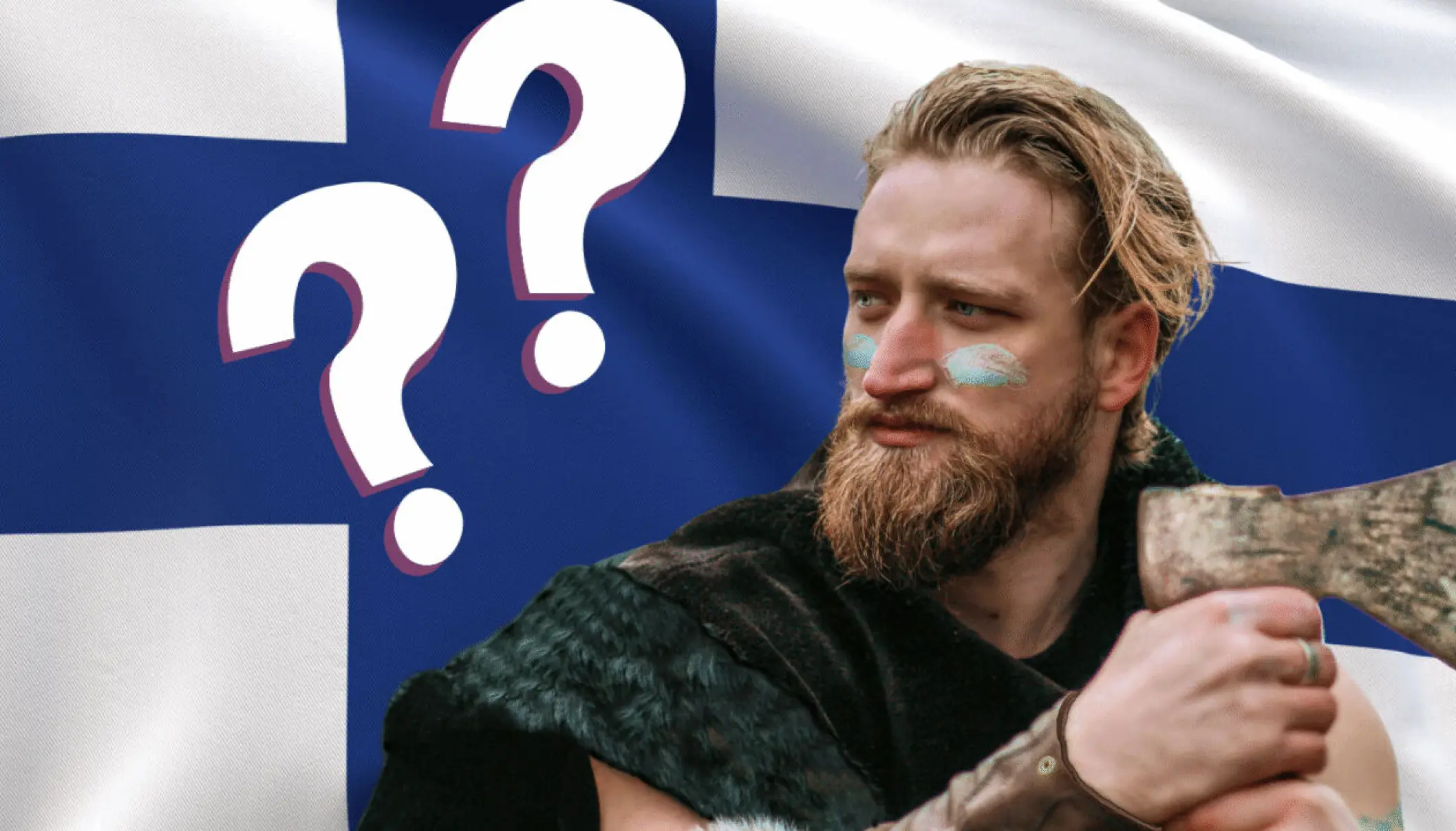
What is the first thing that comes to mind when you think of Vikings?
For many, it may be images of longships cutting through the waves of the North Sea. Warriors landing in England to plunder, kidnap and kill. Expeditions along the west coast of Europe or long journeys to the Faroe Islands, Iceland and Greenland.
What all of these things have in common is that they are typically associated with Danish and Norwegian Vikings, who had direct access to the sea to the west.
But what about the Vikings who lived further east? Videnskab.dk reader Finn wondered about this, and he therefore wrote in with the question:
"Why do we never hear about Vikings from Finland?"
We have taken the question to Søren Sindbæk, who is an archaeologist, researcher in the Viking Age and vice-dean at Aarhus University.
He explains that the answer to Finn's question actually has less to do with the world of the Viking Age - and more to do with the world we live in today. We'll come back to that.
Shared language and culture
Let's start by establishing: There were Vikings in Finland.
In fact, a Viking who had traveled all the way from Iceland, Denmark or Norway would be able to arrive in Finland and recognize many of the population as part of the same culture, explains Søren Sindbæk.
And the difference was actually not as big as one might think, he explains:
- The Finnish and Swedish Vikings were, like the Danish and Norwegian Vikings, farmers from small villages and hamlets, but who were also warriors and traders. In addition, the gods here were also called Thor, Odin and Freya, says Søren Sindbæk.
- They were dependent on trade with other areas for many things, and because of the geography, much of their communication was tied up with sailing. It was a warrior society where it was understood that it was honorable, especially for young men, to go on expeditions to win gold and glory.
The relationship would also be visible to the naked eye, the archaeologist explains. For example, jewelry in the so-called Borre style, which is strongly associated with the aesthetics of the Viking Age, has been found in Denmark, Norway and Iceland, as well as in Sweden and Finland.

It would also have been possible to speak to each other despite the distance. In the Viking Age, the Nordic languages were more similar than they are today. Back then, many spoke what we call Danish, Søren Sindbæk explains further:
- Finnish is a very different language than the other Nordic languages, but just like today, many of the Finnish Vikings would also have known Swedish, he says.
- Vikings like Harald Hårderåde could have gone all the way from Ribe to Lake Ladoga and had a conversation about fur hunting or silver trading with the locals without any major problems.

Not evenly distributed who we hear about
And so back to Finn's question: Why do we never hear about the Finnish Vikings?
The answer is that we live in an Anglo-American world, explains Søren Sindbæk - that is, in a time when what is given attention in documentary programs, drama series and web media is largely determined by countries like Great Britain and the USA.
Therefore, the Vikings we hear about are also those who went out into the Atlantic - to the British Isles, Iceland, the Faroe Islands, Greenland and Vinland, as the North American east coast was called in the time of the Vikings.
These Vikings were obviously those who had coasts facing the Atlantic Ocean, which means Denmark and Norway.
- So, for example, if you find a Viking grave in England or Denmark, it can be tied to the stories that many people already know about the Vikings, and therefore the find will also receive more attention, says Søren Sindbæk.
- On the other hand, Viking finds from Finland - and Sweden, for that matter - are often overlooked on the international stage.
More than raids
And that's a shame, the archaeologist believes.
Firstly, because the Anglocentric perspective has painted a picture of the Vikings as a people who primarily plundered, kidnapped and destroyed - because that is, among other things, what they did in England.
- Plunder is part of the Vikings' history, but in reality they were much more than that, says Søren Sindbæk.
- The Vikings founded kingdoms and built large ringforts - and they were fantastic shipbuilders and skilled traders. We know that the Finnish Vikings had a large fur trade, and that their trade connections extended all the way to the Middle East.
Finnish finds are located outside Finland
In addition, many exciting finds from the Viking Age are still being made today in both Finland and Sweden, which many people have never heard of, says Søren Sindbæk:
- If you perhaps ignore Birka, you hear almost nothing about the Viking Age in Sweden in the media, says the archaeologist.
Birka was a trading town on the Swedish island of Björkö that flourished from around 750 to 950 AD.

It is known for its many spectacular tombs. The city was an important meeting place in the Viking Age, where trade routes from the Baltic Sea area, Russia and the North Sea intersected.

- On the other hand, for example, Aska-Hallen in Sweden has not received much attention, even though in recent years the large hall has been excavated and a lot of small gold figures have been found, which indicates that it was one of the most powerful places in Sweden at this time.
In Finland, it also plays a role that many areas that were culturally Finnish in the Viking Age are today outside the country's borders:
- If you look at historical Finland, a lot points to the area around Lake Ladoga, including the trading town of Staraya Ladoga. It was one of the major trading centers in the Viking world, on a par with Birka, says Søren Sindbæk.
- The area is Russian today, and for good reasons it is difficult to get there and do archaeological excavations. Therefore, much of the history is still hidden in the ground, he concludes.
Abonnementer
Sermitsiaq.gl - web artikler
- Adgang til alle artikler på Sermitsiaq.gl
- Pr. måned kr. 59.00
- Pr. år kr. 650.00
Sermitsiaq - E-avis
- Adgang til Sermitsiaq e-avis som udkommer hver fredag
- Adgang til alle artikler på Sermitsiaq.gl
- Pris pr. måned kr. 191
- Pris pr. år kr. 1.677
AG - Atuagagdliutit E-avis
- Adgang til AG - Atuagagdliutit e-avis som udkommer hver onsdag
- Adgang til alle artikler på Sermitsiaq.gl
- Pris pr. måned kr. 191
- Pris pr. år kr. 1.677
Sermitsiaq.AG+
- Adgang til AG - Atuagagdliutit e-avis som udkommer hver onsdag
- Adgang til Sermitsiaq e-avis som udkommer hver fredag
- Adgang til alle artikler på Sermitsiaq.gl
- Adgang til Arnanut e-magasin
- Adgang til Nutserisoq.gl
- Ved interesse send en mail til abonnement@sermitsiaq.gl
Kære Læser, Velkommen til Sermitsiaq.gl – din kilde til nyheder og kritisk journalistik fra Grønland. For at kunne fortsætte vores vigtige arbejde med at fremme den frie presse og levere dybdegående, kritisk journalistik, har vi indført betaling for udvalgte artikler. Dette tiltag hjælper os med at sikre kvaliteten af vores indhold og støtte vores dygtige journalister i deres arbejde med at bringe de vigtigste historier frem i lyset. Du kan få adgang til betalingsartiklerne fra kun kr. 59,- pr. måned. Det er nemt og enkelt at købe adgang – klik nedenfor for at komme i gang og få fuld adgang til vores eksklusive indhold. Tak for din forståelse og støtte. Dit bidrag hjælper os med at fortsætte vores mission om at levere uafhængig og kritisk journalistik til Grønland.