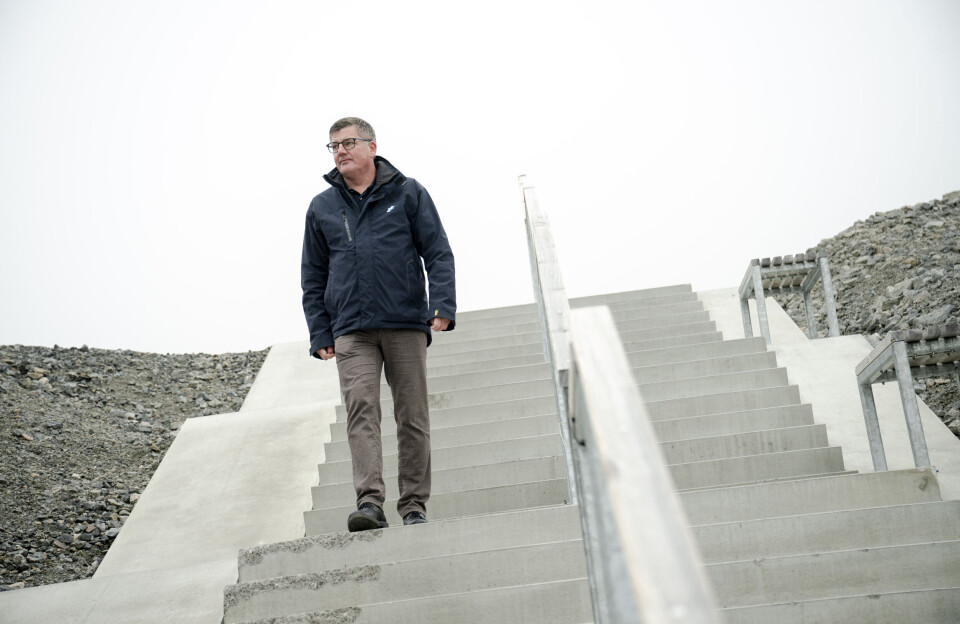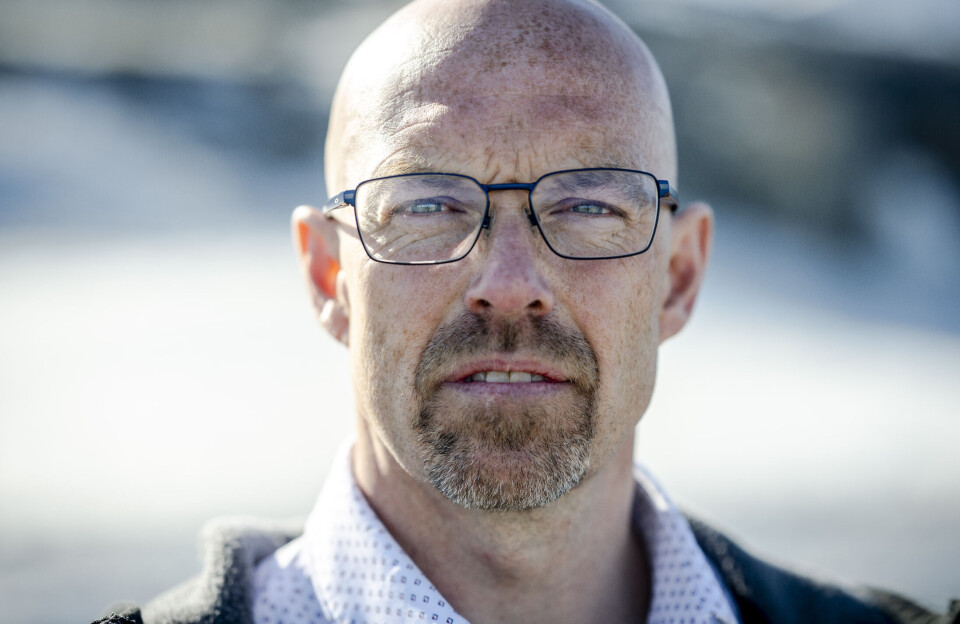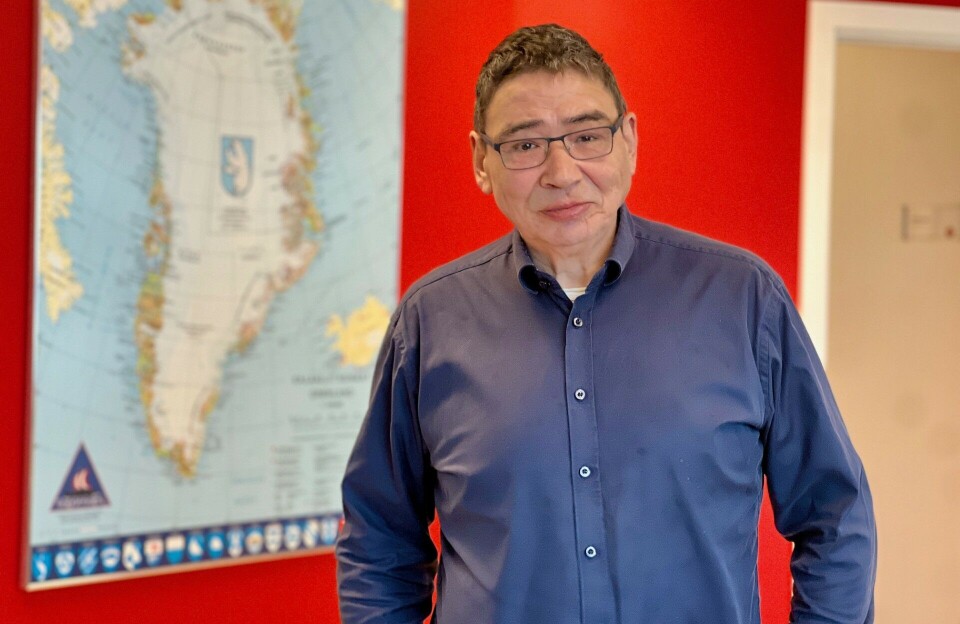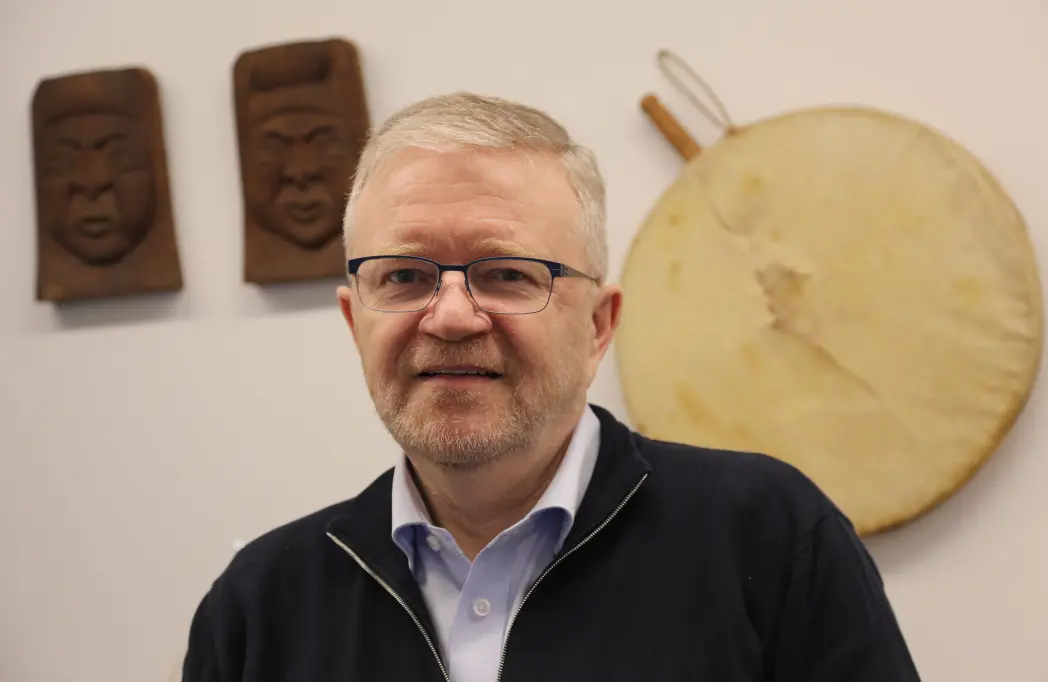
The yellow building of the Ministry of Foreign Affairs at Asiatisk Plads in Copenhagen not only houses the employees of the Ministry of Foreign Affairs and the Danish Minister of Foreign Affairs, but also the Kingdom's Arctic Ambassador Kenneth Høegh, who has just returned to Denmark after 14 days at the Ministry of Foreign Affairs in Nuuk.
– I have an office in both places, and divide my time between Greenland and Denmark. In addition, I spend time in Tromsø, which is the permanent secretariat of the Arctic Council, or I attend meetings and conferences abroad, says Kenneth Høegh, who was appointed Arctic ambassador for the kingdom a year ago, after a lengthy discussion between Greenland and Denmark about who should fill the position.
From agricultural consultant to top diplomat
Before Kenneth Høegh was appointed Arctic ambassador, the job was held by career diplomats from the Danish foreign service. That changed with Kenneth Høegh, who has been described by Naalakkersuisoq's Minister for Foreign Affairs Vivian Motzfeldt as "a unifying figure who knows the Arctic well, which is important in these challenging times".
Born and raised in Narsaq and with a Master's degree in agricultural science from the University of Copenhagen, this may not sound like the classic path to a role as a top diplomat. But along the way, the career took shape for Kenneth Høegh, who started as an agricultural advisor for the self-government within South Greenland's agriculture and later as an envoy for the Ministry of Foreign Affairs (Danida) to Nepal, Bangladesh and Vietnam until he returned to South Greenland in 2014 - first as a business developer and after a few years as deputy municipal director in the Municipality of Kujalleq.
It was from here that Kenneth Høegh was brought to Naalakkersuisut in 2018, where a profile with a foreign affairs as well as agricultural background was sought. Kenneth Høegh initially worked as a department head and later as head of representation in Washington.
The Greenlandic imprint
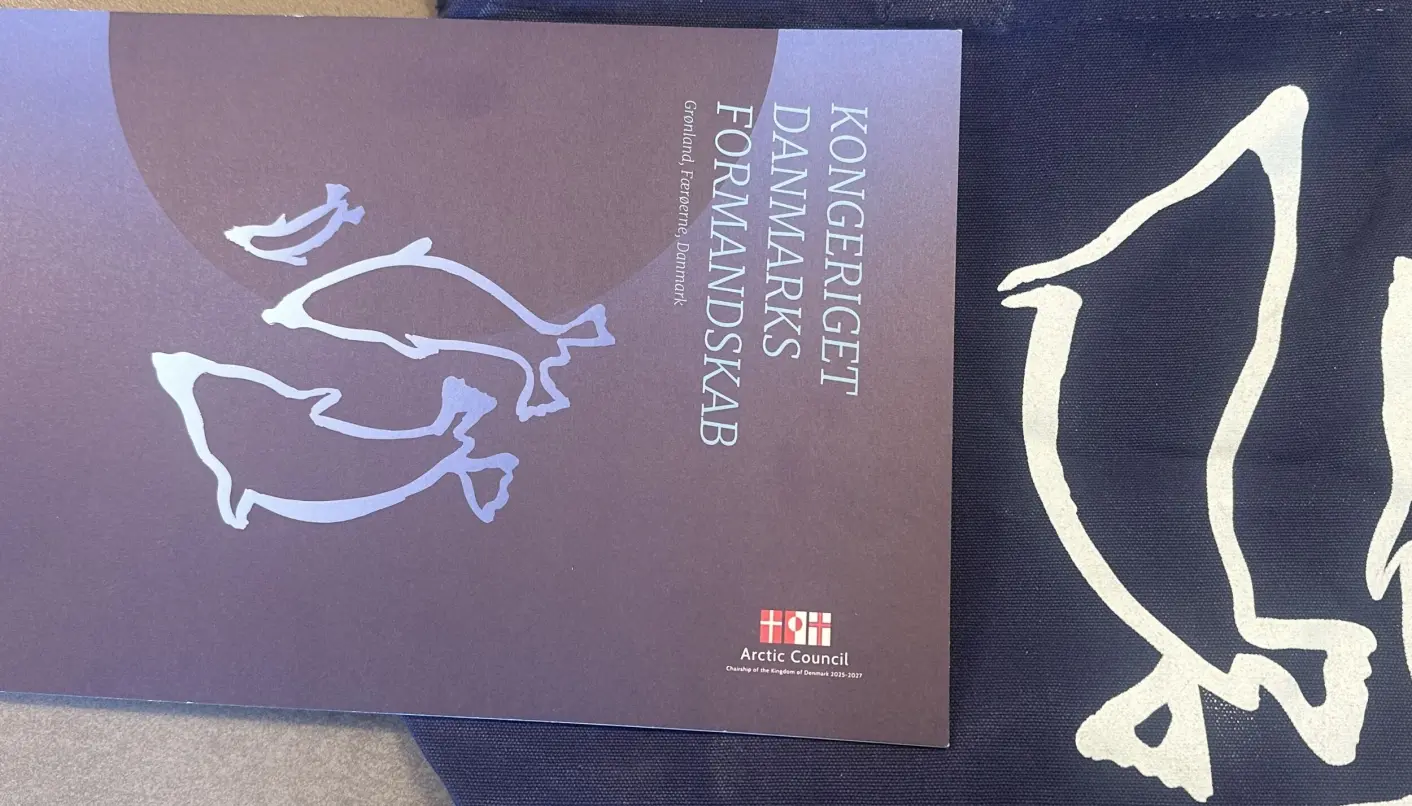
Kenneth Høegh opens the cupboard in his office and takes out a dark blue bag and a leaflet printed on the occasion of the Kingdom's chairmanship of the Arctic Council from 2025-2027. On the outside is the chairmanship's special logo - The Three Seals - created by Greenlandic artist Miki Jacobsen.
The logo, created with brush and ink, encapsulates in many ways the life and challenges of indigenous peoples and communities in the Arctic.
It also symbolizes the Arctic Council's priorities: to ensure sustainable economic development, support solutions in relation to energy transition, ensure effective management of the marine environment and address the consequences of climate change and changes in biodiversity.
– I think it is a very exciting task that we are in the middle of. The Kingdom of Denmark holds the chairmanship of the Arctic Council, and there is agreement to focus on sustainable business development and energy transition in the Arctic, which has been a Greenlandic wish for a long time, says Kenneth Høegh, who directs the chairmanship together with a team of competent employees in both the Ministry of Foreign Affairs, the Ministry of Foreign Affairs in Nuuk, the Faroese Ministry of Foreign Affairs and, not least, the Arctic Council's secretariat in Tromsø.
Stabilizing factor in the Arctic
The Arctic Council can celebrate its 30th anniversary in September. The role as a stabilizing and cooperating factor in the Arctic has not become less important over the years. On the contrary. New trade routes, increased focus on natural resources and current great power politics mean that it is extra important that the eight countries in the Arctic stick together and better understand each other.
– There is a narrative that the Arctic Council is not functioning. This is not true, because although some of the political meetings have been paused in protest against Russia's invasion of Ukraine, work in the six working groups has continued unabated with participation from all eight member states and the organizations representing indigenous peoples in the Arctic. The working groups are continuously defining new projects and exchanging experiences, for example on environmental monitoring in the broadest sense and social and business development. This form of knowledge sharing and inspiration across the Arctic – from north to north – is very important these years. I believe that Greenland with the new airports and Sikuki in Nuuk can develop into an important infrastructure hub in the northeastern part of the Arctic, and in this way contribute to binding the Arctic countries closer together, says Kenneth Høegh, who believes that there is a responsiveness and respect about Greenland right now.
– The Arctic is our life. It is my life. We know it inside and out, and that is being listened to. This gives Greenland some opportunities to shape the debate and cooperation.
Conferences in Greenland
Under the auspices of the presidency, Nuuk will be the host city for a major biodiversity conference in 2027, and there are also plans for a workshop on economic development in the Arctic.
Finally, there are plans for a youth conference in Greenland in February 2027, which will bring together around 300 young people from all over the Arctic with the aim of learning from each other and focusing on the conditions of young people.
– Exchanging knowledge makes us smarter and more resilient. We learn from each other and continuously expand cooperation. In this regard, the Arctic Council plays a crucial role as a stabilizing factor in difficult times.
The article is sponsored by Greenland Business.