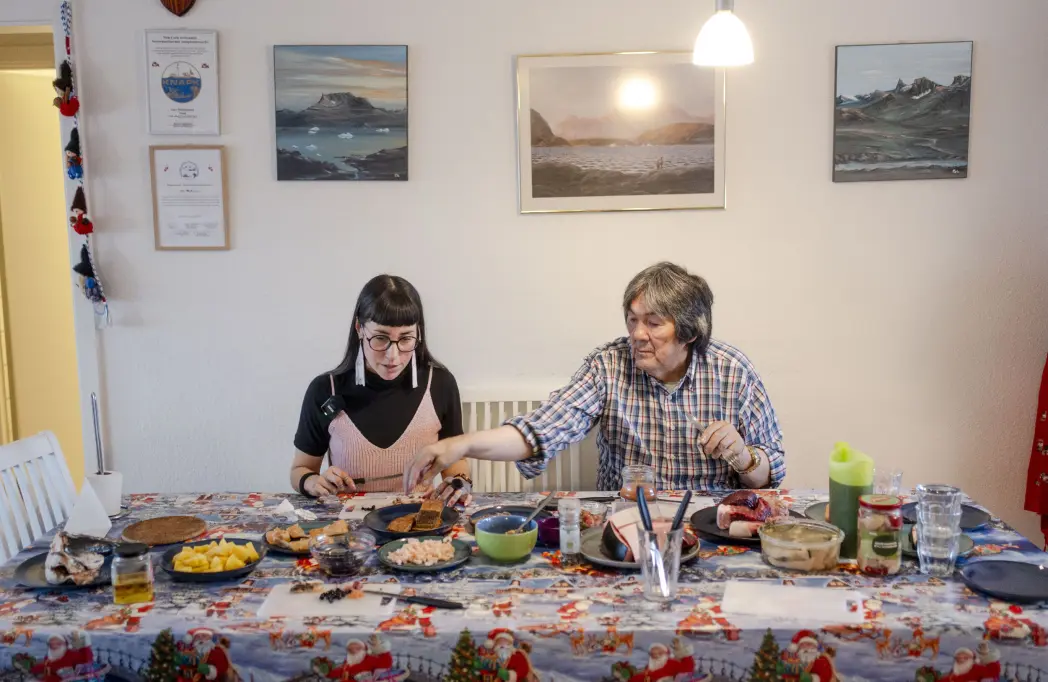
Smoked salmon, herring whips, seal intestines and blubber. The smell of Greenlandic food fills the entire room. It feels homely and nostalgic – like a place you've been before.
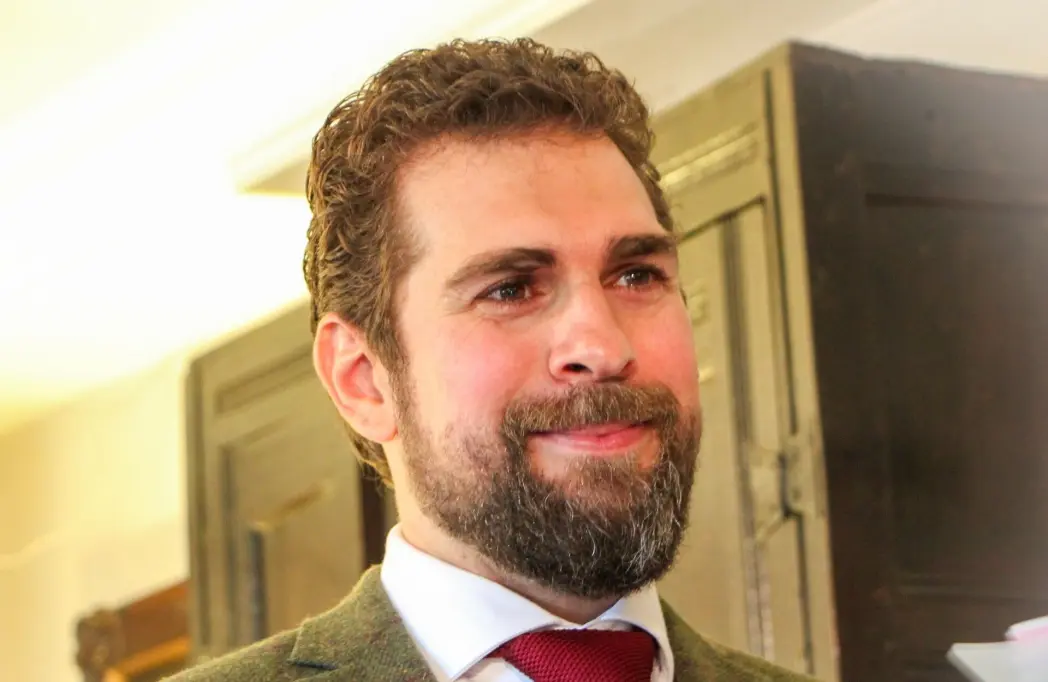
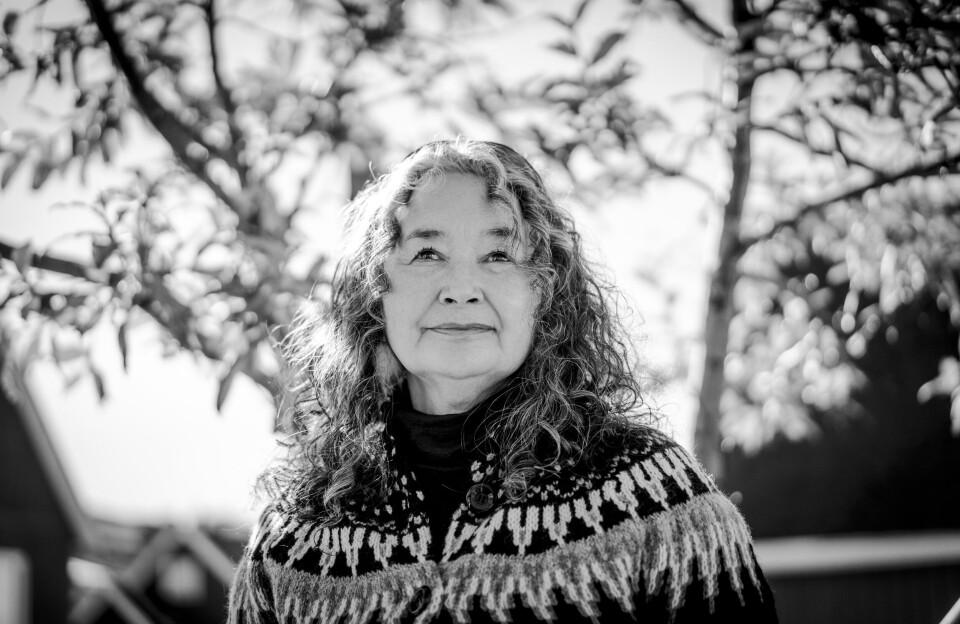
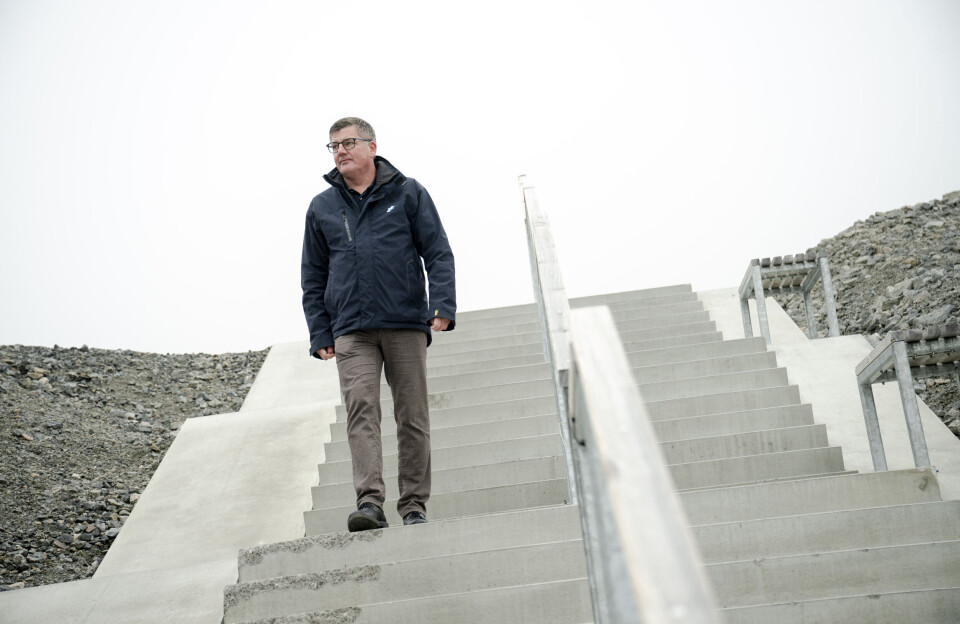
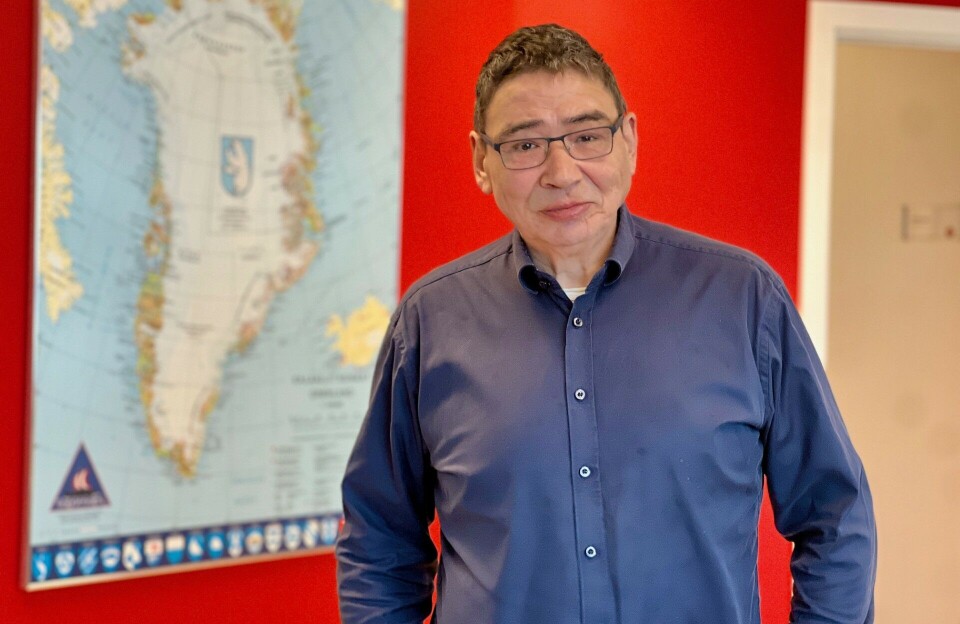
Sitting at the table is 69-year-old fisherman and trapper Lars P. Mathæussen, along with Aviâja Lyberth Hauptmann. She has a PhD in microbiology and is responsible for establishing the biology program, SILA Bachelor of Biology, which is based on Greenland, Greenlandic nature and culture.
Aviâja and Lars speak the same language. For years, the story has often been about conflicts between biologists and trappers. Here there is agreement. About health. About Greenlandic food. The Greenlandic food becomes - in this case - what connects them.
Lars takes a bite of herring whip from the well-laid table - a table created by hands that know nature, shaped through decades of experience and close interaction with the surroundings, with a trapper's wife sitting next to him, who is the indispensable support in such a harsh environment.

Lars begins to talk about his heart disease. In 2015, he had a blood clot in his heart.
- I was given a lot of medicine to take daily, and I could feel how my body was quickly getting weaker. In the end it was so bad that I couldn't go up and down stairs without holding on to the railing, says Lars P. Mathæussen.
He talks with his whole body, and it is clear that it still remembers that frightening time.
Fearing that something would go wrong, he started sleeping with his phone close to him. At the same time, he and his wife started sleeping in separate bedrooms because his body would shake so violently during the worst periods.
One day at the dinner table, surrounded by his children and with his wife by his side, Lars says that he wants to stop taking his medication.
- I told them that they had to be patient and accept what was going to happen. It was my body, and I could feel how weakened it had become, says Lars P. Mathæussen.
From that day on, Lars decided to replace medicine with Greenlandic food and started eating blubber every single day.
"Although I was already eating blubber every now and then, I started eating it every single day. I ate oatmeal in the morning and ate Greenlandic food the rest of the day," he says.
Seal blubber everyday
Aviâja Lyberth Hauptmann takes some seal intestine and cuts it into smaller pieces. She smiles at the memory of her aanaa (grandmother, ed.), who made suaasat (soup, ed.) with seal intestine. She takes a piece in her mouth and asks Lars:
- Why did you choose lard? Was it just because you thought it was delicious or did you know that it would be good for you?
Lars has a clear answer to her question:
According to Lars, he took medication for about three years before making the decision to stop completely.
"Over the course of about two months, things slowly progressed. I could suddenly walk up and down the stairs without having to hold on. My body started to heal," he says.
According to Lars, the pain became milder and the body more flexible.
However, he is very careful because he does not want to encourage others to ignore the advice of their doctors.

- I am not encouraging people to ignore doctors' advice, quite the opposite. But in my case, I know my body best and what it needs to be healthy, he says.
Aviâja Lyberth Hauptmann emphasizes the importance of precisely that:
- We are increasingly striving for food with a lot of sugar and salt and have become less able to listen to what our bodies need. But Lars could feel what his body needed, and for him it was lard. It is not necessarily the solution for everyone, but it emphasizes the importance of becoming better at listening to the body's signals, says Aviâja Lyberth Hauptmann.
Very little processed
According to Aviâja Lyberth Hauptmann, medicine is an important tool, but she also emphasizes that other factors can also be important.
Lars points to a glass on the table. The glass has a black lid and is half-filled with a liquid oil. 2020, it says on the glass.
- What you see here is cod liver oil, which is oil extracted from the liver of a shoe last. It has been there since 2020 and has been refrigerated ever since. It has not changed in all these years, and it cannot rot, even though it does not contain preservatives, says Lars P. Mathæussen.
- Our food is unique because it comes directly from nature and is only minimally processed. In comparison, foreign food, such as pork, often contains far more additives, explains Aviâja Lyberth Hauptmann.

She believes that there is a tendency today that the whole world is encouraged to eat the same way in the name of sustainability. But it does not always take into account how well Greenlandic animals and plants are adapted to us and our living conditions, i.e. place-based food.
- Scientists are talking a lot about, among other things, the planetary diet and recommending that everyone follow the same model. I, on the other hand, believe that we should say yes to the food that suits us and the place we want to live in, and for us that is Greenlandic food, she says.
Lars nods and agrees with Aviâja.
- If I have to work in a cold environment, I need food that comes from a cold environment. To keep my body strong and avoid cold hands, I eat lots of halibut and get the benefits of the fat. The food I eat strengthens my immune system and gives my body what it needs, says Lars P. Mathæussen.
Believe in Greenlandic food
Lars P. Mathæussen acknowledges that Greenlandic food can be very expensive, especially if you don't go out and catch it yourself.
- The dream scenario would be that the prisoners would receive subsidies so that the price could be halved. But that seems like a very distant dream, he says.
According to Aviâja, it is necessary that we start believing that Greenlandic food can be a much bigger part of our everyday lives, rather than acting as if it were impossible.

- I often hear that people don't believe it. If we don't believe it now, we might as well give up. We can and must do something about it. One thing we know for sure, and that is that Greenlandic food is healthy. It's logical, and yet questions are asked about it all too often. Why don't we want to believe in something that is so clear?, she says.
Some of the first steps towards change are to start thinking about and acknowledging that our food is not just “special food”, while rye bread and fruit are presented as “normal”.
- It is also understandable that it is like this today, because it is normal to work and then shop in Brugsen or Pisiffik, where the vast majority of goods come from abroad. I wish more people had the opportunity to gather supplies and learn how to do it, because not everyone is trained in it. It is a huge privilege we have in this country, and one that we should exploit to a much greater extent, says Aviâja Lyberth Hauptmann.
She envisions a world where Greenlandic food is recognized as healthy in the system, where the wisdom of our ancestors and our culture are respected, and where we as a people dare to believe in ourselves in connection with our food.
- For example, when the government talks about self-sufficiency, something often comes up that is more suitable for Denmark. What about the Greenland seal?, she says.
- If we eat place-based food, it's the best, says Lars P. Mathæussen.
Abonnementer
Sermitsiaq.gl - web artikler
- Adgang til alle artikler på Sermitsiaq.gl
- Pr. måned kr. 59.00
- Pr. år kr. 650.00
Sermitsiaq - E-avis
- Adgang til Sermitsiaq e-avis som udkommer hver fredag
- Adgang til alle artikler på Sermitsiaq.gl
- Pris pr. måned kr. 191
- Pris pr. år kr. 1.677
AG - Atuagagdliutit E-avis
- Adgang til AG - Atuagagdliutit e-avis som udkommer hver onsdag
- Adgang til alle artikler på Sermitsiaq.gl
- Pris pr. måned kr. 191
- Pris pr. år kr. 1.677
Sermitsiaq.AG+
- Adgang til AG - Atuagagdliutit e-avis som udkommer hver onsdag
- Adgang til Sermitsiaq e-avis som udkommer hver fredag
- Adgang til alle artikler på Sermitsiaq.gl
- Adgang til Arnanut e-magasin
- Adgang til Nutserisoq.gl
- Ved interesse send en mail til abonnement@sermitsiaq.gl
Kære Læser, Velkommen til Sermitsiaq.gl – din kilde til nyheder og kritisk journalistik fra Grønland. For at kunne fortsætte vores vigtige arbejde med at fremme den frie presse og levere dybdegående, kritisk journalistik, har vi indført betaling for udvalgte artikler. Dette tiltag hjælper os med at sikre kvaliteten af vores indhold og støtte vores dygtige journalister i deres arbejde med at bringe de vigtigste historier frem i lyset. Du kan få adgang til betalingsartiklerne fra kun kr. 59,- pr. måned. Det er nemt og enkelt at købe adgang – klik nedenfor for at komme i gang og få fuld adgang til vores eksklusive indhold. Tak for din forståelse og støtte. Dit bidrag hjælper os med at fortsætte vores mission om at levere uafhængig og kritisk journalistik til Grønland.