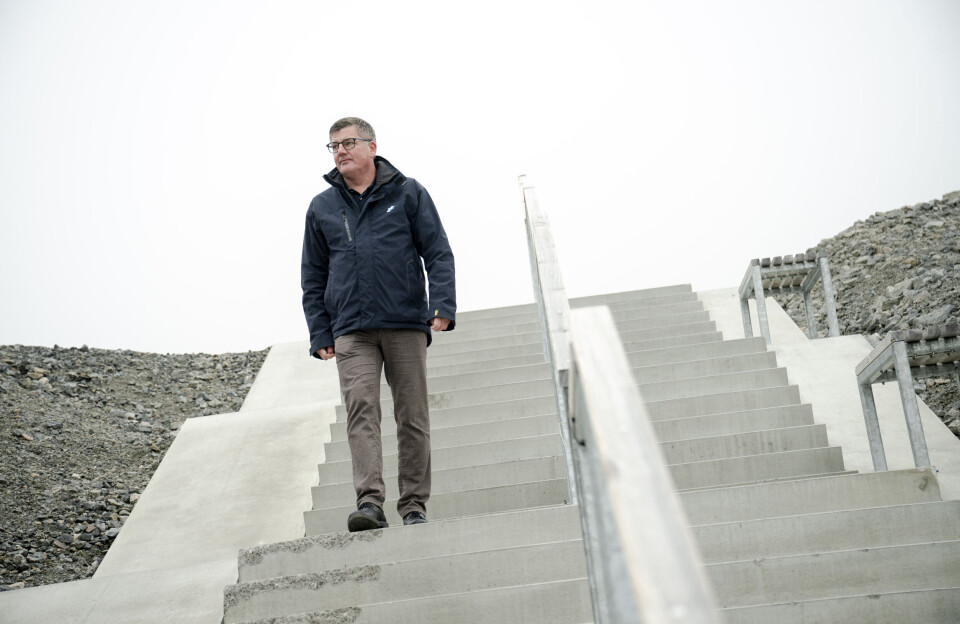
While all of Greenland followed with bated breath the visit of Prime Minister Vivian Motzfeldt and Foreign Minister Lars Løkke Rasmussen to Washington D.C. last week and the meeting with US Vice President J.D. Vance and US Secretary of State Marco Rubio, work continued in the Arctic Council – although it was not business as usual – in Arctic Ambassador Kenneth Høegh's office in the Danish Ministry of Foreign Affairs.
Pretty much, because nothing was quite normal on the foreign front that week – and that naturally affected everyone who went about their daily business in the Danish Ministry of Foreign Affairs. Not least Kenneth Høegh, who, with a past as Greenland's representative at the embassy in Washington, knows more than most about Greenlandic-American relations.
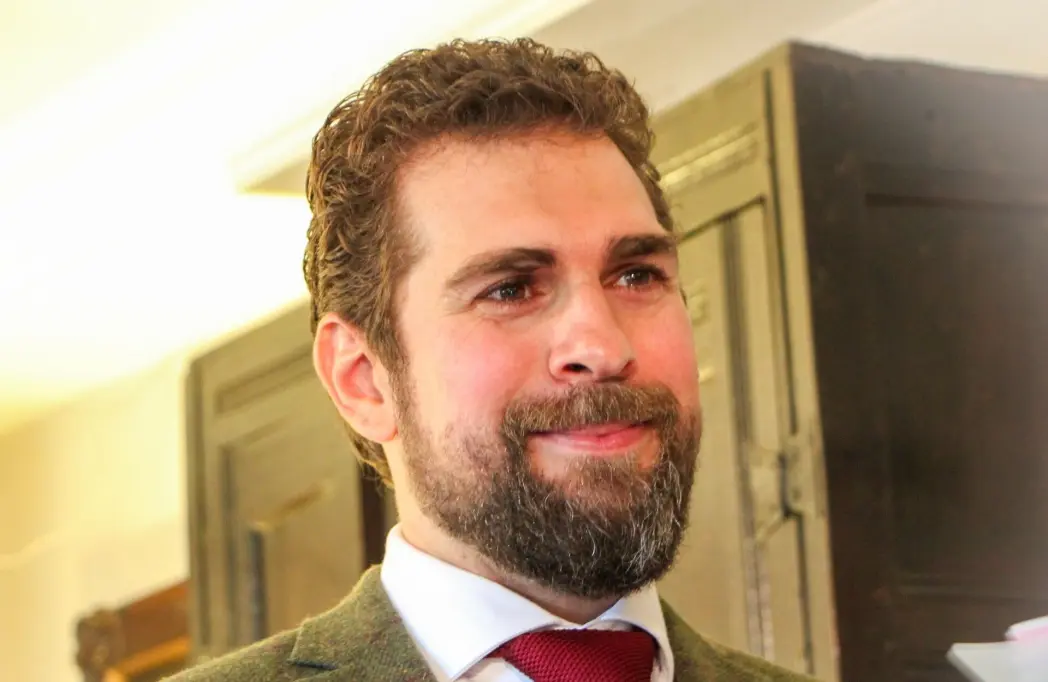
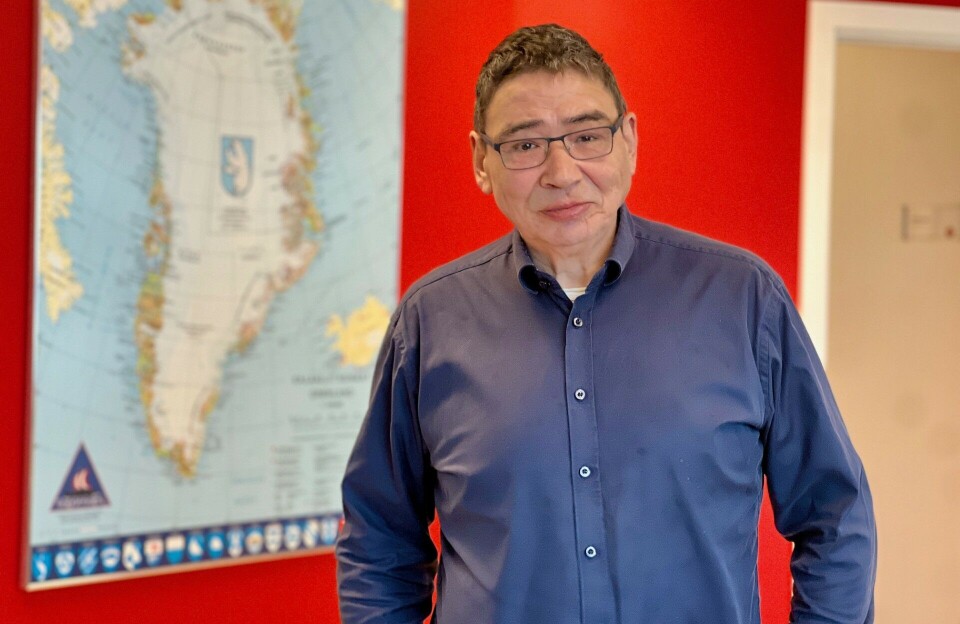
As the Kingdom of Denmark's Arctic Ambassador, Kenneth Høegh's primary function, from his offices in the Ministry of Foreign Affairs and Research in Nuuk and the Ministry of Foreign Affairs in Copenhagen, is to lead international cooperation in the Arctic Council, where Greenland, the Faroe Islands and Denmark have held the chair since May 2025.
- The Arctic Council is alive and the work continues as before, Kenneth Høegh confirms to Sermitsiaq.
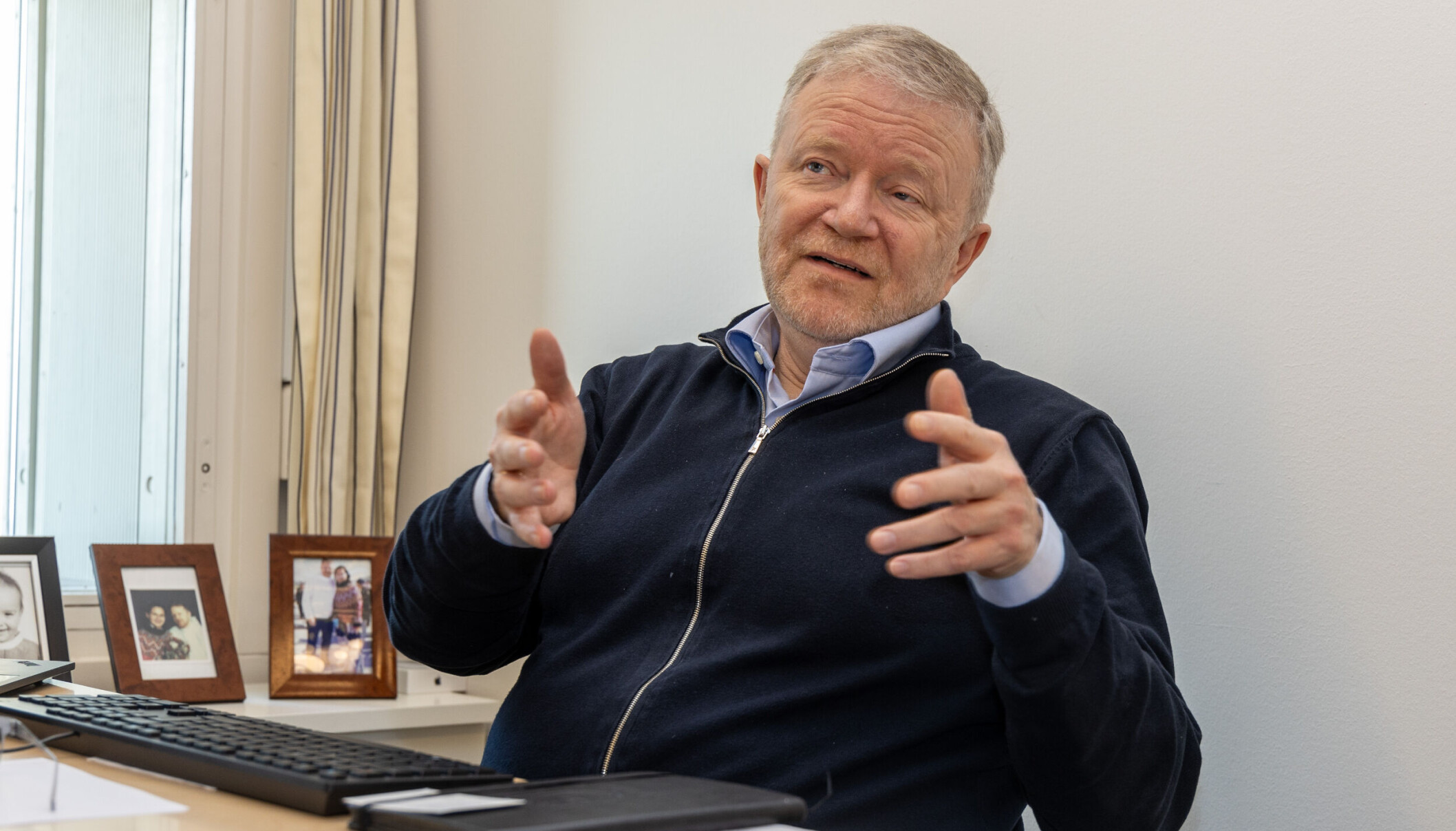
- My work is the multilateral cooperation in the Arctic Council, between the member states and the six indigenous peoples' organizations, not the bilateral relations between the Kingdom and other Arctic states. But I feel a great interest in my work from the international press – and I get many requests for interviews.
- So when I'm finished with Sermitsiaq's visit today, an appointment with Spanish radio awaits - and that's how the days are going at the moment, says the Arctic ambassador.
- I spend a lot of time on inquiries from the international press, because the work of the Arctic Council is important. It affects us all, and of course we must inform about that work.
It is not that the Arctic Council has escaped international conflicts. When Russia invaded Ukraine on February 24, 2022, cooperation between the eight member states – the Kingdom of Denmark, the United States, Sweden, Norway, Finland, Iceland, Canada and Russia – was put on hold.
"We cannot cooperate with a state that attacks its neighbors," was the reasoning from the seven other states that cooperate in the Arctic Council.
Complicated situation
The situation in the Arctic Council was further complicated by the fact that Russia held the chairmanship. It rotates between member states for a two-year period – and it was only when Norway became chairman in 2023 that work began to slowly resume.
- Initially, collaboration based on written procedures – and now in the working groups also virtual meetings, consultations and conferences, explains Kenneth Høegh.
- The Norwegians really did a great job to get the work started again – and it is paying off today, explains Kenneth Høegh.
- However, it is still not realistic and possible to hold physical meetings where all the member states and representatives of the indigenous Arctic peoples can be present at the same time.
- It complicates my work as a representative of the Kingdom – because I have to take the meetings bilaterally instead of a joint meeting. I experienced a good example during last year's Arctic Circle Assembly in Reykjavik, where I and the chairman's team had 30 bilateral meetings related to the Arctic Council during the week – both with the member states and the observer states.
- In addition, there were meetings with the six indigenous peoples' organizations, so it was a busy week.
It works
- But it works – and we will probably achieve the Kingdom's priorities for cooperation, the Arctic ambassador asserts.
The Kingdom has five overarching priorities for its presidency.
1) Indigenous peoples and communities in the Arctic 2) Sustainable economic development and energy transition 3) The oceans 4) Climate change in the Arctic 5) Biodiversity
- Over the coming year, we will focus on all five priorities at a wide range of meetings and conferences in Greenland, the Faroe Islands and Denmark.
- The Arctic Council is crucial for us to solve some of the environmental challenges in the Arctic, because the environment is cross-border and cannot be solved by any single state alone.
Kenneth Høegh comes from South Greenland and uses an example from his own garden in Qaqortoq.
- I have a piece of driftwood lying in our garden. It looks nice – and it always reminds me of how the entire Arctic ecosystem works. The tree probably grew in Siberia at one time. Then it died and ended up in one of the big rivers, where it was carried out into the Arctic Ocean. Then it was carried by the ice sheet east of Greenland, past Nunap Isua and finally ended up on the beach at Qaqortoq.
- It shows how things are connected. What happens in Siberia has importance for Greenland and vice versa.
Important working groups
A good part of Kenneth Høegh's work involves staying up to date on the work of the Arctic Council's six permanent working groups - ACAP (pollution control), AMAP (environmental mapping), CAFF (diversity and protection of animals and plants), EPPR (prevention and control of disasters - including oil accidents and wildfires), PAME (protection of the marine environment) and SDWG (sustainable economic and social development of Arctic communities).
The working groups comprise representatives of the eight member states and the six organizations of the indigenous peoples of the Arctic. The work is primarily of a scientific nature – and the working groups then present their work for political approval every two years when there are meetings of foreign ministers in the Arctic Council. The challenges with Russia have not changed this procedure.
- But since we can't meet physically, it's happening virtually.
- The working groups are the engine of the Arctic Council. This is where the cross-border and important work is practiced – and without the working groups there would be no Arctic Council. So this is where the momentum lies – and they do a great job, says Kenneth Høegh.
The work of the working groups is led by a chairperson elected from among the member states, so that six of the member states have a chairpersonship.
The Kingdom of Denmark currently holds – in addition to the chairmanship of the Arctic Council – the chairmanship of the working group called SDWG. Camilla Aviaja Olsen from the Ministry of Foreign Affairs and Research is the current chairman.
Abonnementer
Sermitsiaq.gl - web artikler
- Adgang til alle artikler på Sermitsiaq.gl
- Pr. måned kr. 59.00
- Pr. år kr. 650.00
Sermitsiaq - E-avis
- Adgang til Sermitsiaq e-avis som udkommer hver fredag
- Adgang til alle artikler på Sermitsiaq.gl
- Pris pr. måned kr. 191
- Pris pr. år kr. 1.677
AG - Atuagagdliutit E-avis
- Adgang til AG - Atuagagdliutit e-avis som udkommer hver onsdag
- Adgang til alle artikler på Sermitsiaq.gl
- Pris pr. måned kr. 191
- Pris pr. år kr. 1.677
Sermitsiaq.AG+
- Adgang til AG - Atuagagdliutit e-avis som udkommer hver onsdag
- Adgang til Sermitsiaq e-avis som udkommer hver fredag
- Adgang til alle artikler på Sermitsiaq.gl
- Adgang til Arnanut e-magasin
- Adgang til Nutserisoq.gl
- Ved interesse send en mail til abonnement@sermitsiaq.gl
Kære Læser, Velkommen til Sermitsiaq.gl – din kilde til nyheder og kritisk journalistik fra Grønland. For at kunne fortsætte vores vigtige arbejde med at fremme den frie presse og levere dybdegående, kritisk journalistik, har vi indført betaling for udvalgte artikler. Dette tiltag hjælper os med at sikre kvaliteten af vores indhold og støtte vores dygtige journalister i deres arbejde med at bringe de vigtigste historier frem i lyset. Du kan få adgang til betalingsartiklerne fra kun kr. 59,- pr. måned. Det er nemt og enkelt at købe adgang – klik nedenfor for at komme i gang og få fuld adgang til vores eksklusive indhold. Tak for din forståelse og støtte. Dit bidrag hjælper os med at fortsætte vores mission om at levere uafhængig og kritisk journalistik til Grønland.