
On Monday, Inatsisartut will meet for an extra meeting day.
A single item is on the agenda, namely the situation surrounding the United States, where President Donald Trump in particular has repeatedly expressed that the United States should take over Greenland.
You can read more about Jens-Frederik Nielsen's statement here: – 14 months in a very difficult situation
In this article we will update from the debate itself.
Is it also treason to visit the Danish Parliament?
Member of Naleraq Kuno Fencker's visit to the US last year is being brought up by several circles, including Nivi Olsen. His visit to the White House in particular is being questioned.
- I think it's strange that people are trying to misunderstand. I have already explained on social media what happened, says Kuno Fencker in his defense.
He explains that he went to the United States because he cannot accept statements that Greenland can never become independent from Denmark.
He asks if you are also a traitor if you visit the Danish Parliament.
Atassut: Small populations can be squeezed by great powers
As the last speaker, the chairman of Atassut, Aqqalu C. Jerimiassen, on the podium.
He starts his speech by acknowledging that he once wore a Trump shirt. He says he must own up to his mistakes.
He then begins his speech, describing how small populations can be squeezed by great powers in an instant.
- But small populations can also – if they stand strong, dignified and act wisely – maintain their self-determination, he says.
He points out that it is crucial that Greenland does not stand alone when external pressure increases.
- We must cooperate with other countries that share our values, which defend democracy, respect the rule of law and human rights, and the international legal order.
He does not deny that Atassut is happy with the Commonwealth and believes that it is in Greenland's interest to continue to be part of the Collaboration.
- There are clear changes taking place in the world community, and the world is in an uncertain situation. Major powers are talking openly about border demarcation and the management of smaller populations, and it is becoming increasingly clear to us how important it is to cooperate with partners who respect international law, says Aqqalu C. Jerimiassen.
Erik Jensen: Trump is motivated by "historical self-staging"
It is now time for Siumut's spokesman Erik Jensen.
He expresses harsh criticism of the US president:
- We are currently in a period in our recent national history where we are facing completely extraordinary and serious events, says Erik Jensen and continues:
-This is because the leader of the world's most powerful country is currently exhibiting behavior and delivering messages that we cannot accept in any way.
Erik Jensen further says that Donald Trump appears as if he is "motivated solely by historical self-aggrandizement," which puts Greenland in a deeply problematic situation.
The party also believes that it is completely unrealistic to attempt to achieve statehood in an agreement with the United States.
- Siumut defends the opportunities that the Self-Government Act gives us, says Erik Jensen, among others.
IA: We are still in a critical situation
Inuit Ataqatigiit spokesperson Mariane Paviasen Jensen takes the podium after a short break. She speaks about how Greenland will never be for sale or transferred to others.
- We are willing to cooperate with other countries, but if there is to be cooperation, our partners must respect our laws and lifestyle here in our country, she says.
She refers to international provisions on mutual respect, respect for national borders, and living in mutual peace.
- The US president is ignoring all these issues in his actions against his allies, and he is harming and endangering cooperation. We thank the states that oppose and support us, but let us make this clear: we are still in a critical situation, and we need support, says Mariane Paviasen Jensen.
She calls for work to be done to achieve collaborations that can benefit Greenland.
- Let us base ourselves on mutual responsibility and let us shoulder our responsibility in a positive way, as our ancestors did through a way of life based on mutual respect, which we must cherish and which we must pass on to our descendants, she says in conclusion.
10 minute break
After three hours, two speakers have given their speeches from the podium, while questions have been asked of them. The questions to Naleraq in particular have taken a long time, where questions are being asked about their attitude towards the USA.
As there are no more questions for Naleraq, Jens Napãtôk leaves the podium.
Kim Kielsen says there is a 10-minute break before the next speaker's speech.
We cannot sacrifice our core values.
Nivi Rosing (IA) accuses Naleraq of not wanting to cooperate with the coalition and stand together in this situation.
To this, Jens Napãtôk responds:
- We have said that we can join the solidarity. We can join the coalition. But we cannot change our priorities or our objectives. We cannot sacrifice them. We from Naleraq want to join the dialogue about the situation of the Greenlandic population, their quality of life.
In the chamber, they discuss a closed meeting between the parties that took place on Friday, where disagreements arose. Naleraq ended up leaving the meeting before it began.
Naleraq criticizes the coalition
Speaker for Naleraq, Jens Napãtôk’, praises unity during his speech:
- We stand together, while there are strong forces from outside trying to gain influence. It's important that we show where we stand, he says.
He then turns the debate away from the US situation.
He criticizes the coalition for not doing enough to improve living conditions:
- We can see that there are some living conditions that are difficult. There are people who are having a hard time and are collecting garbage to survive, says Jens Napãtôk’.
Naleraq also disagrees with the fact that the rest of Part 2 of the Autumn Session is postponed to the Spring Session.
Threats must be reported
Statements about threats of violence appear several times during the debate.
Politicians from several parties have apparently been threatened in connection with the debate for and against the United States.
Chairman of Inatsisartut, Kim Kielsen (S), states that all threats of violence should be reported to the police immediately.
Jens-Frederik Nielsen received a call from the USA
A specific episode comes up in the debate, where Naleraq has previously been critical of Jens-Frederik Nielsen's unwillingness to speak to Donald Trump immediately after the Inatsisartut election.
Jens Napãtôk has previously mentioned that Jens-Frederik Nielsen has received congratulations after the election.
Jens-Frederik Nielsen confirms in the chamber that a call came from the USA.
- I received a call that the President of the United States wanted to congratulate me. This happened before I became Chairman of the Greenlandic Parliament.
- But it did not happen while I was chairman of the Greenlandic government, says Jens-Frederik Nielsen.
Pele Broberg says that he has also been contacted by the US administration, who wanted to get through to Jens-Frederik Nielsen.
- There was a desire to congratulate the candidate who received the most votes during the election campaign, says Pele Broberg.
Is that treason?
The debate rages on, while questions are being asked of Demokraatit. Chairman of Atassut Aqqalu C. Jerimiassen asks whether it is not treason when there are some who have the American flag.
- We are accused of wanting to be Danes when we protect our country. While there are others who cheer when the cake is cut, says Aqqalu C. Jerimiassen.
Here he is probably referring to the fact that Jørgen Boassen, who is very pro-USA, has been to a party in the USA, where a cake in the shape of Greenland covered in the American flag was served.
Naleraq wants a break
The chairman of Naleraq, Pele Broberg, requests a half-hour break, as Naleraq only found out this morning that the rest of the meeting has been postponed to the spring meeting.
The Chairman of Inatsisartut, Kim Kielsen (S), calls for a break not to be held right now, but only after the Chairman of Naalakkersuisut's closing remarks.
There is a majority in favor of continuing to meet.
Democracy: We must stand together
Jørgen Rosbach from Demokraatit takes the podium. He talks about the importance of standing together in troubled times.
"In troubled times of concern, it is important that we stand together and respect each other here in our country," he says.
He talks about the situation with the United States and says that national borders are not negotiable and that the dialogue with the United States and Denmark is important and must take place in an open and respectful manner.
- All of Europe has shown that Greenland is not alone in our situation. We are respected because we fight and protect democracy.
- The situation today is very special and acute, and it will help to shape our country and our future, but also the rest of the world, says Jørgen Rosbach.
He concludes by calling for Inatsisartut to stand together so that there are not individual members who will signal that the United States can approach Greenland.
Kielsen: The rest of the collection is postponed
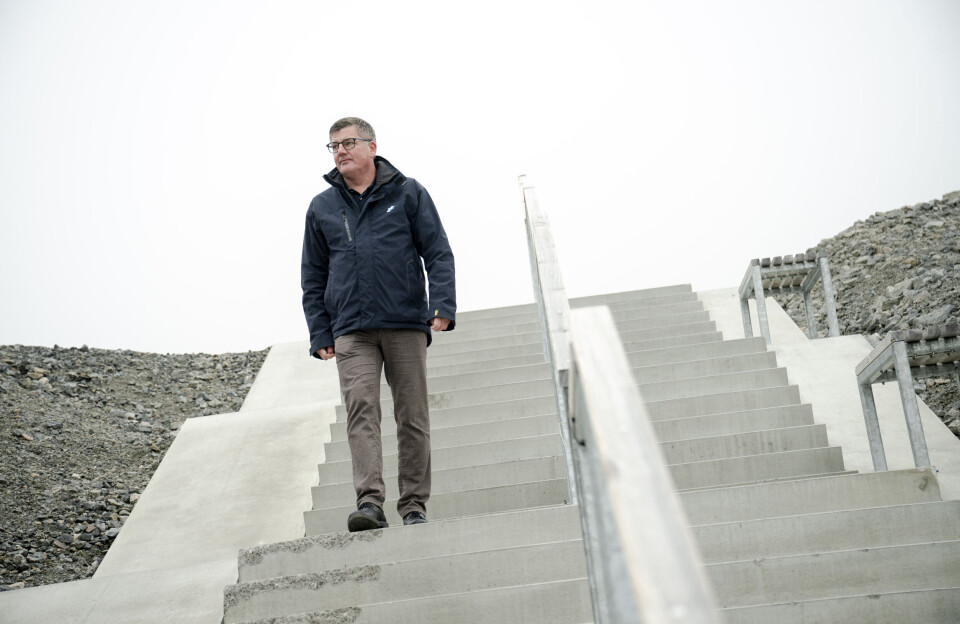
Chairman of Inatsisartut, Kim Kielsen (S), begins the meeting by announcing that the rest of the items on the Autumn Meeting Part 2 are postponed due to the extensive work involved in handling the US situation.
This means that the autumn session part 2, which was supposed to last until February 12, will end after today's debate.
The items that were supposed to be discussed will be postponed to the spring session, which begins on April 14, says Kim Kielsen. Among the items being postponed is a proposal on the determination of time, which proposes returning to the previously used time zone.