The Arctic Council can celebrate the international organization's 30th birthday in 2026. This will happen while Greenland, the Faroe Islands and Denmark hold the presidency of the organization, which has both the Arctic states and the organizations of the indigenous peoples of the Arctic as members.
Sermitsiaq will be following the work of the council closely during the anniversary year. The work of the Arctic Council is challenged by international tensions while the Kingdom holds the chair. But so far, it has succeeded in keeping the work going – not least in recognition of the major environmental challenges that affect nature and people in the Arctic.
The Arctic Council was formed at a meeting in Ottawa in 1996. This happened because there was a growing concern for the environment in the Arctic – and environmental issues are the backbone of the Council's work. This was reflected, among other things, in the fact that a large part of the Kingdom of Denmark's contribution to the Arctic Council's activities in the early years came primarily from the Ministry of the Environment.
The Council consists of eight states – Canada, Denmark, Finland, Iceland, Norway, Russia, Sweden and the USA. The contractual basis for the cooperation is the so-called Ottawa Declaration, which was adopted at the first meeting.
Sustainable development
In this, the countries confirm that they will work for sustainable development in the Arctic region and its inhabitants, taking into account the communities of indigenous peoples – both economically, socially and culturally.
The countries also pledge to protect the Arctic environment and ensure biodiversity in the area.
The Ottawa Declaration specifically emphasizes that cooperation in the Arctic Council does not include military security issues. The rule was introduced at the request of the United States – and it was this rule that for many years meant that the council could accommodate both the United States and Russia.
The Arctic Council is a consensus organization. This means that all decisions must be made jointly. There are no votes where a majority imposes something on a minority.
This makes it difficult for member states to adopt binding decisions. However, it did happen in 2011, when the Arctic Council held a ministerial meeting in Nuuk. Here, the member states agreed on cooperation in the SAR area, so that the countries could draw on joint resources in connection with ship disasters and searches.
This practice has been debated from time to time, especially by environmental organizations, because it has been argued that it slows down the work of the Arctic Council. But in retrospect, it is probably the broad agreement on consensus that has ensured the survival of the Arctic Council for 30 years.
The indigenous peoples
The Ottawa Declaration also stipulates that indigenous peoples' organizations shall be permanently represented in the work of the Council. Finally, the Declaration provides for the possibility of observers to participate in the work. Observers may be non-Arctic nations, NGOs or institutions.
The permanent representatives of the indigenous peoples are the ICC, the Sami Council, Raipon (indigenous peoples of the Arctic part of Russia) and the three North American organisations Aleut International Association, Arctic Athabaskan Council and Gwich'in Council International. The six permanent participants have a joint secretariat, the Indigenous Peoples Secretariat, which was located in Copenhagen for many years, but is now located in Tromsø in connection with the Arctic Council Secretariat. The IPS has two employees.
The Arctic Council has 36 organizations and nations as observers. They are divided between 13 countries, including China, 13 international organizations such as IMO (shipping) and the Nordic Council, and 12 NGOs, including WWF.
The chairmanship of the Arctic Council rotates between member states for a two-year period. The Kingdom of Denmark last held the chairmanship in the period 2009-2011. The outgoing chairmanship always hosts the ministerial meetings, which are also held every other year. However, due to the challenges in cooperation with Russia, the ministerial meetings in 2023 and 2025 will be held virtually at the civil service level.
The work of the Arctic Council between ministerial meetings is carried out in six working groups. These are ACAP (pollution control), AMAP (environmental mapping), CAFF (diversity and protection of animals and plants), EPPR (prevention and control of disasters – including oil accidents and wildfires), PAME (protection of the marine environment) and SDWG (sustainable economic and social development of Arctic communities).
Small organization
The working groups have independent secretariats. The groups are led by a presidency that rotates between the member states.
In addition to the working groups, the Arctic Council has the possibility of establishing expert groups and so-called task forces that work on specific and operational tasks.
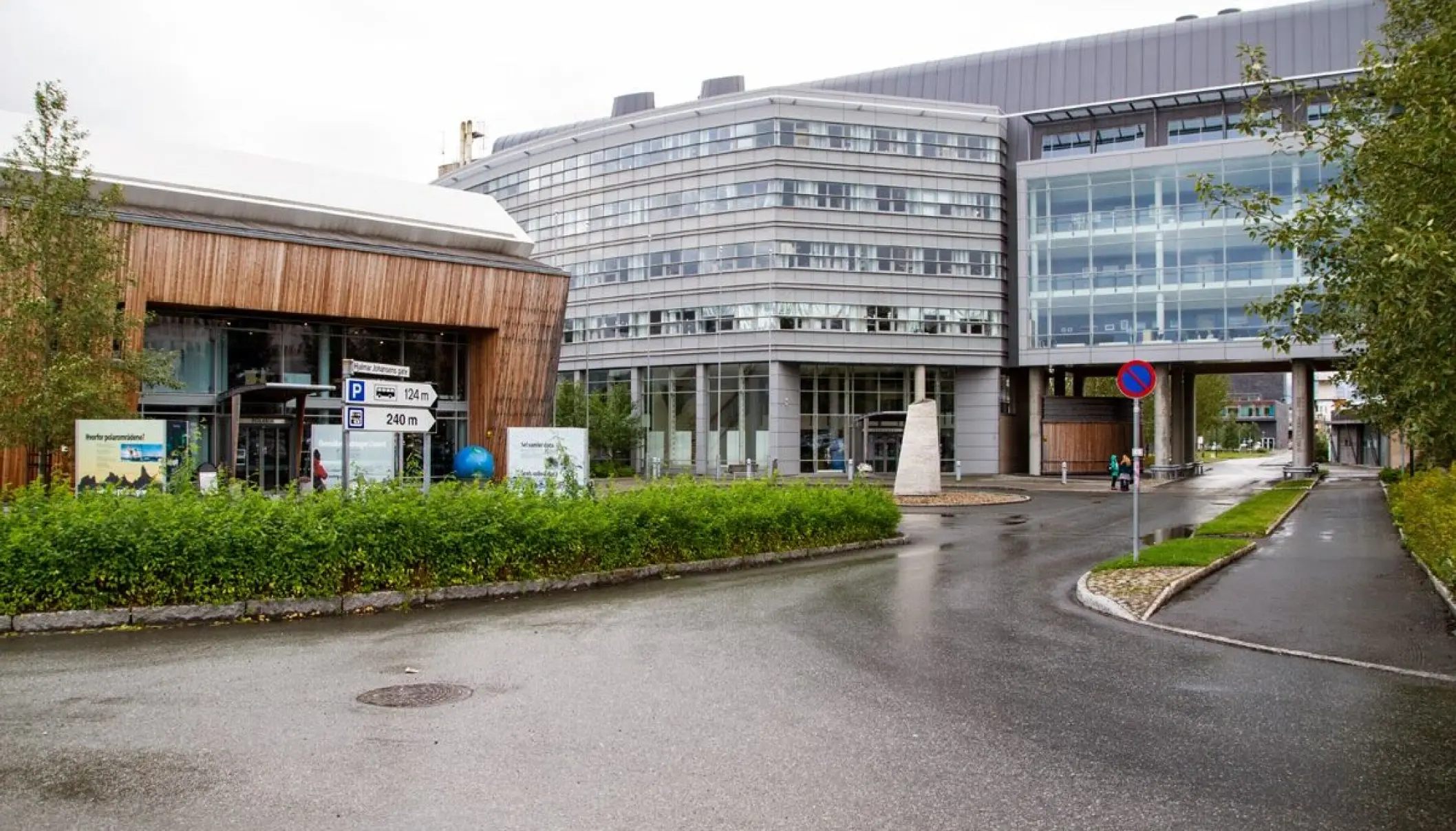
The Arctic Council has had a secretariat in Tromsø since 2007. Compared to many other international organizations, the secretariat is quite modest and currently employs 12 employees.
This led the then Danish Foreign Minister Per Stig Møller to highlight the Arctic Council as a role model in his speech when the Kingdom took over the chairmanship at the ministerial meeting in Tromsø in 2009. At that time, the secretariat had three employees.
- The Arctic Council is the only international organization with only three employees. It is an example for other international organizations to follow, the warm-hearted Per Stig Møller emphasized with a smile at a reception in connection with the change of chairman.
Abonnementer
Sermitsiaq.gl - web artikler
- Adgang til alle artikler på Sermitsiaq.gl
- Pr. måned kr. 59.00
- Pr. år kr. 650.00
Sermitsiaq - E-avis
- Adgang til Sermitsiaq e-avis som udkommer hver fredag
- Adgang til alle artikler på Sermitsiaq.gl
- Pris pr. måned kr. 191
- Pris pr. år kr. 1.677
AG - Atuagagdliutit E-avis
- Adgang til AG - Atuagagdliutit e-avis som udkommer hver onsdag
- Adgang til alle artikler på Sermitsiaq.gl
- Pris pr. måned kr. 191
- Pris pr. år kr. 1.677
Sermitsiaq.AG+
- Adgang til AG - Atuagagdliutit e-avis som udkommer hver onsdag
- Adgang til Sermitsiaq e-avis som udkommer hver fredag
- Adgang til alle artikler på Sermitsiaq.gl
- Adgang til Arnanut e-magasin
- Adgang til Nutserisoq.gl
- Ved interesse send en mail til abonnement@sermitsiaq.gl
Kære Læser, Velkommen til Sermitsiaq.gl – din kilde til nyheder og kritisk journalistik fra Grønland. For at kunne fortsætte vores vigtige arbejde med at fremme den frie presse og levere dybdegående, kritisk journalistik, har vi indført betaling for udvalgte artikler. Dette tiltag hjælper os med at sikre kvaliteten af vores indhold og støtte vores dygtige journalister i deres arbejde med at bringe de vigtigste historier frem i lyset. Du kan få adgang til betalingsartiklerne fra kun kr. 59,- pr. måned. Det er nemt og enkelt at købe adgang – klik nedenfor for at komme i gang og få fuld adgang til vores eksklusive indhold. Tak for din forståelse og støtte. Dit bidrag hjælper os med at fortsætte vores mission om at levere uafhængig og kritisk journalistik til Grønland.