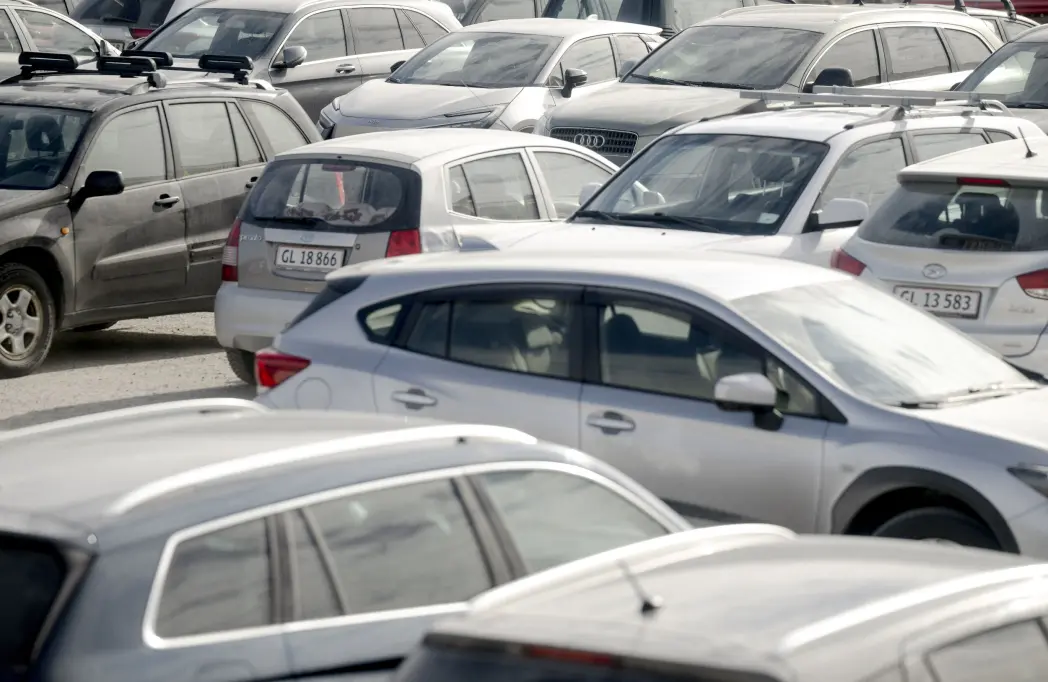

Out of the 7,088 passenger cars, vans and trucks driving around Greenland, 795 are electric cars. This is shown by a statement from Statistics Greenland from May 2025.
Since 2020, the number of electric cars has increased quietly year by year, and it seems to continue.

The same trend is seen in large parts of Europe. This is according to Torben Arent, news editor at FDM's magazine Motor.
– In Denmark, it is most clear. In January and February, we were right up to the point where 80-90 percent of all new cars sold were electric cars. Looking beyond Europe, the picture is more mixed. In Southern Europe, electric cars only account for 5 percent of the market share, while electric cars in countries like Denmark, the Netherlands, Finland and the UK account for approximately 20 percent of all passenger cars on the road. The average in Europe is currently 19 percent.
Gigantic selection
According to Torben Arent, the popularity of electric cars is due to the fact that you currently get the most for your money by buying an electric car.
– Operating costs are lower, and there is a gigantic selection of different electric cars. This year, 65 new cars will be launched on the market, and 60 of them are electric cars. So the selection is very large. The charging infrastructure is also important for the spread of electric cars, and in Denmark, for example, it is very well developed with fast chargers.
New technology
In recent years, electric car technology has also developed significantly, so that the cars have a longer range and the possibility of faster charging.
– I am currently sitting in a press conference about the new version of the electric car from BYD, which - when it was introduced to the market - had a charging speed (kW) of 82. Today it is up to 220, which means that you can charge it ultra-fast from 10 to 80 percent in 25 minutes. That is useful. The battery capacity has also grown - although not quite as much - but from 60 to 75 kW, which ensures a longer range.
According to Torben Arent, however, cold is still a negative factor in electric cars. Because even though the new electric cars are equipped with battery heating and heat pumps, there is still a large heat loss, which means that the cars typically run 40 percent below the norm in temperatures below freezing.

Works stably - even in winter
At Deres Auto in Nuuk, sales director Palle Frederiksen says that it is true that electric cars are affected by cold, typically in the form of reduced range and slightly longer charging time.
– But based on our experience, the cars work stably in daily use even in winter.
In addition, Palle Frederiksen points out that the newer models have become significantly better at handling cold, including heat pumps and battery preheating.
– In short: yes, cold affects – but we do not experience that the batteries “do not work”, says Palle Frederiksen.