Minister of Finance and Taxes, Múte B. Egede, has submitted a bill amending the Tax Act.
This is done to ensure that capital earned in Greenland is not taken out of the country without taxation.
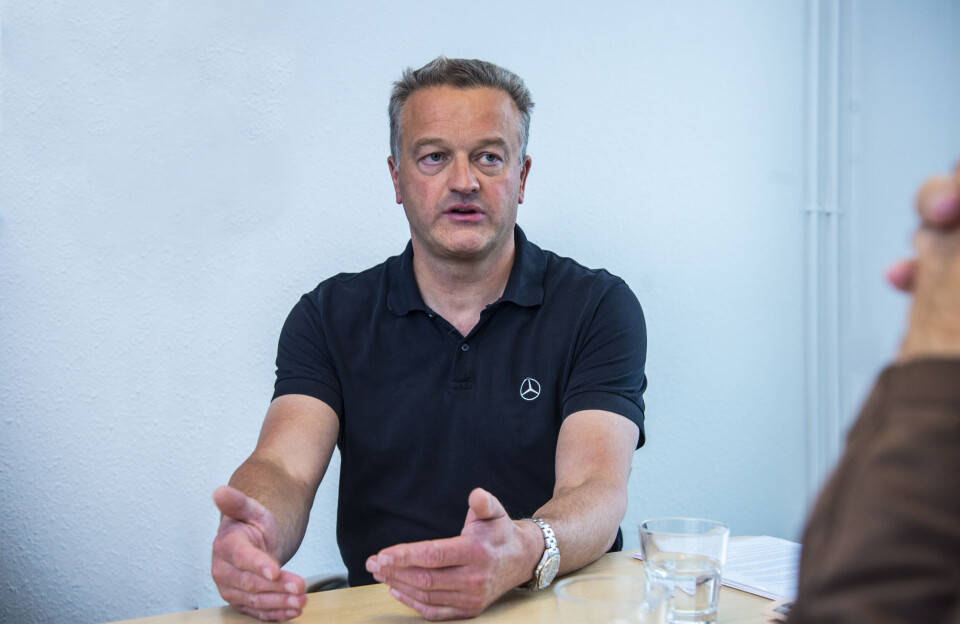
Sermitsiaq has asked state-authorized public accountant Per Laugesen from Grønlands Revision A/S to explain the proposal to amend the Tax Act, and whether it is possible to move capital out of Greenland without taxation.
Per Laugesen explains:
- Since the introduction of the Tax Act in Greenland, the concept of full tax liability (Section 1 of the Tax Act) and limited tax liability (Section 2 of the Tax Act) has been used. These concepts are also used internationally.
The basic tax rules
A person is fully liable to tax if the person lives in Greenland. A company is fully liable to tax if the company is registered in Greenland or if the daily management of the company lives in Greenland. Full liability to tax means that a person or company is liable to tax in Greenland on everything they earn worldwide. Regardless of whether the money is earned in Greenland or abroad.
- It is worth noting here that a foreign company with a Greenlandic management (the seat of management) is fully liable to tax in Greenland according to Greenlandic rules.
- It may sound a bit strange, but it is to avoid that you just set up a company in a tax haven and make money in Greenland without being taxed in Greenland. The place of management is also an international concept, which is used both in the OECD and the rest of the world.
If a person comes to Greenland and works for an employer in Greenland, but without moving to Greenland, then the person has limited tax liability in Greenland. The person must therefore only pay tax in Greenland on the Greenlandic income and not on what the person may earn in his or her home country.
A foreign company with a branch or department or a major construction project in Greenland is subject to limited tax liability in Greenland on the income earned in Greenland. And here Greenland receives the tax on the portion earned in Greenland.
- So let me state right away that no one can work in Greenland for a Greenlandic employer or run a business in Greenland and earn money in Greenland without Greenland also receiving tax on the income. This is regardless of whether it is a person or a company, and regardless of whether the company is registered abroad or in Greenland, says Per Laugesen.
So what happens if you move out of Greenland? Can you take your earnings with you, or does Greenland lose some of its tax?
- The main rule in tax law is that the time when a person or company is liable to tax on income is when the person or company becomes entitled to the money (the time of acquisition of rights).
- This means that it is not possible to postpone when the tax is to be collected by postponing the payment itself until later. If it were possible, many people would ask to be paid their salary or other income after moving out of Greenland. And then Greenland would lose a tax. This is not possible according to the Greenlandic tax rules.
What happens if a company or person moves out of Greenland? Does Greenland lose tax on earnings in Greenland after the move?
- No. If a person or a company moves out of Greenland, the tax status changes from full tax liability to limited tax liability. The part of the company that is still physically located in Greenland will still be taxed in Greenland – even after a company has moved out of Greenland. This could be, for example, a trucking business, construction company, law firm, architect's office and so on.
- The part of the business that is not physical is taxed by the new home country. Non-physical assets can be, for example, securities such as shares, bonds, financial contracts and mortgages. These rules are also in accordance with international rules.
So, is Greenland being cheated of tax by the part of the business (not physical assets) that follows the person or company out of Greenland?
- No. For about 30 years, we have had a rule in Section 38 of the Tax Act that these securities must be taxed in Greenland when the person or company moves. The physical assets remain in Greenland and Greenland receives the tax on the earnings and assets such as shares, bonds, financial contracts and mortgages are taxed by Greenland until the day of the move. Even if the shares, bonds or mortgages have not been sold before the move.
- That is, this rule is an exception to the main rule that Greenland can only tax income when it has been realized (sold). So here too, there is no real possibility of moving out of Greenland and taking an unrealized profit out of the country tax-free.
- Just because a director moves from Greenland to another country, no assets will leave the company. If the director takes any assets with him, then that is theft. And it is punishable under the Criminal Code.
Dividend tax
The country where a company is tax resident is the source country when dividends are paid. It is the source country that is entitled to a provisional dividend tax. However, where the owner of the company lives, dividend tax is also typically payable. Normally, the owner can offset the tax paid in the source country. These rules are also in accordance with international rules.
So Greenland doesn't lose a dividend tax when a company moves out of Greenland?
- The short answer is no! No dividends will be distributed in connection with the move. If dividends are paid in a few years, it is correct that Greenland cannot levy dividend tax as a source country. The main rule in Greenland is that dividends are deductible. So either a company pays corporate tax or dividend tax is paid. If a company moves out of Greenland, the rule that dividends are deductible does not apply to foreign companies. So therefore, Greenland will in practice either pay corporate tax or dividend tax on the income earned in Greenland.
- The transfer tax in § 38 only covers the four forms mentioned, shares, bonds, financial contracts and mortgage deeds. This means that if, for example, you have developed an App or something else that is not physical and is not tax-depreciable and is also not a share, bond, financial contract or mortgage deed, then there is theoretically a gap in the law.
The proposed changes
In June 2025, a bill was sent to the Greenlandic Government for consultation. The proposal included a modernization of Section 38, so that all assets that are moved out of Greenland must be taxed. In addition, it is proposed to introduce a new special liquidation tax of 17-19 percent, even if the company is not liquidated, i.e. closed. The liquidation tax is collected even if the company's earnings are already taxed in Greenland, and even if the company does not close, but rather continues its operations in Greenland. And even if Greenland continues to receive the tax from the company's earnings after the move.
- But the existing rules are already very finely constructed both internally in Greenland and in relation to other countries' own tax rules and international agreements on the avoidance of double taxation.
- The existing rules in Greenland work, and there is no income that can be taken out of Greenland without taxation, states Per Laugesen from Greenland's Audit Office.
Grønlands Revision A/S, of which Per Laugesen is a co-owner, has also submitted a response to the Naalakkersuisut consultation on the Proposal for the Greenland Act on Amendments to the Landsting Act on Income Tax. The consultation took place in June-July 2025.
Abonnementer
Sermitsiaq.gl - web artikler
- Adgang til alle artikler på Sermitsiaq.gl
- Pr. måned kr. 59.00
- Pr. år kr. 650.00
Sermitsiaq - E-avis
- Adgang til Sermitsiaq e-avis som udkommer hver fredag
- Adgang til alle artikler på Sermitsiaq.gl
- Pris pr. måned kr. 191
- Pris pr. år kr. 1.677
AG - Atuagagdliutit E-avis
- Adgang til AG - Atuagagdliutit e-avis som udkommer hver onsdag
- Adgang til alle artikler på Sermitsiaq.gl
- Pris pr. måned kr. 191
- Pris pr. år kr. 1.677
Sermitsiaq.AG+
- Adgang til AG - Atuagagdliutit e-avis som udkommer hver onsdag
- Adgang til Sermitsiaq e-avis som udkommer hver fredag
- Adgang til alle artikler på Sermitsiaq.gl
- Adgang til Arnanut e-magasin
- Adgang til Nutserisoq.gl
- Ved interesse send en mail til abonnement@sermitsiaq.gl
Kære Læser, Velkommen til Sermitsiaq.gl – din kilde til nyheder og kritisk journalistik fra Grønland. For at kunne fortsætte vores vigtige arbejde med at fremme den frie presse og levere dybdegående, kritisk journalistik, har vi indført betaling for udvalgte artikler. Dette tiltag hjælper os med at sikre kvaliteten af vores indhold og støtte vores dygtige journalister i deres arbejde med at bringe de vigtigste historier frem i lyset. Du kan få adgang til betalingsartiklerne fra kun kr. 59,- pr. måned. Det er nemt og enkelt at købe adgang – klik nedenfor for at komme i gang og få fuld adgang til vores eksklusive indhold. Tak for din forståelse og støtte. Dit bidrag hjælper os med at fortsætte vores mission om at levere uafhængig og kritisk journalistik til Grønland.