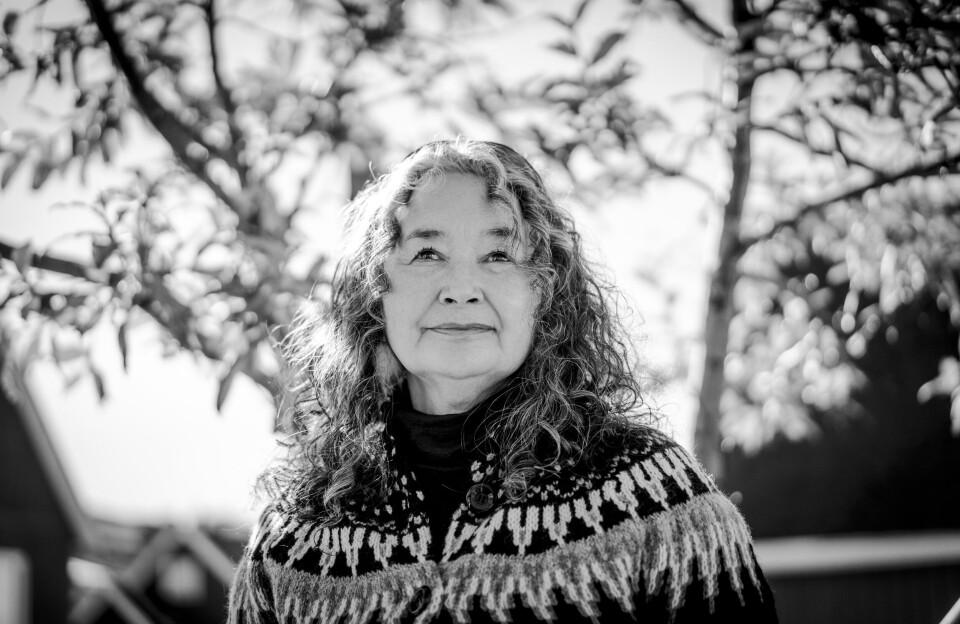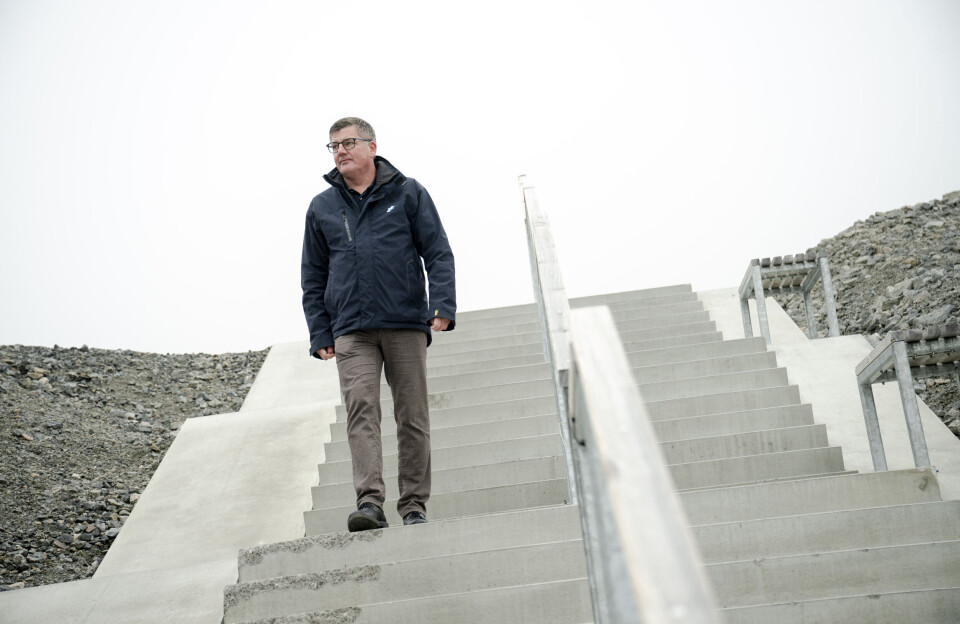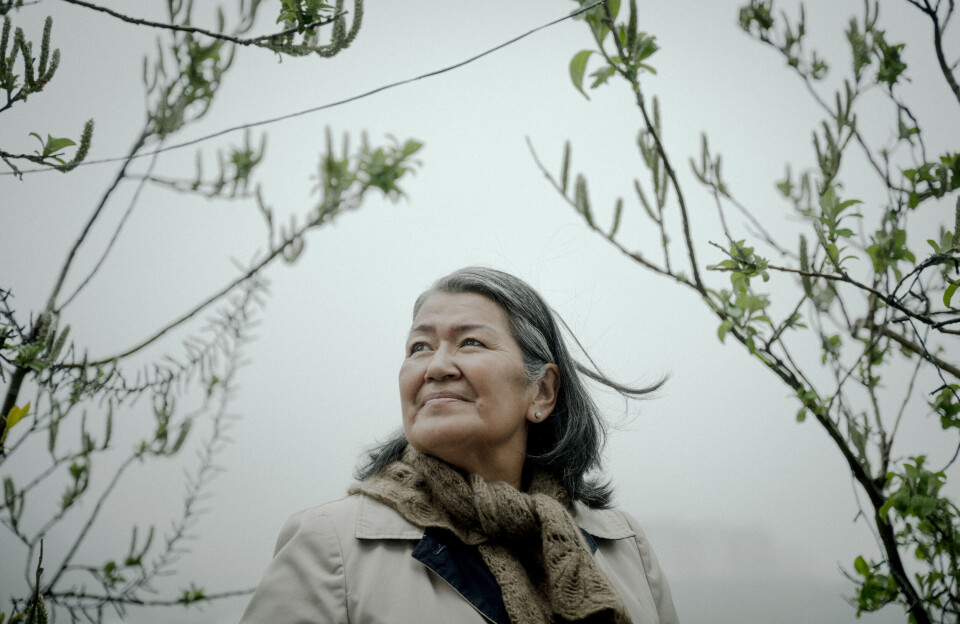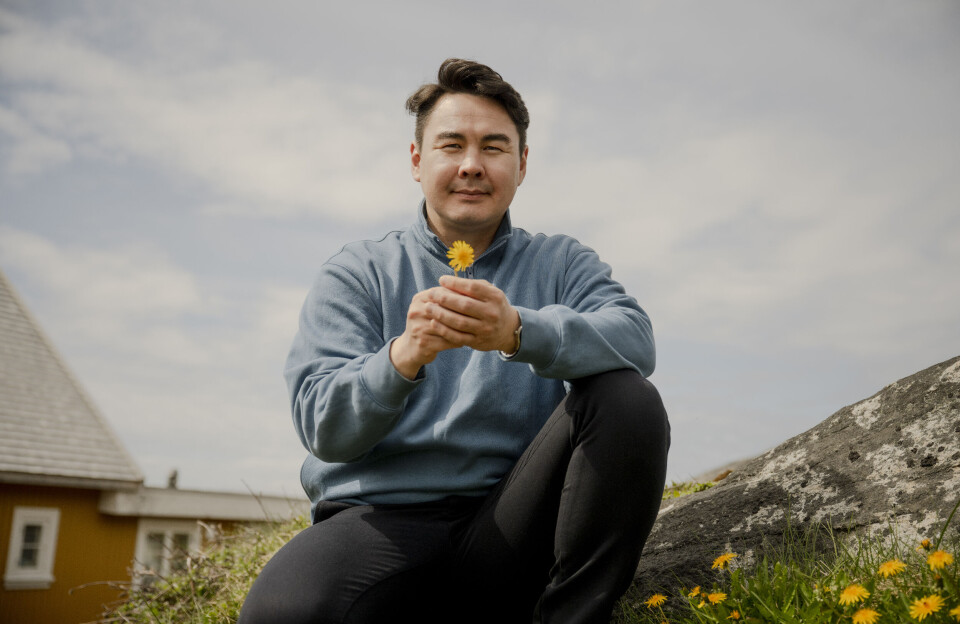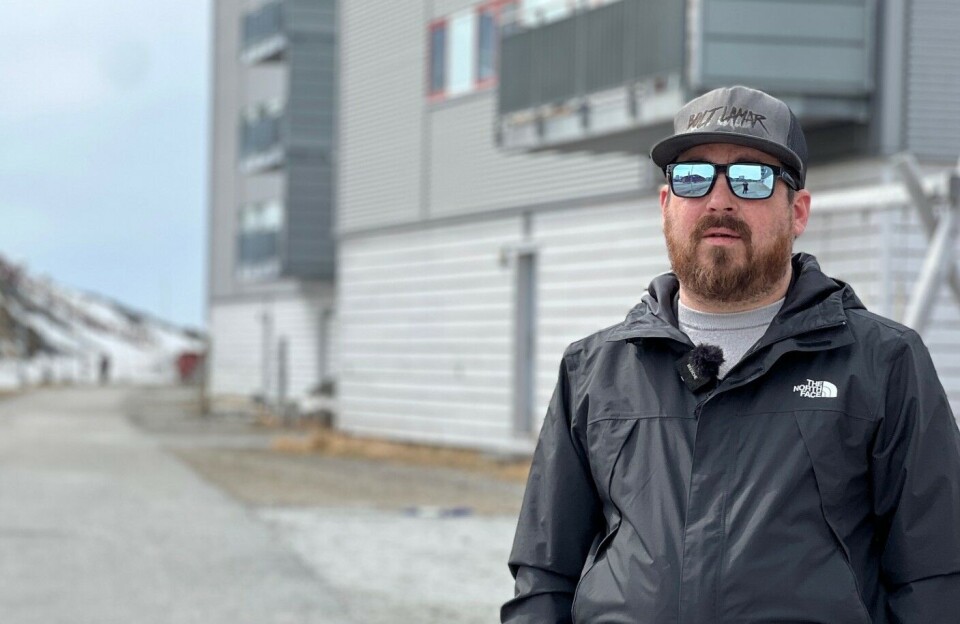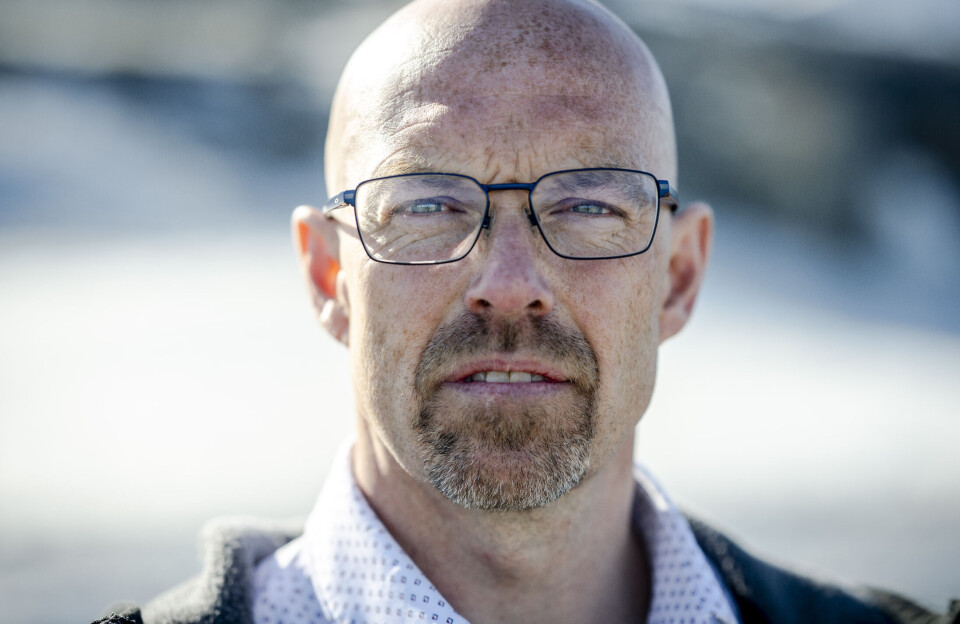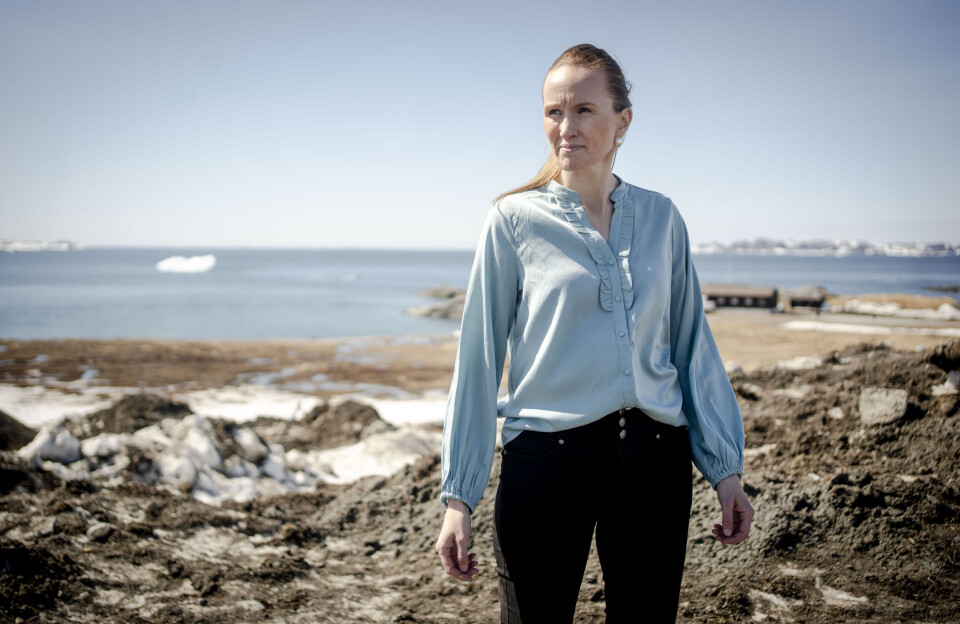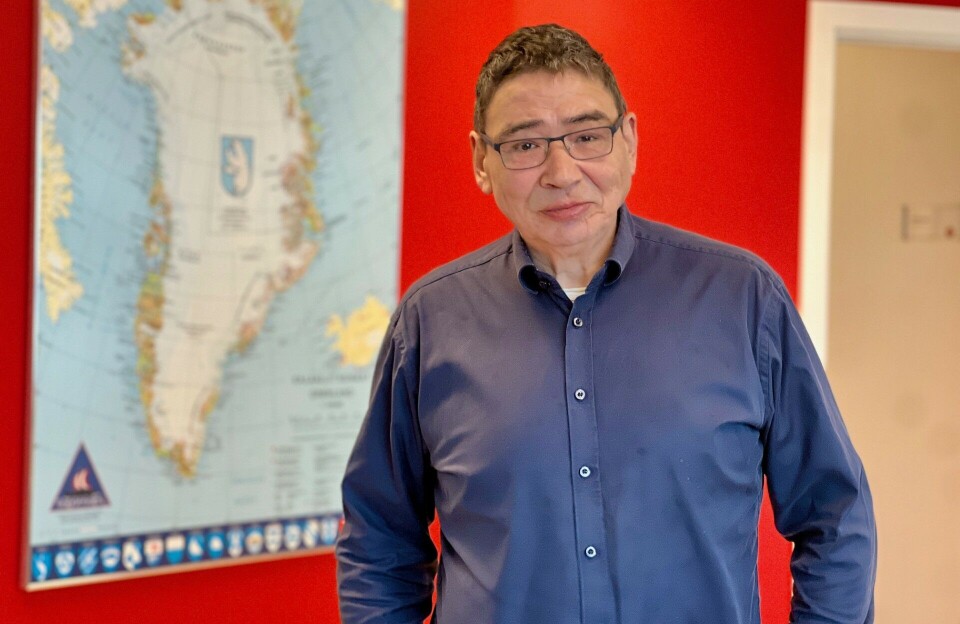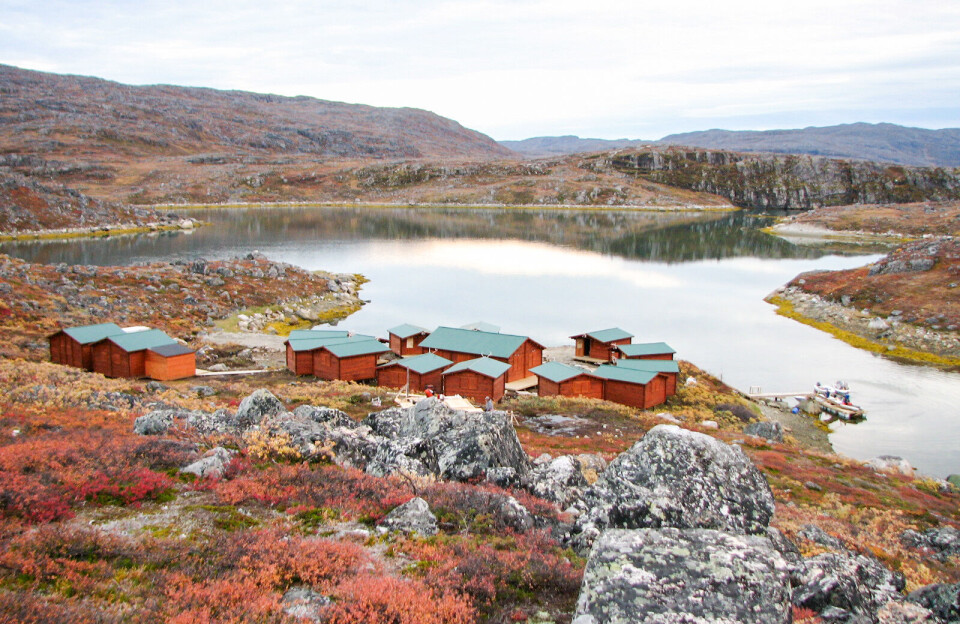
Stefán Hrafn Magnússon has run a reindeer station in Isortoq for almost 40 years. His son and daughter are now taking over the operation, which now consists more of selling tours to tourists and trophy hunting.
It is the son Manitsiaq John Nielsen aged 28 and daughter Freyja Athena Stefánsdóttir aged 23, who runs the company, while Stefán Hrafn Magnússon, who is 69 today, acts as a consultant.
Stefán's story is unique. The English-language Icelandic Times reports this in a review of the biography "Isortoq: Stefán, the Reindeer Herder", written by Svava Jónsdóttir.
In the book, Stefán tells about his life before and after moving to Greenland. About his adventurous life, the challenges, the accidents, the animals, the nature and the global warming that affects his business.
Growing up, Stefán spent all his summers on his grandparents' farm in West Iceland. His dream was to become a farmer, and he was interested in the Arctic, which was an adventure for him.
At the age of 15, Stefán went to Greenland for the first time – alone, and in the following years he traveled there several times and got to know the country.
Youth characterized by reindeer
Otherwise, his upbringing was characterized by reindeer and he learned reindeer herding from scratch.

After Stefán had received his agricultural education in Iceland, he moved to Norway at the age of 19 to work as a reindeer herder for the Sami people. He worked on a cattle farm in Canada, and he studied reindeer husbandry in Sweden, where he attended upper secondary school in Gellivare in Swedish Samiland, where there was a high school program that included reindeer husbandry.
He then moved to Alaska, where he taught reindeer herding and the use of Icelandic horses as a means of transportation on the Alaskan tundra, similar to cowboy life in Texas, and worked as a consultant in reindeer herding.
Reindeer in South Greenland
With his experience in reindeer herding, Stéfan moved to Greenland around 1980 and collaborated with Ole Kristiansen on reindeer in South Greenland.
Ole was a pioneer and brought the reindeer to South Greenland in 1973 from the Norwegian reindeer population in Itinnera in Nuup Kangerlua, which KGH imported from Stjernøy in Finnmark in Northern Norway in 1953.
In 1989, Stéfan Magnússon established his reindeer station, and for the past 30 years or so he has been working with reindeer on a huge piece of land in South Greenland.
The farm is called Isortuusua (meaning 'Big muddy water' – referring to the glacial mud that is carried out from the bottom of the glacier at the Inland Ice Sheet), and the family business is called Isortoq Reindeer Station.
Hard work, but lack of support

The reindeer population grew from a few hundred to over 5,000 at its peak.
Stéfan had to develop the business and generate revenue himself. He received no help from either the Home Rule or the Self-Government, which apparently had no interest in reindeer herding.
– Or they didn't get into it, since we weren't that big in many, but I'll mention some.
That for three years in a row we accounted for 30 percent of the agricultural production in Greenland and for 100 percent of the export of agricultural goods from Greenland, says Stéfan Magnússon and adds:
– All agricultural support went to and continues to go to sheep farmers. Reindeer farming was and is apparently not recognized as eligible for support.
– When we slaughtered, we did it with our own money, while the sheep farm received a purchasing subsidy, and at the same time Neqi A/S also received a purchasing subsidy, he says.
– I think the total purchase subsidy in 2023 amounted to 33 kroner per kilo of slaughtered lamb, while reindeer husbandry did not receive any support.
– Compared to Norway, Norway paid purchase subsidies of up to 250 kroner per purchased animal. Sweden (a member of the EU) used to pay around eight kroner in subsidies per kilogram.
However, he received support from Kaj Egede when he was Minister of Agriculture.
– Kaj Egede had good insight into the agricultural industry in South Greenland and had big visions, says Stéfan Magnússon.
The slaughterhouse

It was hard work, and he built his own slaughterhouse, which was approved for export by the EU and CFIA Canada. The slaughterhouse still exists and is in good mechanical condition.
– We have maintained the standard in accordance with veterinary requirements, he tells Sermitsiaq.
– Before we built the slaughterhouse, we applied for business development support for the construction, but were rejected. The claim from the administration at the time was that the slaughterhouse was industry and not agriculture. But a few years later, Neqi A/S received 60 million to modernize the lamb slaughterhouse in Narsaq. We only needed about four million at that time.
At a time when both the Narsaq slaughterhouse and the Kangerlussuaq muskox slaughterhouse were making a loss, Stéfan Magnússon offered to slaughter all lambs and other animals at his Isortoq slaughterhouse without receiving a subsidy.
– But it was rejected, even though the Home Rule government could have saved money at the time. This was mainly due to negotiations with KNI and the Lambeslagteriet about the purchase price, he estimates.
Do you think that agricultural support is negative?
– Many people perceive subsidies as something negative, but they forget that subsidies to agriculture make food cheaper to buy for citizens in general. It is a democratic distribution of equal living conditions for everyone in society. Therefore, support for agriculture and business should be considered something good for society, says Stéfan Magnússon and adds, but the support should also include reindeer herding.
Export to many countries
Stéfan Magnússon could not sell all the reindeer meat in Greenland, so he has exported to various countries. He had good contacts in Iceland, Norway, Sweden, Canada and Alaska, and over the years has exported to all of these countries as well as several countries in the EU.

At one point, he exported reindeer meat to gourmet restaurants in Montreal and the rest of Quebec - the French part of Canada.
Rising expenses
Gradually, the costs of reindeer production have increased so much that Stéfan Magnússon has difficulty keeping up, which is why he switched to trophy hunting.
This includes increased costs for helicopters when the reindeer are collected.
– The government requires in the Act on Domesticated and Semi-Domesticated Animals that we tag all animals, but there is no compensation from the public sector that would enable us to comply with this legislation 100 percent, explains Stéfan about the increased expenses.
At the same time, climate change is creating problems for the reindeer's natural food, as frost follows after thaw periods and ice forms on top of the natural food such as heather, lichens and other plants that the reindeer feed on and scrape up with their hooves.
But the ice prevents them from getting down to the food.
– This means that in the future of reindeer husbandry, we will have to focus on systematically feeding the animals, similar to what other agriculture does. We have not yet started these initiatives, and a concrete agreement with the Agricultural Administration in the self-government is needed to make this possible, he says.
The same phenomenon is experienced by reindeer herders in other places around the world.
– Our colleagues in Norway, Sweden and Finland practice feeding supplements in the winter with purchased feed. But in Greenland it will be very expensive to have feed transported to the country. Therefore, it will be more self-sustaining and economically sound with long-term planning and to produce the feed locally, he says.
Management
He also struggles with the public for help in running the reindeer herd and understanding the problems.
– In glacial winters, the fjord that separates the northern border of the reindeer station and Ivittuut in Kommuneqarfik Sermersooq freezes. When this fjord gets iced over, the reindeer tend to migrate over the border to Ivittuut. The self-government confiscates these animals and issues hunting licenses to the public. It is pure confiscation of our property without compensation in our opinion, he assesses.
– We would like to capture these animals and will therefore apply to the Technical Administration of Kommuneqarfik Sermersooq to build an enclosure so that we can capture these animals and transport them home under conditions where we are not dependent on whether there is ice on the fjord. This ice is currently very unstable and often only lasts for two weeks or so. Therefore, it is very unsafe to drive over with snowmobiles, which we have to use to drive the reindeer together and push them back, even though the ice carries the reindeer with their wide hooves. There are also dangerous places in the stream, where the ice can be very thin if there are warm periods for a few days, as often happens with climate change.
New initiatives in tourism
Stéfan Magnússon has always been at the forefront of developments and, as an entrepreneur, has thought about new opportunities.
He was thus, among other things, instrumental in starting trophy hunting in Greenland. In the early nineties, there was a lot of opposition to his trophy hunting.
He also helped to establish the outfitter system in Greenland.
– As far as I remember, we held the first courses in 1996. Famous outfitters such as Mattias Ingemann and Karsten Lings from Kangerlussuaq participated. This was followed by Trophy courses in Kangerlussuaq in the following years.
– In 2012, we made a cooperation agreement with an Icelandic angling company to finance a luxurious tourist camp with cabins in reindeer husbandry country, where people from all over the world come to hunt, fish or hike, he says.
– Today, the largest part of the business is therefore tourism and especially trophy hunting.
– The tourist activities are marketed mainly from Iceland and on social media.
– The negative side of this is that there are not enough funds for daily operations, as too much profit flows out of the country, which could be used for further expansion and consolidation of purebred breeding as such. But the agreement is soon over, so there will be financial improvements to this in the future, says Stéfan Magnússon.
There is also another reindeer breeder in South Greenland. It is Hans Janussen, who has a herd of 400 animals on the island of Tuttutooq just opposite Narsaq. His company is called Tuttutooq, named after the island.
Abonnementer
Sermitsiaq.gl - web artikler
- Adgang til alle artikler på Sermitsiaq.gl
- Pr. måned kr. 59.00
- Pr. år kr. 650.00
Sermitsiaq - E-avis
- Adgang til Sermitsiaq e-avis som udkommer hver fredag
- Adgang til alle artikler på Sermitsiaq.gl
- Pris pr. måned kr. 191
- Pris pr. år kr. 1.677
AG - Atuagagdliutit E-avis
- Adgang til AG - Atuagagdliutit e-avis som udkommer hver onsdag
- Adgang til alle artikler på Sermitsiaq.gl
- Pris pr. måned kr. 191
- Pris pr. år kr. 1.677
Sermitsiaq.AG+
- Adgang til AG - Atuagagdliutit e-avis som udkommer hver onsdag
- Adgang til Sermitsiaq e-avis som udkommer hver fredag
- Adgang til alle artikler på Sermitsiaq.gl
- Adgang til Arnanut e-magasin
- Adgang til Nutserisoq.gl
- Ved interesse send en mail til abonnement@sermitsiaq.gl
Kære Læser, Velkommen til Sermitsiaq.gl – din kilde til nyheder og kritisk journalistik fra Grønland. For at kunne fortsætte vores vigtige arbejde med at fremme den frie presse og levere dybdegående, kritisk journalistik, har vi indført betaling for udvalgte artikler. Dette tiltag hjælper os med at sikre kvaliteten af vores indhold og støtte vores dygtige journalister i deres arbejde med at bringe de vigtigste historier frem i lyset. Du kan få adgang til betalingsartiklerne fra kun kr. 59,- pr. måned. Det er nemt og enkelt at købe adgang – klik nedenfor for at komme i gang og få fuld adgang til vores eksklusive indhold. Tak for din forståelse og støtte. Dit bidrag hjælper os med at fortsætte vores mission om at levere uafhængig og kritisk journalistik til Grønland.