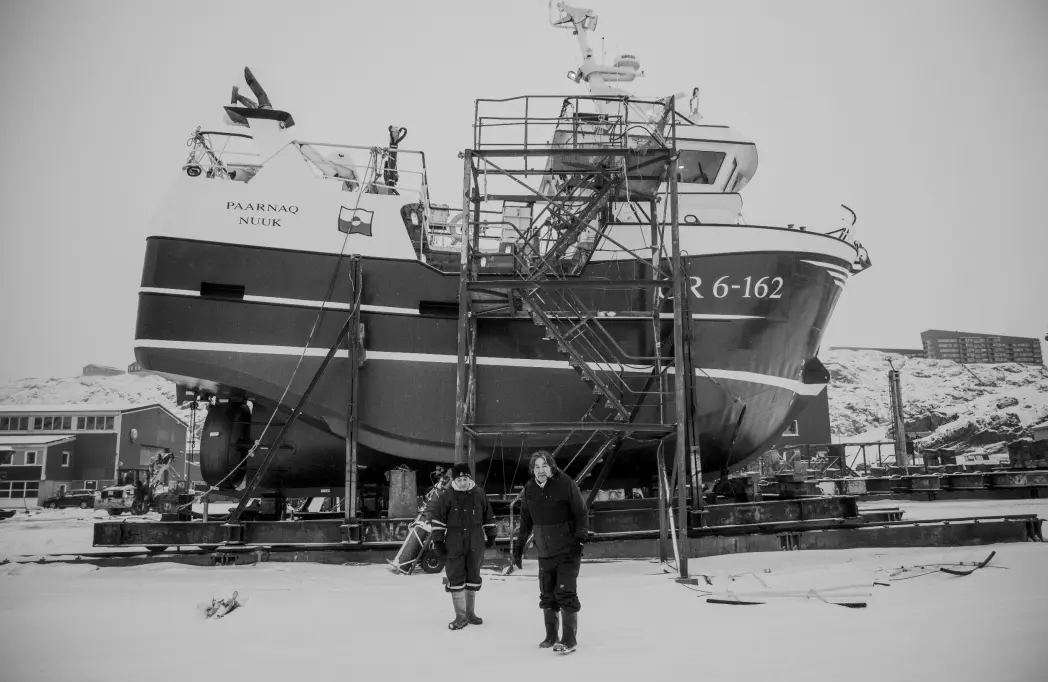

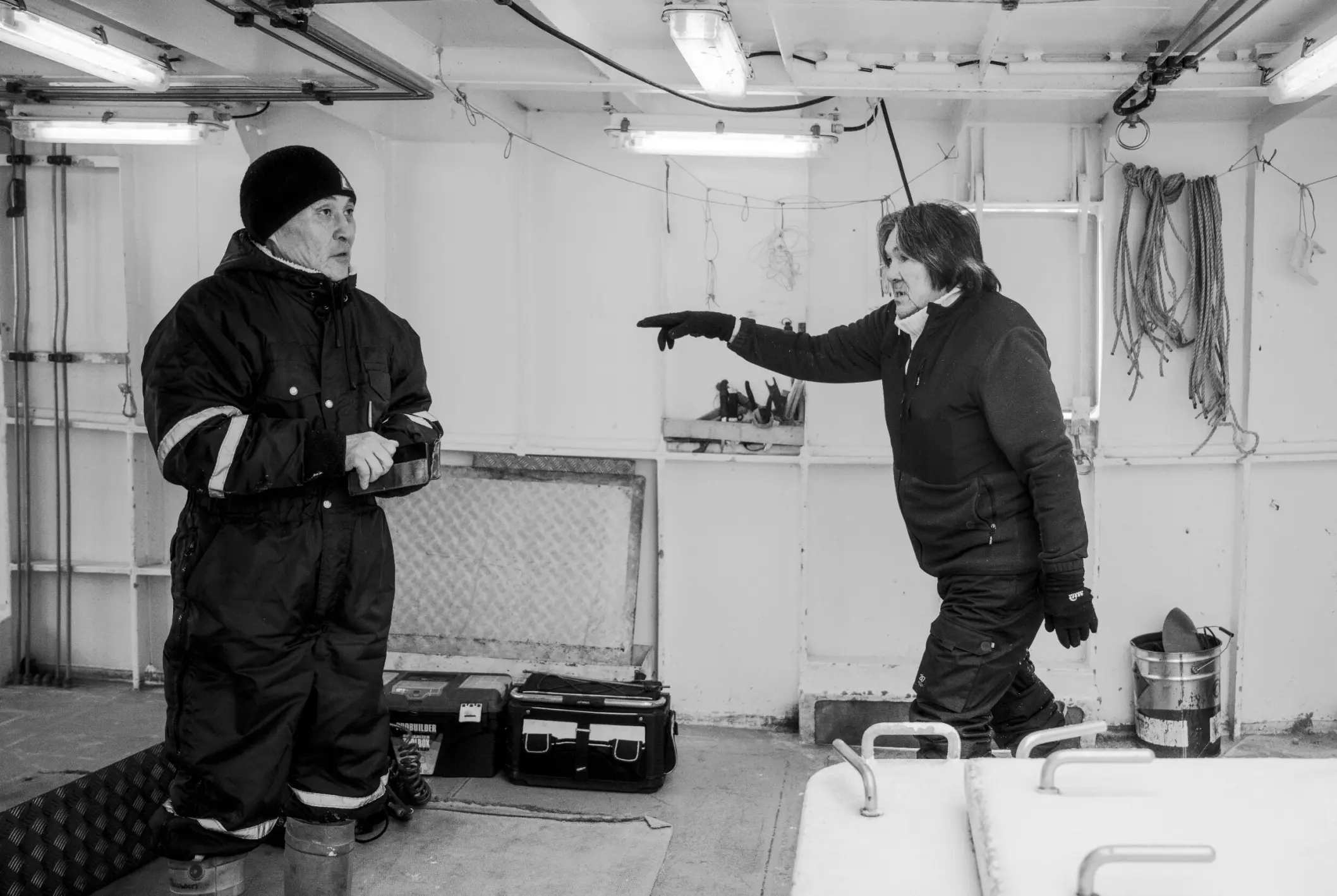
The shrimp cutter is lying on land at Nuuk's shipyard.
The cold has set in, and the snow has covered the ground like a heavy blanket. On the deck stand two men who have spent a century together in Greenlandic waters. They are Jens Tobiassen and Lars Mathæussen, both from the settlement of Saqqaq, north of Ilulissat on the south side of the Nuussuaq peninsula towards Vaigat.
Jens' hand rests half-bent against the railing. It is firm, but the fingers cannot fully straighten -the years of nets, ropes and cold have left their mark. He was 14 years old when he first boarded a shrimp boat on August 17, 1971.
- The shrimp boat belonged to my father, who has since passed away. Since then, the sea has been my workplace, says Jens Tobiassen.
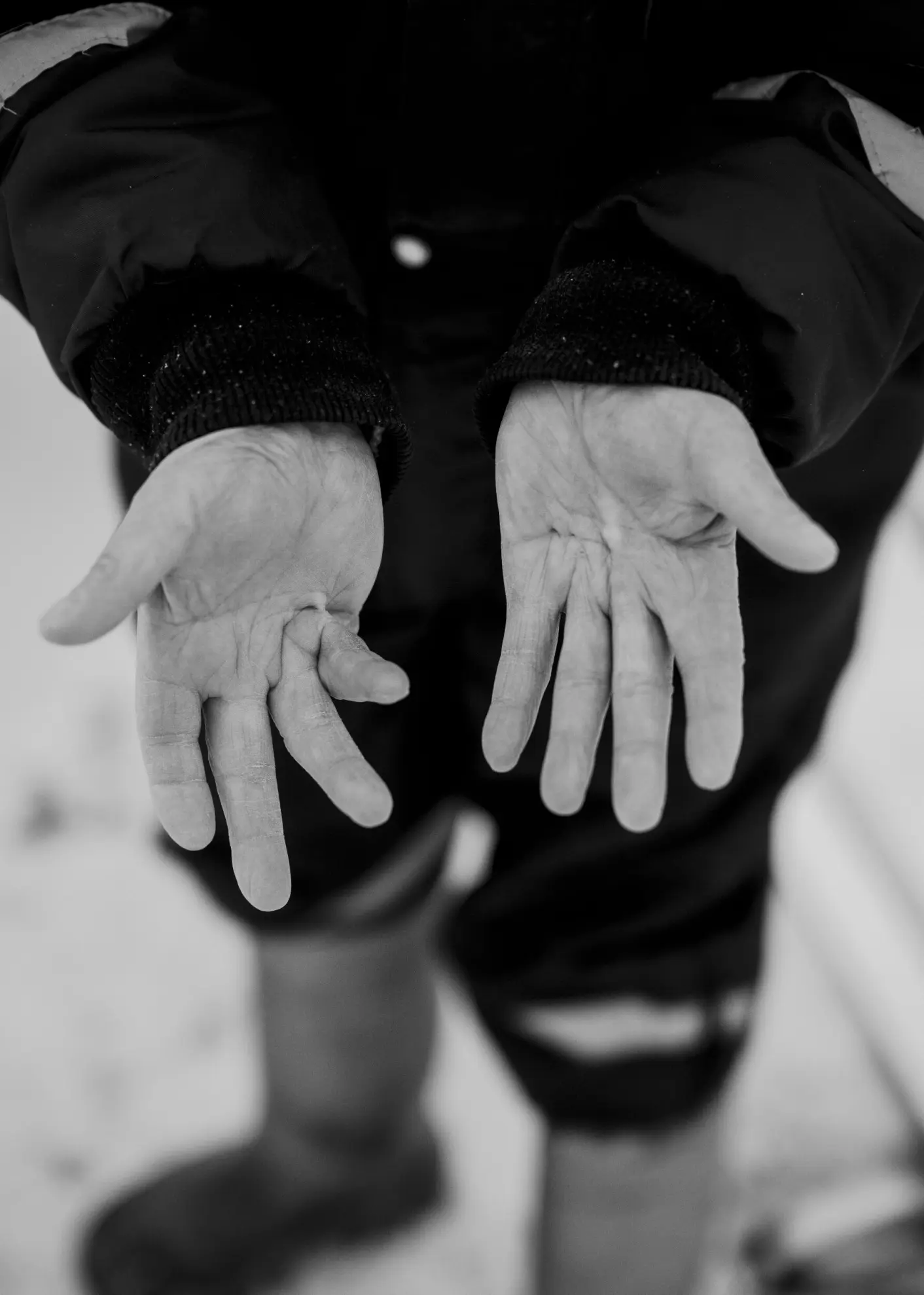
Lars stands a little to the side, his hands also resting on the cold railing. He himself was 17 years old when he first boarded the shrimp boat with Jens - the same boat that Jens' father owned. Jens had already taken the helm as captain the year before, at just 16 years old.
- We haven't always worked side by side, but over the years we've met again and again. Today, we're both grandfathers, and we still sail, says Lars Mathæussen.
In the video below, Lars and Jens put into words the feelings that come with life at sea:
They started as young boys in the 1970s, long before modern GPS and echo sounders became everyday life. Back then, positions were memorized in their heads, and the catch was found by reading the current, the animals and the sea.
- We used our brains and emotions. We didn't use modern equipment, but all our senses and our physical muscles, says Lars Mathæussen.
They have seen the unpredictability of sea ice, changing seasons and quotas that are regulated. For them, fishing is not just a profession. It is a legacy. A way of understanding the world.
The clear imprint of the climate
Throughout half a century at sea, Jens Tobiassen and Lars Mathæussen have felt the changes in the climate in their bodies - in the absence of ice and in seasons that no longer follow their old rhythm.
- The climate has changed significantly compared to before. Back then, at the end of October, there was usually already new sea ice. Some years, you could even start driving with a dog sled at that time. But today, the weather is very difficult to predict, says Jens Tobiassen.
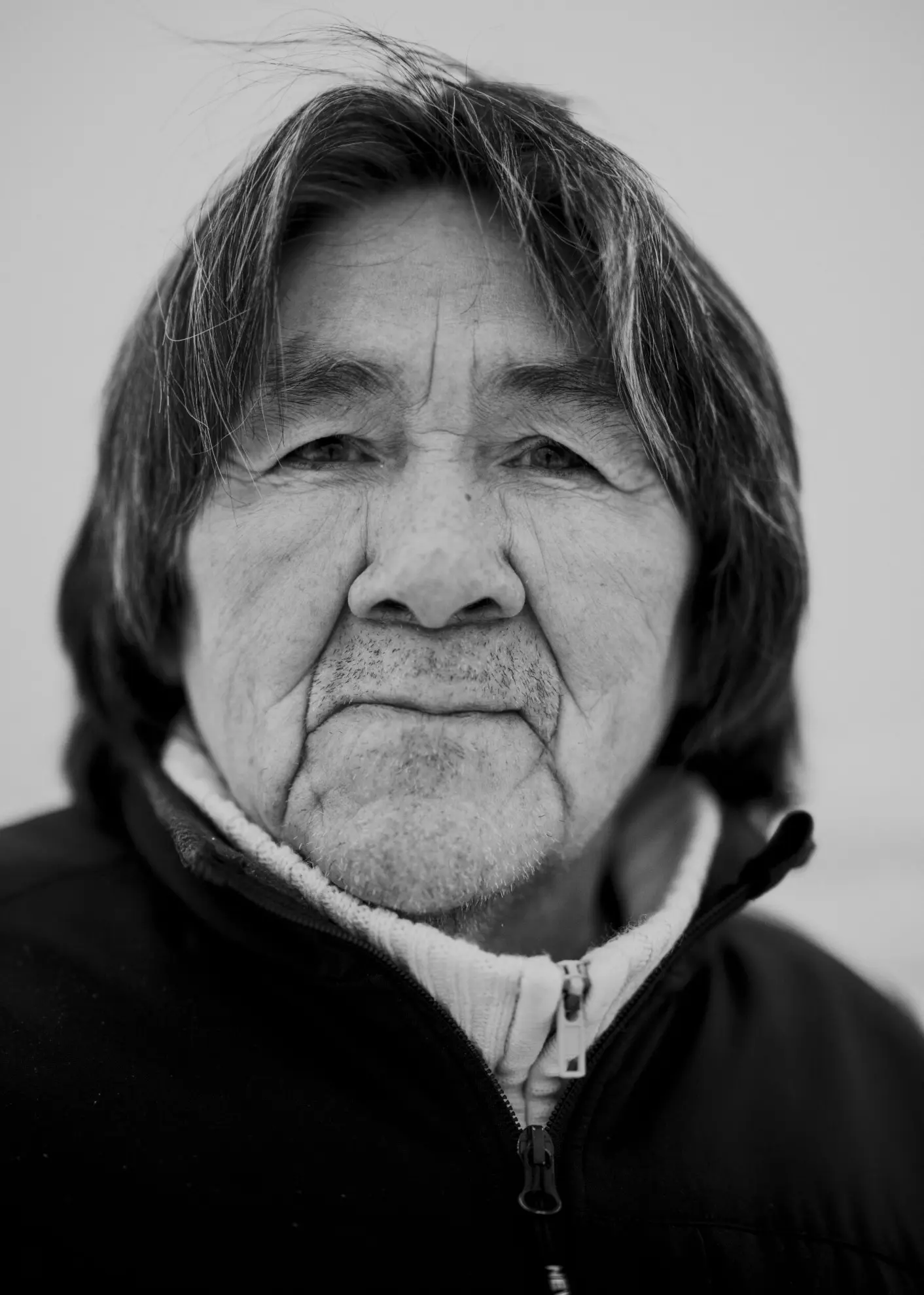
Climate change has both negative and positive consequences for the way of life in Greenland, they believe.
- Our fishermen are very active, especially in the winters when the cold doesn't stop us. Previously, the sea ice could completely close off, so we couldn't fish at all. Today, there are winters when we can work without being disturbed by the ice. But the weather is constantly changing in this country. Life can be hard because of both the sea and the air, says Lars Mathæussen.
He also points out that the rhythm of nature still fluctuates.
- Sometimes the seals disappear, and sometimes the fish disappear. But they always come back, and life goes on. If you want to live that way, you have to be prepared for the consequences that the changes can have, says Lars Mathæussen.
The clouds as DMI
In addition to climate change, the fishermen also point to more advanced and modern technology. It has many advantages, but in their opinion, it has also made the weather more unpredictable.
- I hardly bother looking at the weather forecast anymore. Before, you just looked at the clouds to know what the weather would be like. Today, I think it has become more difficult, there are so many different weather apps, and they don't always say the same thing, says Jens Tobiassen.
Another significant change is that, according to them, the risk of accidents has increased compared to before.
- In my opinion, the risk of accidents is greater today. Many people spend time on their mobile phones and social media, even while they are at work. Before, the focus was on the sea and the tasks, says Jens Tobiassen.
When the attention is shifted, it can have consequences, especially in a profession where safety depends on being fully present.
- Sailing is never completely safe. You have to be on guard at all times, says Lars Mathæussen.
Although the work requires concentration and alertness, there are also moments when the shoulders are lowered and laughter fills the deck, especially when the engine is turned off and the sea is calm around them.
In the video below, they tell a funny anecdote from one of the many sailing trips at sea:
A father as a maritime school
Jens Tobiassen and Lars Mathæussen both attended the Skipper School in Nuuk.
When they grew up, fishing was still characterized by traditions that went back generations. Many worked in smaller boats and dinghies, where the most important tool was experience, not technology. You learned about the sea through your hands and through the stories of your elders. Nevertheless, modernization began to make its inroads as early as the 1960s.
While larger cutters and new production facilities slowly emerged in the 1960s and 70s, Jens Tobiassen stood on the deck of his father's shrimp cutter as a young boy and learned the job from scratch.
- My father woke me up early in the morning when I was about nine years old. He told me to make oatmeal, and then we would sit and eat together, facing each other. Then he would go sailing and tell me to fix some nets that were used for shrimp fishing. I loved it, recalls Jens Tobiassen.
All too soon, it was time for school, and that wasn't what Jens was looking forward to the most. Because it was the mornings with his father and working around the nets that were the most exciting. It was there, around the age of nine, that his father began to teach him the rhythm and responsibility of fishing, almost as if he knew even then that his son would one day make the sea his life.
Lars Mathæussen also left elementary school early.
- I was 14 years old, and at that time shrimp fishing was my focus. But shrimp hasn't always been all that I've been doing over the years, says Lars Mathæussen.
When they finished the Skipper School in Nuuk, the two young men went their separate ways. Yet their paths have crossed again and again. They grew up with the sea as their playground and teacher. Greenlandic waters have never just been a workplace, but a calling. They have given their lives to fishing – in storms and calms.
Together they are living witnesses to the change: from dinghy fishing close to the coast to the larger shrimp boats, from hands-on experience to modern technology. But amidst the development, something has remained the same - the respect for the sea and the knowledge that was passed on.
Abonnementer
Sermitsiaq.gl - web artikler
- Adgang til alle artikler på Sermitsiaq.gl
- Pr. måned kr. 59.00
- Pr. år kr. 650.00
Sermitsiaq - E-avis
- Adgang til Sermitsiaq e-avis som udkommer hver fredag
- Adgang til alle artikler på Sermitsiaq.gl
- Pris pr. måned kr. 191
- Pris pr. år kr. 1.677
AG - Atuagagdliutit E-avis
- Adgang til AG - Atuagagdliutit e-avis som udkommer hver onsdag
- Adgang til alle artikler på Sermitsiaq.gl
- Pris pr. måned kr. 191
- Pris pr. år kr. 1.677
Sermitsiaq.AG+
- Adgang til AG - Atuagagdliutit e-avis som udkommer hver onsdag
- Adgang til Sermitsiaq e-avis som udkommer hver fredag
- Adgang til alle artikler på Sermitsiaq.gl
- Adgang til Arnanut e-magasin
- Adgang til Nutserisoq.gl
- Ved interesse send en mail til abonnement@sermitsiaq.gl
Kære Læser, Velkommen til Sermitsiaq.gl – din kilde til nyheder og kritisk journalistik fra Grønland. For at kunne fortsætte vores vigtige arbejde med at fremme den frie presse og levere dybdegående, kritisk journalistik, har vi indført betaling for udvalgte artikler. Dette tiltag hjælper os med at sikre kvaliteten af vores indhold og støtte vores dygtige journalister i deres arbejde med at bringe de vigtigste historier frem i lyset. Du kan få adgang til betalingsartiklerne fra kun kr. 59,- pr. måned. Det er nemt og enkelt at købe adgang – klik nedenfor for at komme i gang og få fuld adgang til vores eksklusive indhold. Tak for din forståelse og støtte. Dit bidrag hjælper os med at fortsætte vores mission om at levere uafhængig og kritisk journalistik til Grønland.