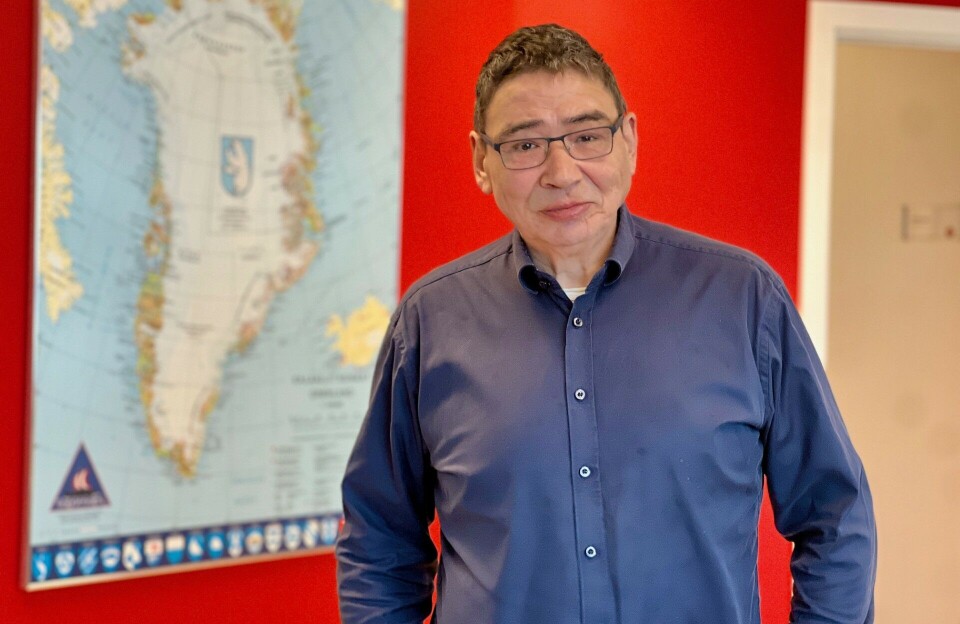

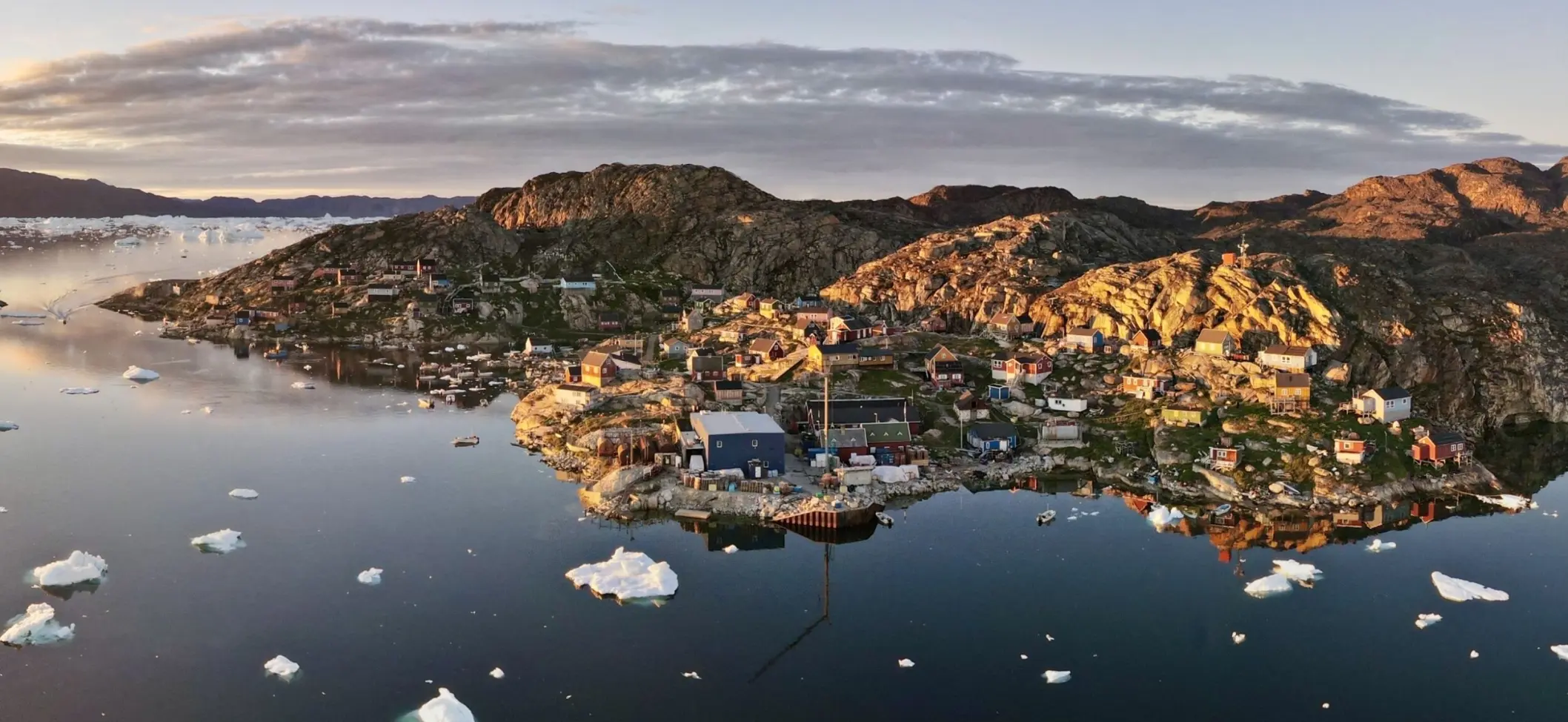
For Simon Petersen, the cold and hunger were part of everyday life in Aappilattoq in the 1950s.
He grew up with his mother in a small peat hut. The woman was actually his aunt, but she took him in as her own.
After her husband died while hunting, she was left alone with the responsibility. Life was hard, and there was neither much warmth nor food to give.
Yet Simon does not only remember deprivation. He remembers a mother with an unwavering strength, a stubborn will and a love that carried them through the difficult years.
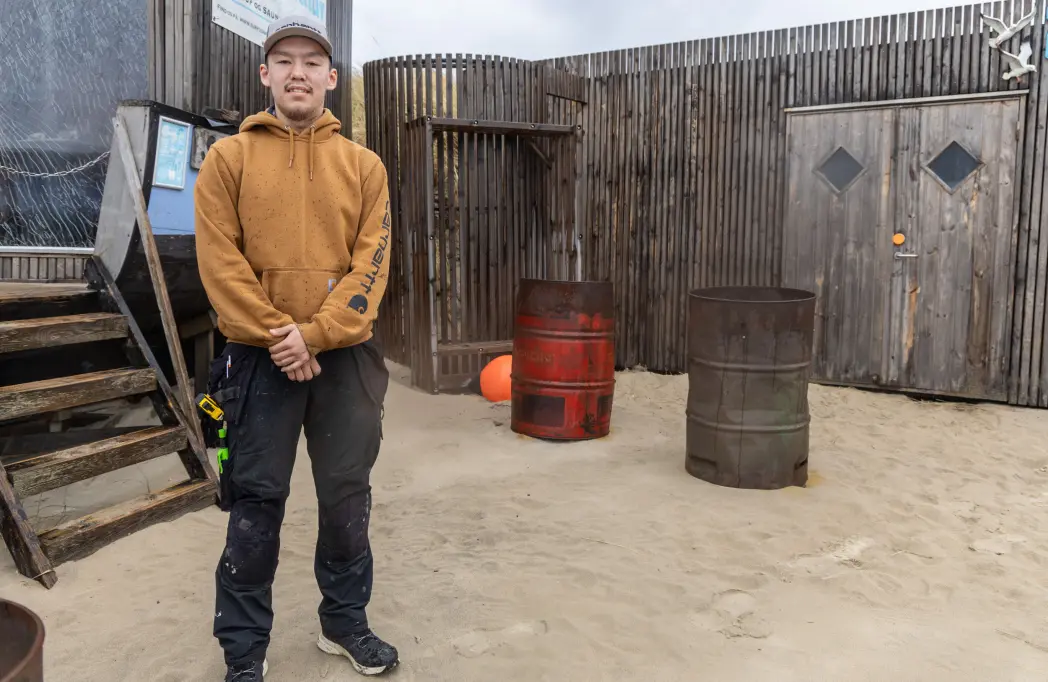
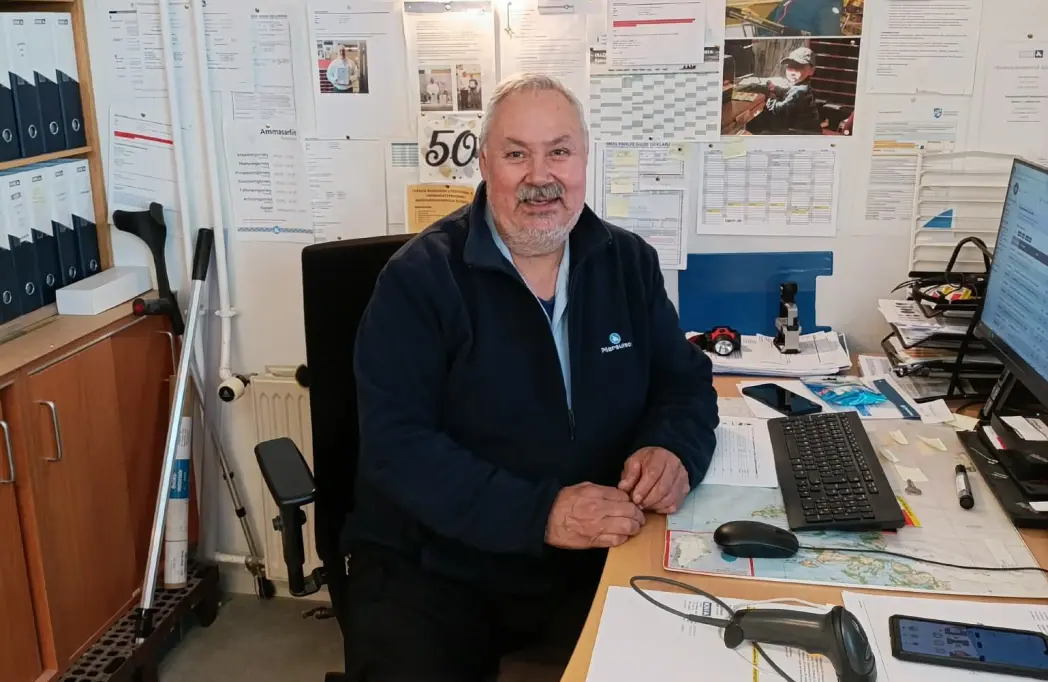
That strength followed him on in life. From the cold peat hut, which today has entered into the warmth of the shop. The door to Pilersuisoq opens and in, customers greet, and the voice behind the counter is familiar. It is Simon Petersen. 50 years after his first day of work, he is still standing in the same place - now with half a century behind him in the village's shop. Simon Petersen was born in Upernavik in 1957. "Four months after I was born and after my baptism, I moved to Aappilattoq when my aunt, whom I now call mother, adopted me," says Simon Petersen. Since then, Simon has lived in Aappilattoq, about 20 kilometers northeast of Upernavik, on the edge of the Upernavik Isfjord. At the beginning of the year, the village had 158 inhabitants. For Simon, Aappilattoq was the setting for his first encounter with the world. His earliest memory is the sound of the dog sled over the snow. He rode with his father, a man he doesn't remember, only as a figure. It's the sled and the dogs that stand out clearly.
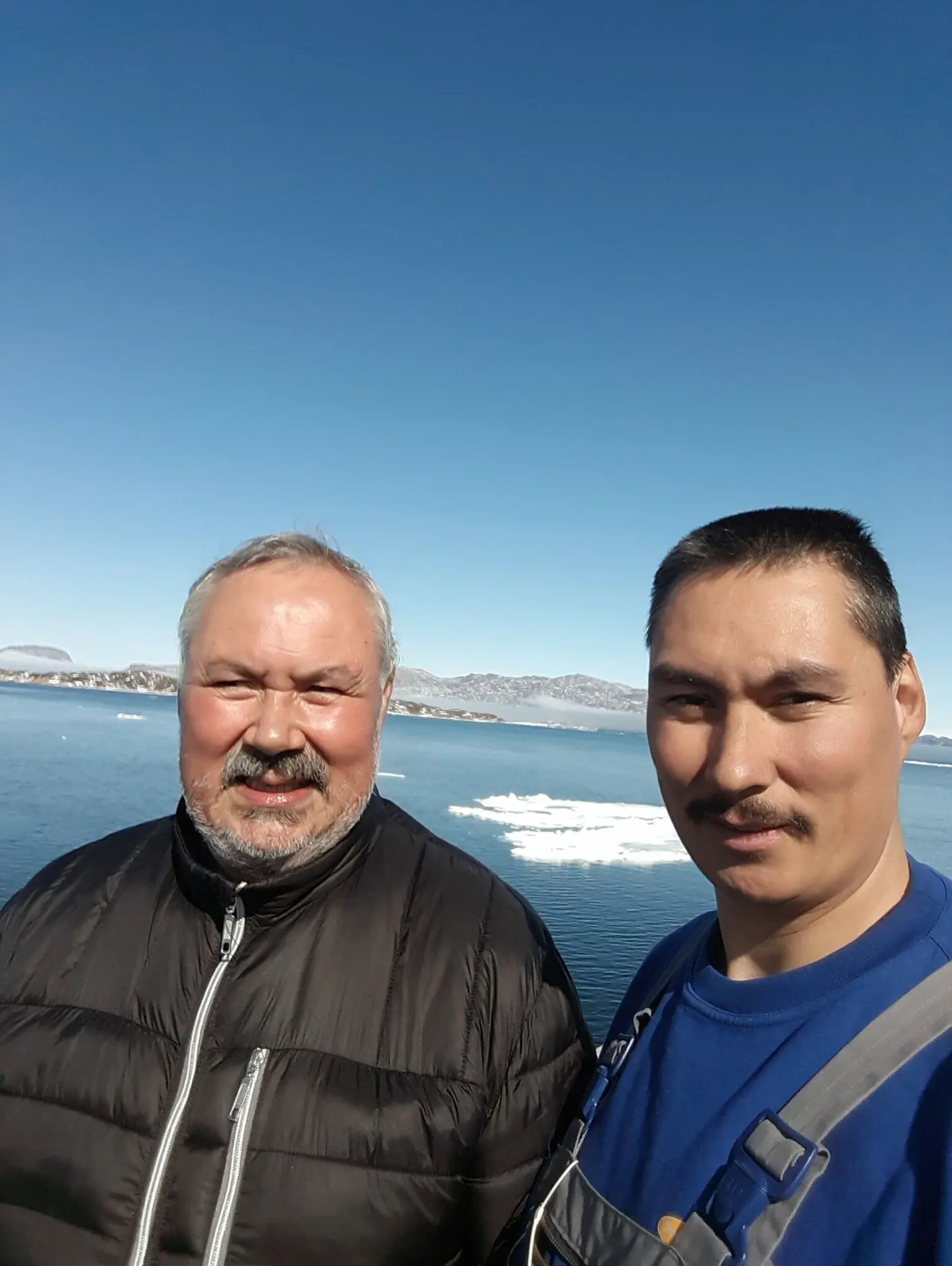
- I was so little. He died around 1959, and then it was just me and my mother, he says.
Right next to their cabin, his grandmother lived, and Simon often went back and forth between the two homes. He has eight siblings from his biological parents.
His mother, who raised him, was named Dorthe Petersen, known as Dorthennguaq. When she got married, she became Dorthennguaq Gabrielsen. She died today.
Teaching in a workshop
Simon Petersen began his schooling in Aappilattoq, where classes were held in the church. But a fire put an abrupt end to the familiar environment when the church burned down.
This meant that teaching had to be moved to more temporary conditions.
- I started school in a workshop. It was in 1965, and I remember that I really liked it, he says.
The simple setting may have been different, but for Simon it was still the beginning of his school life in the settlement.
When he was in fourth grade, it was suggested that he should travel to Denmark to continue his education, as many other children from the settlements did at the time. But his mother put her foot down and said no.
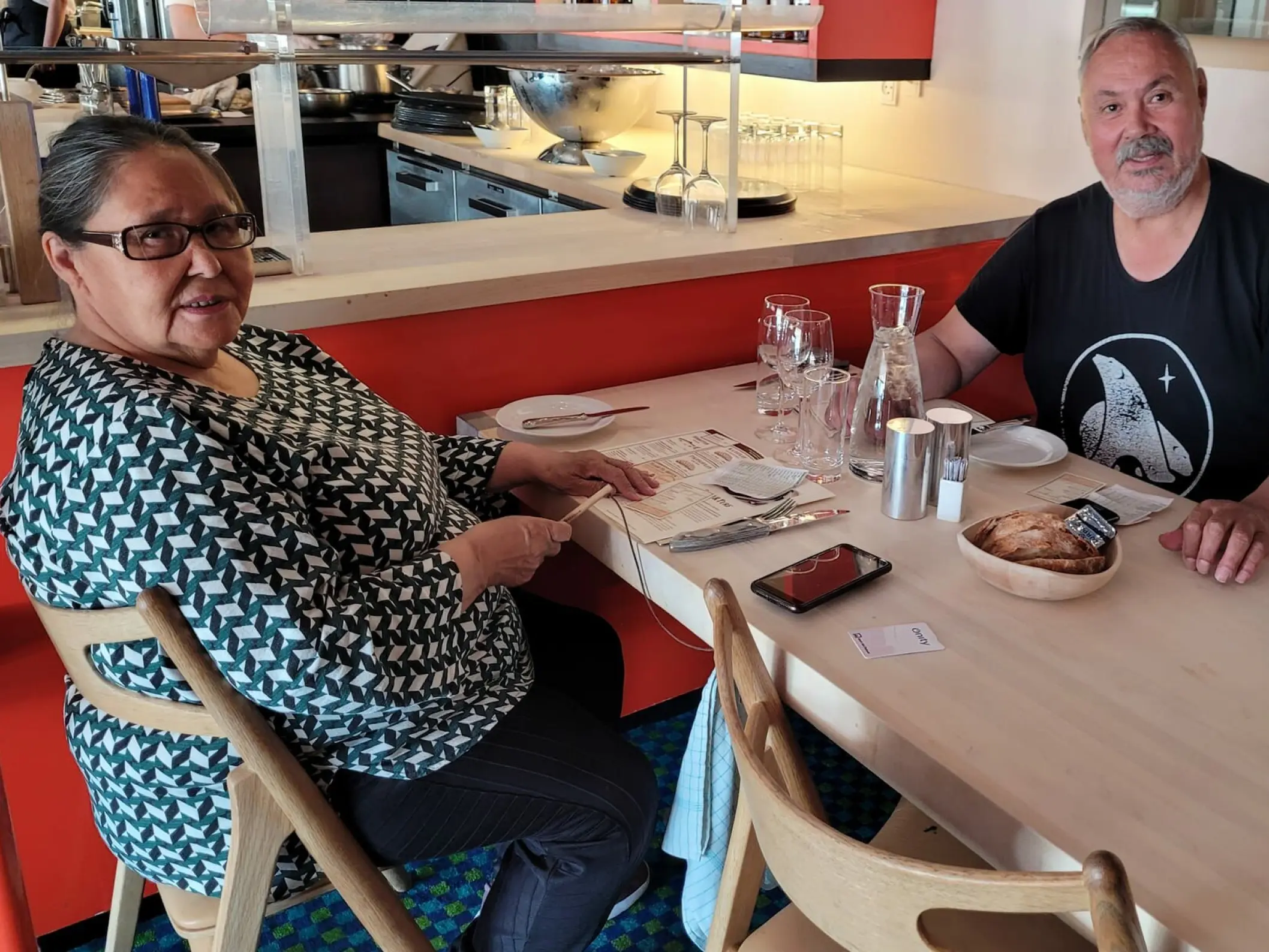
- She said that I should work instead, says Simon Petersen.
Simon's schooling was short, reaching only the fourth grade. In 1971, Simon was confirmed and his first job was in the municipality. Everything pointed towards fishing. The municipality gave him both tools and a kayak. But at home, his mother made a different decision: He should not be a fisherman.
- Because of my father. She refused to let me follow the same path as my father, he says.
This led to Simon getting a job in the municipality, where he collected freshwater ice in the winter. At that time, access to water was difficult, and in the winter, freshwater ice was collected and dragged home to the household.
- When summer came, I remember that Pilersuisoq was looking for young employees, and I started working there, says Simon Petersen.
What started as a seasonal job developed slowly. In the summer he worked in the store, which was then called KGH, while the winter was still marked by ice.
But in the winter of 1976 something happened that changed the direction.
- I was collecting ice as usual when the village manager came to me and asked if I wanted to be a permanent employee at KGH, he says.
A very happy Simon ran to his mother to tell her about the good news.
- She told me that I should take really good care of my work and be good at getting up in the morning. She told me that if it was possible, I could live my life as a worker, says Simon Petersen.
The words made an impression. From that day on he began to take responsibility seriously, not only for himself, but also to help his mother.
Trained merchant
In the 1970s, work was different from today. There were no aids – goods were lifted, carried and moved by hand. It required strength and the days were felt in the body.
- You used your muscles for everything. But it was fine when you were young, he says with a smile.
Simon arrived early and went to work seriously. His boss noticed it. He was stable, worked hard and could be counted on.
Slowly, he was given more responsibility. The tasks became bigger, his confidence grew and step by step, he worked his way up in the company. In 1999, he began training as a merchant and graduated two years later.
- This year, I also celebrated 25 years as a manager in the store, says Simon Petersen.
Throughout the years as a grocer, he has experienced both good and hard times. Not all days have been easy. There have been customers who came in with frustrations and took them out on him.
- It has sometimes been easier to be angry with the grocer, he says.
But that is not what fills the most when he looks back. Because between the difficult moments, there have been many good times, laughter over the counter, small conversations in the store and a community with both customers and colleagues that has made the work worth staying in.
Throughout his working life, Simon has not only sold goods. He has also been at the heart of Aappilattoq's development and seen the settlement change year by year, as part of the life he himself has helped to shape.
- I have also worked a lot with associations as a young man. In the 80s, I was among those who worked to get electricity to the settlement. It was successful. Those were good times, he says.
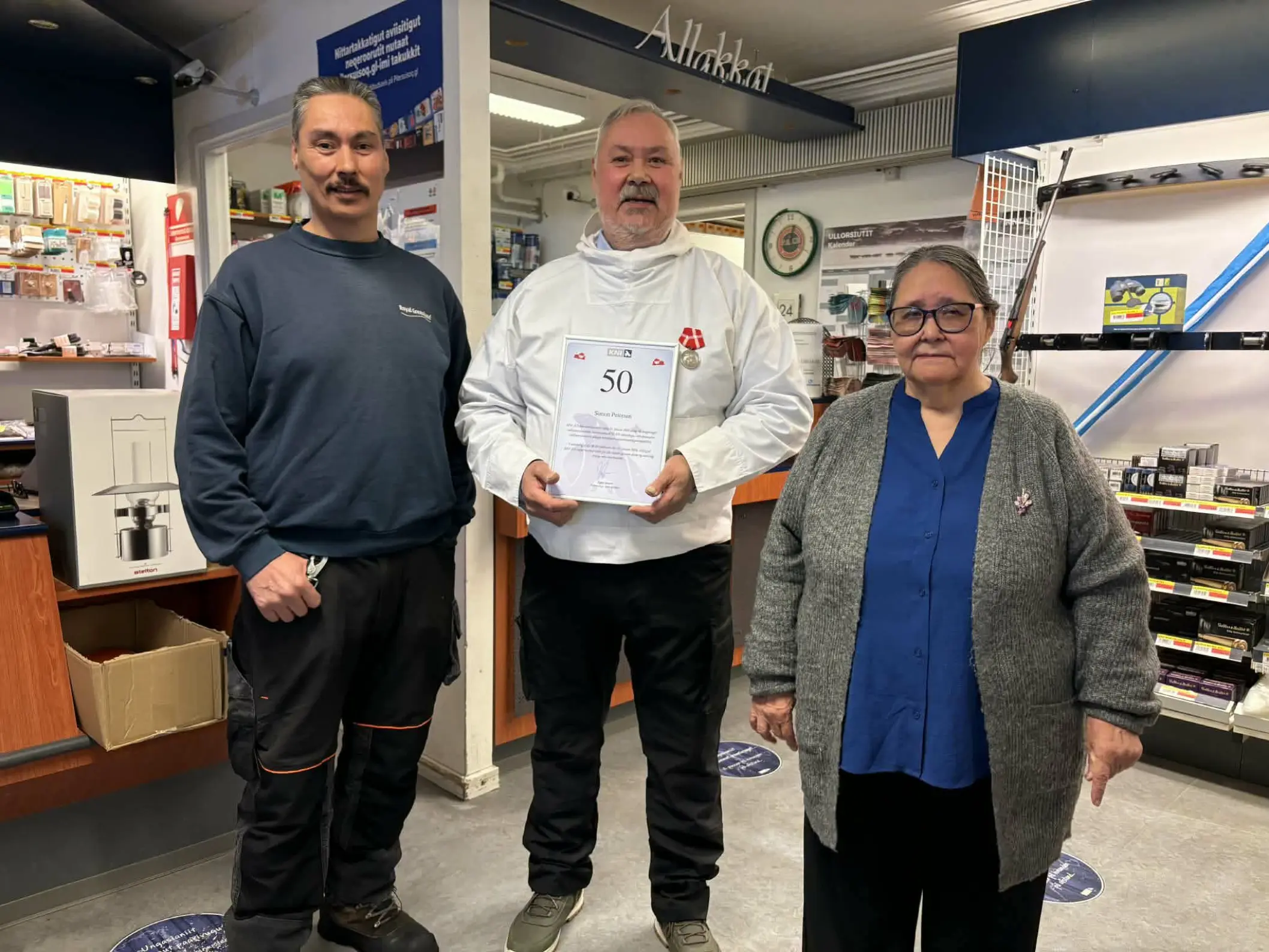
Ten years ago, Simon Petersen was awarded the Queen's Medal of Merit in silver in connection with his 40th anniversary in KNI A/S.
Next goal
- I achieved my goal on January 31st this year, when I was able to celebrate 50 years in Pilersuisoq. I don't think there has been anyone before me here in Aappilattoq who has reached the same milestone, he says.
When the municipality presented him with the diploma on the occasion of his 50th birthday, time stood still for him for a moment.
Thoughts found their own way back through the years, through the life that had shaped him. And there, in the middle of it all, she stood: his mother. The woman who had carried him through the quiet days and stormy nights of his childhood.
She who had given him everything. He felt a quiet gratitude mixed with longing, as if her presence still lived within him, deep and unwavering.
Now Simon has set a new goal for himself. Next year he will turn 70. Maybe that will be the time when he says goodbye to working life and retires, but that depends on his health, he says quietly.
Until then, his days are still bound by the same fixed rhythms. He meets at seven every morning, and only at four o'clock - sometimes a little later - does he let go of the day's duties. The routine is unshakable, almost like an anchor in time that has moved faster than he had expected.
The years can be felt in his body now. Not as something sudden, but as a quiet heaviness in his movements, a reminder that he is no longer young.
When work lets go of its grip, it is the family that takes over. Together with his partner Mina, he has two children, grandchildren and now great-grandchildren, who fill their lives with a special warmth and love.
Abonnementer
Sermitsiaq.gl - web artikler
- Adgang til alle artikler på Sermitsiaq.gl
- Pr. måned kr. 59.00
- Pr. år kr. 650.00
Sermitsiaq - E-avis
- Adgang til Sermitsiaq e-avis som udkommer hver fredag
- Adgang til alle artikler på Sermitsiaq.gl
- Pris pr. måned kr. 191
- Pris pr. år kr. 1.677
AG - Atuagagdliutit E-avis
- Adgang til AG - Atuagagdliutit e-avis som udkommer hver fredag
- Adgang til alle artikler på Sermitsiaq.gl
- Pris pr. måned kr. 191
- Pris pr. år kr. 1.677
Sermitsiaq.AG+
- Adgang til AG - Atuagagdliutit e-avis som udkommer hver fredag
- Adgang til Sermitsiaq e-avis som udkommer hver fredag
- Adgang til alle artikler på Sermitsiaq.gl
- Adgang til Arnanut e-magasin
- Adgang til Nutserisoq.gl
- Ved interesse send en mail til abonnement@sermitsiaq.gl
Kære Læser, Velkommen til Sermitsiaq.gl – din kilde til nyheder og kritisk journalistik fra Grønland. For at kunne fortsætte vores vigtige arbejde med at fremme den frie presse og levere dybdegående, kritisk journalistik, har vi indført betaling for udvalgte artikler. Dette tiltag hjælper os med at sikre kvaliteten af vores indhold og støtte vores dygtige journalister i deres arbejde med at bringe de vigtigste historier frem i lyset. Du kan få adgang til betalingsartiklerne fra kun kr. 59,- pr. måned. Det er nemt og enkelt at købe adgang – klik nedenfor for at komme i gang og få fuld adgang til vores eksklusive indhold. Tak for din forståelse og støtte. Dit bidrag hjælper os med at fortsætte vores mission om at levere uafhængig og kritisk journalistik til Grønland.