Even though Queen Margrethe handed over the throne to King Frederik almost two years ago, interest in her remains high.
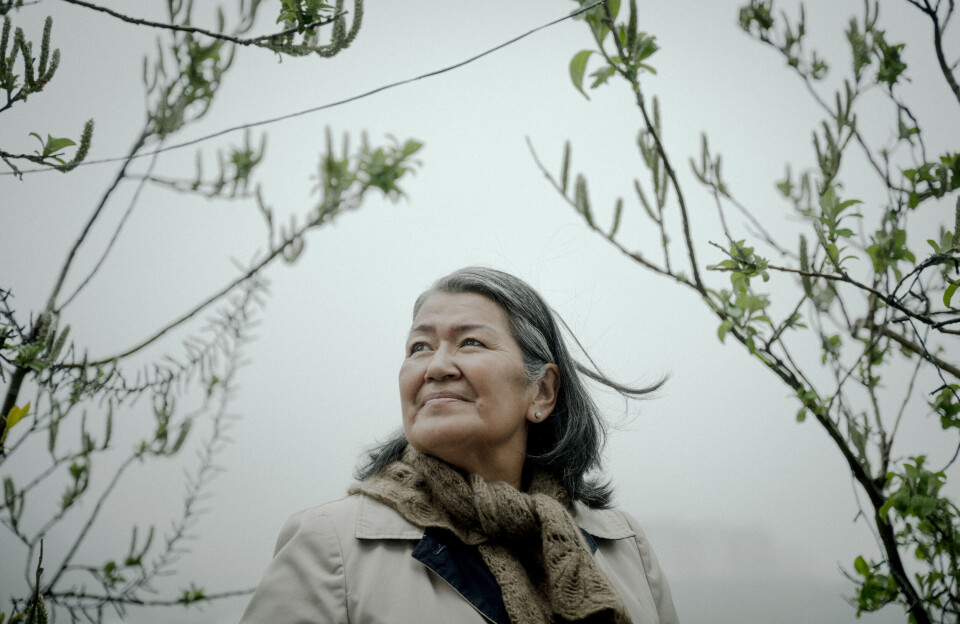
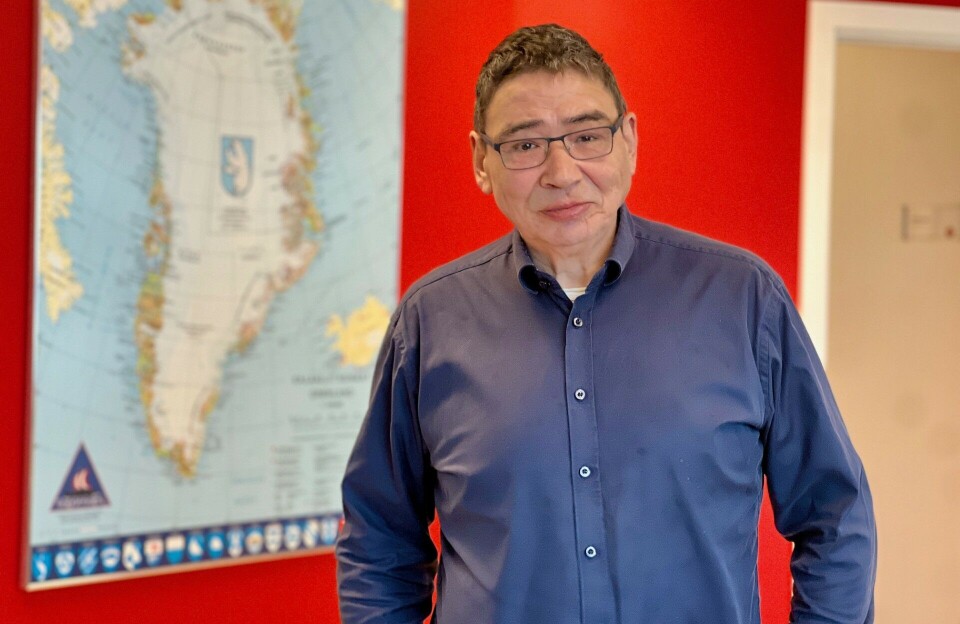
This is according to Greenlandic art historian Laila Lund Altinbas. Earlier this year, she helped Randers Art Museum with a large special exhibition featuring artworks from Queen Margrethe's large private art collection.
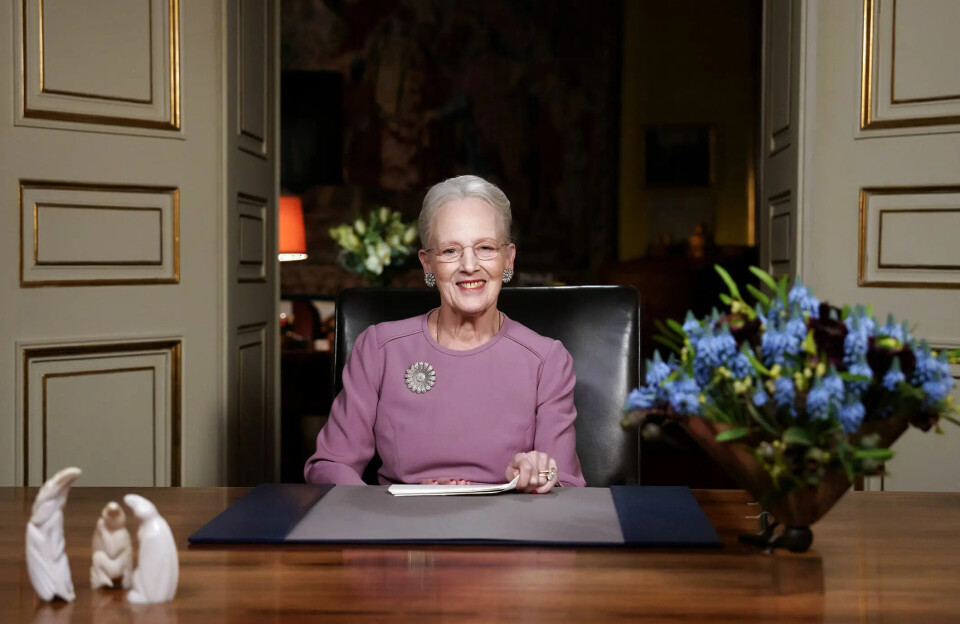
- My help was quite small. I helped the museum write the information text for the three tupilaks, which many in the Kingdom know from the Queen's desk when she gave her New Year's speech, says Laila Lund Altinbas.
- Afterwards, I was invited to speak about the Tupilaks in mid-October at an evening event at the museum.
- It was a success. Fifty people turned up for the event. It turned out that the three tupilaks had been seen by everyone – and many had talked about them when they listened to the New Year's speech with a glass of champagne in hand, so Queen Margrethe has really brought Greenlandic art to the population, says Laila Lund Altinbas.
Carved elephant tusk
The Greenlandic art historian can also reveal that the Queen has a carved elephant tusk in her collection, made by tupilak artist Aron Kleist, who is also the artist behind the largest of the three tupilaks on the Queen's desk.

The story of the tupilaks begins in 1975, when Queen Margrethe and Prince Henrik visited South Greenland and were given the tupilaks as a gift.
- They are so impressed by Aron's figure that in the summer of 1977 they order a carved ivory tusk from him - that's why they send him two elephant tusks, one to practice on, and another for the final work, explains Laila Lund Altinbas.
It is unknown where the elephant tusks come from, but Prince Henrik lived in Vietnam for five years during his childhood and later returned to Hanoi to study.
- So these are probably elephant tusks from the time that Aron Kleist has carved. That makes good sense, because all trade in elephant tusks and ivory was banned when the Washington Convention was adopted in 1973.
Conservator solved the problem
- Aron's figures are easy to recognize by their refined and detailed surface treatment. One of the other figures in the collection has the same characteristic beautiful surface, but the royal house was not sure of the artist's name - until they were examined by a conservator for the exhibition in Randers.
- The conservator noticed the initials "CK", which must be Aron's daughter Cecilie Kleist. Cecilie and Aron worked so closely together for a period that their works were almost indistinguishable - however, she took up depictions of women more often than her father.
- The last figure is by an unknown artist, like so many other tupilak figures, where the artist has unfortunately not been noted - and here there was no signature on the figure, says Laila Lund Altinbas.
Queen Margrethe herself has selected the more than 60 works that are included in the exhibition at Randers Art Museum. The selected works represent several centuries and many styles. Naturalistic and figurative landscapes, portraits and abstract compositions are on display.
The works reflect a lifelong encounter with art, guided by personal intuition, aesthetic sense and great interest in and knowledge of art, literature and history. Overall, the exhibition constitutes a rich, multifaceted and colorful whole composed of the works of art that have had a very special meaning for Queen Margrethe over the years. The works are currently part of the decoration of Queen Margrethe's home at the royal palaces, Marselisborg, Amalienborg, Fredensborg and Gråsten Castle.
The special exhibition with Queen Margrethe's artworks at Randers Kunstmuseum was open until December 14th.