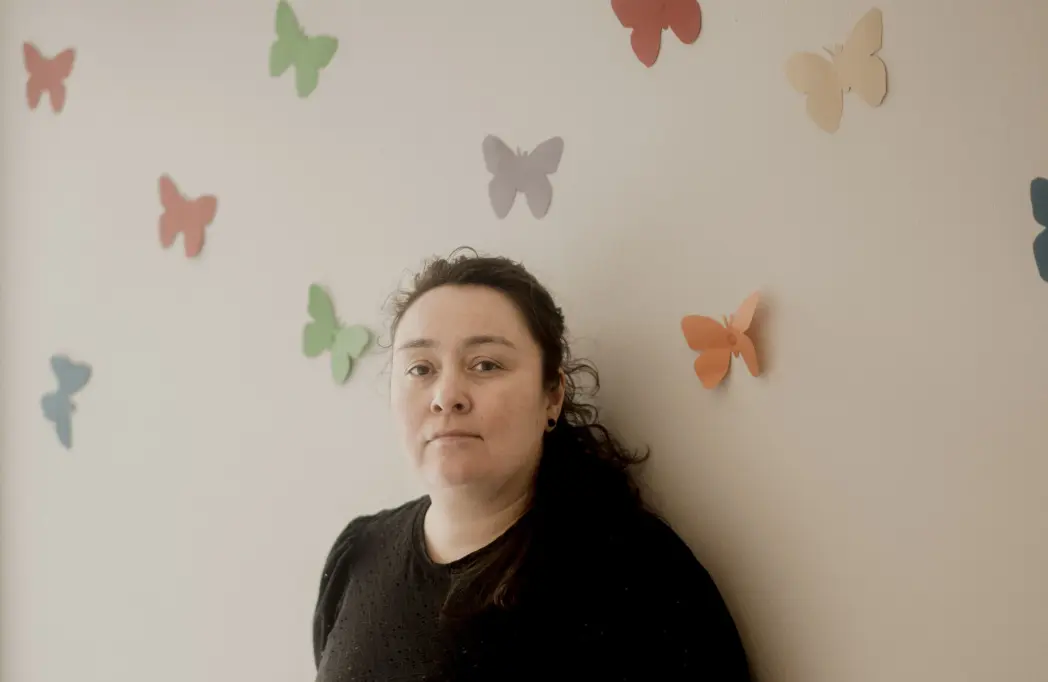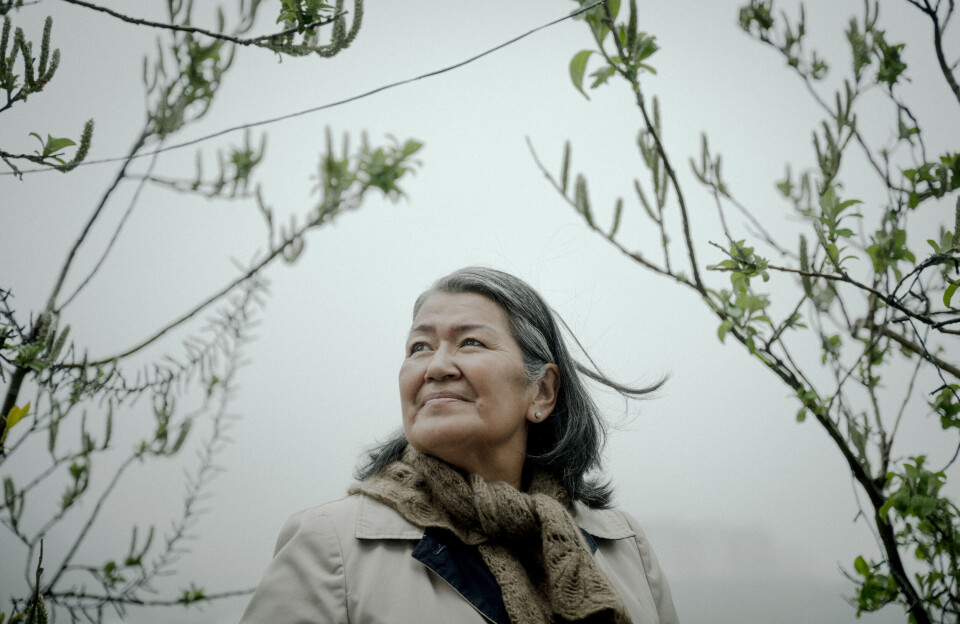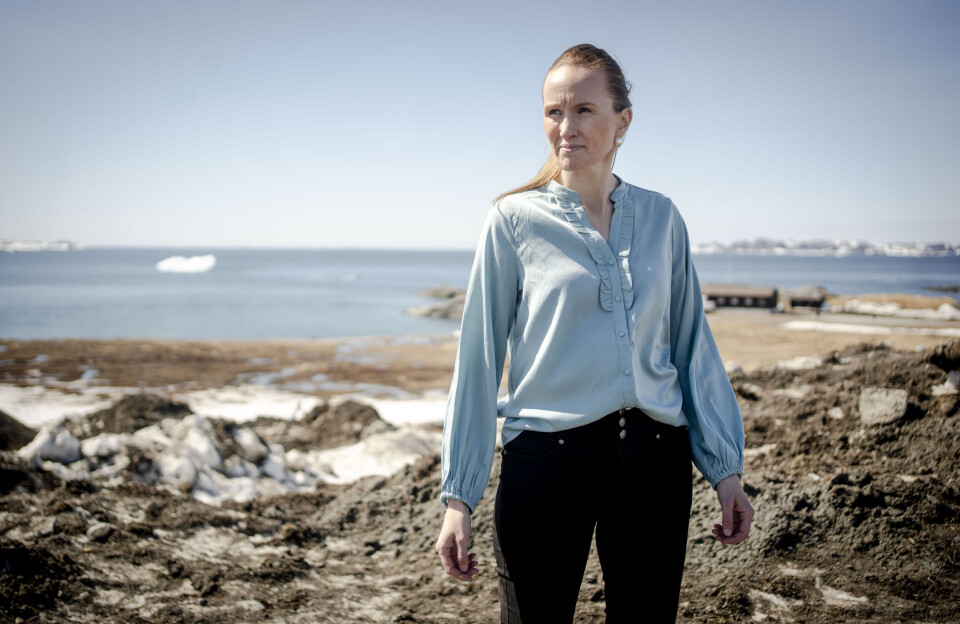
For a decade, she has worked purposefully and with a quiet but heartfelt effort to preserve the traditions surrounding the national costume at Kalaallisuuliornermik Ilinniarfik, Greenland's only educational institution specializing in national costume and traditional fur sewing.
Her struggle has never been loud, but it has been persistent, driven by a deep love for the materials, the suit and the heritage. The stubbornness and curiosity that keeps her working today has been there since childhood. Back then, she would sneak out in the middle of the night while her parents were sleeping, even though she wasn't allowed to, to be up close to the music and experience the life of concerts with Aasiaat's most popular bands in the mid-1990s.
Pilunnguaq Kleist Aronsen was born in January 1983 in temperatures of over -40 degrees Celsius in Qasigiannguit. Her harsh beginnings also reflect the persistence she puts into preserving Greenlandic traditions today.

Although Pilunnguaq Kleist Aronsen was born in Qasigiannguit, she did not grow up there. When she was two years old, the family - her parents, two siblings and herself - moved to Aasiaat.
- My father, Ludvig Kleist, is from Aasiaat, and that's why we moved there in 1985, she says.
Pilunnguaq grew up as the eldest child in the family. Her father's eldest son, who is biologically her older brother, lived with her grandparents, and this gave her the role of the eldest in everyday life. A position that, according to the family, she filled to the brim - with curiosity, determination and not a few antics that sometimes tested her parents' patience.
When she wasn't sneaking out to concerts while her parents were sleeping, she was also hiding under the bed in Sisimiut, just to skip school.
- I used to take the bus to school and sometimes fell asleep during the ride. I ended up just walking home. When my father came home from work to check, I hid under the bed, recalls Pilunnguaq Kleist Aronsen.
The first memories
The family lived in Aasiaat from 1985 to 1997. This is also where Pilunnguaq Kleist Aronsen's first memories come from. Her mother Martha Rosa Olsen, born Andreassen, was a stay-at-home mother in Pilunnguaq's early years. But when she was about five years old, her mother returned to the job market, which meant that Pilunnguaq and her little brother had to start daycare. An experience that has stuck with her.
"My little brother and I stuck together and tried to find our place among the other kids. That's probably why we're so close today," she says.

Pilunnguaq also had a close relationship with her two grandmothers. With one she went to bingo and church services. With the other she received a very special gift on her first day of school: a plane ticket to Denmark in connection with a christening in the family. The excitement was palpable. She had never been there before - and never flown in a big plane. What would it be like?
- There I had my first experience of turbulence. Ajoq, I had closed my eyes and just cried, says Pilunnguaq Kleist Aronsen.
She spent a month in Denmark with her family.
"My cousins spoke Danish, and I tried to imitate the sound. I just spoke gibberish," she laughs.
- When I went home, I was startled by the sight of my little sister. It was summer and she had gotten so tanned that I was a bit shocked, she laughs at the memory.
A good decision
Pilunnguaq Kleist Aronsen began her schooling at Aasiaat's primary school, Gammeqarfik. She was the quiet and shy one in the class, but she loved school and still remembers several of her primary school teachers as important and significant.
When she was about 12 years old, she was told that the choir “Aasiaat Nipaat” was looking for children to join the choir. Despite her reluctance, she found the courage and showed up for the audition. Best decision ever.
"I loved it and always showed up for rehearsals. I fell in love with singing," she says.

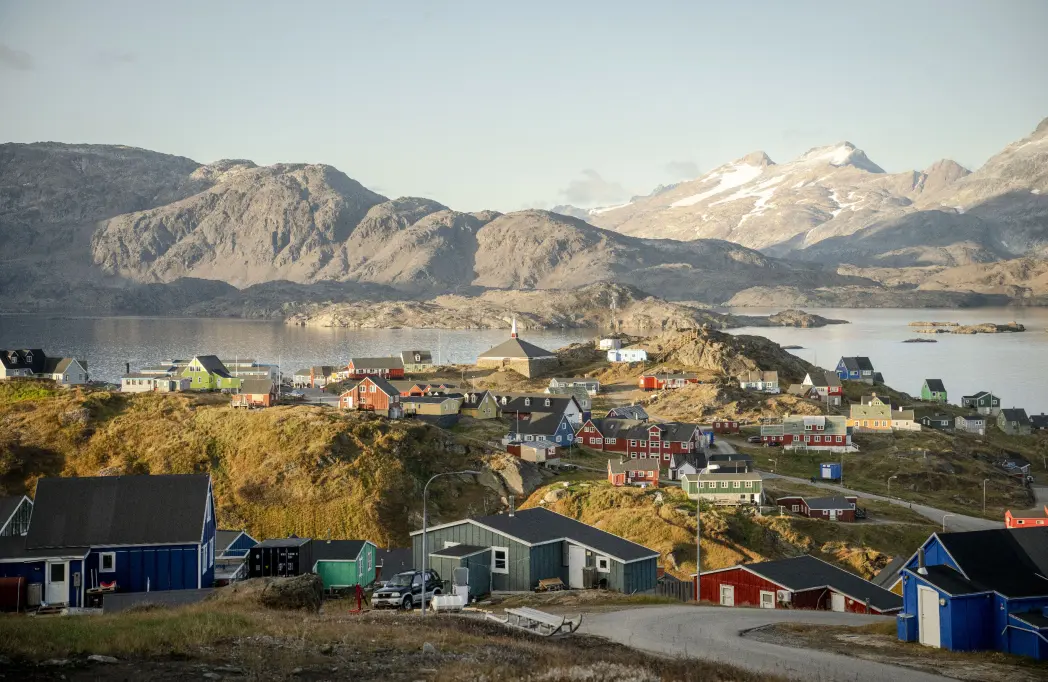
A few years later, in 1997, her father got a job in Sisimiut. Since her mother is also a Sisimiormioq, it made good sense for the family to move to the city.
- I moved a little later than my family, when I was on tour with the choir in Denmark. I clearly remember how I felt at the airport after the tour, where I had to say goodbye to them. I cried the whole trip to Sisimiut, she says.
A new city and new surroundings. Away from the friends and everyday life she was used to.
"I experienced a culture shock and had a hard time in elementary school. That meant I had to get higher grades to move on," she says.
New path in life
Pilunnguaq Kleist Aronsen applied for a place at high school – but was rejected. But ajunngilaq, she knew it well. She was 17 years old.
- Instead, I got a full-time job in a store and worked for three years, she says.
In 2002, Pilunnguaq received news that pleased her. She had become pregnant.
- In 2003 I had a son, she says.
The child changed Pilunnguaq's entire life path. She started attending night school to get better grades. The goal was clear: a high school education.

- I started at GU in Aasiaat. My son was two years old when we both traveled to Aasiaat, says Pilunnguaq Kleist Aronsen.
The demands of high school were heavy, and Pilunnguaq had to make a difficult decision. She sent her son back to Sisimiut, where he would live with her parents - a choice that was necessary.
And she graduated. With a graduation cap richer, Pilunnguaq applied to nursing school.
"But after two years I decided I wanted my son back. I stopped the education," she says.
Pilunnguaq got a job at the retirement home and concentrated on it and her child.
The Night Watch
One day she had a night shift. Everything went on as usual – the familiar routines and duties at the retirement home followed their usual rhythm. The television was on in one of the rooms, and suddenly an advertisement caught her attention: The National Costume School was looking for new students.
The sight brought her back to her confirmation day, when she was first fascinated by the national costume she was wearing. She had wondered: How was it made and sewn? At the time, she had not thought about it any more. But now, several years later, the advertisement rekindled her curiosity.

When she got the day off, she went straight to Majoriaq to apply for a place – without having slept. Again, Pilunnguaq had been on the night shift and she slept through the night’s hustle and bustle at home when the school called after a few days. They asked her if she was interested in taking a test to see if she was suitable. Of course she would. Before she could blink, she was holding an ulu and was about to scrape the skin off a seal. She had never used an ulu in that way. She was a little startled, but at the same time filled with curiosity – curiosity about the craft, the material and what she was about to learn.
She began her education in October 2012.
- When I started, I was told that I would have to – during the course of the education – make a national costume for myself, one for a child and one for a man, recalls Pilunnguaq Kleist Aronsen, who completed the education in 2013.
Teacher for 11 years
When Pilunnguaq Kleist Aronsen graduated, she became a teacher at the school. She had finally found her calling.
- I love needlework, where I can challenge myself and be creative, she says.
For Pilunnguaq, working with leather is therapy. While she scrapes and processes the leather, she also sorts her own thoughts and lets the heavy, negative emotions slide away - as if each movement cleanses the mind.
While she was a teacher, Pilunnguaq met her husband and had two more children. So she has three children in total.
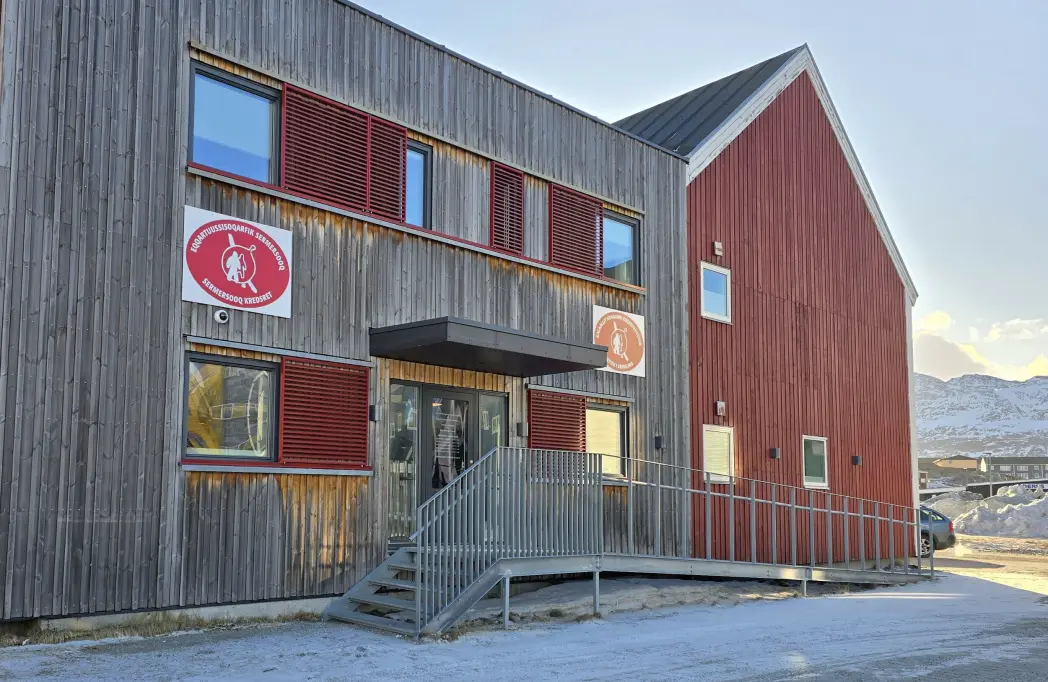
Pilunnguaq Kleist Aronsen became the 1st of December new head of the National Dress School, which is based in Sisimiut.

One of Pilunnguaq's big visions is to ensure better conditions for fur work. She explains that seal skins today are of poorer quality, without anyone fully knowing why.
"When I was a student, we could complete over 40 skins in a month. We can't do that anymore because the skins quickly split or get damaged. Now it's my job to find out why," she says.
Pilunnguaq is in a position she knows well. Day after day, she works to preserve the tradition of the Greenlandic national costume so that it is not lost. One day at a time, one task at a time. It is slow, but that is also the way traditions survive - through care, perseverance and love for the craft.
Abonnementer
Sermitsiaq.gl - web artikler
- Adgang til alle artikler på Sermitsiaq.gl
- Pr. måned kr. 59.00
- Pr. år kr. 650.00
Sermitsiaq - E-avis
- Adgang til Sermitsiaq e-avis som udkommer hver fredag
- Adgang til alle artikler på Sermitsiaq.gl
- Pris pr. måned kr. 191
- Pris pr. år kr. 1.677
AG - Atuagagdliutit E-avis
- Adgang til AG - Atuagagdliutit e-avis som udkommer hver onsdag
- Adgang til alle artikler på Sermitsiaq.gl
- Pris pr. måned kr. 191
- Pris pr. år kr. 1.677
Sermitsiaq.AG+
- Adgang til AG - Atuagagdliutit e-avis som udkommer hver onsdag
- Adgang til Sermitsiaq e-avis som udkommer hver fredag
- Adgang til alle artikler på Sermitsiaq.gl
- Adgang til Arnanut e-magasin
- Adgang til Nutserisoq.gl
- Ved interesse send en mail til abonnement@sermitsiaq.gl
Kære Læser, Velkommen til Sermitsiaq.gl – din kilde til nyheder og kritisk journalistik fra Grønland. For at kunne fortsætte vores vigtige arbejde med at fremme den frie presse og levere dybdegående, kritisk journalistik, har vi indført betaling for udvalgte artikler. Dette tiltag hjælper os med at sikre kvaliteten af vores indhold og støtte vores dygtige journalister i deres arbejde med at bringe de vigtigste historier frem i lyset. Du kan få adgang til betalingsartiklerne fra kun kr. 59,- pr. måned. Det er nemt og enkelt at købe adgang – klik nedenfor for at komme i gang og få fuld adgang til vores eksklusive indhold. Tak for din forståelse og støtte. Dit bidrag hjælper os med at fortsætte vores mission om at levere uafhængig og kritisk journalistik til Grønland.