
In an 11-page letter, 3 UN Special Rapporteurs sharply criticize the Danish authorities for possible violations of the human rights of Greenlandic families.
Criticism of the use of FKU tests
The three Special Rapporteurs Reem Alsalem, Albert K. Barume and Ashwini K.P., who are rapporteurs on violence against women and girls, the rights of indigenous peoples and racism and intolerance, respectively, have taken a closer look at the forced placement case of Greenlandic Keira Alexandra Kronvold, which they use as a starting point for a general concern regarding the Danish authorities' use of non-adapted psychological tests in connection with the preparation of parental competence assessments in cases involving Greenlandic families.
Although the tests are no longer allowed to be used according to the law, and that instead a new special unit with expertise in Greenlandic language and culture under VISO in the National Board of Health and Welfare must be used in cases involving Greenlandic families, the concern is that previously used tests continue to form the basis for municipalities' decisions on forced removal.
In addition, the three special rapporteurs raise concerns about children being removed from their Greenlandic parents to be placed with Danish foster parents, which may have a negative impact on their cultural and linguistic identity.
Critical questions to the Ministry of Social Affairs
The three special rapporteurs have asked a long list of questions to the Ministry of Social Affairs, including whether the standardized tests are still used, even though they are officially no longer allowed to be used. As well as how stereotypical assessments of cultural norms are avoided and to what extent indigenous peoples, Greenlandic organizations and professionals have been involved in planning, implementing and evaluating initiatives in VISO and their working methods. Finally, questions are also asked about information on the basis for forced removals from birth and what support women who have their children forcibly removed from birth are offered.
Sermitsiaq has also seen the Ministry of Social Affairs' response, where they first explain that there is currently no government in place in Denmark. Next, they suggest that a personal meeting be arranged in Geneva or alternatively a meeting in Copenhagen, where there is also the possibility of a visit to Odense, where the special unit under VISO is located. "During a meeting, we can review the general framework for the newly established specialized unit with expertise in Greenlandic linguistic and cultural matters in VISO, the Danish legal system and the Danish system for the provision of social support, clarify any points or questions and examine the next steps," writes Head of Department Julie Grunnet Wang.
A serious matter for Denmark
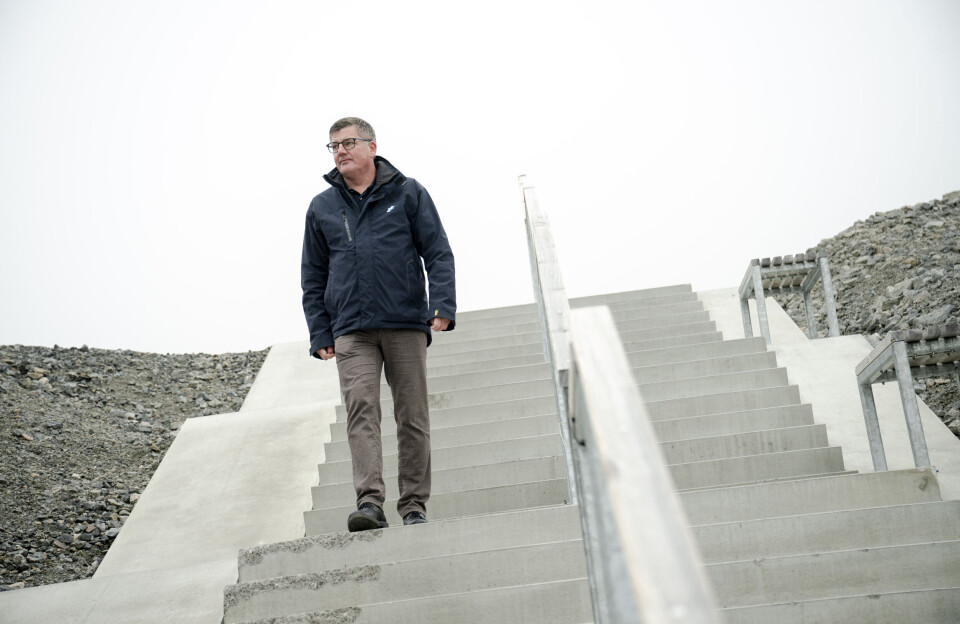
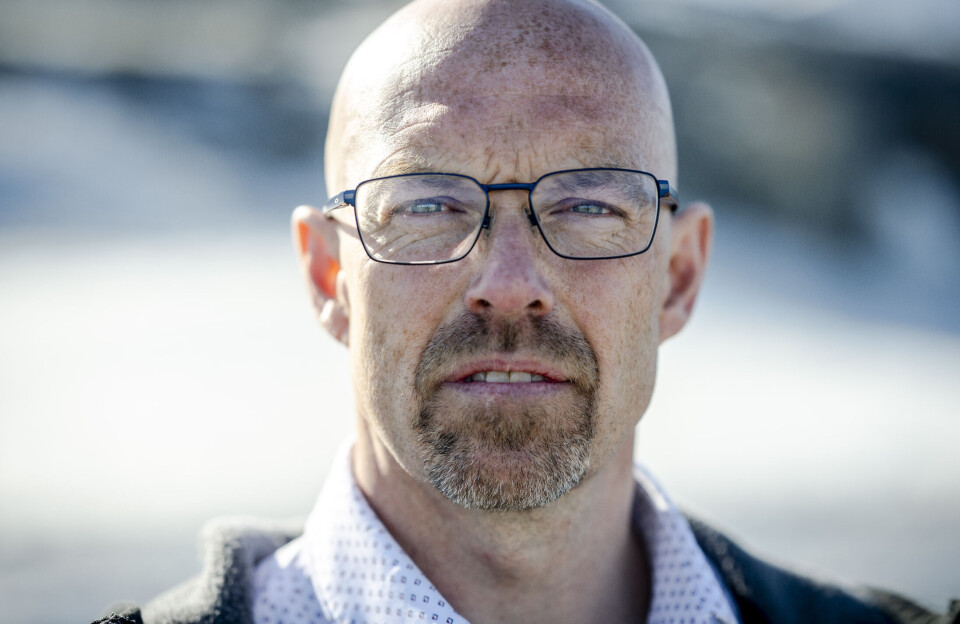
Considering both the letter from the UN special rapporteurs and the response from the ministry, Professor Emeritus of International Law, Frederik Harhoff, says that this is a serious matter for the Danish government.
– I can see nothing other than that the use of FKU tests in Greenlandic families' cases is contrary to basic administrative law rules, because they did not take sufficient account of the special linguistic, social and cultural conditions that applied - and still apply - to many Greenlandic women and their families in both Greenland and Denmark. The way in which the FKU examinations were conducted was therefore undoubtedly experienced as highly offensive and traumatizing for those affected in the cases that ended in a forced removal.
All communication should take place in Greenlandic
Frederik Harhoff emphasizes that all communication between a municipality, the experts and a Greenlandic citizen should take place in Greenlandic. It was therefore an obvious mistake that the municipalities did not use interpreters and Greenlandic experts in most of these situations.
How serious is the criticism from the UN?
– It is clearly unusual. I think it is deeply serious.
What do you think should be done now?
– For the children who have come of age, there is hardly anything to do - other than to assess whether there is a basis for compensation. But for the children who are not yet of age, the cases will probably have to be reviewed again by Greenlandic psychologists and professionals with a view to assessing whether the decisions should be changed, and whether, under the circumstances, there is a basis for providing compensation to the parents who wrongfully had their children forcibly removed, and possibly also to the foster families who must now give the children back, if a decision is made to this effect, says Frederik Harhoff.
Review of the cases
Frederik Harhoff believes that in all cases the best interests of the children must be given priority in any possible new review of the 406 current placement cases, where this is still possible, and that the review must then be expedited.
He adds that the work of reviewing these cases again will be enormously extensive and will naturally be very burdensome for both the mothers, their families and not least for the children who were forcibly removed - especially in the oldest cases. It cannot therefore be ruled out that the costs, trauma, despair and pain of reopening the cases in several cases will prove to be greater than the satisfaction that can be achieved by reversing the decision on forcible removal at the time. In particular, the question of compensation will be the most reasonable outcome here.
It is reported that UN Special Rapporteur Reem Alsalem will come to Denmark next week.
Abonnementer
Sermitsiaq.gl - web artikler
- Adgang til alle artikler på Sermitsiaq.gl
- Pr. måned kr. 59.00
- Pr. år kr. 650.00
Sermitsiaq - E-avis
- Adgang til Sermitsiaq e-avis som udkommer hver fredag
- Adgang til alle artikler på Sermitsiaq.gl
- Pris pr. måned kr. 191
- Pris pr. år kr. 1.677
AG - Atuagagdliutit E-avis
- Adgang til AG - Atuagagdliutit e-avis som udkommer hver fredag
- Adgang til alle artikler på Sermitsiaq.gl
- Pris pr. måned kr. 191
- Pris pr. år kr. 1.677
Sermitsiaq.AG+
- Adgang til AG - Atuagagdliutit e-avis som udkommer hver fredag
- Adgang til Sermitsiaq e-avis som udkommer hver fredag
- Adgang til alle artikler på Sermitsiaq.gl
- Adgang til Arnanut e-magasin
- Adgang til Nutserisoq.gl
- Ved interesse send en mail til abonnement@sermitsiaq.gl
Kære Læser, Velkommen til Sermitsiaq.gl – din kilde til nyheder og kritisk journalistik fra Grønland. For at kunne fortsætte vores vigtige arbejde med at fremme den frie presse og levere dybdegående, kritisk journalistik, har vi indført betaling for udvalgte artikler. Dette tiltag hjælper os med at sikre kvaliteten af vores indhold og støtte vores dygtige journalister i deres arbejde med at bringe de vigtigste historier frem i lyset. Du kan få adgang til betalingsartiklerne fra kun kr. 59,- pr. måned. Det er nemt og enkelt at købe adgang – klik nedenfor for at komme i gang og få fuld adgang til vores eksklusive indhold. Tak for din forståelse og støtte. Dit bidrag hjælper os med at fortsætte vores mission om at levere uafhængig og kritisk journalistik til Grønland.