Iñupiat is an Inuit people who have their homeland in northernmost Alaska, facing the Arctic Ocean.
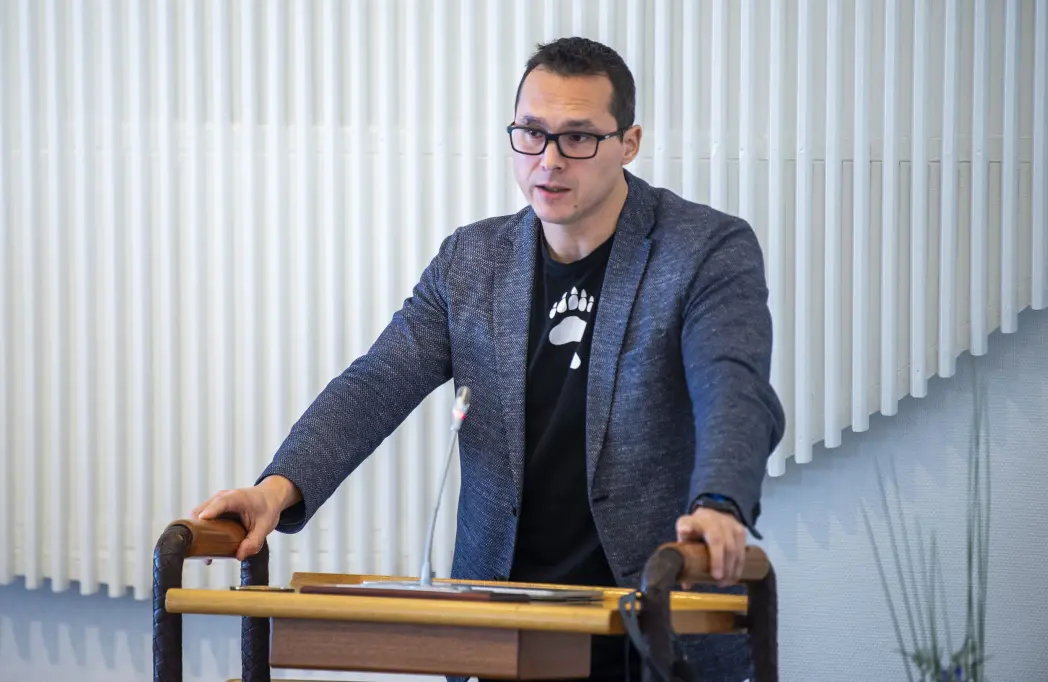
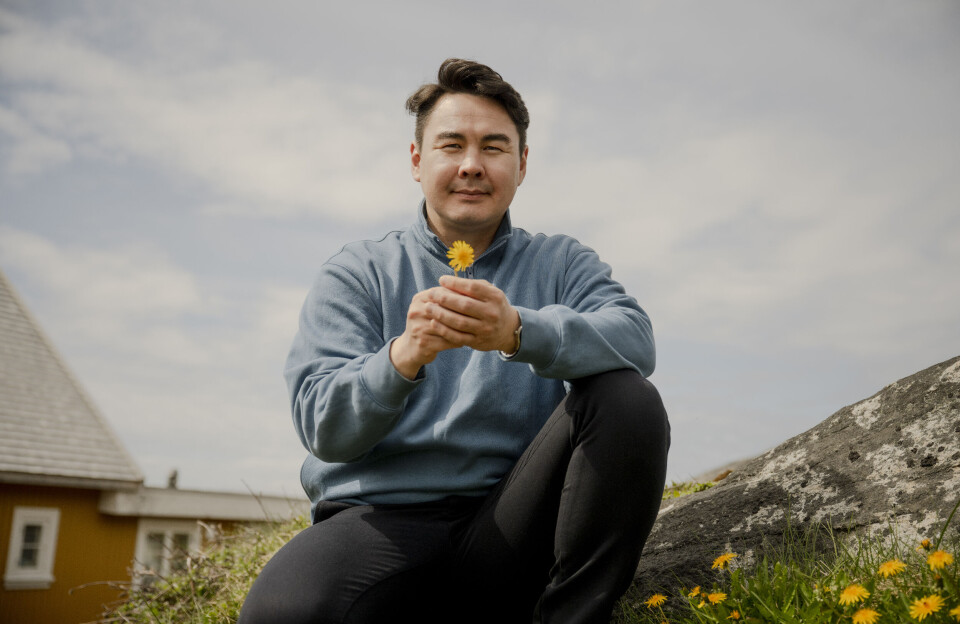
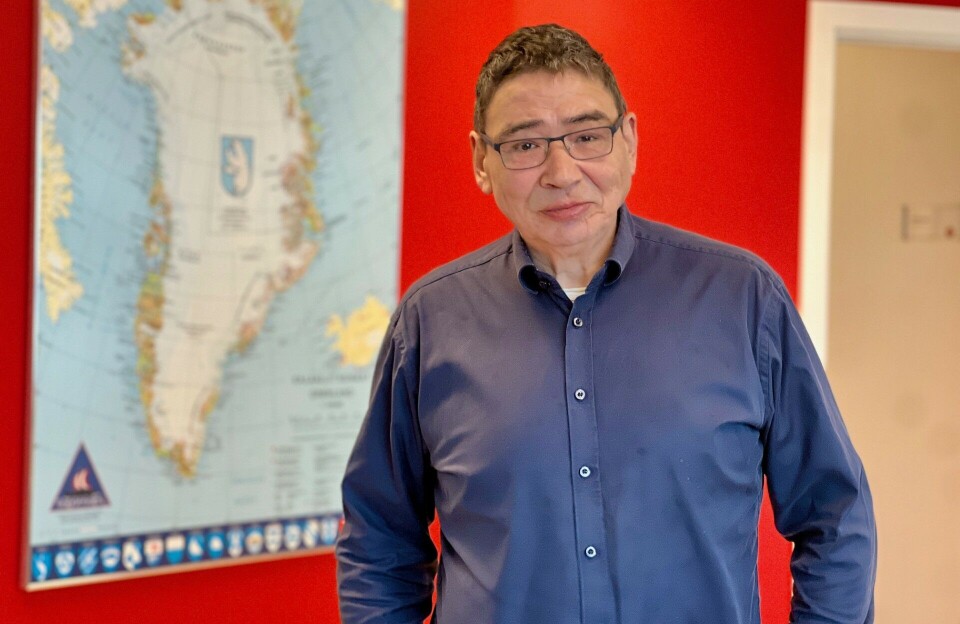
Here on the tundra, James “Jimmy” Stotts was born 78 years ago, specifically in the town of Utqiaģvik, the northernmost in the United States. Since then, he has lived in several other places in the state and now makes his home in its largest city, Anchorage.
So Jimmy knows Alaska. But he also feels at home in Greenland, because his wife, Karo Heilmann Stotts, is Greenlandic and from Maniitsoq. They have lived in her homeland for periods, where their children have cousins.
So where is the best life? In Greenland or in Alaska?
- The answer to that question is obvious, says Jimmy and responds with a counter-question:
- Who wants to live under the conditions that Donald Trump and his people are about to introduce?
Jimmy says that the vast majority of Iñupiat people don't like what's happening right now, especially all the talk about war and gun power. In the conflict with the US president, they - like a majority of the American population - are clearly on Greenland's side.
ANCSA
Their own situation is shaped by a law passed by Congress in Washington and signed by then-President Nixon in 1971, called the Alaska Native Claims Settlement Act, ANCSA. It awarded Inuit and Alaska Natives a total of $963 million and 180,000 square kilometers of land (more than four times the size of Denmark) as compensation for the claims they had made as native peoples for the loss of their ancestral land.
The money was not paid out in cash to the population, but was to be invested in locally based limited liability companies owned by the native people. More than 200 village corporations and 12 native regional corporations were established. Another regional corporation was later added, bringing the total to 13. The latter is for native peoples who are not residents of Alaska.
Anyone who had at least a quarter of native blood in their veins and who was born before the law came into force in 1971 became a shareholder. The idea was that the companies would invest their money so that Inuit and Indians would, through stock dividends, have a share in the exploitation of the riches found in Alaska, including oil, minerals, timber and much more. At the time, it was seen as a visionary way to compensate Alaska's original inhabitants for the loss of their birthright.
Capitalists
ANCSA also had the effect of turning the local population into capitalists. They were forced to think that their companies had to make money or they, as shareholders, would lose everything, and therefore dropped some of their skepticism about, for example, oil extraction.
- People get excited about money, says Jimmy.
- Some of the Alaska Natives have quite good lives, economically speaking, but life is also about more than prosperity.
ANCSA, he says, was not the “miracle cure that many back then believed it would be. Or proclaimed it to be. But it is better than the alternative, which is nothing.”
He himself has been a member of the management of one of the regional companies, Arctic Slope Regional Corporation, ASRC, which is owned by 14,000 iñupiat shareholders. It has 15,000 employees (2023) and operates not only in Alaska, but also in many other US states. The activities are very diverse and range from providing services to the oil industry to contracting to tourism.
In addition, subsidiaries of ASRC have contracts with the federal government in Washington in a number of areas, including telecommunications.
The most successful companies – like ASRC – have grown really big and are now billion-dollar businesses. While other companies have fared less well.
"ANCSA is not perfect. There are no perfect solutions," says Jimmy.
- The law was an attempt to go in the right direction. You have to work with things all the time.
No. F..., NO!
This is how the situation for Alaska's indigenous people has developed over decades. But with Trump's inauguration as president, much has changed.
"The president is quietly undermining us," Jimmy says.
Trump is pushing for more oil and gas extraction - including in areas where the vulnerable Arctic nature risks being harmed - while the world's attention is focused on Greenland, Venezuela, Ukraine and Iran:
- While all this is happening, Trump and his people are operating in the shadows. Some of the provisions that have protected Native peoples are being rolled back. Not just here, but across the United States, the support that we, as Native Americans, have received from the federal government is being removed.
At the same time, there is an increasing degree of adaptation among the Iñupiat to the surrounding American society:
- We have been assimilated, says Jimmy.
- People are giving in to the new world order. We are losing our culture. We had much stronger leaders 20-30 years ago.
Jimmy once said in an interview that he would have liked to have been Greenlandic. Is that still the case?
- Oh yes, I love Greenland!, he says.
- They've made some mistakes over there too - everyone does - but I love Greenland.
What is it that he likes so much about his wife's homeland?
- The people, he answers promptly.
- I really like the Greenlanders, who still have a sense of justice and generosity. Here in Alaska, people have become much less generous.
Because of money?
- Probably. I don't know, but what else could it be?
So you're not recommending that Greenland become part of the United States and Greenlanders become Americans?
- No, f... NO! You've lived in Greenland yourself and know that it's a very special place.
Abonnementer
Sermitsiaq.gl - web artikler
- Adgang til alle artikler på Sermitsiaq.gl
- Pr. måned kr. 59.00
- Pr. år kr. 650.00
Sermitsiaq - E-avis
- Adgang til Sermitsiaq e-avis som udkommer hver fredag
- Adgang til alle artikler på Sermitsiaq.gl
- Pris pr. måned kr. 191
- Pris pr. år kr. 1.677
AG - Atuagagdliutit E-avis
- Adgang til AG - Atuagagdliutit e-avis som udkommer hver onsdag
- Adgang til alle artikler på Sermitsiaq.gl
- Pris pr. måned kr. 191
- Pris pr. år kr. 1.677
Sermitsiaq.AG+
- Adgang til AG - Atuagagdliutit e-avis som udkommer hver onsdag
- Adgang til Sermitsiaq e-avis som udkommer hver fredag
- Adgang til alle artikler på Sermitsiaq.gl
- Adgang til Arnanut e-magasin
- Adgang til Nutserisoq.gl
- Ved interesse send en mail til abonnement@sermitsiaq.gl
Kære Læser, Velkommen til Sermitsiaq.gl – din kilde til nyheder og kritisk journalistik fra Grønland. For at kunne fortsætte vores vigtige arbejde med at fremme den frie presse og levere dybdegående, kritisk journalistik, har vi indført betaling for udvalgte artikler. Dette tiltag hjælper os med at sikre kvaliteten af vores indhold og støtte vores dygtige journalister i deres arbejde med at bringe de vigtigste historier frem i lyset. Du kan få adgang til betalingsartiklerne fra kun kr. 59,- pr. måned. Det er nemt og enkelt at købe adgang – klik nedenfor for at komme i gang og få fuld adgang til vores eksklusive indhold. Tak for din forståelse og støtte. Dit bidrag hjælper os med at fortsætte vores mission om at levere uafhængig og kritisk journalistik til Grønland.