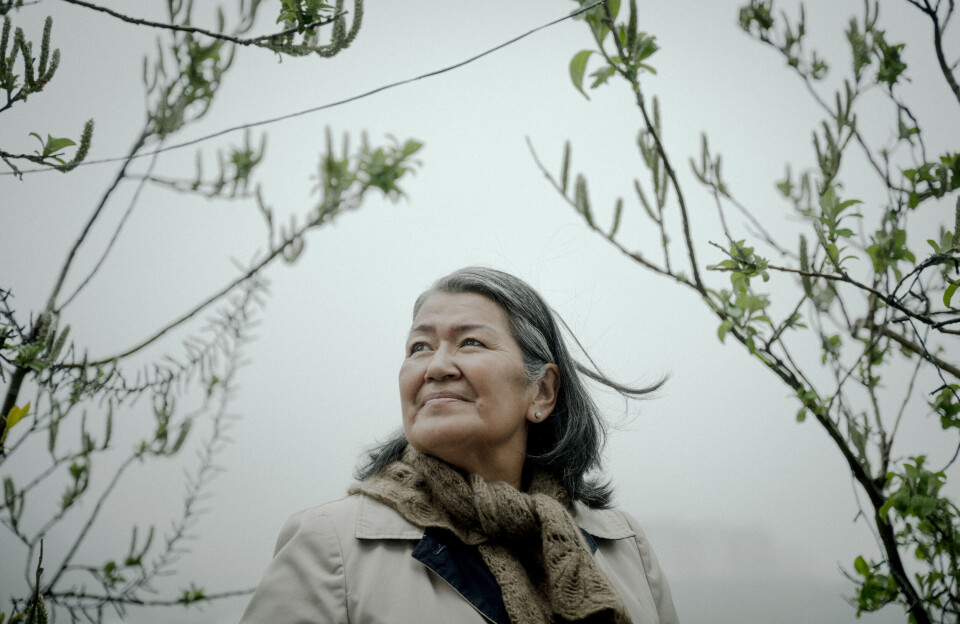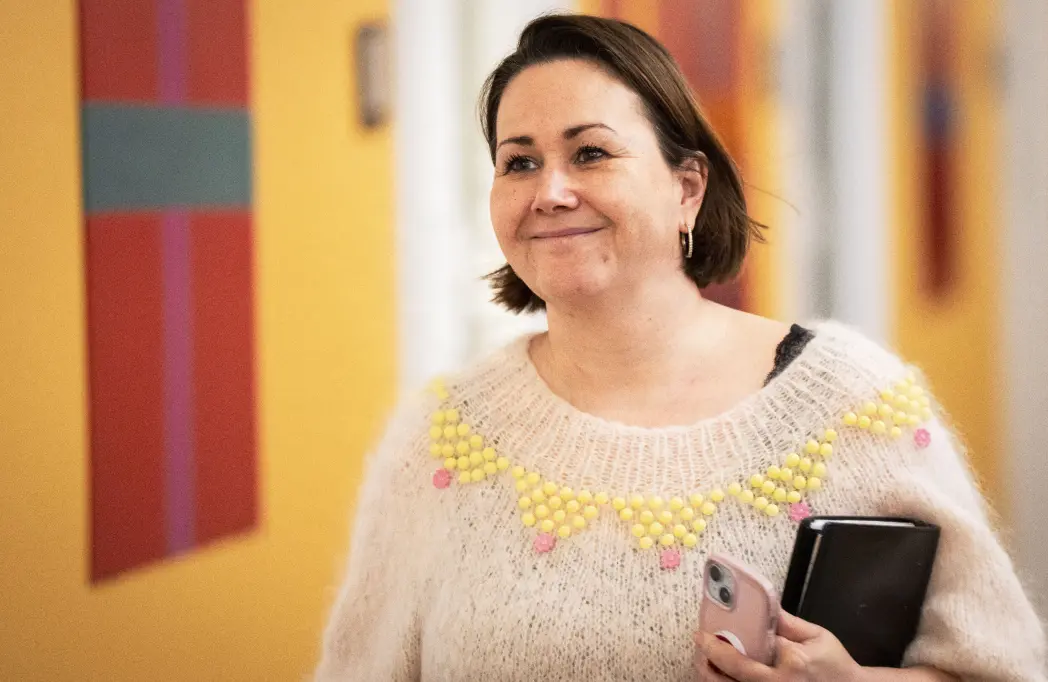
– You can get involved, and you should get involved, says the experienced member of the Folketing Aaja Chemnitz to Greenland's two new members of the Folketing, who will be elected on Tuesday, March 24.
– How have you navigated the waters between Denmark and Greenland yourself?
– I was elected as »Greenland's free voice« in 2015, and it has been important for me to cooperate broadly in the Folketing, but also dare to use my mandate actively to get involved in Danish politics if it serves Greenland's cause in the long run. It is not 1-to-1 that you get out of it, but you ensure good cooperation if you appear as a trustworthy and loyal partner, Aaja Chemnitz tells Sermitsiaq.
In doing so, she is preempting a possible criticism of the Greenlandic members when negotiations on a new government begin at Christiansborg the night after the parliamentary elections in 11 days.
It is no news that whoever can count to 90 among the 179 members of parliament will become prime minister. The news two weeks into the election campaign is that most opinion polls divide the 175 Danish seats so lopsidedly into red and blue blocs that one or both Greenlandic members of parliament can decide who will become prime minister in the entire kingdom.
In both the parliamentary elections of 1960 and 1971, Greenland delivered the 90th mandate to a government led by the Social Democrats. The author Paul Hammerich writes in his Chronicle of Denmark about the »almost hysterical fury« of the VK opposition when, after the 1960 election, the Greenlandic member of parliament Mikael Gam was presented as the SR government's 90th mandate - and Minister for Greenland.
Still a job to do
During her almost 11 years as a member of parliament, Aaja Chemnitz has also had her legitimacy in the Folketing questioned when she participates in debates and votes on areas that other members perceive as purely Danish matters. For example, the abolition of St. Prayer Day in Denmark, but not in the Faroe Islands and Greenland, or the rejection of the opposition's motion of no confidence in the Minister for Climate Change.
– We are sometimes challenged, but I always answer that I am just as democratically elected as those who criticize my active participation in the work of the Folketing, Aaja Chemnitz tells Sermitsiaq.
In Greenland, too, the relevance of the Folketing for the North Atlantic in an era of constitution and independence has been questioned, but Aaja Chemnitz rejects that time has run out for the Greenlandic members of parliament.
– The Folketing legislates on 30 subject areas that have not yet been adopted, including high-profile areas such as police, courts and correctional services and the food and veterinary sector. The Folketing also adopts the Danish laws that apply to the 17,000 Greenlanders living in Denmark. So there is still work to be done for the new members of parliament after March 24th.
Two Greenlandic ministers…
In the parliamentary elections on 1 November 2022, the blue bloc from the Moderates to the Danish People's Party received a total of 88 seats, and even with a bourgeois member from the Faroe Islands, it was not enough for a majority of 90 members. On election night, the Moderates' leader Lars Løkke Rasmussen asked if Aaja Chemnitz would be the 90th seat in the blue bloc. The answer was "no thanks", and instead a government was formed across the middle of Danish politics. The SVM government could not count more than 89 either, but the four North Atlantic members stretched a safety net under the government, which survived for almost 3 ½ years.
However, it was far from the first time that Greenland had delivered the 90th seat.
After the constitutional amendment in 1953, the Folketing consists of 179 members: 175 from Denmark, two from the Faroe Islands and two from Greenland.
The schoolboy Augo Lynge ran for election in 1953 with the slogan "The two Greenlandic MPs must serve the cause of Greenland" - a slogan that has been the guiding star for all members of the Folketing ever since.
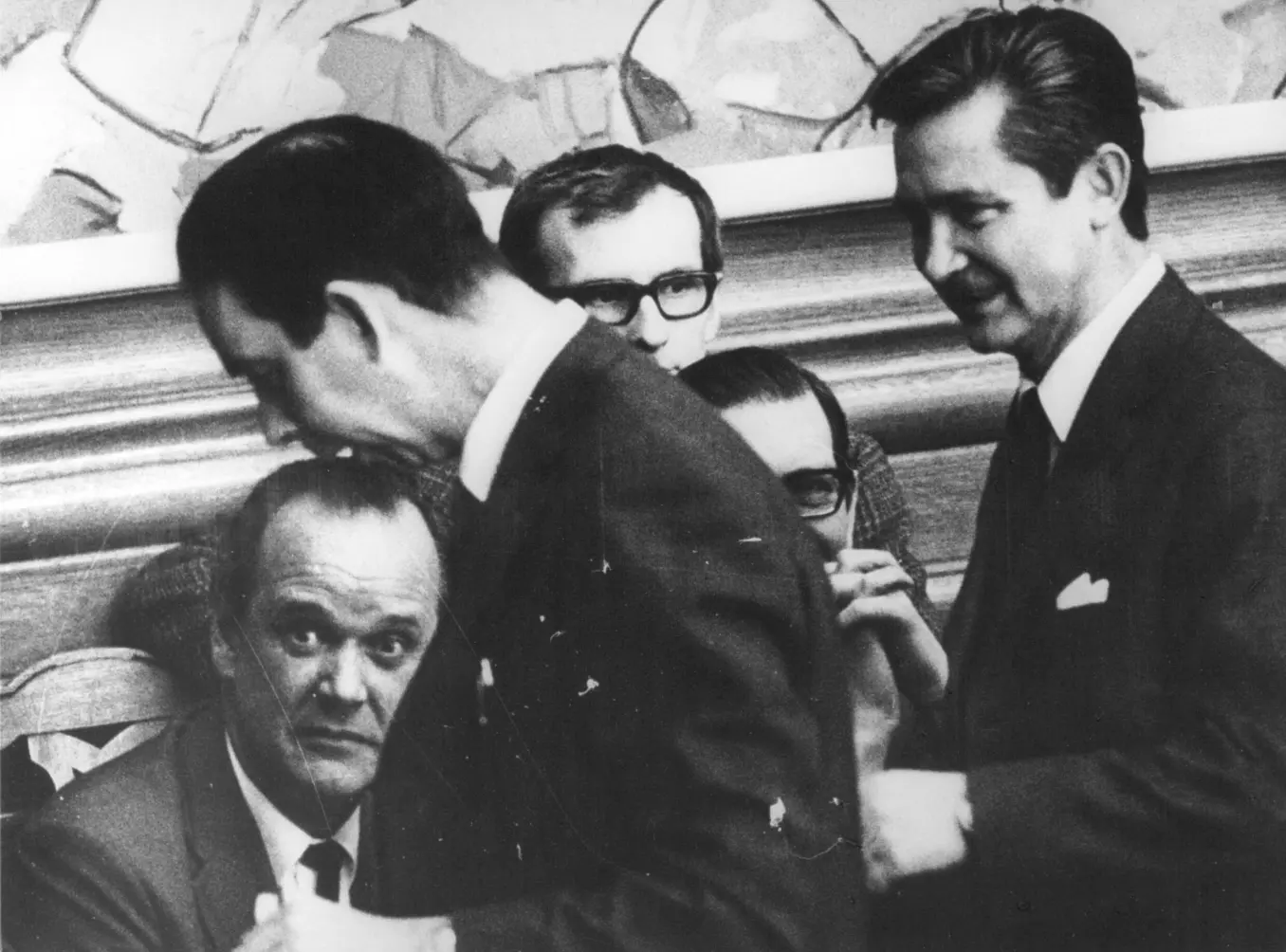
The two Greenlandic MPs (!) did not participate in the formation of governments in the 1950s. In 1953, Prime Minister Hans Hedtoft and the Social Democrats formed a minority government with the Radical Left as a supporting party. In 1957, the Social Democrats, the Radical Left and the Retsforbundet formed a majority government with H. C. Hansen as Prime Minister.
But in 1960, Greenland came to the fore.
H. C. Hansen died on 19 February 1960, and his successor Viggo Kampmann called an election on 15 November 1960. Viggo Kampmann was determined to continue as Prime Minister, but together with the Radical Left (the Constitutional League did not pass the threshold) he was one mandate short of reaching the magic majority of 90.
The author Paul Hammerich writes in his Chronicle of Denmark:
"When the results of the Greenlandic election were available on 16 November, the North Greenland mandate had gone to school director Mikael Gam, Godthåb. The Jutland-born educator had a past in Silkeborg's Radical Youth, but more importantly, he now had a vote in the Thing. So when Kampmann presented his second ministry just three days after the election, the Greenland Minister was called - to the almost hysterical fury of the VK opposition - Mikael Gam."
The election was controversial both in Denmark and Greenland.
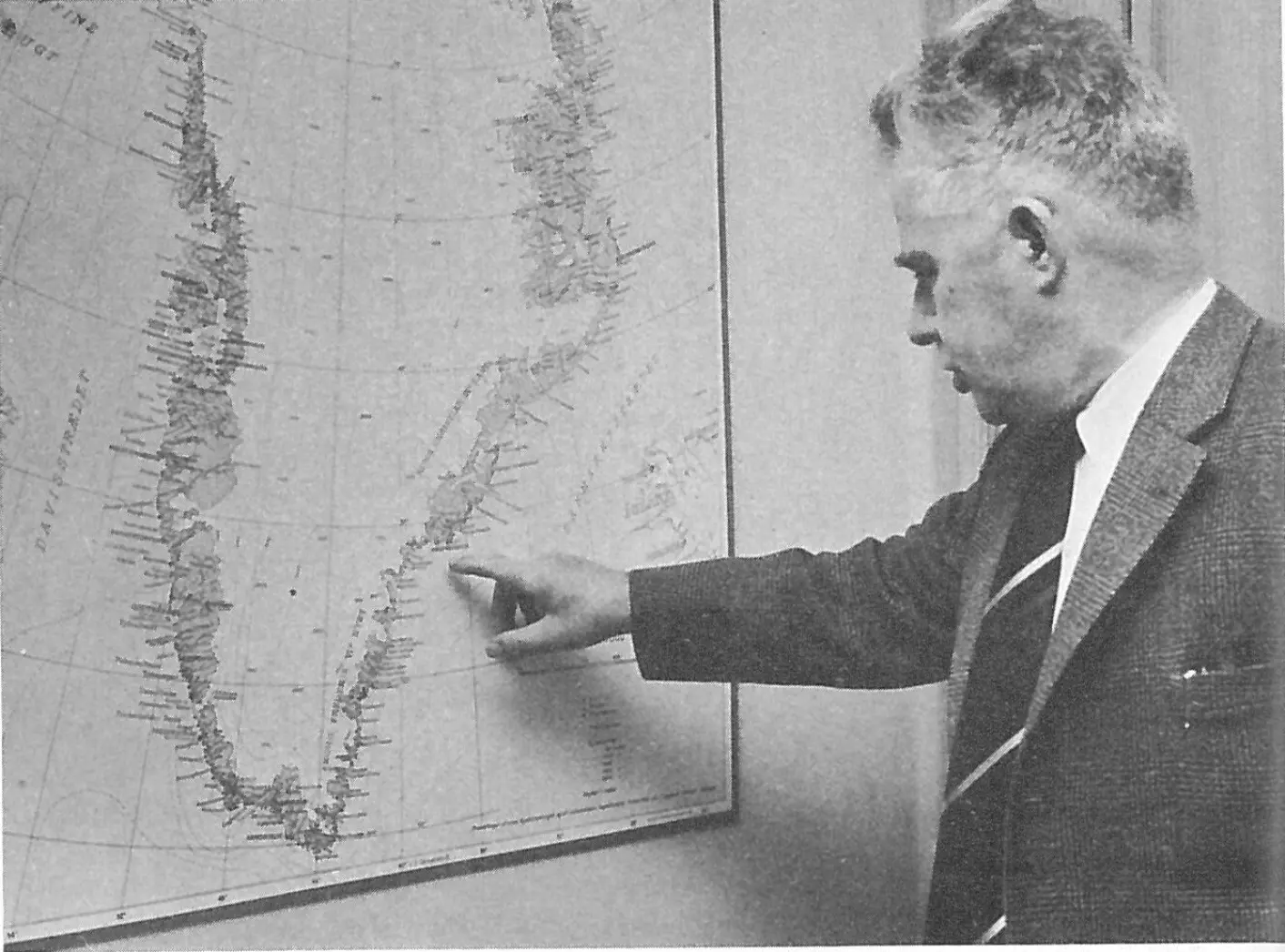
AG editor Jørgen Fleischer wrote about the election of a Dane as a member of the Greenlandic parliament:
»The election of Gam shows that the many fine words about Danish-Greenlandic cooperation are not just empty phrases. We must not have Congolese conditions up here. Development must move steadily forward, and the guiding principle in this work must be: The best for the country.
Mikael Gam was called Gáme, and the Gammeqarfik primary school in Aasiaat is named after him.
11 years later, it was crazy again.
The VKR government with Prime Minister Hilmar Baunsgaard lost the parliamentary election on 22 September 1971, which gave the Social Democrats and the Socialist People's Party 87 seats.
"As expected, the Social Democrats won the mandates of the Faroese priest Johan Nielsen and the Greenlandic lawyer Knud Hertling, but were still short of one mandate. The other was a 33-year-old college teacher in Holsteinsborg, Moses Olsen, who, like his Old Testament namesake, took his time before coming down from the mountain.
“My little finger bristles to the left,” he said prophetically to BT. But when he invited Krag and Baunsgaard to a discussion in Godthåb, both said no thanks to participate in the auction. So Moses Olsen chose a suit. He pointed to Jens Otto Krag, but by then Knud Hertling, who had chosen a side from the start, had already been appointed Minister of Greenland."
As Greenland Minister from 1971 to 1973, Knud Hertling supported the desire for home rule, and at the request of the National Council in 1972 he appointed a committee of Greenlandic politicians to prepare the negotiations.
… perhaps a third
Since 2001, Siumut and Inuit Ataqatigiit have been heavily involved in Christiansborg, but it cannot be taken for granted that Greenland will support the red bloc after March 24.
The last two elections were won by Inuit Ataqatigiit's Aaja Chemnitz and Siumut's Aki-Matilda Høegh-Dam, who will not be running again. All balls are in the air, and both Demokraatit and Atassut are running strong candidates for the People's Parliament to win Greenland's first blue mandate in 25 years. Even a single mandate in the North Atlantic could be decisive in the choice between a blue and a red prime minister.
In 1960 and 1971, the Greenlandic members of parliament who delivered the 90th mandate were rewarded with a post as Minister of Greenland. This is not possible today, since the Ministry of Greenland closed in 1987 with Mimi Stilling Jakobsen as the very last Minister of Greenland.
Aaja Chemnitz believes that Greenland is often treated as a stepmother in the individual ministries, and she has been putting an Arctic minister in play since 2015. If the government negotiations after March 24 include an Arctic minister, a Greenlandic politician will be an obvious choice.
“If you want to have ultimate influence in politics, you have to sit at the government table,” Aaja Chemnitz tells Sermitsiaq today.
Abonnementer
Sermitsiaq.gl - web artikler
- Adgang til alle artikler på Sermitsiaq.gl
- Pr. måned kr. 59.00
- Pr. år kr. 650.00
Sermitsiaq - E-avis
- Adgang til Sermitsiaq e-avis som udkommer hver fredag
- Adgang til alle artikler på Sermitsiaq.gl
- Pris pr. måned kr. 191
- Pris pr. år kr. 1.677
AG - Atuagagdliutit E-avis
- Adgang til AG - Atuagagdliutit e-avis som udkommer hver onsdag
- Adgang til alle artikler på Sermitsiaq.gl
- Pris pr. måned kr. 191
- Pris pr. år kr. 1.677
Sermitsiaq.AG+
- Adgang til AG - Atuagagdliutit e-avis som udkommer hver onsdag
- Adgang til Sermitsiaq e-avis som udkommer hver fredag
- Adgang til alle artikler på Sermitsiaq.gl
- Adgang til Arnanut e-magasin
- Adgang til Nutserisoq.gl
- Ved interesse send en mail til abonnement@sermitsiaq.gl
Kære Læser, Velkommen til Sermitsiaq.gl – din kilde til nyheder og kritisk journalistik fra Grønland. For at kunne fortsætte vores vigtige arbejde med at fremme den frie presse og levere dybdegående, kritisk journalistik, har vi indført betaling for udvalgte artikler. Dette tiltag hjælper os med at sikre kvaliteten af vores indhold og støtte vores dygtige journalister i deres arbejde med at bringe de vigtigste historier frem i lyset. Du kan få adgang til betalingsartiklerne fra kun kr. 59,- pr. måned. Det er nemt og enkelt at købe adgang – klik nedenfor for at komme i gang og få fuld adgang til vores eksklusive indhold. Tak for din forståelse og støtte. Dit bidrag hjælper os med at fortsætte vores mission om at levere uafhængig og kritisk journalistik til Grønland.