Suddenly, TikTok, Snapchat, Twitch, Instagram, YouTube, Facebook and several other social media were gone.
In December 2025, the world's first ban on social media for everyone under 16 became a reality in Australia.
But now, barely six months later, the first experiences show that the law has a limited effect.
This is the conclusion of a report in which researchers asked 1,050 Australians aged 12 to 15 how the ban has affected them. The results show that:
· 61 percent of young people still have their SoMe profiles.
· 70 percent of those who continue to use social media found it easy to circumvent the rules.
· Half of young people say that it has not created greater safety for them online, which was otherwise a goal of the ban.
Andreas Lieberoth, an associate professor at the Danish Institute of Education (DPU) at Aarhus University, is not surprised by the figures.
- Videos immediately appeared on YouTube (right after the ban, ed.) with titles like 'How to avoid the age limit', the associate professor, who follows developments in Australia closely, tells Videnskab.dk.
May look different in 5-10 years
However, Andreas Lieberoth believes that it is too soon to say that the legislation will not have an effect, as the ban is still new.
- We have a generation of young people who are used to being allowed to use social media, who then suddenly are not allowed to, he says.
It will take many years before you can see the effect of such extensive societal changes. So perhaps the figures will be different in 5-10 years, when a new generation of young people grows up who are not used to being free to use social media. Here it will be interesting to see whether there is an effect on their well-being, believes Andreas Lieberoth.
On the drawing board in Denmark
In Denmark, this is probably a development that is being followed closely.
In October last year, the SVM government proposed a national age limit of 15 years for access to social media.
- Mobile phones and social media are stealing our children's childhood. That is why we will ban more social media for children under 15 years of age, said Mette Frederiksen in a Facebook post.
In Norway, they have presented a far-reaching plan to ban social media for children and young people under 16 years of age.
Austria is planning a ban for young people under 14 years of age. Several other countries have similar initiatives on the drawing board.
The many plans for bans are fueled by a fear that social media creates increased dissatisfaction among young people. The ban is therefore intended to improve young people's social health.
But there is no immediate research that supports this effect, says Andreas Lieberoth:
- Overall, research shows that there is limited evidence that a ban on social media can improve their mental health, he says, referring to a British report from the University of Cambridge.
Are young people unhappy on social media?
Andreas Lieberoth does not see any clear signs of the unhappy that politicians link to social media and are the basis for a ban in the research.
- When you do studies on it, you find fluctuating results and small effects. This shows that technology use in itself does not explain a large part of the variation in young people's well-being, he says.
- And we have plenty of data, so we would have discovered it if there was a clear connection, the researcher estimates.
In so-called meta-studies, where researchers compile all studies on the subject, they do not find that the increasing dissatisfaction can be linked to young people's high consumption of social media.
However, Andreas Lieberoth understands well the concern that children and young people are using their time incorrectly and are fed with unattainable and unhealthy ideals on media such as TikTok and Instagram.
Can help vulnerable young people
The so-called Well-being Commission, which was set up by the government back in 2023 to find the bottom line in the debate on the well-being of children and young people, presented its results last year.
Here, the commission, which had several researchers on board, did not find a general increase in dissatisfaction among Danish children and young people.
However, the Well-being Commission did make another interesting finding: The group of young people who were already unhappy was increasing.
And this development is amplified on social media, says Andreas Lieberoth.
- When we are dealing with a child who is already exposed, this is reflected in their digital life. They are even more excluded, bullied or have unfortunate behavior that is reflected on social media, he says.
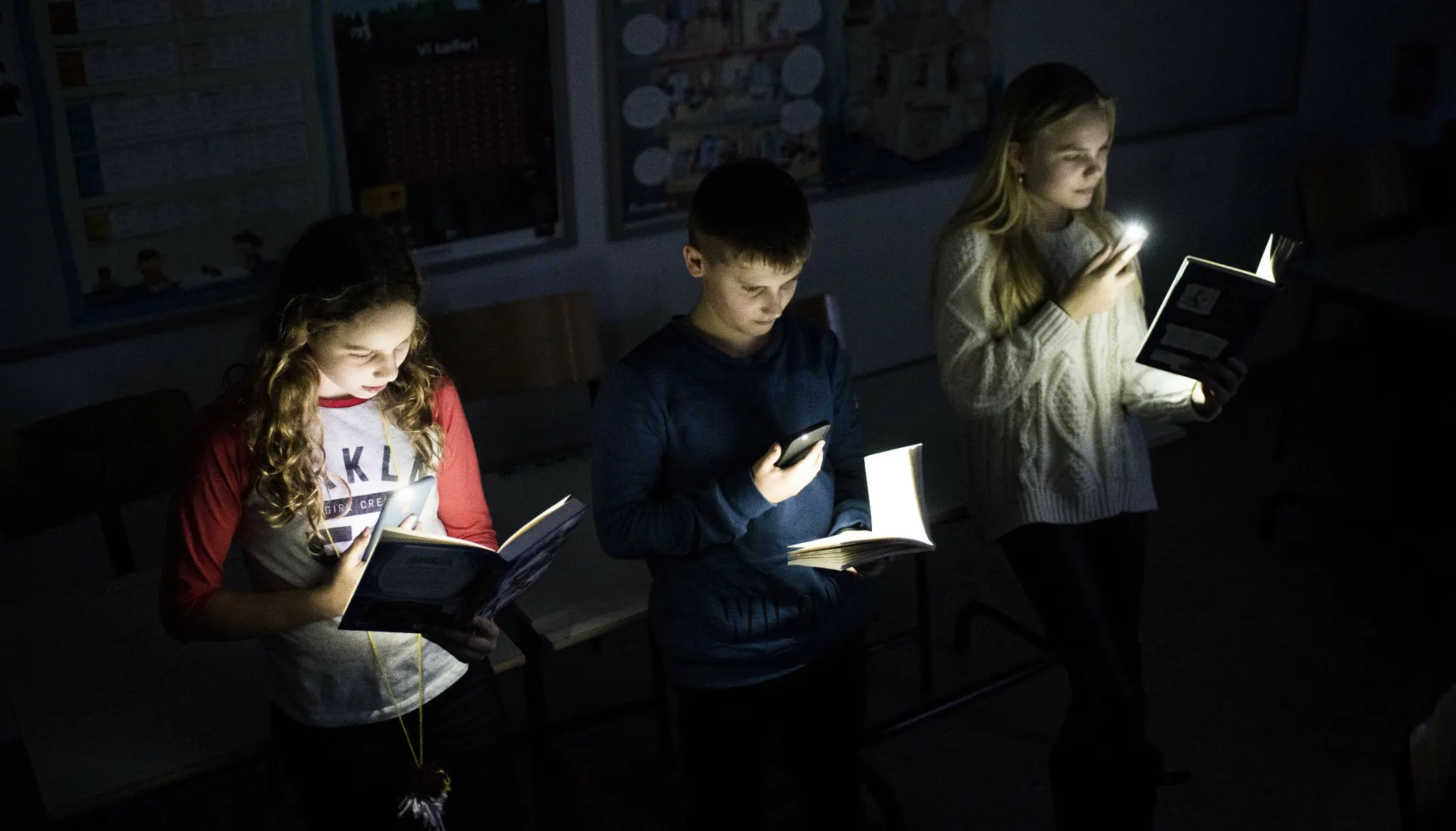
According to Andreas Lieberoth, helping the exposed children and young people is the strongest argument for a general ban.
But we don't know whether it has an effect, he says.
Abonnementer
Sermitsiaq.gl - web artikler
- Adgang til alle artikler på Sermitsiaq.gl
- Pr. måned kr. 59.00
- Pr. år kr. 650.00
Sermitsiaq - E-avis
- Adgang til Sermitsiaq e-avis som udkommer hver fredag
- Adgang til alle artikler på Sermitsiaq.gl
- Pris pr. måned kr. 191
- Pris pr. år kr. 1.677
AG - Atuagagdliutit E-avis
- Adgang til AG - Atuagagdliutit e-avis som udkommer hver fredag
- Adgang til alle artikler på Sermitsiaq.gl
- Pris pr. måned kr. 191
- Pris pr. år kr. 1.677
Sermitsiaq.AG+
- Adgang til AG - Atuagagdliutit e-avis som udkommer hver fredag
- Adgang til Sermitsiaq e-avis som udkommer hver fredag
- Adgang til alle artikler på Sermitsiaq.gl
- Adgang til Arnanut e-magasin
- Adgang til Nutserisoq.gl
- Ved interesse send en mail til abonnement@sermitsiaq.gl
Kære Læser, Velkommen til Sermitsiaq.gl – din kilde til nyheder og kritisk journalistik fra Grønland. For at kunne fortsætte vores vigtige arbejde med at fremme den frie presse og levere dybdegående, kritisk journalistik, har vi indført betaling for udvalgte artikler. Dette tiltag hjælper os med at sikre kvaliteten af vores indhold og støtte vores dygtige journalister i deres arbejde med at bringe de vigtigste historier frem i lyset. Du kan få adgang til betalingsartiklerne fra kun kr. 59,- pr. måned. Det er nemt og enkelt at købe adgang – klik nedenfor for at komme i gang og få fuld adgang til vores eksklusive indhold. Tak for din forståelse og støtte. Dit bidrag hjælper os med at fortsætte vores mission om at levere uafhængig og kritisk journalistik til Grønland.