
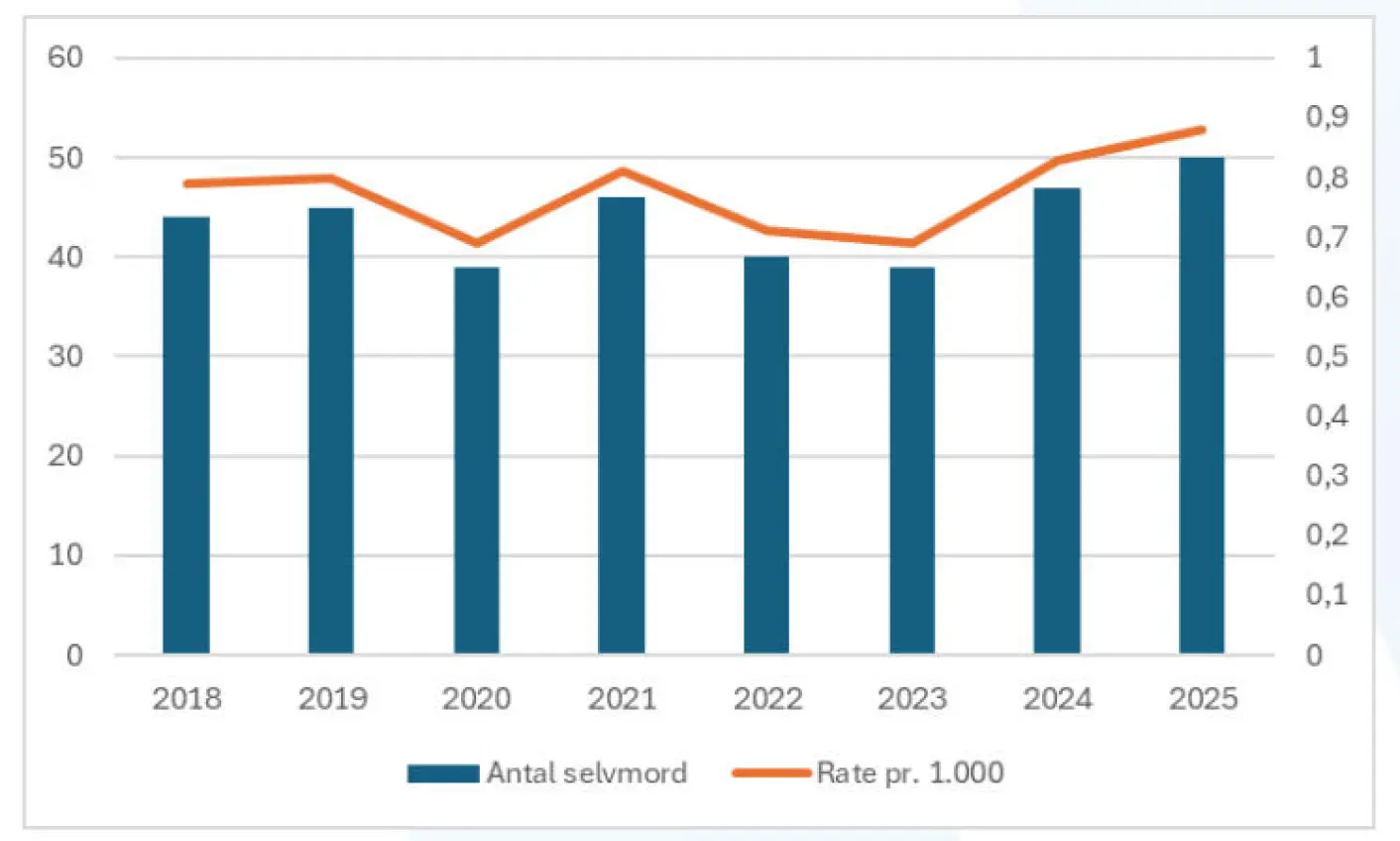
The suicide rate in Greenland is significantly higher than in other countries. In 2025, it reached its highest level since 2018.
This is stated in the National Medical Board's annual report on suicide in 2025.
There were a total of 50 suicides in Greenland in 2025, which corresponds to 0.88 per 1000 inhabitants, which is seven to nine times higher than the Danish and global level.
According to the report, suicide rates are also high among Inuit in Canada and Alaska.
It is mainly men who are included in the statistics. 84 percent of those who died last year were men, and the highest incidence is among young men between 15 and 24 years of age. The average age was 32 years.
Suicide prevention courses did not help
"International research shows that suicide is most often associated with mental illness, previous suicide attempts and abuse, including alcohol," the report states.
Of the 50 people who committed suicide in 2025, 30 percent had a psychiatric diagnosis, while 24 percent had previously attempted suicide.
The report shows that suicide prevention courses are offered through the health service to people who have attempted suicide. 12 people had previously attempted suicide. Four of these had accepted a course, three had completed it, while the last one was still on the waiting list at the time of death.
There was alcohol influence in 10 cases. In the remaining cases, there was no information about any alcohol intake prior to the suicide.
Alcohol prevention must be prioritized
None of the 50 people had contacted the health service with suicidal thoughts in the week leading up to the death.
And this is remarkable, the report points out. It is in accordance with research that shows that suicide often occurs impulsively or in a state of affect, sometimes increased by alcohol.
"This limits the effect of individual-oriented efforts alone and requires strengthened structural prevention," the report states.
The report points out that alcohol prevention must be considered an integrated part of suicide prevention, especially since drinking alcohol and alcohol-related stresses remain widespread in Greenland.
The individual treatment and crisis intervention must be supplemented with structural measures that reduce alcohol-related burdens, strengthen protective factors in local communities and reduce the risk of impulsive actions in acute crisis situations, the report concludes.