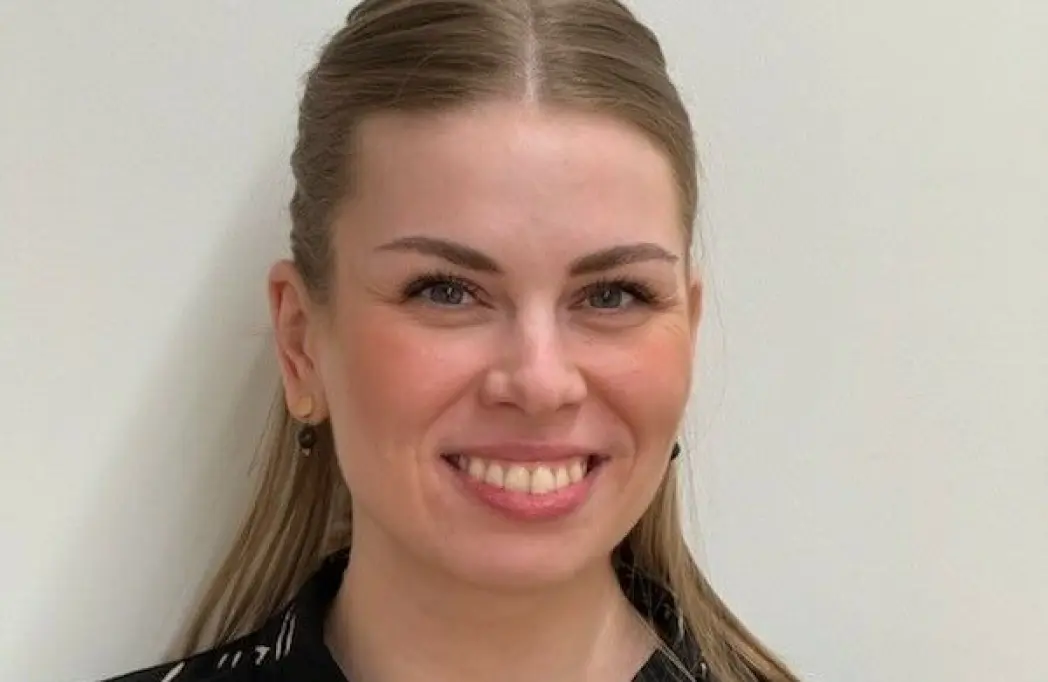
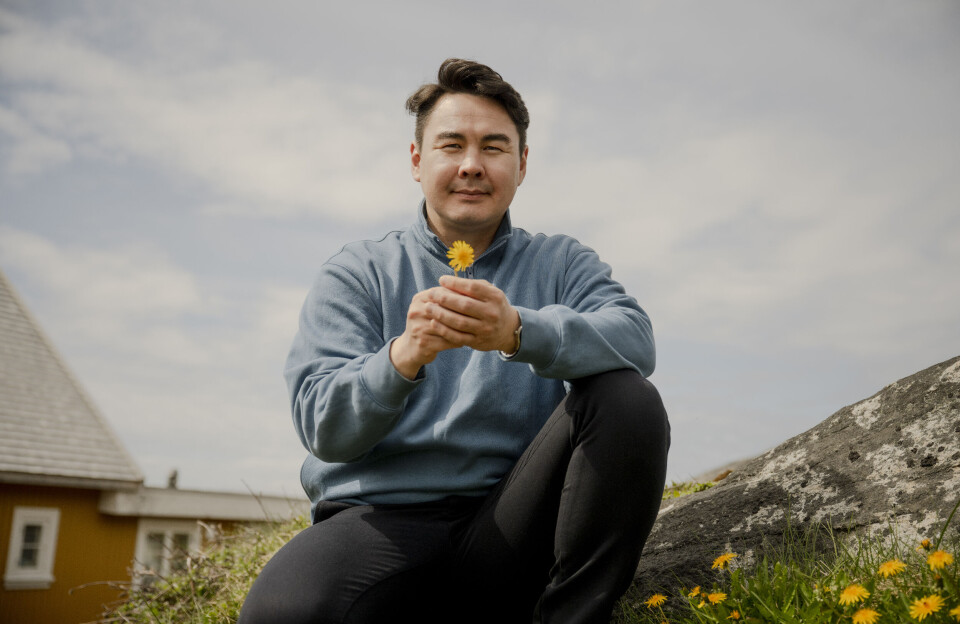
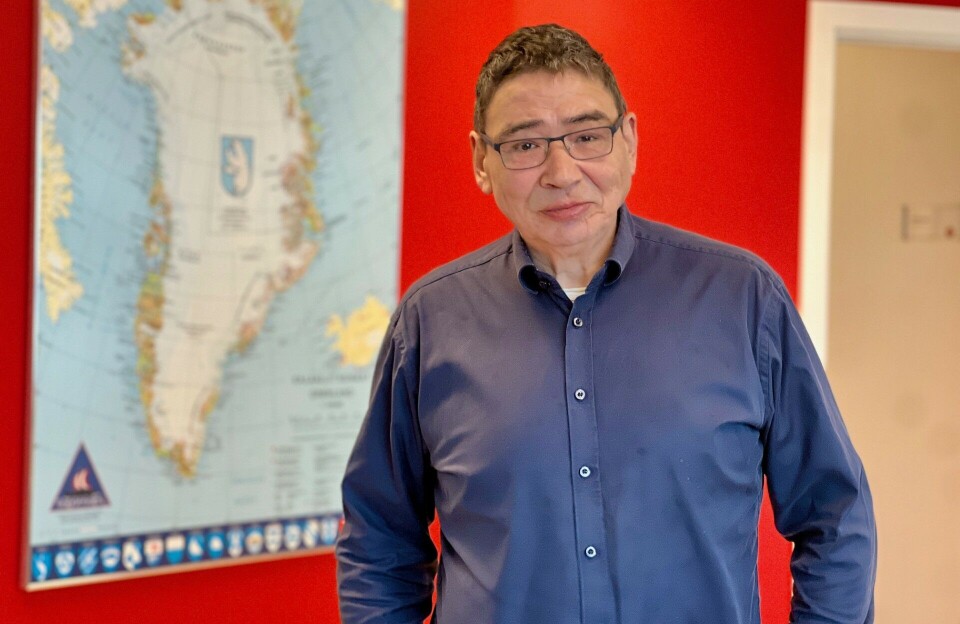
Sara Sandgreen Lundblad is a young woman with clear passions. She has lived in Nuuk since 2018 and lives with ADHD and a rare defect on chromosome 12. Although she can neither read nor write, she manages her everyday life with practical tasks such as laundry, washing dishes and cooking.
When it comes to her disability, she is clear: It has no power over her self-confidence. She knows what she can do, even though the outside world often doubts.
Barriers in the education system
Despite her diligence, Sara is trapped in an educational void. She finished primary school in 2015 without grades, and since then a suspicion of dyslexia has arisen. Both Sara, her mother Najánguak Sandgreen Lundblad and her former teacher suspect that she is dyslexic, but there are no testing tools for dyslexia in Greenlandic.
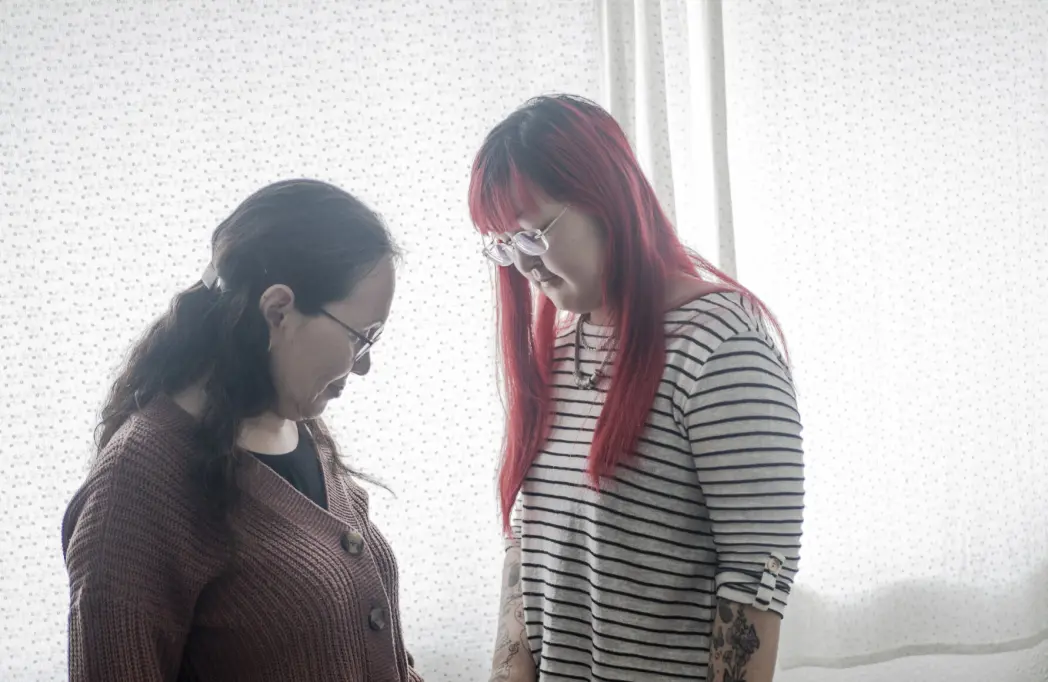
- In order to be tested, she must first learn Danish in writing and speaking. This is a barrier to even clarifying her difficulties and moving forward, explains Najánguak Sandgreen Lundblad.
The lack of clarification means that doors are closed. When the family turned to Majoriaq for help, the answer was discouraging: Majoriaq does not have educational offers for Sara, as they lack the framework and tools to accommodate her formal competencies.
A desire to be seen
Sara Sandgreen Lundblad often feels put in a box by both workplaces and educational institutions. She experiences that her invisible disability leads to generalizations and special treatment, which in reality means exclusion.
- I am seen as someone who cannot work, even though I can, says Sara and continues:
- I need to be welcomed with open arms, where my skills are emphasized and my needs as a person are taken into account.
Sara has proven herself to have both the will and the ability to change. With the help of artificial intelligence, she has sought out advice on diet and recipes, which has resulted in a weight loss of 14 kilos.
Although the road is paved with obstacles, Sara dreams of her own apartment and a career as a painter or chef, places where she can use her "skilled hands" and her creativity.
For Sara and her mother, it is not about getting special treatment, but about getting a fair chance. Being asked "What do you want?" rather than being told what you can't do.
Loneliness and insecurity
Although Sara Sandgreen Lundblad is passionate and loving, the lack of social support takes its toll. Her mother says that Sara experiences deep social isolation because peers often have difficulty understanding her disability. This makes it challenging to create and maintain friendships, leaving her largely on her own in everyday life.
- Although Sara has a helpful personality, her peers have difficulty understanding her and her disability, which is why it is difficult for Sara to make friends, says her mother, Najánguak Sandgreen Lundblad.
The experiences from educational institutions such as Ado Lyngep Atuarfia, a boarding school for students with special needs, still haunt Sara.
Here, male and female students lived close together, and Sara experienced advances from male students that she could not escape.
The mother is therefore calling for gender-segregated housing so vulnerable young people like Sara can feel safe and get the peace they need to study.
- They wanted to be my boyfriend, even though I had no interest in them, they kept making advances, says Sara Sandgreen Lundblad plaintively.
The model student who had to find her own answers via AI
The image of Sara Sandgreen Lundblad as a person without skills does not match her school days.
In Sisimiut, she was named "atuartusialak", and her teachers remember her as extremely diligent. Her biggest challenge at school was actually her impatience. She worked so concentrated that she often solved both her homework and the next pages in the book, which were otherwise not given.
- I didn't have patience, so I felt compelled to continue working on the next pages in the books, even though I wasn't supposed to solve the tasks on the next pages, Sara says proudly.
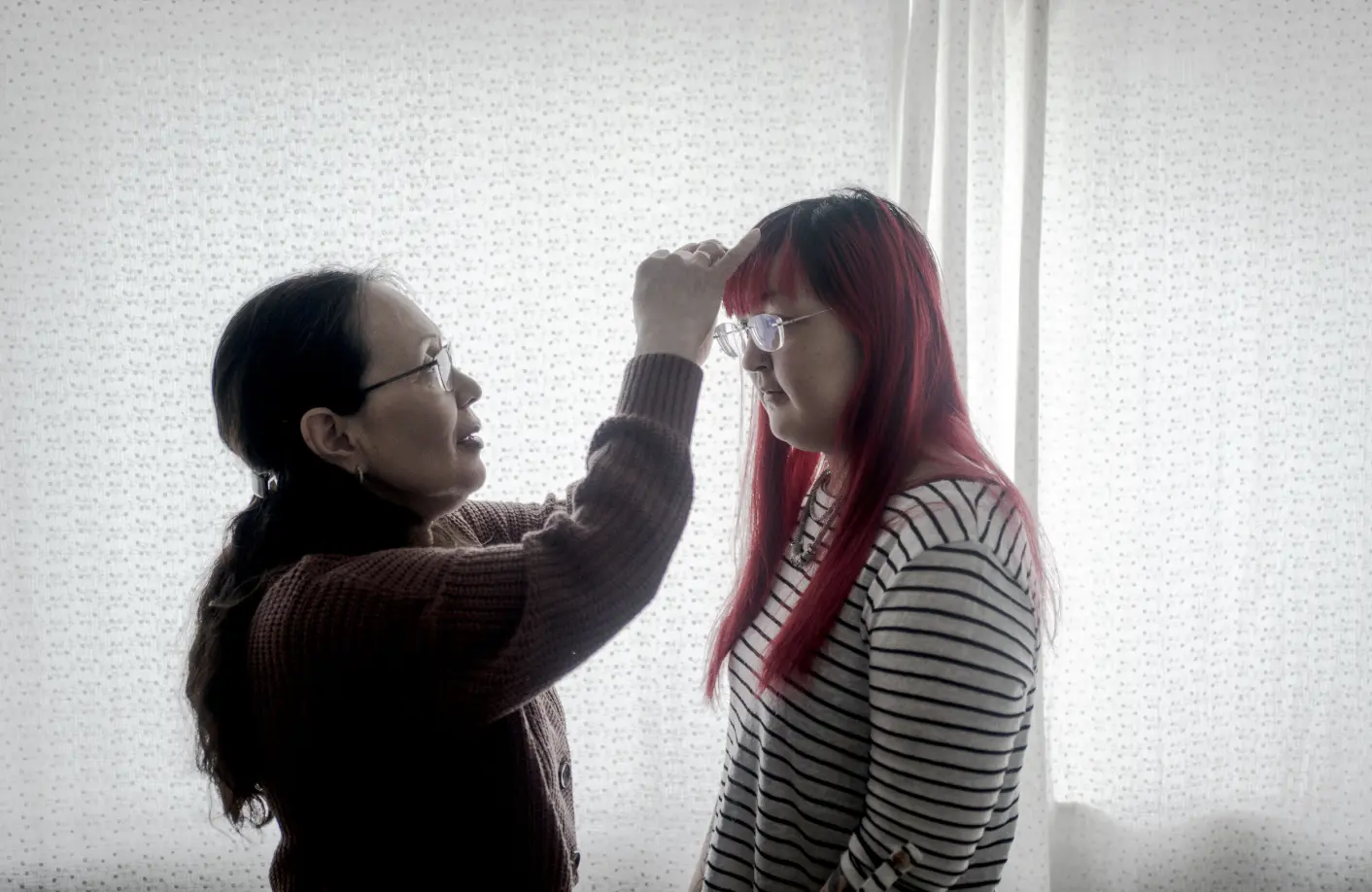
Life with a rare error on chromosome 12 has been characterized by a lack of information. When the health service could not provide an answer to what the diagnosis entailed, the family took matters into their own hands and did research via ChatGPT. This is where they themselves discovered the connection between the chromosome defect, language difficulties and ADHD, knowledge they have had to fight to have confirmed.
- The diagnosis is so rare that there are no tangible characteristics yet, we had to look for it ourselves to learn the symptoms of the diagnosis, emphasizes Najánguak Sandgreen Lundblad.
When the system fails "Mother Bear"
Najánguak describes herself as a "mother bear" who fights for her daughter's rights, but the fight is difficult when the municipal framework is constantly changing.
- The politicians have set good goals, but the citizen service is lagging behind. The frequent change of caseworkers makes continuity impossible. We start from scratch every time, says mother Najánguak.
At the same time, the physical framework in society is not designed for people like Sara. She needs structure and cannot handle unpredictable waiting times in, for example, the emergency room or at the dentist, where anxiety takes over after a short time. This requires a flexibility that the public sector rarely offers.
- I get homesick, I get anxious when I sit in the emergency room, for example, explains Sara Sandgreen Lundblad.
"What advice do you have for parents in the same situation?"
- I can't think of anything, Najánguak Sandgreen Lundblad answers, but is quickly interrupted by her daughter, Sara:
- The most important thing we have learned is that you have to keep in touch with people in the same situation.
Sara says with a smile that the roles in the home are sometimes reversed. Since her mother is 58 years old and can sometimes be a little forgetful, Sara steps in as the one who keeps track of the details and reminds her of everyday things.
- As parents, we must support each other. There is always someone who has tried it all before, and their experiences can help you further. That is why my advice is to apply to associations and spar with others, says Najánguak.
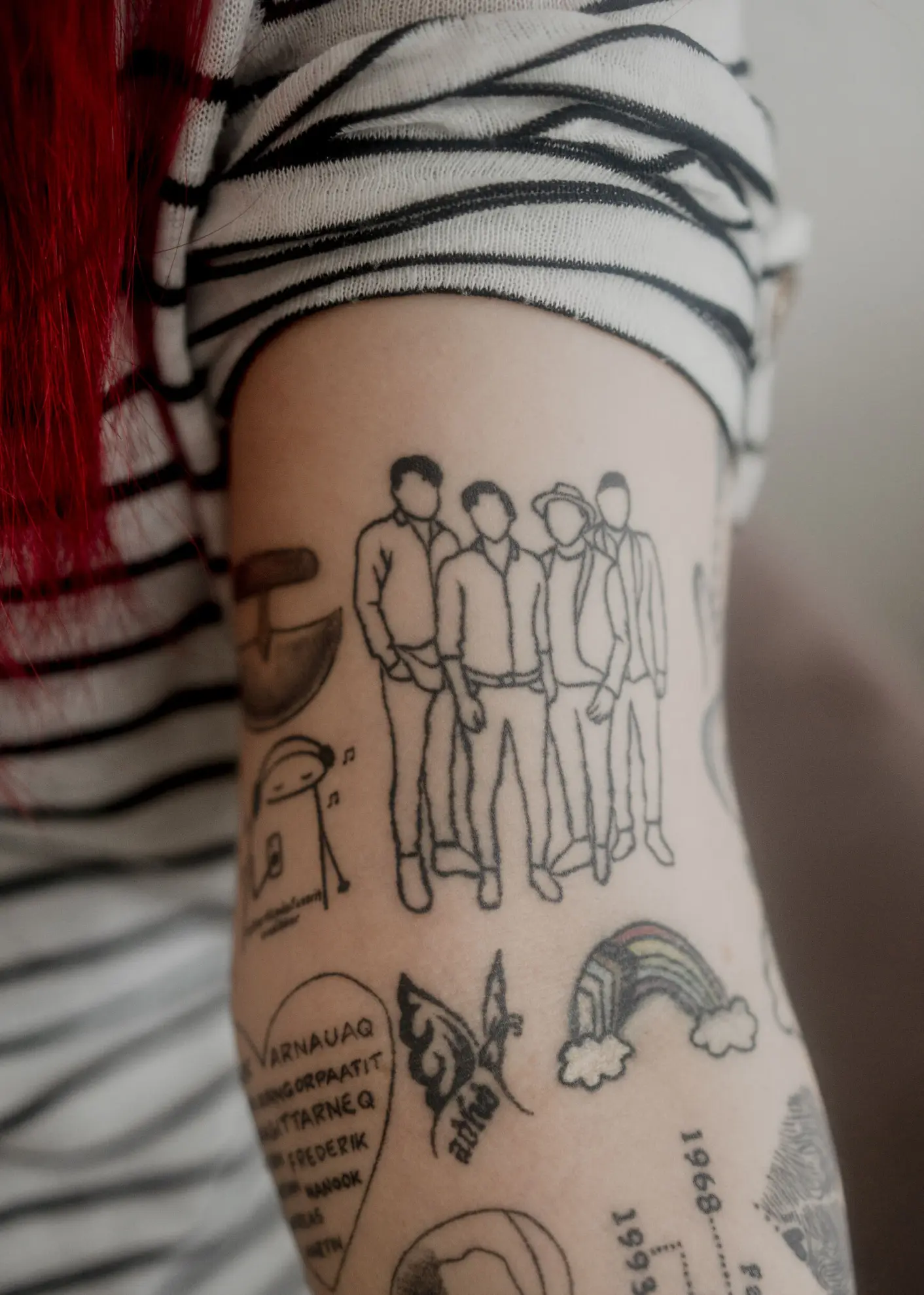
Through the associations Sugisaq and Inooqat, Najánguak spars with other parents and sends political messages directly to Naalakkersuisut. Through a joint focus on disability-specific legislation and courses, they work to make everyday life easier for families.
Abonnementer
Sermitsiaq.gl - web artikler
- Adgang til alle artikler på Sermitsiaq.gl
- Pr. måned kr. 59.00
- Pr. år kr. 650.00
Sermitsiaq - E-avis
- Adgang til Sermitsiaq e-avis som udkommer hver fredag
- Adgang til alle artikler på Sermitsiaq.gl
- Pris pr. måned kr. 191
- Pris pr. år kr. 1.677
AG - Atuagagdliutit E-avis
- Adgang til AG - Atuagagdliutit e-avis som udkommer hver fredag
- Adgang til alle artikler på Sermitsiaq.gl
- Pris pr. måned kr. 191
- Pris pr. år kr. 1.677
Sermitsiaq.AG+
- Adgang til AG - Atuagagdliutit e-avis som udkommer hver fredag
- Adgang til Sermitsiaq e-avis som udkommer hver fredag
- Adgang til alle artikler på Sermitsiaq.gl
- Adgang til Arnanut e-magasin
- Adgang til Nutserisoq.gl
- Ved interesse send en mail til abonnement@sermitsiaq.gl
Kære Læser, Velkommen til Sermitsiaq.gl – din kilde til nyheder og kritisk journalistik fra Grønland. For at kunne fortsætte vores vigtige arbejde med at fremme den frie presse og levere dybdegående, kritisk journalistik, har vi indført betaling for udvalgte artikler. Dette tiltag hjælper os med at sikre kvaliteten af vores indhold og støtte vores dygtige journalister i deres arbejde med at bringe de vigtigste historier frem i lyset. Du kan få adgang til betalingsartiklerne fra kun kr. 59,- pr. måned. Det er nemt og enkelt at købe adgang – klik nedenfor for at komme i gang og få fuld adgang til vores eksklusive indhold. Tak for din forståelse og støtte. Dit bidrag hjælper os med at fortsætte vores mission om at levere uafhængig og kritisk journalistik til Grønland.