

When a person is insane or in a similar condition, and it is considered unreasonably not to deprive the person of their liberty, psychiatry can use coercion. This includes forced hospitalizations.
This coercion is primarily used against younger adults, according to the National Medical Board's annual report on forced hospitalizations and other use of force in psychiatry for 2024.
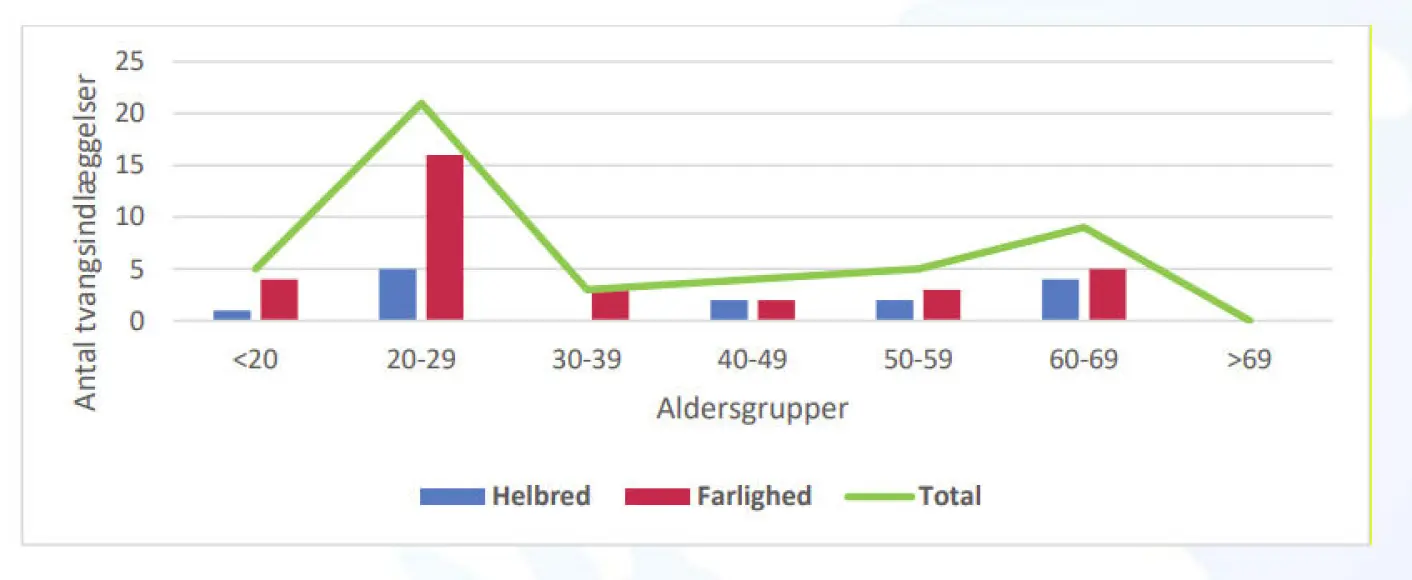
In 2024, 47 forced hospitalizations were registered. The age distribution shows that forced hospitalizations occur most frequently among 20–29-year-olds, where a total of 21 cases were registered.
The distribution by gender shows an overall predominance of women, as 28 forced admissions concerned women and 19 concerned men.
Forcible admissions are also divided into whether the justification is for the patient's health, or because they pose a danger to others or themselves. The majority of forced admissions were initiated due to dangerousness, which constituted 33 cases, while 14 forced admissions were initiated due to the patient's health.
More forced restraints than patients
In psychiatry, they can also use forced restraints if it is necessary to prevent the patient from exposing himself or others to imminent danger. For forced restraints, only belts, hand and foot straps and gloves are used.
The annual report shows that in 2024 there were a total of 35 fixation episodes distributed over 15 patients. This indicates that some patients have been subjected to forced fixation several times.
"The figures also show that for several forms of coercion there are more forced episodes than affected patients, which indicates that a smaller group of patients are repeatedly subject to coercive measures. This applies to, among other things, forced admissions, forced detentions and forced fixations and indicates complex and recurring processes," the report states.
There were a total of 20 episodes of belt fixation and 15 episodes of strap fixation.
On average, the forced fixations lasted one day, seven hours and 55 minutes. The shortest time was one minute with straps, while the longest was five days, two hours and 30 minutes with a belt.
Compulsory follow-up
In 2019, the Psychiatry Act was amended, which came into effect during the reporting period.
This made it possible to force patients to follow-up after discharge if the chief physician at the Dronning Indrid Hospital psychiatric department, before the patient is discharged, finds a justified risk that the patient after discharge will cease to follow the treatment necessary for the patient's health.
Compulsory follow-up may be necessary for the patient to receive necessary treatment after discharge.
The measure differs from deprivation of liberty and other acute coercive measures in that it is a follow-up measure after discharge.
In 2024, compulsory follow-up was initiated in three patients – one woman and two men – where the average age of the patients was 50 years.
Compulsory follow-up was implemented in two of the patients, both of whom were picked up with police assistance three times due to non-attendance from outpatient treatment after discharge.