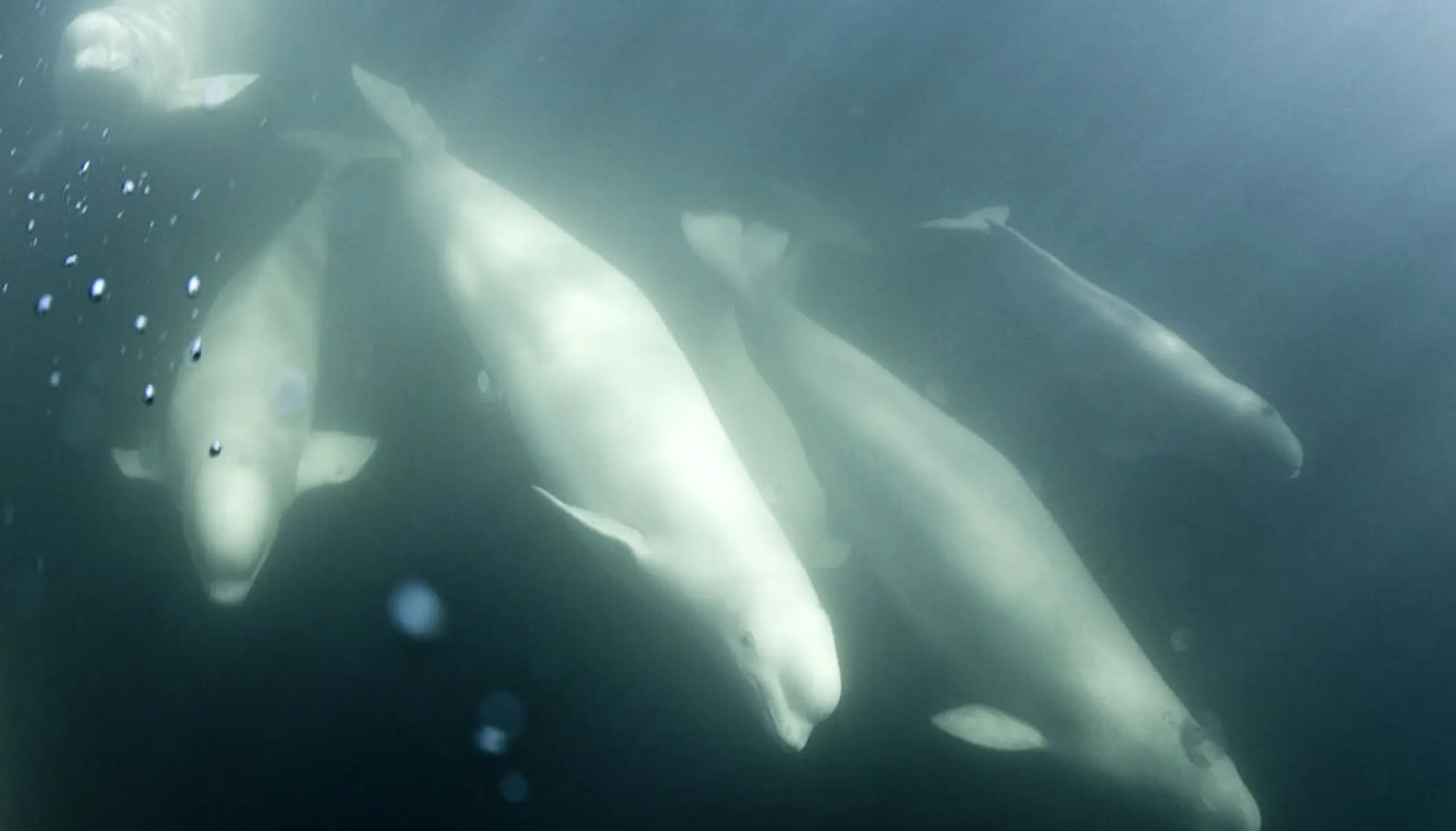

In order to protect the populations of narwhals and belugas in East Greenland for future generations, NAMMCO now recommends a zero-catch.
However, Siumut both disagrees with and is concerned about this recommendation.
The party writes this in an open letter to the Greenlandic Government.
Although the Institute of Natural Resources bases its advice on the capture of narwhals in East Greenland on NAMMCO's recommendations, it is the Greenlandic Government that sets the quotas.
- Siumut recognizes the need for sustainable management of our living resources, and we share the desire to secure the stocks for future generations. However, we cannot accept a decision on zero-harvest, which affects our coastal communities to such a great extent, without a sufficiently documented and transparent basis, writes Siumut.
They point out the importance of the narwhal both culturally and socio-economically in East Greenland. They believe that stopping the catch will have serious consequences for both lifestyle, food base and traditions. Therefore, such far-reaching decisions must be made on a solid and credible data basis.
Helicopter counts are not sufficient
Siumut would like to know what specific stock figures are the basis for the recommendation on zero-harvest, and how the figures have been used, including any uncertainties associated with the counts.
However, they also write that it appears that the assessments are based, among other things, on counts using helicopter-based observations. A method that Siumut finds problematic due to the risk of error margins.
- We believe that Greenland should adopt more proven and internationally recognized methods. In this connection, we would like to point to the work of the JCNB, which uses more comprehensive and systematic approaches to assessing the population of narwhals and belugas.
- We believe that responsible management of our resources requires a balance between science, local knowledge and respect for our culture. A decision on zero catch must therefore not be made on an insufficient basis, Siumut writes.
NAMMCO (North Atlantic Marine Mammal Commission) has, since 1992, functioned as a central cooperation body between Greenland, the Faroe Islands, Iceland and Norway regarding marine mammals.
The organization fights for scientifically based and sustainable management of marine mammals, which directly supports the UN's global goals on both life in the ocean and combating hunger.