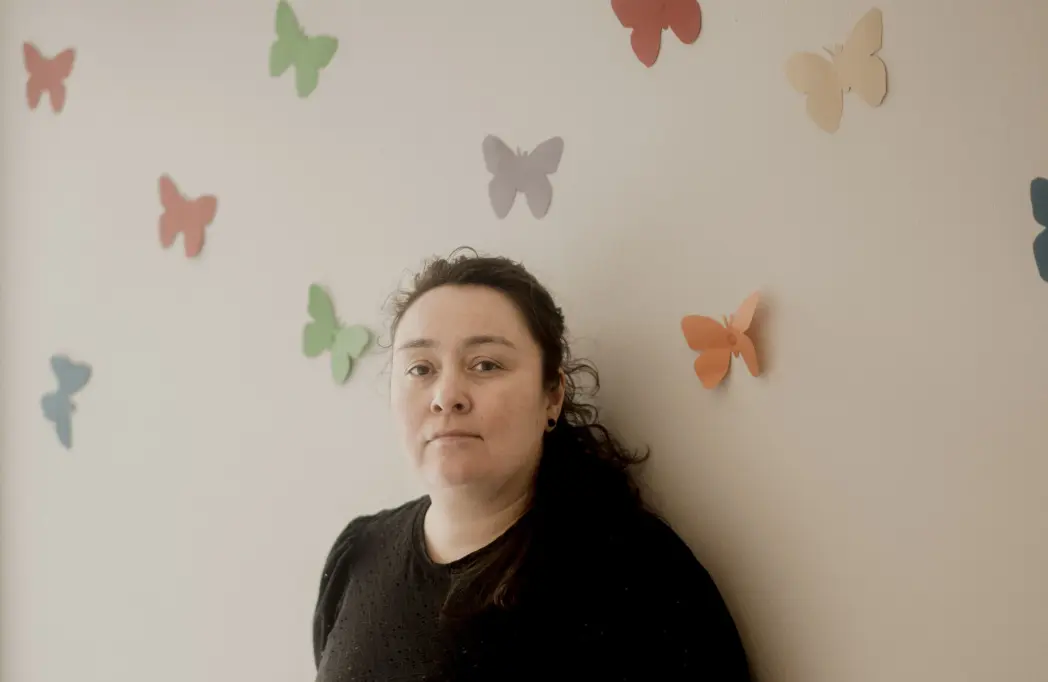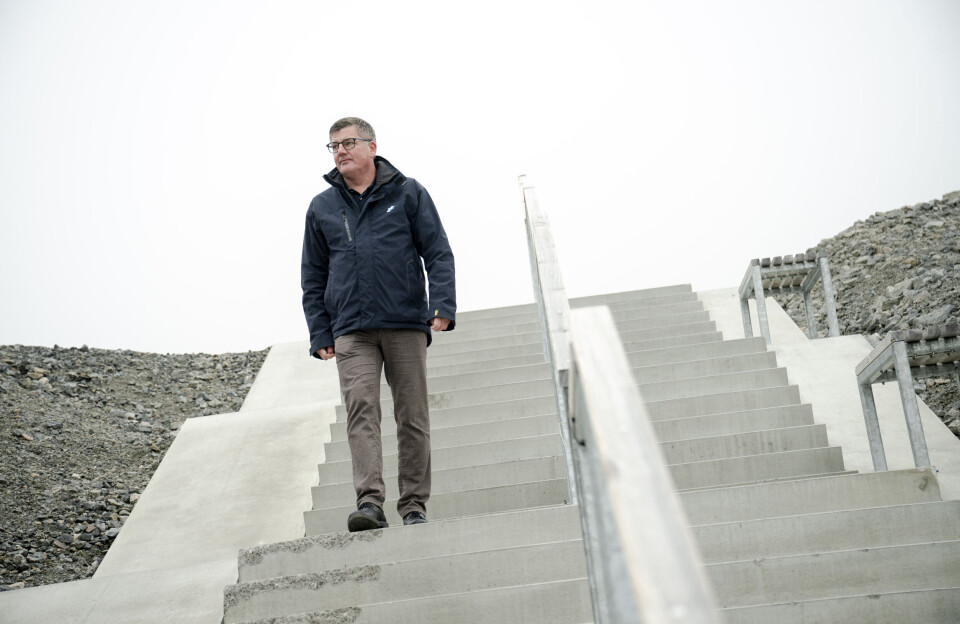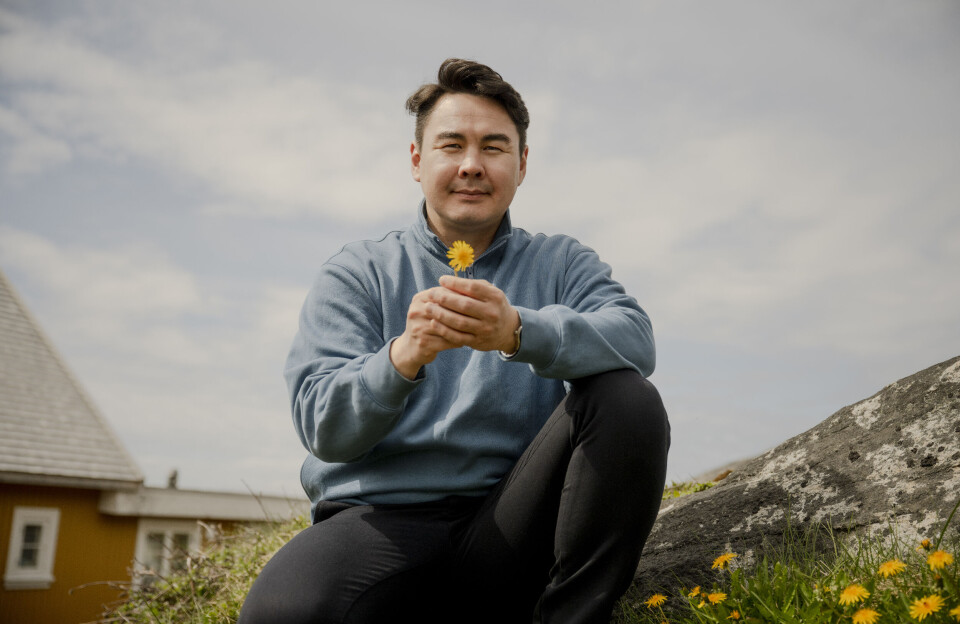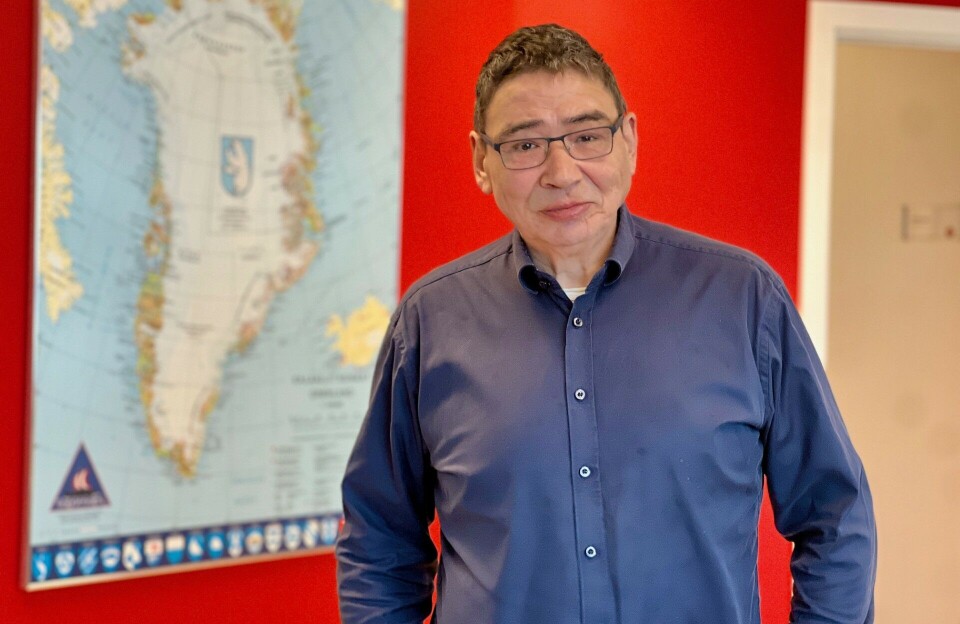
It is 08.53 and Morten Heilmann and his girlfriend, Magdalene Hansen, are walking out of their apartment in Nuuk.
Before Morten Heilmann has to show up for work later, he has to go out and buy water cans, gas, and whatever else he can find.
- I bought pamol yesterday, he says.
The US attack on Venezuela and the subsequent overtures from Donald Trump, who wants to buy, own and annex Greenland, have made him anxious.
"This is the first time I've felt so unsafe. There's just something about this that makes me feel really, really nervous," he says, continuing:
- I have a lot of thoughts after work and before I go to bed. You think, I wonder what will happen tomorrow?
Missing recommendations from the authorities
Morten Heilmann has missed information from the authorities. Because what should a citizen do if the worst were to happen and the Americans annex the country?
- You can't leave the country, he says.
- And what about the internet? If it goes off and on, what do you do?
To feel just a little ahead of the situation, Morten Heilmann has googled how much water you should have in stock if you want to be able to survive for 72 hours.
Morten Heilmann also believes that such concrete recommendations should be made in Greenland.
- My impression is that people here seem 99 or 100 percent sure that nothing will happen. But what about that one percent? he asks, getting into the passenger seat of the car.
His girlfriend, Magdalene Hansen, starts the car and they drive off.
- What if we lose connection?
Morten Heilmann is far from the only one who, in light of the US threats, has become uneasy and has started to think about 'prepping' - as it is called when you as a private individual prepare for crises or disasters.
Both in the media and on social media, more and more stories and posts are appearing about people – especially in Nuuk – who are either already prepared or, like Morten Heilmann, have started to think along those lines.
Among other things, Intalik Milne, who also lives in Nuuk, posted a video on TikTok where he gives a few tips on how to prepare for crisis situations.
- The first piece of advice is to have a stockpile of food for several days. Maybe five to seven days. It can be anything from canned food to freeze-dried food, he says in the video, among other things.
Also in Qaanaaq there are people who have become more anxious lately and are asking for information on how they as private individuals should behave. This is according to David Qujaukitsoq, who lives in the town.
- There are people who miss some action plans from the politicians or from the authorities. We don't get any information about what will happen if war or disasters break out or something like that, he says, and asks:
- What happens if we no longer have a connection to the coast?
Mental 'prepping'
Back in Nuuk, Morten Heilmann and his girlfriend stopped by Stark.
When Morten Heilmann enters the store, he is first greeted by signs with offers on fan heaters, oil for heat guns and radiators.
He stops briefly to look at the committee.
"I don't think I need that. I have a lot of warm clothes at home," he says, laughing a little.
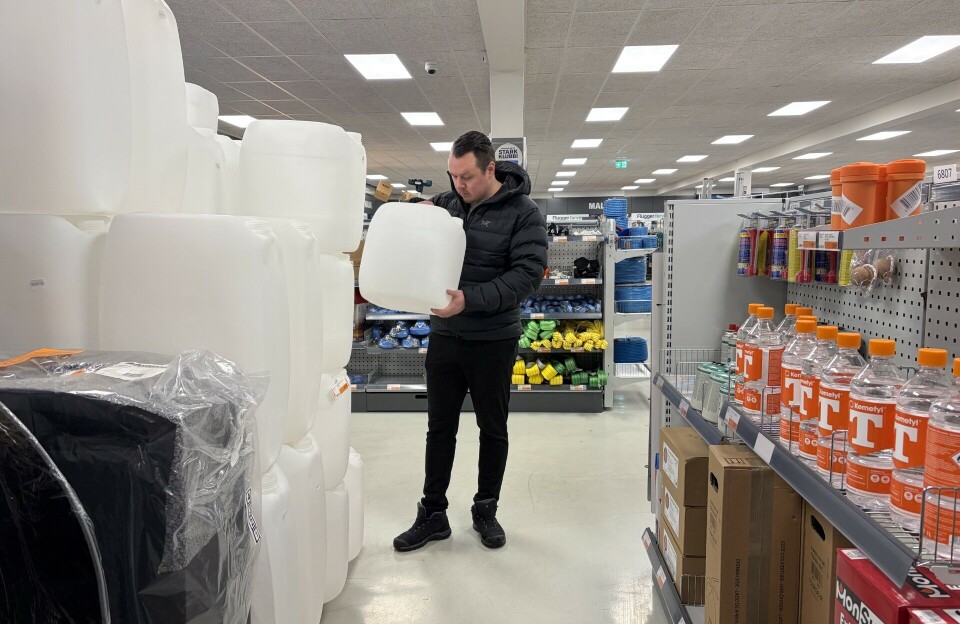
Morten Heilmann heads to an area where a lot of water cans of different sizes are stacked; 5 liters, 10 liters and 25 liters.
"I've done some research on it. For three people, you need about 40-50 liters of water for three days," he says.
He grabs five 10-liter cans and goes up to the cash register to pay.

Magdalene Hansen sits outside in the car and waits. Although she would really like to take part in Morten Heilmann's mission to 'prep', she doesn't.
For now, she's trying to shield herself from the news and all the worries.
"Not to be ignorant, but to protect my mental health," she says.
Precisely to address the population's concerns about crises and "unforeseen events", the organization People & Security in collaboration with UNICEF Kalaallit Nunaanni launched two information pamphlets on January 12th.
The names of the two booklets are “What if?” and “How to support your child in times of crisis,” and will be distributed to homes around the country in the near future.
According to Tina Dam, program manager at UNICEF Kalaallit Nunaanni, the booklets are intended to help create security in families and give people practical and concrete advice on how to take care of each other, their mental health and prepare for times of crisis.
- The pamphlets are not specifically designed for this specific situation with the USA and Trump, but in recent years the world has been through a bit of everything with pandemics, tsunamis, earthquakes, says Tina Dam.

- So there are different situations that these booklets address. It's about creating security and protecting the children if everyday life suddenly turns upside down, she says.
The timing for the publication of the pamphlets is good, however, she admits.
- The interest in Greenland and the harsh rhetoric that follows can quickly create some insecurity. Both among children and adults. It is completely natural and human, says Tina Dam and continues:
- They are falling on a dry spot now, you could say. But it wasn't planned that way. And it would be absolutely optimal if we never needed them.
High demand for gas and water tanks
Morten Heilmann's last stop on his shopping trip is Orsiivik Marine Center. Here he needs to buy gas.
Inside stands store manager Rasmus Nilsson. According to him, many people have recently come to buy gas, water cans, cartridges and dried food.
- It's terrible, says the store manager and adds:
- People are a little afraid of what's going to happen. But they don't show it. You can feel it in them, though.
Rasmus Nilsson says that gas is currently the best-selling product.
- Fortunately, we have a decent stock, he says and continues:
- We've burned our hands before when we've had power outages in this city. That's why we have a large stock of gas.
Are you a little nervous about what's going to happen?
- You have your thoughts in the back of your head, Rasmus Nilsson answers.
- But hopefully they (the politicians and the authorities, ed.) have it under control.

Whether the Greenland government and the authorities in this country have an action plan is, however, something that Morten Heilmann has been a little unsure about.
- It all happens a lot on Facebook. The latest messages I've seen from the Greenland Government or others are through Facebook, he says.
- Maybe it's not enough to say or write that it will work out. Because what if, ilaa?
Over by the gas shelves, Morten Heilmann has found two containers with 450 grams each. He looks satisfied.
When he has paid at the cash register, he goes out and throws the two gas canisters into the trunk, where the five water cans are.
- I'd also like to buy some freeze-dried food, but that'll have to be another day, he says, slamming the trunk door.
What do the authorities say?
In connection with this article, Sermitsiaq has reached out to several of the country's public institutions and authorities to ask whether they have a contingency plan or action plan ready for emergencies - or if war broke out in Greenland.
In a written response, Tusass said they have a contingency plan that covers “all conceivable incidents.”
- We are therefore always prepared to intervene when an incident occurs on our systems or infrastructure for any reason, it says.
The Greenland Police does not wish to comment on "internal operational considerations", but states in writing that it is the police's task "to maintain security, peace and order".
- Regardless of the situation, the Greenland Police will always fulfill its role in society. This also includes in any crisis situations, the police respond.
Arctic Command, Nukissiorfiit and the Health Service have confirmed receipt of our inquiry and will return with a response.
The emergency services in Kommuneqarfik Sermersooq and Naalakkersuisut have not responded to our inquiry.
Abonnementer
Sermitsiaq.gl - web artikler
- Adgang til alle artikler på Sermitsiaq.gl
- Pr. måned kr. 59.00
- Pr. år kr. 650.00
Sermitsiaq - E-avis
- Adgang til Sermitsiaq e-avis som udkommer hver fredag
- Adgang til alle artikler på Sermitsiaq.gl
- Pris pr. måned kr. 191
- Pris pr. år kr. 1.677
AG - Atuagagdliutit E-avis
- Adgang til AG - Atuagagdliutit e-avis som udkommer hver onsdag
- Adgang til alle artikler på Sermitsiaq.gl
- Pris pr. måned kr. 191
- Pris pr. år kr. 1.677
Sermitsiaq.AG+
- Adgang til AG - Atuagagdliutit e-avis som udkommer hver onsdag
- Adgang til Sermitsiaq e-avis som udkommer hver fredag
- Adgang til alle artikler på Sermitsiaq.gl
- Adgang til Arnanut e-magasin
- Adgang til Nutserisoq.gl
- Ved interesse send en mail til abonnement@sermitsiaq.gl
Kære Læser, Velkommen til Sermitsiaq.gl – din kilde til nyheder og kritisk journalistik fra Grønland. For at kunne fortsætte vores vigtige arbejde med at fremme den frie presse og levere dybdegående, kritisk journalistik, har vi indført betaling for udvalgte artikler. Dette tiltag hjælper os med at sikre kvaliteten af vores indhold og støtte vores dygtige journalister i deres arbejde med at bringe de vigtigste historier frem i lyset. Du kan få adgang til betalingsartiklerne fra kun kr. 59,- pr. måned. Det er nemt og enkelt at købe adgang – klik nedenfor for at komme i gang og få fuld adgang til vores eksklusive indhold. Tak for din forståelse og støtte. Dit bidrag hjælper os med at fortsætte vores mission om at levere uafhængig og kritisk journalistik til Grønland.