It is a completely ordinary school day in Greenland.
But in the classroom, the situation is far from ordinary. In just 45 minutes, the teacher has to teach – and at the same time try to communicate in Greenlandic, Danish, English and with body language.
Now the teachers' union, IMAK, confirms the picture – from the teachers' side of the department.
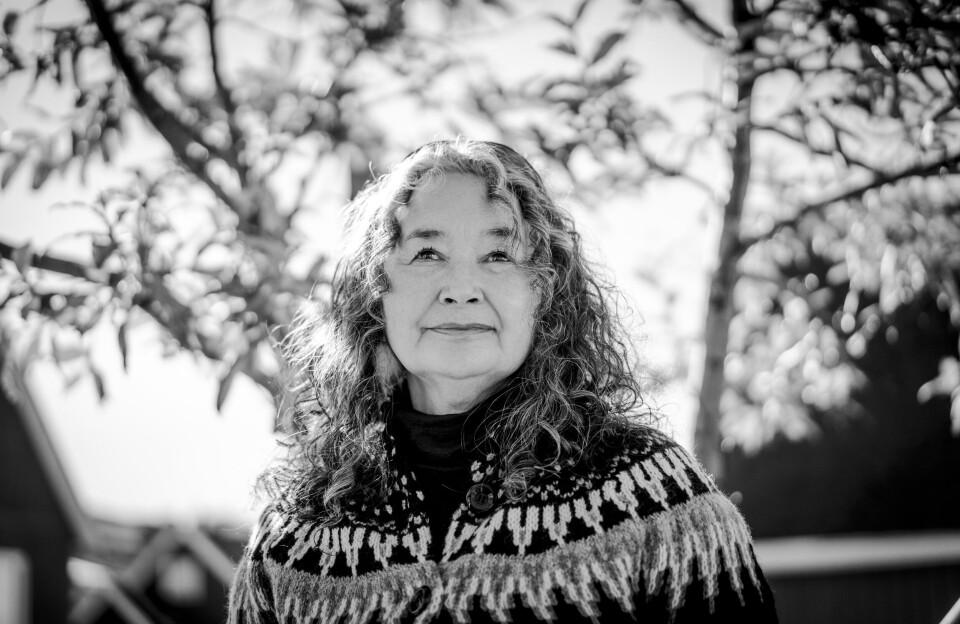
- Teachers are in a situation where they have to both teach professionally and at the same time function as interpreters between several languages. This is not a sustainable way of teaching, says the chairwoman of the teachers' union, IMAK, Elna Thomsen Heilmann.
For her, the problem is not an isolated one, but a structural failure: Foreign students – including Asian students – are continuing to be placed directly in regular classes without the necessary support, and this puts pressure on both teaching and the people who have to make it function.
In a number of previous articles in AG, both researchers and Asian students themselves have pointed to the same challenges: lack of support, language barriers and an everyday life where they often have difficulty keeping up.
The criticism is that the system is not geared to the reality that is increasingly affecting Greenlandic elementary schools.
A known problem for several years
According to IMAK, the challenges are far from new. Already at the 2023 board of representatives meeting, the members drew attention to the situation. Since IMAK raised the issue with the municipalities and the Self-Government, only few initiatives have been taken – and they continue to be characterised by a lack of resources and unclear goals.
- Our members have been expressing the challenge in primary schools with Asian students for several years, explains the teachers' leader.
She points out that teachers are in a very difficult situation, where the goals and structure of teaching become difficult to maintain when students without linguistic qualifications suddenly join the class.
- Teachers tell us that they become very confused and that the goals they have set for teaching are constantly postponed because so many situations arise along the way that they have to deal with. It is very frustrating when you want to teach them – and at the same time you don't have the opportunity to achieve them.
At the same time, the development has only gone one way in relation to foreign children in primary school – and that is upwards. And it is not only from the Philippines and Thailand, but also from a wider range of countries.
The municipalities do not use the opportunities in the Primary School Act
According to the Primary School Act, pupils can receive teaching in their mother tongue as well as supplementary teaching in Greenlandic. There is also the possibility of establishing groups and implementing support measures targeted at the needs of the individual pupil. However, according to the chairwoman of IMAK, these opportunities are not being utilized sufficiently in practice.
The consequence is that everyone pays a high price: both the foreign students, their classmates and the teachers. The municipalities should, to a greater extent, create a framework that matches the local conditions at the schools. There must be room for integration – but not at the expense of the students’ learning and professional development.
Teachers feel powerless
For teachers, it is not only about language challenges – but also about professionalism and working conditions.
- Teachers feel powerless. They often ask the question: How are we going to meet the academic goals when we cannot communicate properly with the students? And when there is no time for the individual student?, says IMAK’s chairwoman, while also pointing out that the lack of English skills among some teachers makes the situation even more difficult.
IMAK points to several concrete solutions. First and foremost, there is a need for further training in multilingual teaching.
- Teachers must have the opportunity to take courses so that they are better equipped for the task, says the chairwoman, who has been at the helm of IMAK since 2022.
The self-government and municipalities also need to allocate extra time and funds so that special classes or teams can be established where new students can have a safe start to school with the opportunity for professional development.
At the same time, the organization is open to hiring foreign teachers with a full teacher education if they have relevant skills that can alleviate the problem. The challenge is exacerbated by the fact that there is a significant teacher shortage along the entire coast.
A growing problem requires action
According to IMAK, the situation is not just a temporary challenge, but a structural problem that will grow in line with the need for foreign labor.
- The Self-Government and the municipalities need to do something about the problems as soon as possible, says Elna Thomsen Heilmann, using words like “downright embarrassing” if Greenland cannot offer foreign children the schooling they are entitled to.
The question is no longer whether the problem exists. Everyone agrees on that – but when will action be taken?
Abonnementer
Sermitsiaq.gl - web artikler
- Adgang til alle artikler på Sermitsiaq.gl
- Pr. måned kr. 59.00
- Pr. år kr. 650.00
Sermitsiaq - E-avis
- Adgang til Sermitsiaq e-avis som udkommer hver fredag
- Adgang til alle artikler på Sermitsiaq.gl
- Pris pr. måned kr. 191
- Pris pr. år kr. 1.677
AG - Atuagagdliutit E-avis
- Adgang til AG - Atuagagdliutit e-avis som udkommer hver fredag
- Adgang til alle artikler på Sermitsiaq.gl
- Pris pr. måned kr. 191
- Pris pr. år kr. 1.677
Sermitsiaq.AG+
- Adgang til AG - Atuagagdliutit e-avis som udkommer hver fredag
- Adgang til Sermitsiaq e-avis som udkommer hver fredag
- Adgang til alle artikler på Sermitsiaq.gl
- Adgang til Arnanut e-magasin
- Adgang til Nutserisoq.gl
- Ved interesse send en mail til abonnement@sermitsiaq.gl
Kære Læser, Velkommen til Sermitsiaq.gl – din kilde til nyheder og kritisk journalistik fra Grønland. For at kunne fortsætte vores vigtige arbejde med at fremme den frie presse og levere dybdegående, kritisk journalistik, har vi indført betaling for udvalgte artikler. Dette tiltag hjælper os med at sikre kvaliteten af vores indhold og støtte vores dygtige journalister i deres arbejde med at bringe de vigtigste historier frem i lyset. Du kan få adgang til betalingsartiklerne fra kun kr. 59,- pr. måned. Det er nemt og enkelt at købe adgang – klik nedenfor for at komme i gang og få fuld adgang til vores eksklusive indhold. Tak for din forståelse og støtte. Dit bidrag hjælper os med at fortsætte vores mission om at levere uafhængig og kritisk journalistik til Grønland.