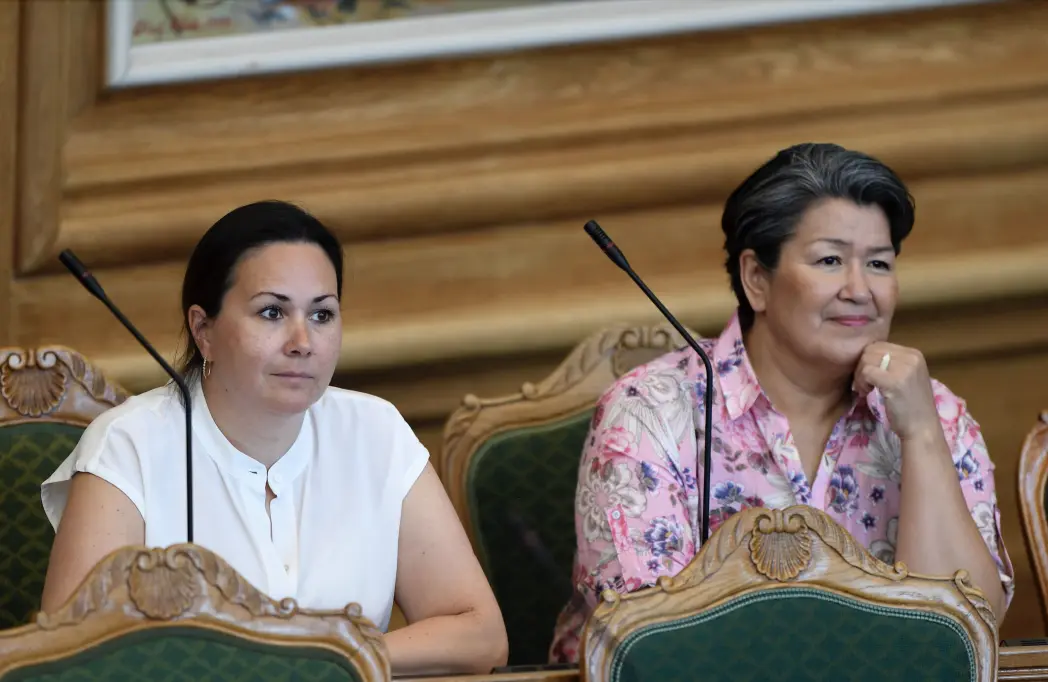
Forget about equality and gender distribution when it comes to elections to the Folketing.
It is true that politics was reserved for men for a century after the establishment of the trusteeships around 1860, but in the four most recent parliamentary elections Greenland has sent exclusively women to Christiansborg.
It is true that men maintained their monopoly of power in the parliamentary elections after the constitutional amendment in 1953, and the string of pearls was only broken by Atassut's Ellen Kristensen in 1999 and Inuit Ataqatigiit's Juliane Henningsen in 2007 (see also the fact box "Greenland at the Thing").
But ever since then, women have not looked back.
In 2011 Sara Olsvig, Inuit Ataqatigiit, and Doris Jakobsen, Siumut. In 2015 Aaja Chemnitz, Inuit Ataqatigiit, and Aleqa Hammond, Siumut. In 2019 Aaja Chemnitz, Inuit Ataqatigiit, and Aki-Matilda Høegh-Dam, Siumut. In 2022 re-election for Aaja Chemnitz and Aki-Matilda Høegh-Dam - with Demokraatit's Anna Wangenheim close on their heels.
Municipal elections are women's elections
Elections to the Folketing, Inatsisartut and municipal councils cannot be compared - and yet. Greenland's most recent elections were for municipal councils on 1 April 2025, and women topped the list of personal votes in all five municipalities.
Malene Vahl Rasmussen, Demokraatit, in Kommune Kujalleq. S. Olsen, Inuit Ataqatigiit, in Kommuneqarfik Sermersooq. Rachel Ingemann, Democracy, in Qeqqata Kommunia. Simigaq Broberg, Democracy, in Municipality Qeqertalik. Heidi Møller, Demokraatiit, in Avannaata Kommunia.
Malene Vahl Rasmussen, Avaaraq S. Olsen and Simigaq Broberg exchanged their great vote numbers for a mayoral chain.
Weeks before that, there were 11 March elections for Inatsisartut with its 31 seats.
In 2021, 10 women elected; in 2025, the number rose to 14 women - or 45 percent of the whole the hall. The development, which really took off in the parliamentary elections 15 years ago, is strange – all the while, that there are more male than female voters in a country, dominated for centuries by men in kayaks.
The women say what the voters want to hear
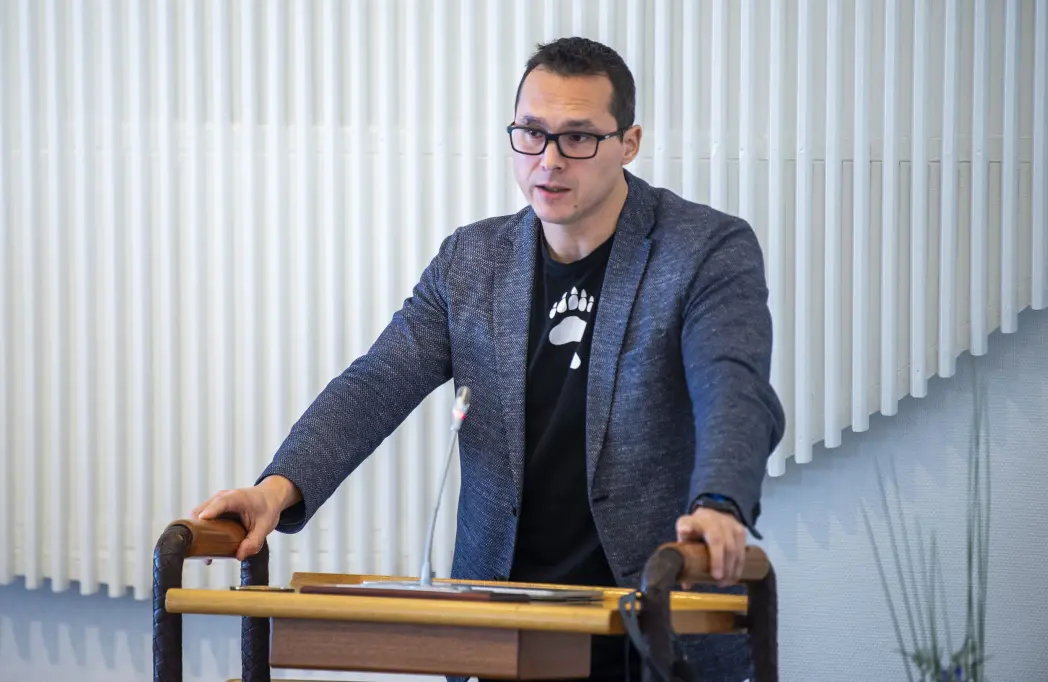
Ph.d. emerita MarieKathrine Poppel is a researcher in gender and equality at the University of Greenland Ilisimatusarfik.
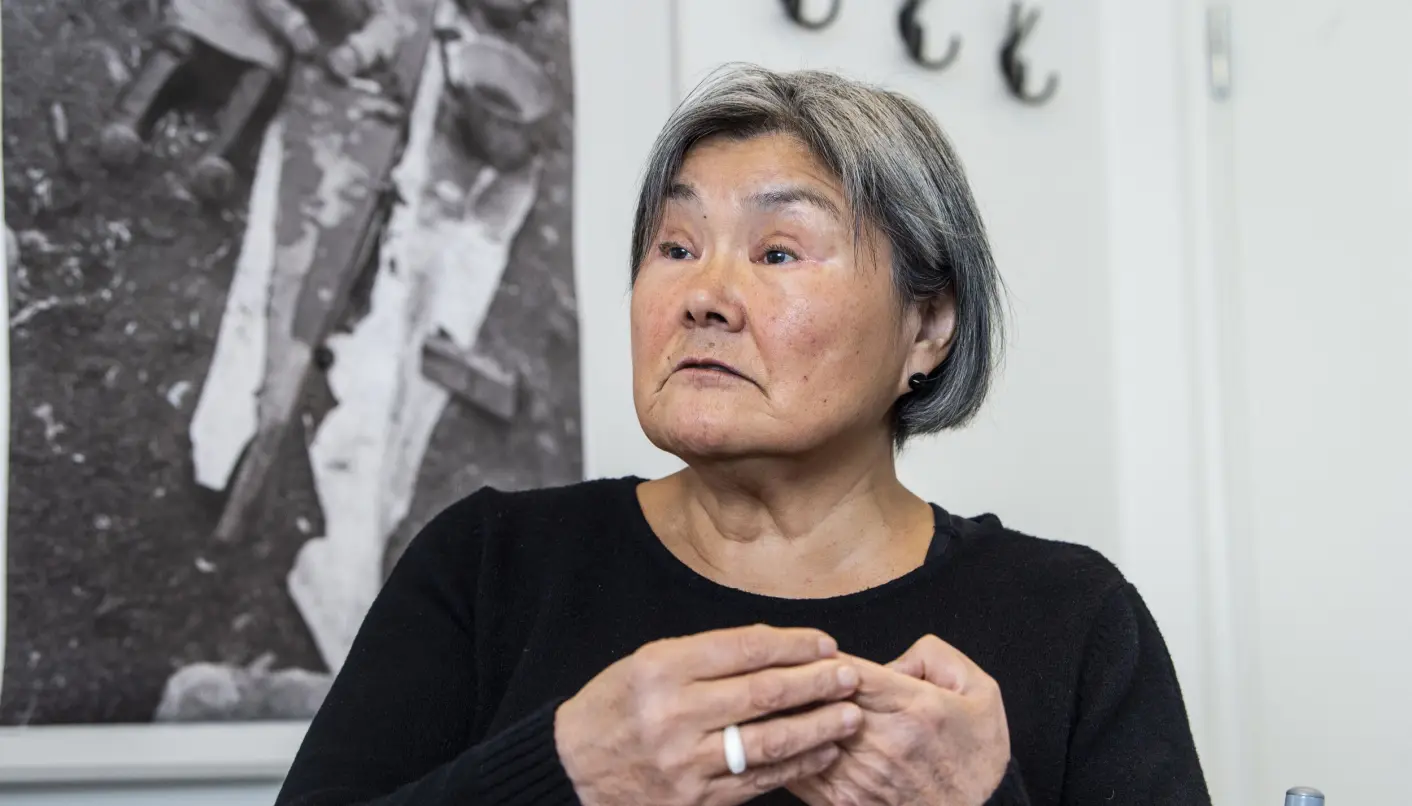
– Within the public sector, in business and in politics a great many women have moved forward, and in the future even more women will make their mark in central areas of society, says MariaKathrine Poppel to Sermitsiaq.
– Why are we seeing this development with more and more women in important positions?
– This is largely due to increased equality and better education. In Greenlandic homes, it has traditionally been women who manage child rearing, but today we see to a much greater extent that men and women share the tasks in the homes. At the same time, more women are getting educated, often with higher education than men. Not least, many women are employed in welfare tasks within daycare institutions, schools and the healthcare system and with administrative tasks in the self-government and the municipalities.
This also affects the themes in the election campaigns.
– Men are most often focused on heavy issues such as the economy and business with fishing and trapping, while women are more focused on better living conditions, more equality and less inequality in society. An inequality that is geographically evident on the shelves in the store in the east and west when the women shop for the family. Voters may well like to listen to candidates who discuss improvements in the welfare area, and many women have more influence than men precisely because of their priorities. And women are often more eloquent than men, says Marie-Kathrine Poppel.
More women give more votes
The researcher also points to women's experience in organizing themselves so that together they put more pressure on decision-makers to create greater equality.
Quote
The first women's association Arnat Peqatigiit was founded in 1948 in Nuuk, and the national association of women's associations was for many years an important voice in the social debate.
The Women's Party Arnat Partiiat was founded in 1999, and the goals were more women in politics and equality in both politics and business. In 2002, the party received 2.4 percent of the vote, which was not enough for a seat in the county council.
– But the formation of the party meant that the other parties saw the value in more female candidates on the ballot. The number of female candidates increased in subsequent elections; not in a straight line, but with a clear trend, says MarieKathrine Poppel.
Equality for all – including men
The big fisher’s sons are left behind in the dinghy, while the daughters thunder off – including in politics.
– Equality goes both ways, and can we fear a backlash if women’s dominance becomes too strong?
– Traditionally, it is men who provide for the family and make the decisions. They feel a power that is being undermined in recent years by the progress of women. Now, I don't think that female dominance has taken hold in politics, where, for example, there is too little focus on families and welfare policy. At the same time, men have not sufficiently supported women or contributed to getting them to run for election, and we know from the news that some young women experienced abusive behavior in their party, says MarieKathrine Poppel.
On October 23, 2020, she defended her PhD thesis "Men's Violence Against Women in Relationships" on the structural, social and historical reasons why men commit violence against women in relationships.
All balls are in the air
We will know late on Tuesday, March 24, whether women will clear the table for the 5th time in a row in a parliamentary election.
Today, all balls are in the air.
In the parliamentary election in 2022, 73 percent of all voters voted for the female 3-clover Aki-Matilda Høegh-Dam 6,670 votes, Aaja Chemnitz 4,296 votes and Anna Wangenheim 3,482 votes.
Aaja Chemnitz and Aki-Matilda Høegh-Dam are not re-running, and Anna Wangenheim has in the meantime become naalakkersuisoq for health and people with disabilities. This creates space for other women and men.
When Prime Minister Mette Frederiksen called elections on Thursday 26 February, four female candidates had already registered: Aka Hansen, Erik Nielsen Baadh, Ane Lone Bagger and Najaaraq Møller, all Siumut. Since then, a few men have come along.
The deadline for registering candidates – both men and women – expires on Friday 13 March. We will therefore have to wait a week for the gender distribution on the ballot. (See also the fact box »Candidate distribution and vote percentage in Greenland at parliamentary elections since 1979«).
Abonnementer
Sermitsiaq.gl - web artikler
- Adgang til alle artikler på Sermitsiaq.gl
- Pr. måned kr. 59.00
- Pr. år kr. 650.00
Sermitsiaq - E-avis
- Adgang til Sermitsiaq e-avis som udkommer hver fredag
- Adgang til alle artikler på Sermitsiaq.gl
- Pris pr. måned kr. 191
- Pris pr. år kr. 1.677
AG - Atuagagdliutit E-avis
- Adgang til AG - Atuagagdliutit e-avis som udkommer hver onsdag
- Adgang til alle artikler på Sermitsiaq.gl
- Pris pr. måned kr. 191
- Pris pr. år kr. 1.677
Sermitsiaq.AG+
- Adgang til AG - Atuagagdliutit e-avis som udkommer hver onsdag
- Adgang til Sermitsiaq e-avis som udkommer hver fredag
- Adgang til alle artikler på Sermitsiaq.gl
- Adgang til Arnanut e-magasin
- Adgang til Nutserisoq.gl
- Ved interesse send en mail til abonnement@sermitsiaq.gl
Kære Læser, Velkommen til Sermitsiaq.gl – din kilde til nyheder og kritisk journalistik fra Grønland. For at kunne fortsætte vores vigtige arbejde med at fremme den frie presse og levere dybdegående, kritisk journalistik, har vi indført betaling for udvalgte artikler. Dette tiltag hjælper os med at sikre kvaliteten af vores indhold og støtte vores dygtige journalister i deres arbejde med at bringe de vigtigste historier frem i lyset. Du kan få adgang til betalingsartiklerne fra kun kr. 59,- pr. måned. Det er nemt og enkelt at købe adgang – klik nedenfor for at komme i gang og få fuld adgang til vores eksklusive indhold. Tak for din forståelse og støtte. Dit bidrag hjælper os med at fortsætte vores mission om at levere uafhængig og kritisk journalistik til Grønland.