
The special unit in VISO with expertise in Greenlandic language and culture has received 47 cases for review in the past year.
According to Chief Consultant Randi Lykou, they have closed 16 cases. In only two of the closed cases has the unit assessed that the use of tests has led to misleading results.
– In the cases where the unit has assessed that the use of tests has led to a misleading assessment, in both cases there has been a dialogue with the municipality about subsequently having an investigation and/or advice from the unit.
Dialogue with the municipalities
Randi Lykou further explains that in cases where the unit has assessed that the use of a test has not led to a misleading assessment, the unit has also been in dialogue with the municipalities about either conducting an investigation pursuant to Section 171 b of the Children's Act or providing advice pursuant to Section 165 of the Children's Act with a view to strengthening the municipality's knowledge of the Greenlandic language and culture.
14 cases are still under review, 4 cases are under review and finally 13 cases have been rejected.
– Reasons for rejection are typically that the cases do not include the use of a test, says the explanation from VISO.
Forcibly removed from birth
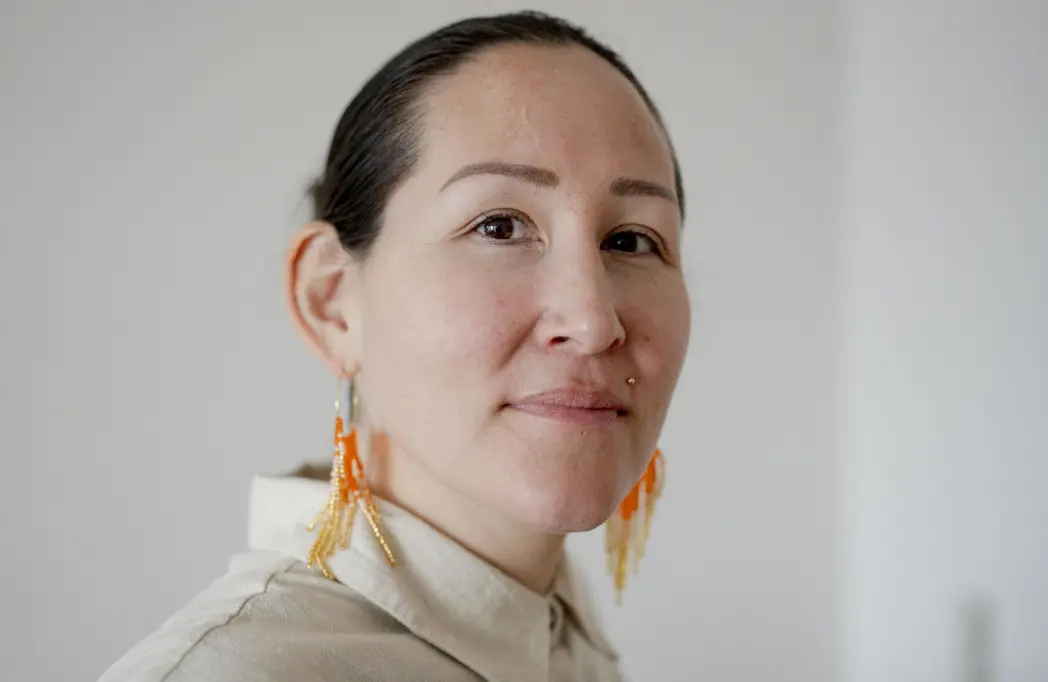
One of the much-discussed cases that VISO has assessed in the past year is Thisted Municipality's forced removal of Keira Kronvold's daughter Zammi from birth, which occurred in November 2024.
The unit found that the use of tests has not led to a misleading assessment, and that Thisted Municipality is right that Keira Kronvold cannot care for her daughter full-time.
However, that decision has been criticized from several sides, including by Keira Kronvold's legal assistant Laila Bertelsen, who does not believe that VISO's report meets the professional standards for an assessment of parental abilities.
Uncertain assumptions
According to Laila Bertelsen, VISO's conclusion is based on uncertain and partially undocumented assumptions. In addition, she emphasizes that the psychologist was Danish, and that no interpreter was used in large parts of the process, even though Keira's primary language is Greenlandic.
In addition, Laila Bertelsen points out that the assessment of mentalization is not based on an actual method, and that the report only contains general interpretations such as "Keira goes on the defensive" or that she "appears distanced" as arguments for her inability to mentalize, i.e. that she is unable to understand her own and others' actions based on underlying mental states such as emotions, thoughts, needs and intentions.
Analyses are made from a Danish context
In general, Laila Bertelsen believes that VISO is not at all able to live up to the purpose of demonstrating understanding of Greenlandic culture and language, probably because the psychologists employed are Danes who have lived or worked in Greenland for a shorter or longer period.
– VISO expresses great understanding for the affected families, but their analyses are based on a Danish context and based on short interviews and assessments based on the municipalities' case reviews, including the psychological tests that would otherwise not have been used. If the report is not to give a misleading result, Greenlandic professional staff with a deep understanding of Greenlandic culture and language must be employed. It is not enough to have lived in Greenland, says Laila Bertelsen, who also points out that there is a big difference between growing up in Nuuk and smaller towns and settlements.
– VISO's employees must also have that understanding, and we do not experience that they have it, says Laila Bertelsen, who is an advisor to several Greenlandic families who have had children placed in Denmark.
According to VISO, the latest nationwide figures from Statistics Denmark show that the number of children and young people with a Greenlandic background placed outside the home has decreased from 460 children and young people in 2023 to 416 in 2024.