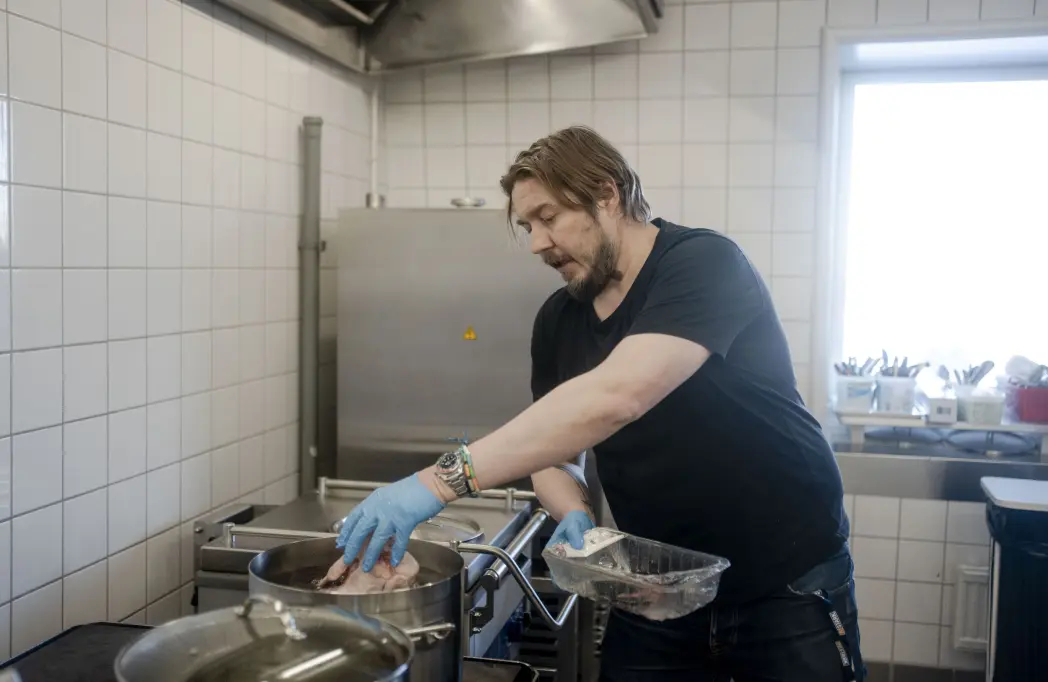
- I have a plan, says Egon Olsen in a clear and authoritative voice, while Benny and Kjeld nod enthusiastically.
Everything is thought through. The coup is brilliant.
But the brilliant stops if the plan doesn't get any further than the kitchen table at Kjeld's house. Because if no one buys the balloons, finds the truck or shows up at the agreed time, it all remains just talk.
- This is how parts of Greenland's social policy work, according to Professor Steven Arnfjord from Ilisimatusarfik via a Teams connection.
According to the professor who is currently writing the book, the Self-Government is taking on Egon's role: Strategies are formulated, visions are ambitious, documents are worked through. The municipalities become Kjeld's kitchen table – the place where the plan lands. But if there is no concrete shopping list – a clear implementation plan, funds and follow-up – nothing happens. The plan is adopted, but it is not carried out.
In his new book “Greenland's Social Policy – The Formation of an Arctic Welfare Society”, Arnfjord reviews a century of social policy development. Recent decades have offered a wealth of strategies for children, the elderly, people with disabilities and the homeless. Yet the figures show that many social problems are in a state of flux – and in some areas have gotten worse.
- The strategies are made, they are praised – and then it stops, he says, pointing to the gap between plan and practice.
When work on the document ends
According to Steven Arnfjord, a central problem is that the strategy work is often considered to be completed the moment the document is finished and politically approved.
- There is a tendency to think that once we have written the strategy, we have done our job, he says.
He tells of a homeless strategy that was received positively in the department. Working groups had used considerable resources, officials had provided analyses, and the plan was praised internally. But when it reached a municipality, the sober question was: What exactly are we going to use it for?
- There was no introduction, no implementation plan and no follow-up. Nobody said: Now we will do this and that – and in six months we will measure whether it is working. And there was no consequence if it was not followed, explains the professor, who specializes in Arctic social conditions.
The problem is compounded by the fact that many strategies are never translated into actual legislation. A strategy is political will on paper – but without legal obligation. As a result, it lacks both steering power and often financing.
- If there are no funds and if you do not clearly place the responsibility, then it is up to the individual municipality to prioritize within their existing framework. And then it is easily pushed aside by urgent tasks, he explains.
According to Arnfjord, this becomes particularly clear when strategies contain ambitious formulations about outreach teams, strengthened prevention or better support for young people outside the labor market.
- If you want outreach efforts, you have to say who is to be hired, how they are organized, what it costs, and how to measure the effect. Otherwise, it remains the same as the intention.
This creates a gap between political rhetoric and administrative reality. The strategy may be professionally well-founded and value-friendly – but without concrete operationalization, it loses power when it affects the everyday life of the municipalities.
The municipalities face different realities
Arnfjord emphasizes several times in the conversation that the municipalities work under very different conditions. In the capital, the economy is relatively strong, and there are larger professional environments. But even here it can be difficult to attract and retain trained staff – and the challenge is even greater in the smaller towns and settlements.
In other places in the country, the situation is the opposite. Here, the economy is pressured and priorities are tough. When the budget is tight, even small but necessary adjustments can drag on. Strategies that require new inputs or extra hands clash with a reality where the core tasks are already difficult to carry out.
According to Arnfjord, the lack of trained employees in the social sector is significant. Less than half of the country's social worker positions are filled by trained social workers. The rest are handled by employees without formal education. In the educational field, the picture looks similarly strained.
- This has concrete consequences, the professor explains with seriousness and continues:
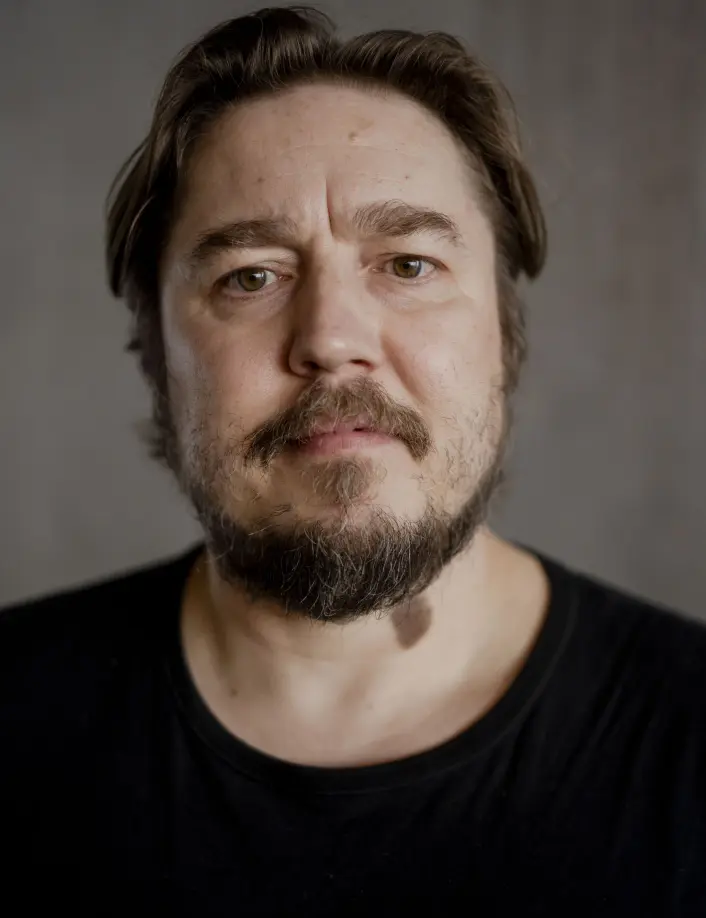
- It is the educators and social workers who meet the citizens every day. They listen, advise, handle conflicts and make difficult decisions. If the professional ballast is lacking, the quality becomes vulnerable.
He also points out that salary, working environment and management quality play a crucial role in retention.
- If we do not invest in professionalism and in proper working conditions, the educated will disappear to other industries or other places. And then even the best strategy cannot work in practice.
Thus, the implementation problem becomes not only a question of political will, but also of structural conditions: Without competent hands and stable professional environments, even ambitious reforms risk crumbling in the encounter with everyday life.
Local politicians must take action
For Arnfjord, it is crucial that municipal politicians take a much greater ownership if the strategies are to become more than just paper.
- They are the mouthpiece of the citizens – also between elections, he says briefly and to the point.
This means that they cannot simply adopt plans and leave the rest to the administration. According to the professor, they must insist on political follow-up:
- Who is responsible for putting the action plan into action? When should a report be made? What milestones should be reached in six or twelve months? If no one asks those questions, the strategy risks disappearing in the daily operations.
Steven Arnfjord has three pieces of advice for elected representatives in the municipalities:
- First, every strategy must contain a concrete implementation model – with clear responsibility and a time frame. Secondly, the goals must be measurable. Without clear success criteria, it is impossible to evaluate the effort or take political responsibility for it. Thirdly, resources must be included. Strategies without funds are in practice non-binding.
He gives an example: You can decide to reduce youth unemployment by four percent. That is concrete. Or you can decide to establish a dementia ward in a nursing home by a certain date.
- In this way, you create both real welfare and political credibility, he says, urging politicians to be much more visible in the local community and strengthen cooperation with voluntary organizations.
- The public sector cannot handle all tasks alone. In several places, partnerships with NGOs have shown that flexible frameworks and shorter decision-making paths can create faster results. It must be made easier to get involved voluntarily. This strengthens citizen-oriented welfare, believes the social science professor, who also emphasizes that political responsibility can never be outsourced.
Ultimately, it is the politicians' responsibility to ensure that we have a responsible social policy.
Abonnementer
Sermitsiaq.gl - web artikler
- Adgang til alle artikler på Sermitsiaq.gl
- Pr. måned kr. 59.00
- Pr. år kr. 650.00
Sermitsiaq - E-avis
- Adgang til Sermitsiaq e-avis som udkommer hver fredag
- Adgang til alle artikler på Sermitsiaq.gl
- Pris pr. måned kr. 191
- Pris pr. år kr. 1.677
AG - Atuagagdliutit E-avis
- Adgang til AG - Atuagagdliutit e-avis som udkommer hver onsdag
- Adgang til alle artikler på Sermitsiaq.gl
- Pris pr. måned kr. 191
- Pris pr. år kr. 1.677
Sermitsiaq.AG+
- Adgang til AG - Atuagagdliutit e-avis som udkommer hver onsdag
- Adgang til Sermitsiaq e-avis som udkommer hver fredag
- Adgang til alle artikler på Sermitsiaq.gl
- Adgang til Arnanut e-magasin
- Adgang til Nutserisoq.gl
- Ved interesse send en mail til abonnement@sermitsiaq.gl
Kære Læser, Velkommen til Sermitsiaq.gl – din kilde til nyheder og kritisk journalistik fra Grønland. For at kunne fortsætte vores vigtige arbejde med at fremme den frie presse og levere dybdegående, kritisk journalistik, har vi indført betaling for udvalgte artikler. Dette tiltag hjælper os med at sikre kvaliteten af vores indhold og støtte vores dygtige journalister i deres arbejde med at bringe de vigtigste historier frem i lyset. Du kan få adgang til betalingsartiklerne fra kun kr. 59,- pr. måned. Det er nemt og enkelt at købe adgang – klik nedenfor for at komme i gang og få fuld adgang til vores eksklusive indhold. Tak for din forståelse og støtte. Dit bidrag hjælper os med at fortsætte vores mission om at levere uafhængig og kritisk journalistik til Grønland.