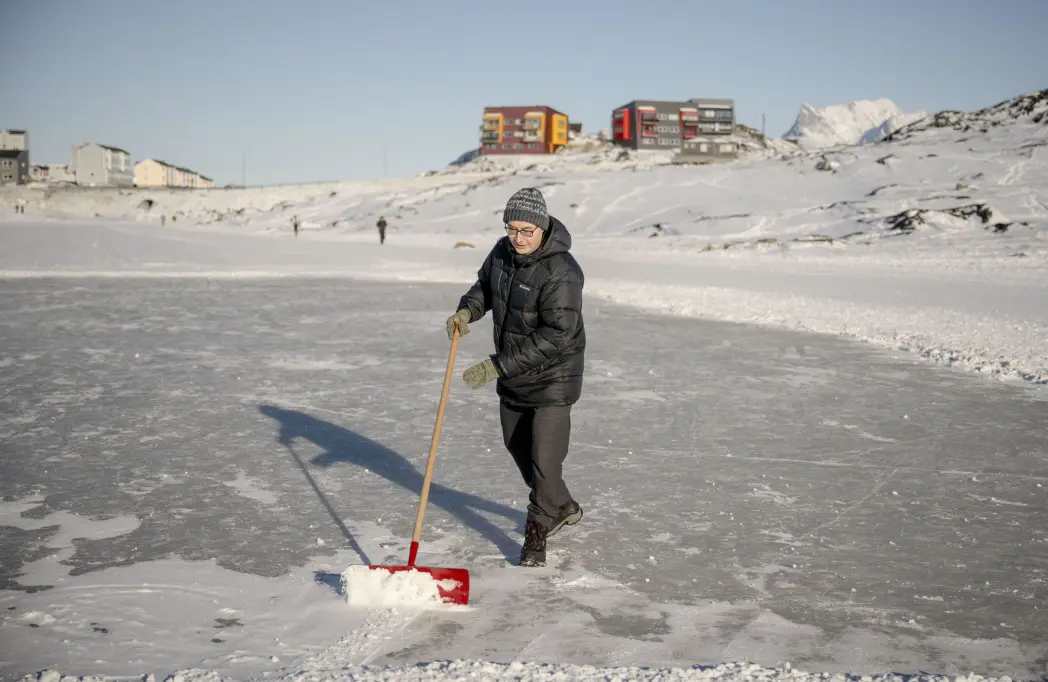

When the frost bites his cheeks over Nuuk, and the winter light sets like a golden glow over the fjord, Jesper Labansen stands in front of a container with skates, bulging to lumps.
Amidst the cold and chaos, he insists again and again on the dream of clanking skate steel and cheerful cheers from an enthusiastic bench. Jesper is an alpine skier, with a fondness for slalom and giant slalom, but his heart beats elsewhere: on the smooth ice.
The Ice of Childhood
The Sukuutserta project is the culmination of a lifelong passion. As early as the 1970s, Jesper Labansen spent all his free time on the ice rink in front of Godthåbshallen, where as a child he learned the feeling of speed, balance and community.
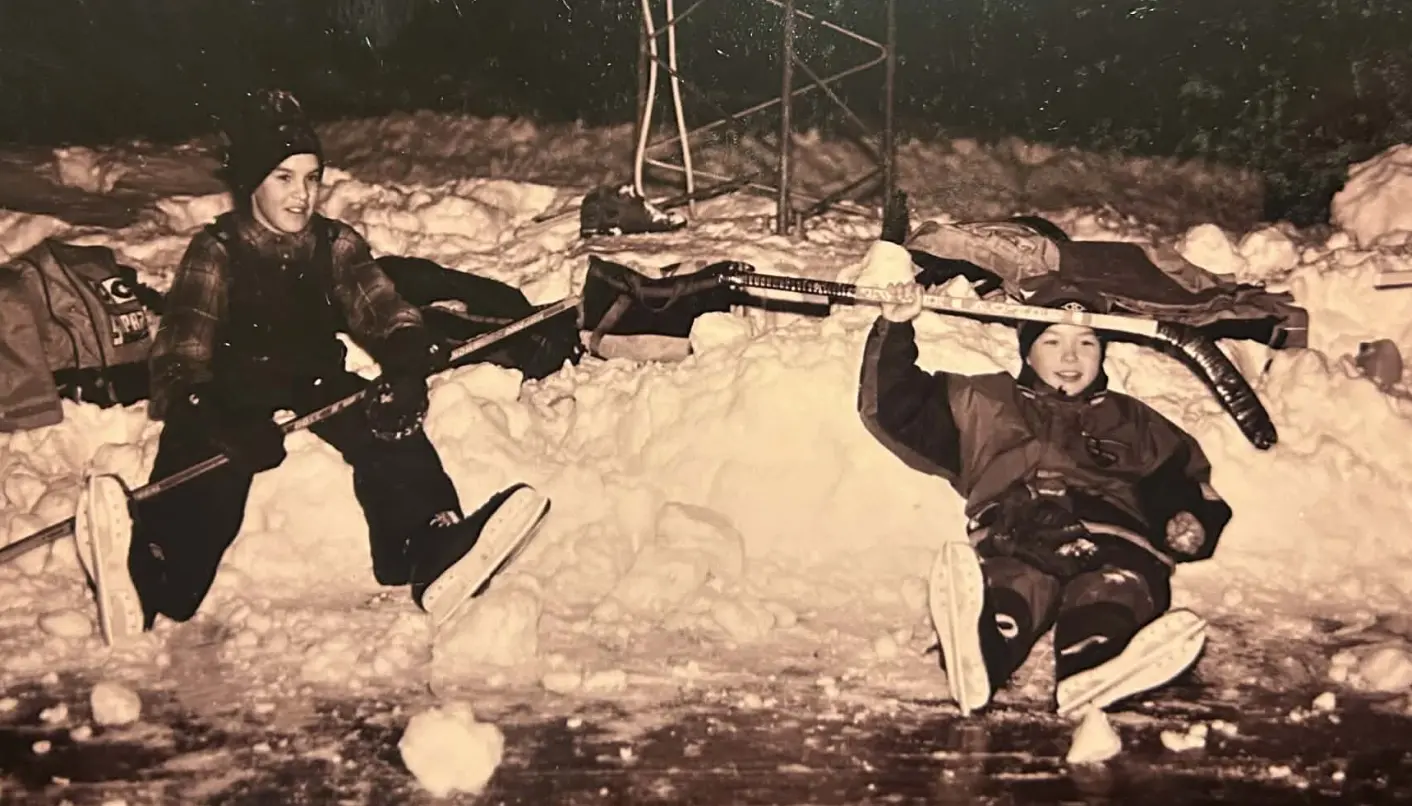
That feeling never left him. As a young student in Alaska, he fell head over heels in love with the raw intensity and strong community of ice hockey – a sport that binds local communities together across generations in the North American cold landscape, where even the smallest towns have their own ice rink. When Jesper Labansen returned home to Greenland, it was with a firm decision: Ice hockey must have roots in Nuuk.
“I just think it made so much sense. There were many parallels that suggested that it would be an obvious choice to practice ice hockey in Greenland,” he says, his voice trembling with excitement.
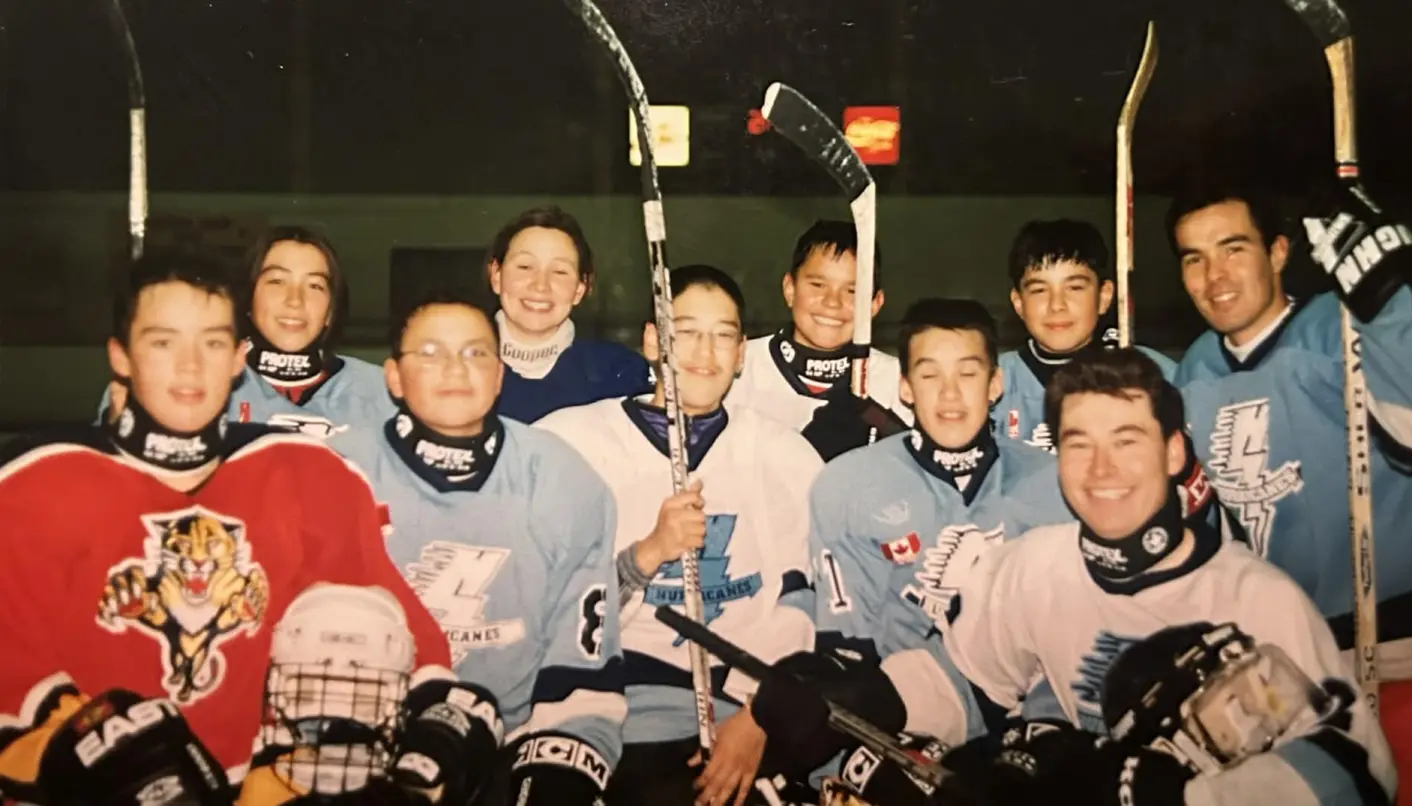
The ice hockey training then became a reality. He even manages to organize a study trip, where young people from both Nuuk and Maniitsoq travel to Iqaluit in Canada to exchange experiences on the ice, while he and three others complete a coaching course.
The ambitions are great, and the energy is contagious. But between the dream of a sustainable Greenlandic skating culture and the Arctic reality, there is more than just ice and winter darkness. The foundation proves to be fragile, and ice hockey never really gets a foothold.
Volunteer hands and frozen water
On Lake Annersuaq, winter draws its own sports facility. Cross-country skiers slide in tracks along the prepared trail, while a square in the middle of the ice marks something more fragile: Nuuk's only skating rink. Homemade. Volunteer-maintained. Rebuilt from scratch every year.
- There is a great energy down here. When it all comes together, we see parents dropping their children off at the ice rink while they find their cross-country skis. I love that, says Jesper Labansen with a broad smile.
However, the idyll rests on hard work. Before the first blades can be put into the ice, the rink must be cleared of snow, watered and repaired when the frost cracks the surface. Because the rink is located directly on the lake, Jesper and his handful of volunteers drill half a meter down through the ice to fetch water for the rink – manual work in sub-zero temperatures, where fingers quickly lose feeling.
- We have received support several times. Among other things, a drill, a small electric generator and a water pump, he says.
But even with the equipment in place, it is the hours and the volunteers that determine whether there will be life on the ice.
A fragile skating culture
The skating rink only opens if a volunteer takes responsibility. Someone has to unlock the container in the afternoon – and most importantly, lock it again when darkness falls. This means collecting leftover skates, sorting them, finding the pairs and creating some order.
- Unfortunately, the culture is not that good. Sometimes it can take a whole hour to shut down because there are skates floating on the rink and they haven't been put away properly. It's incredibly annoying, says Jesper Labansen.
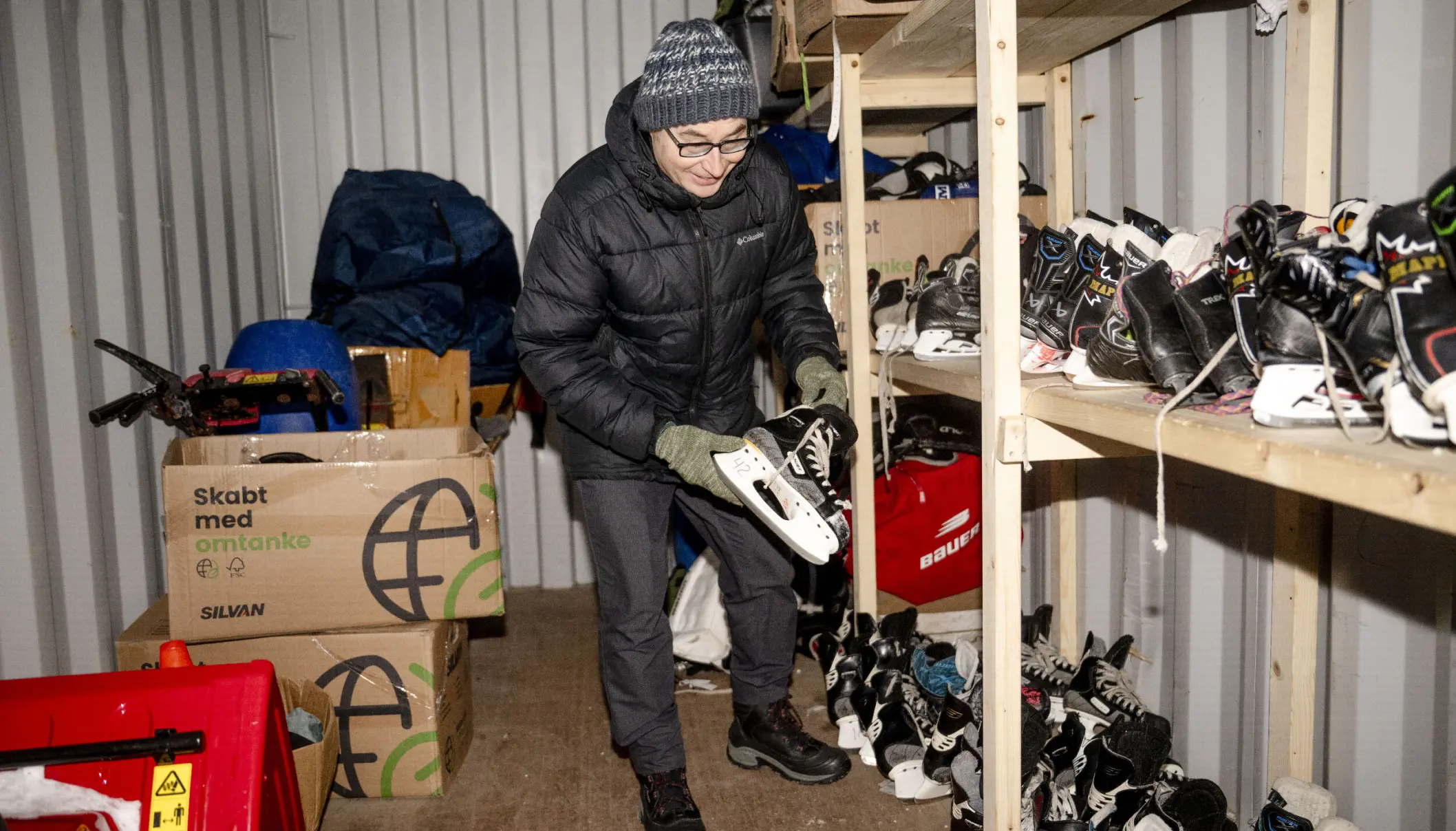
The many skates that can be borrowed for free today have their own history. They originate from the ice hockey association that was tried to be established in the 1990s, when he returned from Alaska. At that time, the initiative waned, and the equipment ended up in a container - forgotten for almost a decade.
- The skates from that time were hidden away for ten years, but I found the container again. These are among the ones that you can borrow for free today - if you take care of them, of course, he says firmly, but with a friendly smile.
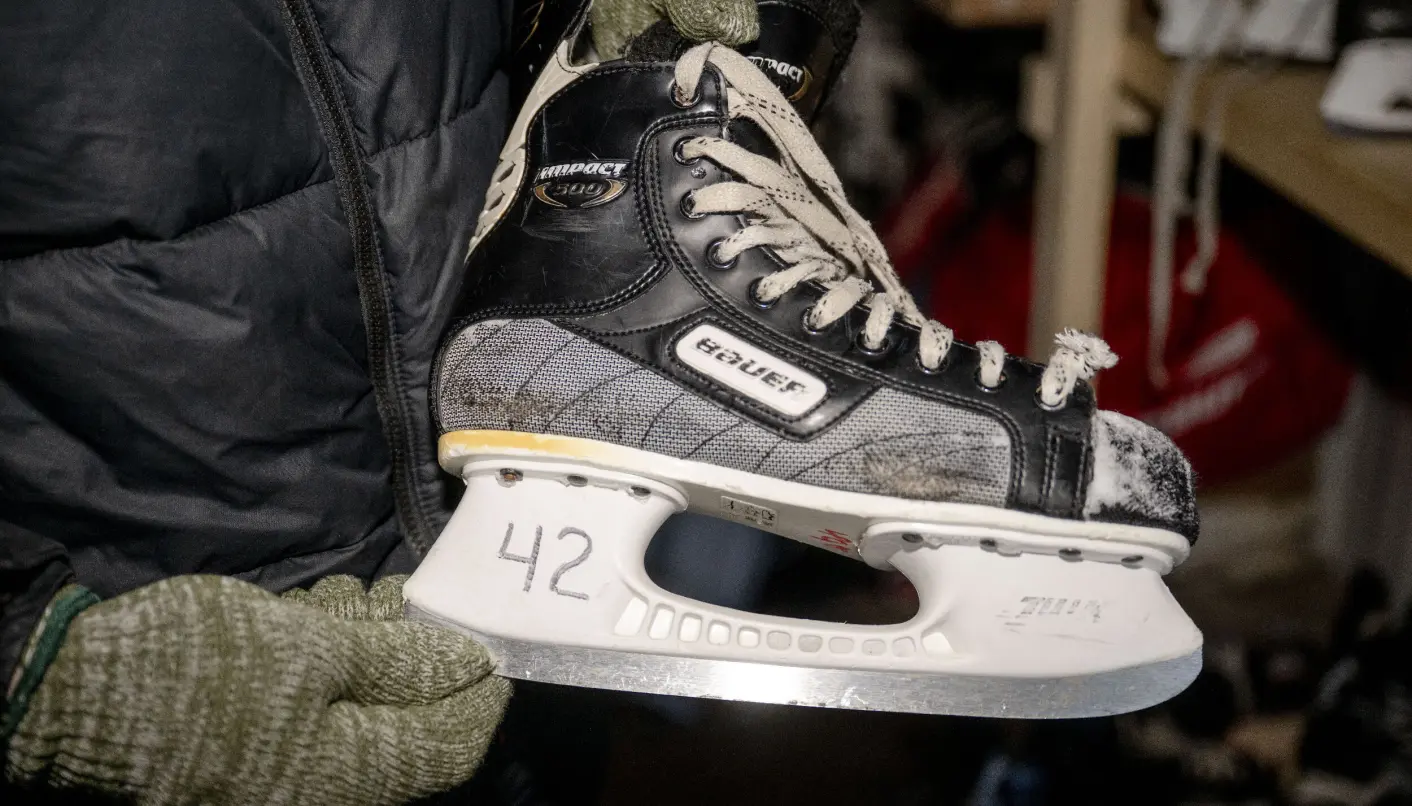
Since then, several pairs have joined with support from the local committee, and the container now contains a small treasure trove of loaner skates. The interest is noticeable. When the rink is open, the ice is buzzing with life, and the queue at the container is evidence that the need is greater than the facilities. The commitment has even found its own ways.
- We now have a lockbox. Before, we just hid the key behind the container in a glove. Some children found it and unlocked it themselves because they wanted to go ice skating. That's both the beautiful and the sad thing about it, says Jesper Labansen.
Amidst the childish enthusiasm lies the story of a fragile construction: A skating culture that lives on desire – but survives on the efforts of enthusiasts.
A dream that must be carried on
Jesper Labansen still puts in hour after hour to keep the rink open. He clears snow, drills holes in the ice and unlocks the container when others go home. But the math no longer makes sense.
- When my children were younger, it made more sense. Now they just think I'm a bit away too much – and that's not how it should be, he says, sitting down on one of the home-built benches, which he has persuaded his daughter to build with him, after all, so that people have a place to sit when they strap on their loaner skates.
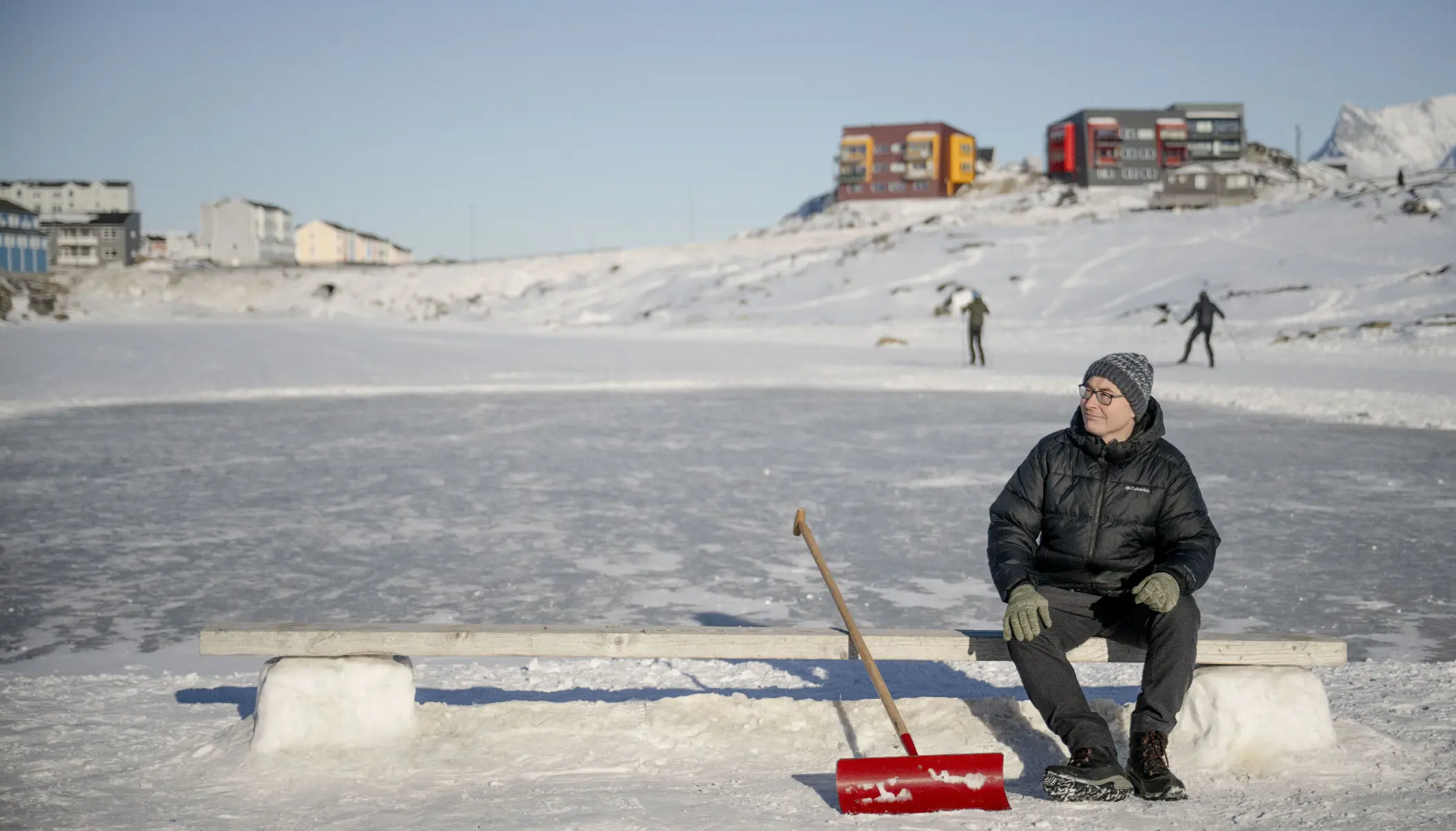
Still, it feels far-fetched to let go. The silence on the rink reminds him of how much he's invested and how hard it is to let the dream stand on its own two feet. Because what happens if he does?
- I have always dreamed of having ice skating in Greenland. It simply cannot be right that only handball and football dominate – even in the winter months, when we live where we live, he says, and his voice takes on a hint of fatigue.
Ironically, his own passion for alpine skiing has helped to give the project some air this year. A winter with modest snowfall has limited training on the ski slopes, and Jesper has been able to put in extra hours at the ice rink. The question is how long a skating culture can rest on a handful of enthusiastic volunteers – and one man’s conscience. Jesper has previously sought and received support from both the local committee and foundations, but the project still lacks the strength and resources to become sustainable.
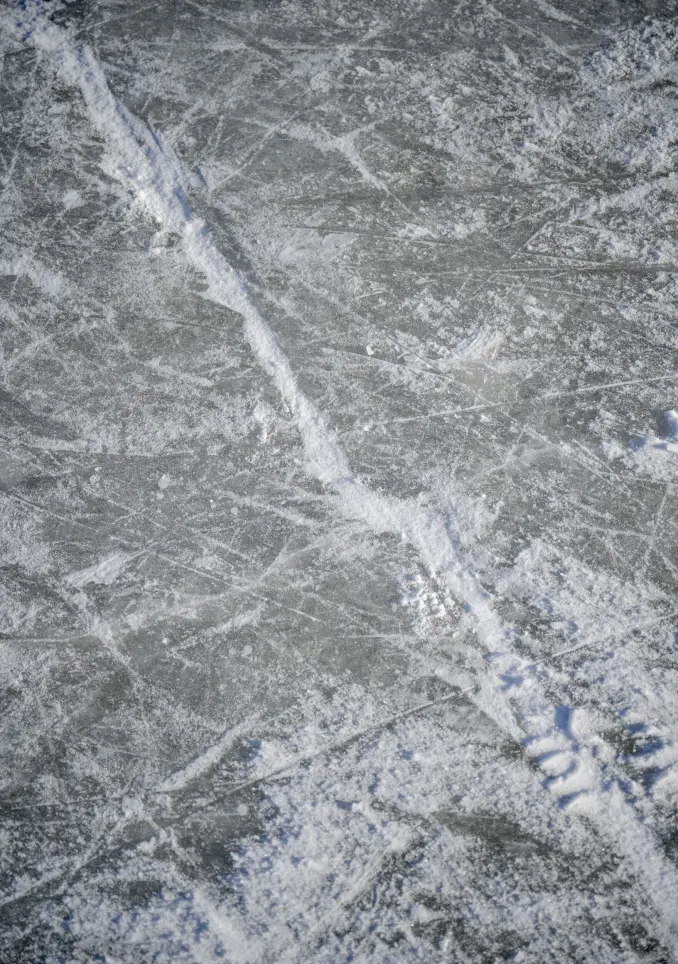
– I dream that the municipality will see that this is a unique opportunity to support their own – and GIF’s – vision of becoming the world’s most physically active country, says Jesper Labansen, while letting the sun sparkle on the ice in front of him before continuing.
– A skating culture that does not require a hall, but draws on Greenland’s nature and winter conditions, he concludes, as a call to invest in movement that stems directly from the landscape and the seasons’ own premises.
He slowly walks back towards the container. The rink is empty, with only the imprints of former skating tracks as silent testimony to life and movement. For Jesper Labansen, ice is more than frozen water – it is hope and community. And even in the silence you can feel the dream that is still waiting for the next time it gets legs to skate on.
Abonnementer
Sermitsiaq.gl - web artikler
- Adgang til alle artikler på Sermitsiaq.gl
- Pr. måned kr. 59.00
- Pr. år kr. 650.00
Sermitsiaq - E-avis
- Adgang til Sermitsiaq e-avis som udkommer hver fredag
- Adgang til alle artikler på Sermitsiaq.gl
- Pris pr. måned kr. 191
- Pris pr. år kr. 1.677
AG - Atuagagdliutit E-avis
- Adgang til AG - Atuagagdliutit e-avis som udkommer hver onsdag
- Adgang til alle artikler på Sermitsiaq.gl
- Pris pr. måned kr. 191
- Pris pr. år kr. 1.677
Sermitsiaq.AG+
- Adgang til AG - Atuagagdliutit e-avis som udkommer hver onsdag
- Adgang til Sermitsiaq e-avis som udkommer hver fredag
- Adgang til alle artikler på Sermitsiaq.gl
- Adgang til Arnanut e-magasin
- Adgang til Nutserisoq.gl
- Ved interesse send en mail til abonnement@sermitsiaq.gl
Kære Læser, Velkommen til Sermitsiaq.gl – din kilde til nyheder og kritisk journalistik fra Grønland. For at kunne fortsætte vores vigtige arbejde med at fremme den frie presse og levere dybdegående, kritisk journalistik, har vi indført betaling for udvalgte artikler. Dette tiltag hjælper os med at sikre kvaliteten af vores indhold og støtte vores dygtige journalister i deres arbejde med at bringe de vigtigste historier frem i lyset. Du kan få adgang til betalingsartiklerne fra kun kr. 59,- pr. måned. Det er nemt og enkelt at købe adgang – klik nedenfor for at komme i gang og få fuld adgang til vores eksklusive indhold. Tak for din forståelse og støtte. Dit bidrag hjælper os med at fortsætte vores mission om at levere uafhængig og kritisk journalistik til Grønland.