Status of deep sea mining is that the moratorium the former Naalakkersuisut introduced expired at the beginning of 2024.
It is therefore allowed under current legislation to get one exploration license for offshore activities also in areas designated as "deep sea", informs Naalakkersuisut, who in March 2024 joined a precautionary pause of a maximum of two years in relation to deep sea mining that implies that permits for exploration are permitted, but that exploitation is not may be allowed during the break.
Status of deep sea mining is that the moratorium the former Naalakkersuisut introduced expired at the beginning of 2024.
It is therefore allowed under current legislation to get one exploration license for offshore activities also in areas designated as "deep sea", informs Naalakkersuisut, who in March 2024 joined a precautionary pause of a maximum of two years in relation to deep sea mining that implies that permits for exploration are permitted, but that exploitation is not may be allowed during the break.
Naalakkersuisoq for raw materials, Naaja H. Nathanielsen (IA) said recently Sermitsiaq that, based on a precautionary principle, she expects to propose one actual ban on deep-sea mining in this election period, which however will require both an approval by Naalakkersuisut and an adoption in Inatsisartut.
Large gaps in knowledge about consequences
At the environmental organization Oceans North Kalaallit Nunaat, people are happy naalakkersuisoq's announcement, because here they don't think there is enough knowledge either on the consequences of deep-sea mining.
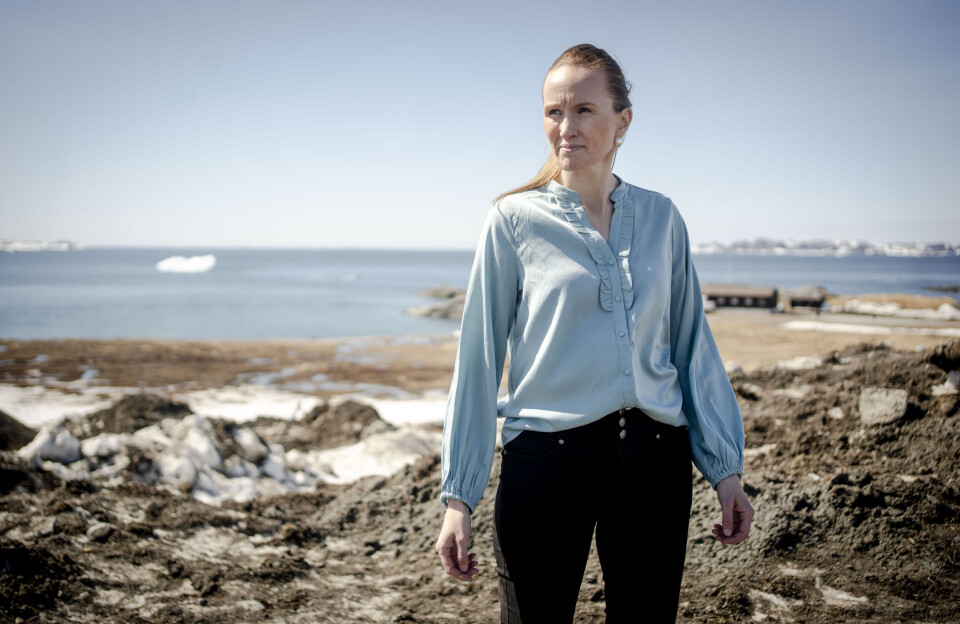
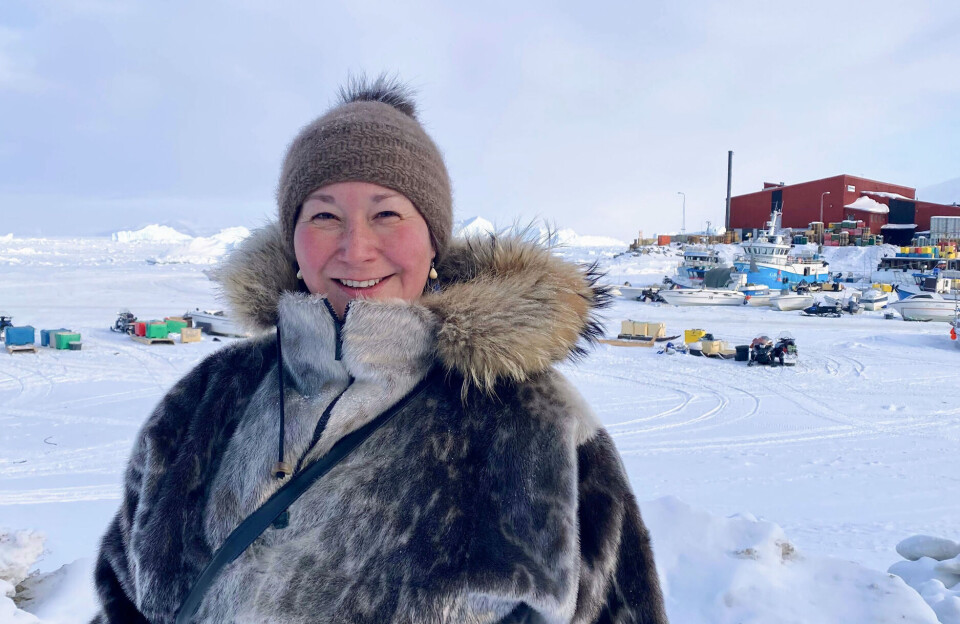
– As long as there are so big knowledge gaps about how it affects the marine environment and ecosystems, then we are against deep-sea mining, and believes that a moratorium is in order, says specialist consultant in Oceans North Kalaallit Nunaat, Parnuna Egede Dahl.
- We have supported the two-year break that the Kingdom of Denmark advocated, and we hope that it can continue or turn into an actual moratorium, but we notes with concern that the Faroe Islands actually show little interest in om deep sea mining may turn into a new financial adventure for them. That's something we are focusing on next year, when there is the UArctic Conference in Torshavn, where we is planning a session on deep-sea mining versus deep-sea ecosystems, says Parnuna Egede Dahl and adds:
- Because there is so much interest from China and the US in particular to start deep-sea mining, then we hope to be able to pull in the opposite direction on them areas where we have an influence.

Research papers on consequences
Oceans North Kalaallit Nunaat has a particular focus on what science says about the consequences of deep sea mining.
- A new research paper published in Nature this November shows, for example, that if dust from the seabed is pumped out further up in the water column, then it has a large negative effect on the primary production of phytoplankton, which in turn affects the rest of the food chain in the sea, says Parnuna Egede Dahl and adds that "You and med that Greenland is so dependent on a good marine environment for fishing, so it should be extra careful to affect the balance of the sea”.
The deep sea as geopolitical arena
Oceans North Kalaallit Nunaat agrees that a green transition is crucial to mitigating the impacts of climate change. But that it is not meaning that more minerals must be extracted.
- Sustainability should not begin with the assumption that new mineral resources must be extracted. Instead, by prioritizing recycling, we can recycling and research into better utilization of mineral waste, reduce the need for new mineral resources significantly. From an economic perspective is many of the metals that deep-sea mining targets are not particularly rare and have profitable land-based alternatives. Some mineral resources in the deep sea only exists in small, unprofitable quantities, and deep sea mining will not eliminating the need for land-based mines. Furthermore, there is growing concern for the international deep sea to become a geopolitical arena that leads to resource races and potential conflicts between the countries.
Fishing is the backbone of ours economy
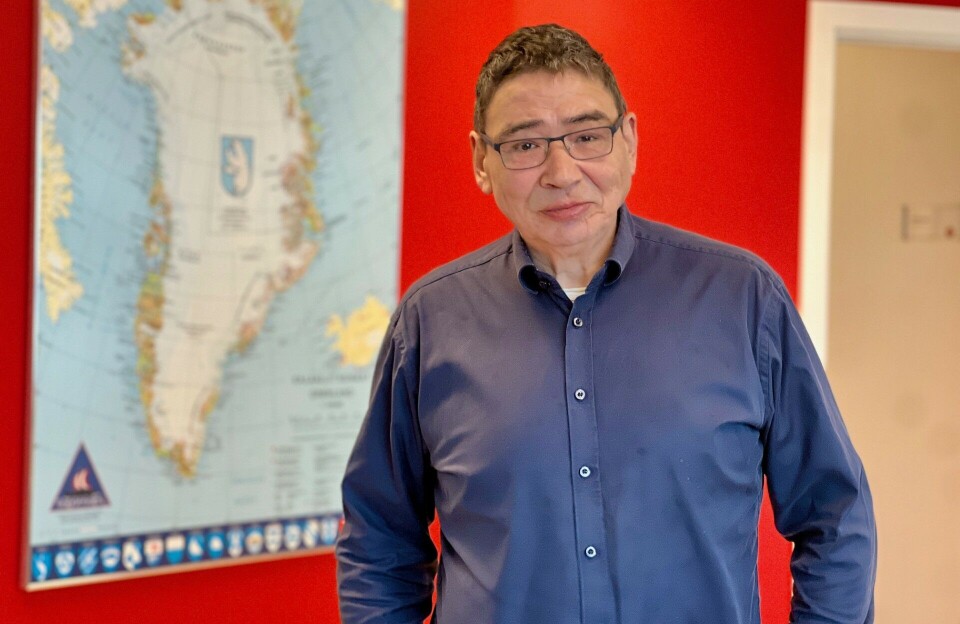
At Grønlands Erhverv, director Christian Keldsen says that they have not yet has taken a stance on deep-sea mining.
- We are aware that there is partly an increasing interest in the subject and partly that Greenland at the moment does not have an actual prohibition against it. There can out of most activities, be both positive and negative derived effects, and we expect that to be taken into account taken into account in a political assessment. Below it is particularly worth being aware of what regulation can mean for ongoing projects (for example glacier flour) as well as fishing, which is the backbone of our economy, says Christian Keldsen to Sermitsiaq.
According to Naaja H. Nathanielsen, it will precisely be problematic to ban everything mining activity at sea, as it will also affect projects with glacial flour and sandblasting. “But I see no reason why deep-sea mining should be allowed", it reads.
40 Countries support i currently a moratorium or a preventive pause on deep-sea mining. UN's international seabed authority ISA continues negotiations on a international code for deep sea mining until March 2026. The aim is to create rules that balance extraction with protection of the ocean ecosystems.
Abonnementer
Sermitsiaq.gl - web artikler
- Adgang til alle artikler på Sermitsiaq.gl
- Pr. måned kr. 59.00
- Pr. år kr. 650.00
Sermitsiaq - E-avis
- Adgang til Sermitsiaq e-avis som udkommer hver fredag
- Adgang til alle artikler på Sermitsiaq.gl
- Pris pr. måned kr. 191
- Pris pr. år kr. 1.677
AG - Atuagagdliutit E-avis
- Adgang til AG - Atuagagdliutit e-avis som udkommer hver onsdag
- Adgang til alle artikler på Sermitsiaq.gl
- Pris pr. måned kr. 191
- Pris pr. år kr. 1.677
Sermitsiaq.AG+
- Adgang til AG - Atuagagdliutit e-avis som udkommer hver onsdag
- Adgang til Sermitsiaq e-avis som udkommer hver fredag
- Adgang til alle artikler på Sermitsiaq.gl
- Adgang til Arnanut e-magasin
- Adgang til Nutserisoq.gl
- Ved interesse send en mail til abonnement@sermitsiaq.gl
Kære Læser, Velkommen til Sermitsiaq.gl – din kilde til nyheder og kritisk journalistik fra Grønland. For at kunne fortsætte vores vigtige arbejde med at fremme den frie presse og levere dybdegående, kritisk journalistik, har vi indført betaling for udvalgte artikler. Dette tiltag hjælper os med at sikre kvaliteten af vores indhold og støtte vores dygtige journalister i deres arbejde med at bringe de vigtigste historier frem i lyset. Du kan få adgang til betalingsartiklerne fra kun kr. 59,- pr. måned. Det er nemt og enkelt at købe adgang – klik nedenfor for at komme i gang og få fuld adgang til vores eksklusive indhold. Tak for din forståelse og støtte. Dit bidrag hjælper os med at fortsætte vores mission om at levere uafhængig og kritisk journalistik til Grønland.