
The Department of Fisheries, Hunting, Agriculture and Self-Sustainability, as well as other relevant departments, are concluding negotiations at the civil service level with external partners on quotas in Greenlandic waters for 2026.
Thus, the fisheries negotiations with the Faroe Islands and the EU are complete. For both, this means smaller quotas, and the Greenland Government has approved the negotiation results.
Agreement with the Faroe Islands
As for the Faroe Islands, both Greenland and the Faroe Islands receive smaller quotas from each other.
- Due to a 41 percent decrease in scientific advice, the Faroe Islands have reduced Greenland's quota for blue whiting by 3,350 tons, Naalakkersuisut informs and continues:
- In return, Greenland has reduced the Faroe Islands on a number of quotas in East Greenland. Greenland halibut has been reduced by 50 tonnes, cod has been reduced by 150 tonnes, tusk has been reduced by 200 tonnes and halibut has been reduced by 25 tonnes.
The quota exchange trade between Greenland and the Faroe Islands can be seen in the table below:

Agreement with the EU
The agreement will form the basis for EU fishing in Greenlandic waters in 2026. The agreement is based on the Fisheries Protocol for 2025-2030, which is part of the Fisheries Partnership Agreement between Greenland and the EU.
In the Fisheries Protocol, the EU is offered a number of quotas in Greenlandic waters, in return for which Greenland receives financial compensation.
The fishing opportunities for 2026 were set based on the indicative quantities in the Fisheries Protocol.
Restrictions introduced for foreign vessels
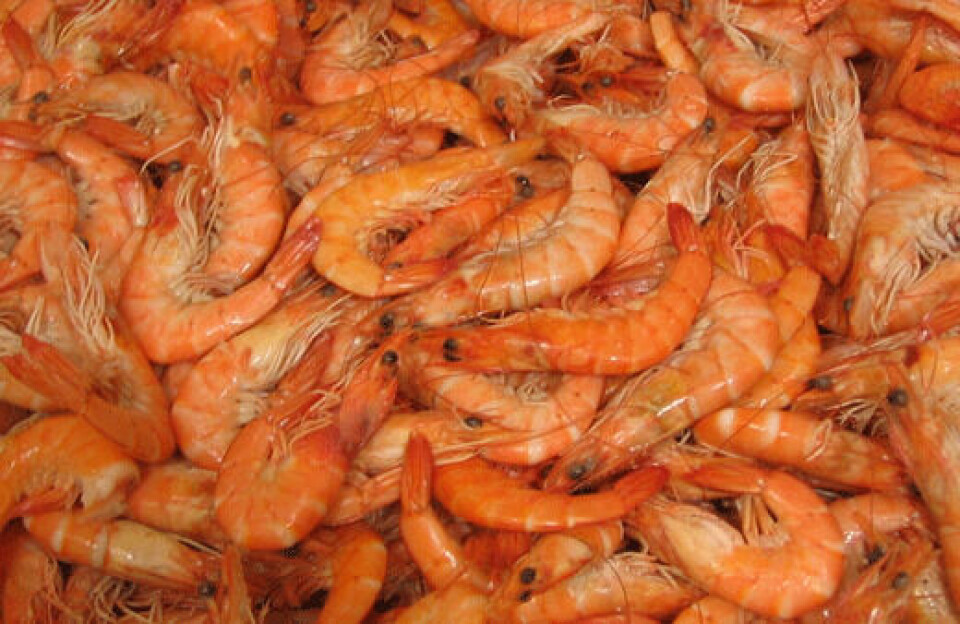
Due to a decline in scientific advice, fishing opportunities for shrimp in both West and East Greenland have been reduced by 181 and 950 tonnes respectively.
Due to the new minimum limit for capelin of 30,000 tonnes to Greenland, the EU has not been offered a quota for capelin in 2026. In addition, Greenland has also introduced a limitation on the number of foreign vessels that can fish for the shrimp stock in East Greenland, according to the Government of Greenland.
- The reduction of quotas allocated to the EU for shrimp in West and East Greenland will contribute to Greenlandic vessels having a larger quota base and being able to better utilize their capacity, informs Naalakkersuisut and continues:
- This will lead to increased revenue for the public sector from resource fees and taxes. The decrease in payments from the EU will be compensated by fees and taxes from Greenland's industry.
91.5 million for fishing opportunities and 25 million for license fees
The Fisheries Partnership Agreement between Greenland and the EU consists of two parts; a commercially based fisheries agreement that includes access payments for the allocated fishing opportunities and license payments, and a sector support program.
The payment for fishing opportunities for 2026 is expected to be approximately DKK 91.5 million for fishing opportunities and approximately DKK 25 million for license payments.

For both negotiations, the Greenlandic delegation consisted of representatives from the Department of Fisheries, Hunting, Agriculture and Self-Sustainability, Greenland's Mission to the EU, Greenland's Fisheries and Hunting Control, Greenland's Institute of Natural Resources, Department of Finance and Taxes and the Greenlandic fishing industry.