In the Fisheries Act section 35 on utilization of quota by individual and transferable quotas, it appears that a holder of a quota share are obliged to fish at least 75 percent of the annual quota.
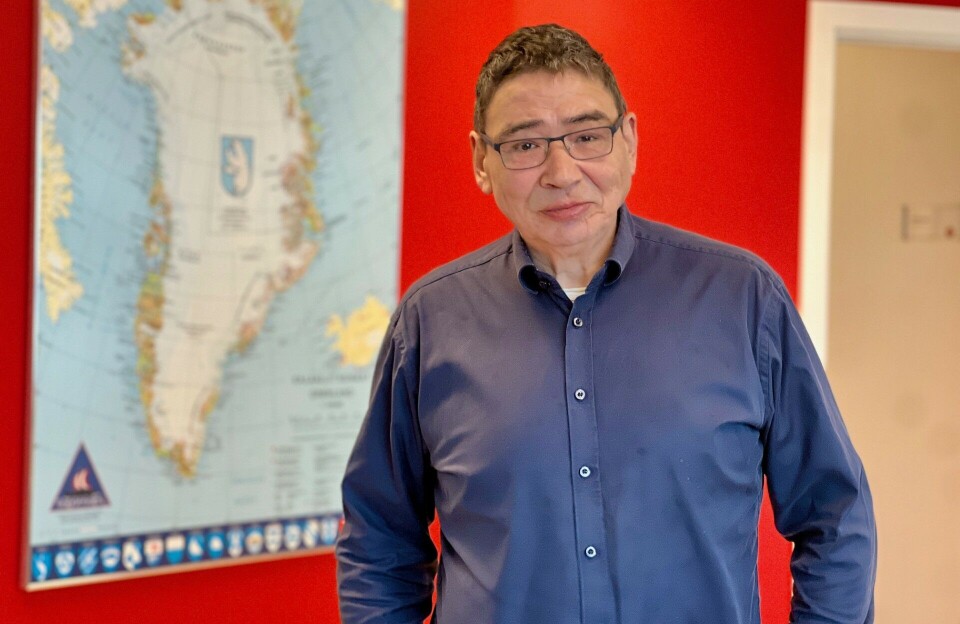
It is among other precisely this, as a number of fishermen who have switched to the scheme with Individual Transferable Quotas (IOK) after the entry into force of the new Fisheries Act, who wanted to get more clarity about the first months after the Fisheries Act came into force, says Sivert Amondsen, who is a consultant in the consultancy service for fishermen and trappers in the coastal fisheries, KONFIFA.
In the Fisheries Act section 35 on utilization of quota by individual and transferable quotas, it appears that a holder of a quota share are obliged to fish at least 75 percent of the annual quota.
It is among other precisely this, as a number of fishermen who have switched to the scheme with Individual Transferable Quotas (IOK) after the entry into force of the new Fisheries Act, who wanted to get more clarity about the first months after the Fisheries Act came into force, says Sivert Amondsen, who is a consultant in the consultancy service for fishermen and trappers in the coastal fisheries, KONFIFA.
But the critics of the fisheries law seems to have fallen significantly, the consultant points out at the same time.
Clarification of the rules
The new fisheries law, which came into force on 1 January this year, has been confusing for several fronts for many coastal fishermen who had to adapt to a number of new rules, including the rules around 75 percentage utilization obligation.
When a fisherman who fishes with IOK has a share of the quota, then the person concerned also has an obligation to utilize the quota.
According to Naalakkersuisut, the fishing resources must be utilized so as far as possible every year, which is exactly why you have introduced an exploitation obligation for IOK fisheries of 75 percent. This means that the fisherman each year must utilize a minimum of 75 percent of its annual quota quantity. If one fails to utilize 75 percent of its quota volume three years in a row, one must i adapt its quota share according to the Fisheries Act, and if this does not happen, Naalakkersuisut will take the quota share, you cannot use it back and offer it to someone who needs it.
In October, the Department of Fisheries, Catching, Agriculture and Self-Sufficiency that the meaning of this rule is that you must adapt its quota share to its fishing capacity, so that those who have too much selling to those who need it in this way, the quota is used as much as possible each year.
- However, it is important to emphasize that this only applies if you do not use 75 percent three years in a row. If you for example cannot utilize 75 percent two years in a row, but utilizes 75 percent or more in the third year, you will not have your quota revoked, it appears in the announcement from the Department of Fisheries, Catching, Agriculture and Self-Sufficiency.
At the same time, flexibility is built into the legislation which ensures that you do not lose your quota if, for example, you have been ill, had an accident or prolonged stay at the shipyard, which has meant that one does not have managed to catch 75 percent of its quota three years in a row, the department says.
Criticism falls
According to Sivert Amondsen from the consultancy service KONFIFA, var the number of inquiries from desperate fishermen very high in the first six months according to the Fisheries Act introduction.
- It was mainly fishermen who switched to the IOK system in fishing for halibut, which has had a great need for our consulting service. One of the topics they wanted to get clarity on was exactly 75 percent the utilization obligation. But it seems that the vast majority now know what it entails, that they don't need to be concerned about the consequences, he says.
The consultant also says that an increasing number of coastal fishermen who, after the law comes into force have chosen to fish in Olympic fishing, have now expressed that they want to to switch to the IOK system from next year.
- The number of fishermen who were extremely critical towards the new fisheries law seems to have fallen significantly in recent years months. This may be because they learn that there are more benefits, including economic benefits, in the IOC system in relation to Olympic fishing, he says.
The current relatively high procurement prices for halibut and cod, according to Siverth Amondsen, can contribute to the fact that the criticism of The fishing law has fallen significantly in recent months.
Abonnementer
Sermitsiaq.gl - web artikler
- Adgang til alle artikler på Sermitsiaq.gl
- Pr. måned kr. 59.00
- Pr. år kr. 650.00
Sermitsiaq - E-avis
- Adgang til Sermitsiaq e-avis som udkommer hver fredag
- Adgang til alle artikler på Sermitsiaq.gl
- Pris pr. måned kr. 191
- Pris pr. år kr. 1.677
AG - Atuagagdliutit E-avis
- Adgang til AG - Atuagagdliutit e-avis som udkommer hver onsdag
- Adgang til alle artikler på Sermitsiaq.gl
- Pris pr. måned kr. 191
- Pris pr. år kr. 1.677
Sermitsiaq.AG+
- Adgang til AG - Atuagagdliutit e-avis som udkommer hver onsdag
- Adgang til Sermitsiaq e-avis som udkommer hver fredag
- Adgang til alle artikler på Sermitsiaq.gl
- Adgang til Arnanut e-magasin
- Adgang til Nutserisoq.gl
- Ved interesse send en mail til abonnement@sermitsiaq.gl
Kære Læser, Velkommen til Sermitsiaq.gl – din kilde til nyheder og kritisk journalistik fra Grønland. For at kunne fortsætte vores vigtige arbejde med at fremme den frie presse og levere dybdegående, kritisk journalistik, har vi indført betaling for udvalgte artikler. Dette tiltag hjælper os med at sikre kvaliteten af vores indhold og støtte vores dygtige journalister i deres arbejde med at bringe de vigtigste historier frem i lyset. Du kan få adgang til betalingsartiklerne fra kun kr. 59,- pr. måned. Det er nemt og enkelt at købe adgang – klik nedenfor for at komme i gang og få fuld adgang til vores eksklusive indhold. Tak for din forståelse og støtte. Dit bidrag hjælper os med at fortsætte vores mission om at levere uafhængig og kritisk journalistik til Grønland.