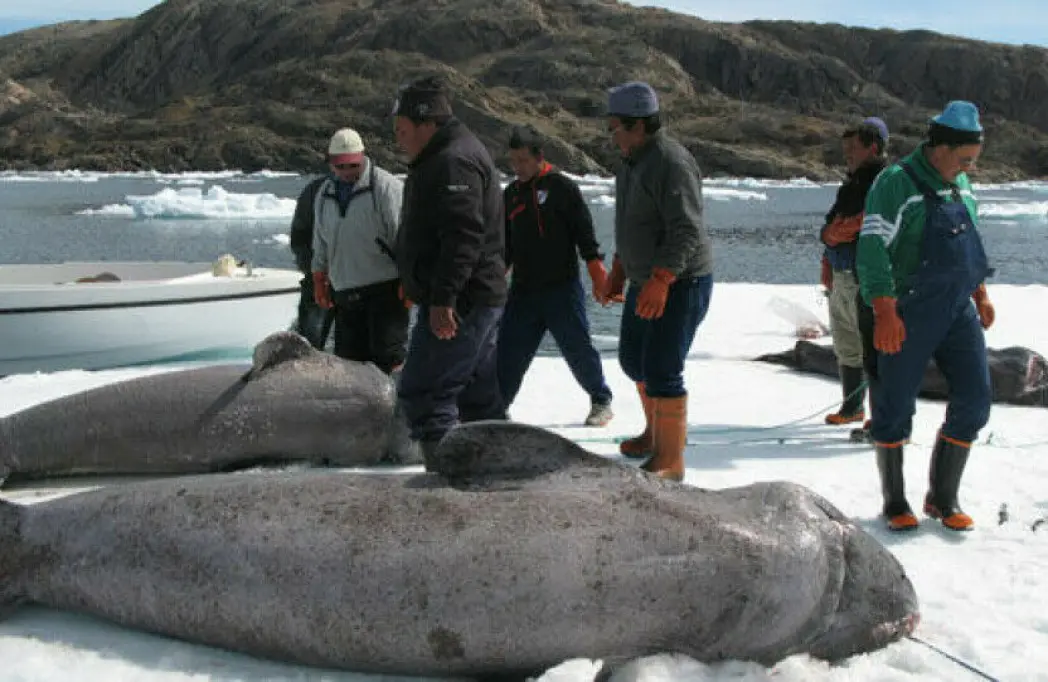
The Greenland shark is considered a pest by many commercial fishermen, as it eats the catch on nets and longlines.
It also causes huge losses in coastal fishing, as the expensive fishing equipment is often lost. Therefore, the majority of the municipal council in Avannaata Municipality is allocating funds to be used to regulate the number of one of the largest shark species in the world, which can grow up to seven meters long and weigh over a ton.
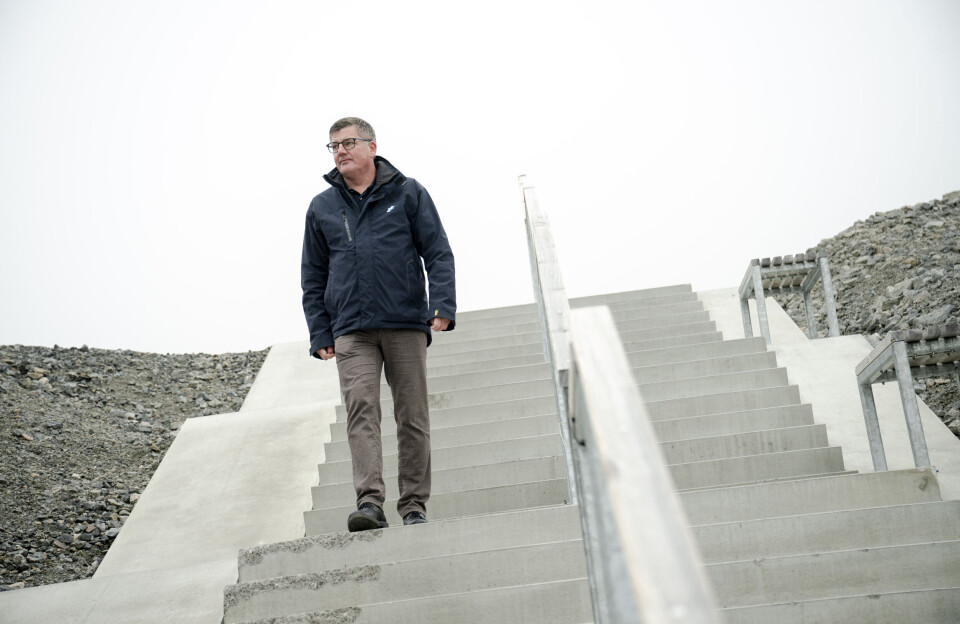
The Chairman of the Committee for Fisheries and Hunting in the Northern Municipality, Ole Møller, Naleraq, who is also a fisherman, believes that it would be appropriate to investigate which measures can ensure full utilization of the shark catches.
Lars Poulsen, Siumut, who is Chairman of the Committee for Fisheries, Hunting and Agriculture in Inatsisartut believes that better utilization of the shark must be achieved, and thus avoid waste of resources. He therefore wants to initiate an investigation into the possibilities for producing shark products in the form of dog food and human food.
He therefore states that he will put the subject on the agenda of the Committee for Fisheries, Hunting and Agriculture in the coming time.
Suggestion from Kullorsuaq
The primary occupation in the settlement of Kullorsuaq is fishing. But according to Timotheus Petersen, who is the chairman of the fishing and hunting association and a member of the settlement council, the local fishermen experience that the high abundance of Greenland sharks in the waters around the settlement is a major nuisance to the fishing industry.
- There are so many Greenland sharks in our waters that it is not possible to have our longlines lying around for more than a few hours. They eat the catches and bite the lines.
- It is very difficult to get new fishing equipment in the settlements in North Greenland. That is why the sharks are causing us major problems, he says.
And it is precisely for this reason that the local fishing and hunting association felt compelled to propose that regulation of the shark population be initiated, says Timotheus Petersen.
300 kroner per heart
Based on the request from Kullorsuaq, the municipal council has brought the issue to political consideration.
It appears from the agenda for the municipal council, which was discussed on February 13, that an application has been made for funds from the cleanup of lost fishing gear for use in regulating the population of Greenland sharks.
According to the meeting minutes, 20 years ago the population of Greenland sharks was regulated in the former municipalities, primarily because the sharks cause serious harm to the fishing industry.
At that time the shark head or heart was sold to the municipality for 100 kroner.
For 2026, 850,000 kroner has been allocated for cleaning the seabed and collecting ghost nets in Avannaata Municipality.
It was proposed that 100,000 kroner be allocated from this pool, which will be used to pay for 1,000 shark hearts for 100 kroner each. But instead, it was decided that regulation of the Greenland shark population should be financed through the pest control account, which falls under the Administration for Technology, where 300,000 kroner is allocated for the payment of 1,000 shark hearts - i.e. for 300 kroner each.
The method works
Ole Møller has a great deal of knowledge of the shark problem through his many years of work as a commercial fisherman in the Uummannaq area.
- In the 1980s, a shark heart was sold for 200 kroner per piece in Uummannaq and the area. It was clear that the method worked because the shark problem in relation to fishing decreased noticeably at that time.
- But interest in shark fishing unfortunately decreased when the price was reduced to 50 kroner.
- Now the longlines are torn to pieces by sharks in just an hour in some places. I therefore hope that the current decision in the municipal council will have a beneficial effect, he says.
Ole Møller also says that he will bring the issue back on the agenda of the municipal council, as he believes that shark catches should also be fully utilized.
- The meat from a single shark weighs around 200 kilos. It can be cut into strips and put to dry on racks and used as dog food.
- Therefore, it would be appropriate to investigate how we can fully utilize the shark in the future, instead of throwing it into the sea, he says.
He will bring the issue up on the agenda of the municipal council in the near future.
The self-sufficiency strategy
Lars Poulsen is originally from Kuummiut and has been a former hunter. In this connection, he has used the meat from the Greenland shark as dog food. But it is also a favorite delicacy for the locals in East Greenland, as it is produced fermented, he says.
At the end of 2024, the Greenlandic Government published Greenland's Self-sufficiency Strategy 2025-2030, which is the first of its kind in Greenland.
The then Naalakkersuisoq for Agriculture, Self-Sustainability, Energy and Environment Kalistat Lund, Inuit Ataqatigiit, stated at the time that the framework must be created for the business community to develop the self-sufficiency area, so that it becomes attractive to invest in it. And precisely with reference to the self-sufficiency strategy, Lars Poulsen believes that the initiative from Avannaata Kommunia must be supported.
- The Greenland shark is worth its weight in gold. It is extremely suitable for dog food, but it is also edible when it is produced as a fermented food. We leave the meat in the snow over the winter and serve it when it is ready, where we eat it with apples and grapes, among other things.
- I will therefore bring this very issue to the agenda of the Fisheries, Hunting and Agriculture Committee in the near future, he says.
According to the Self-Sustainability Strategy, producers must explore the production of local resources and thus create a more sustainable and self-sufficient future.
No systematic studies
According to Søren L. Post, who is Head of Department in the Department of Fish and Shellfish at the Greenland Institute of Natural Resources, no systematic, quantitative studies have been carried out in Greenland that document how often the Greenland shark causes problems in the fishery.
- However, we frequently receive feedback from fishermen, especially in the halibut fishery with nets and longlines, that the Greenland shark can pose a practical problem.
- The sharks can eat catch from the hooks and get entangled in nets and lines, which can damage the gear. For the individual fisherman, this can mean loss of catch, extra work and financial costs, says the head of the department.
Søren L. Post states that the Institute of Nature does not have data that can quantify the extent or determine how frequently this occurs.
He also emphasizes that the Institute of Nature does not have sufficient data to assess the population status of the Greenland shark specifically in Greenlandic waters.
He points out that historically there has been a commercial targeted fishing for the species, but that this does not take place today.
According to information from the Institute of Nature, however, the Greenland shark grows very slowly and only becomes sexually mature at an old age, and it is therefore generally considered a vulnerable species. At an international level, the Greenland shark is listed as vulnerable on the International Union for Conservation of Nature’s Red List.
This assessment is global and not a specific population assessment for Greenland alone, states Søren L. Post.
Abonnementer
Sermitsiaq.gl - web artikler
- Adgang til alle artikler på Sermitsiaq.gl
- Pr. måned kr. 59.00
- Pr. år kr. 650.00
Sermitsiaq - E-avis
- Adgang til Sermitsiaq e-avis som udkommer hver fredag
- Adgang til alle artikler på Sermitsiaq.gl
- Pris pr. måned kr. 191
- Pris pr. år kr. 1.677
AG - Atuagagdliutit E-avis
- Adgang til AG - Atuagagdliutit e-avis som udkommer hver onsdag
- Adgang til alle artikler på Sermitsiaq.gl
- Pris pr. måned kr. 191
- Pris pr. år kr. 1.677
Sermitsiaq.AG+
- Adgang til AG - Atuagagdliutit e-avis som udkommer hver onsdag
- Adgang til Sermitsiaq e-avis som udkommer hver fredag
- Adgang til alle artikler på Sermitsiaq.gl
- Adgang til Arnanut e-magasin
- Adgang til Nutserisoq.gl
- Ved interesse send en mail til abonnement@sermitsiaq.gl
Kære Læser, Velkommen til Sermitsiaq.gl – din kilde til nyheder og kritisk journalistik fra Grønland. For at kunne fortsætte vores vigtige arbejde med at fremme den frie presse og levere dybdegående, kritisk journalistik, har vi indført betaling for udvalgte artikler. Dette tiltag hjælper os med at sikre kvaliteten af vores indhold og støtte vores dygtige journalister i deres arbejde med at bringe de vigtigste historier frem i lyset. Du kan få adgang til betalingsartiklerne fra kun kr. 59,- pr. måned. Det er nemt og enkelt at købe adgang – klik nedenfor for at komme i gang og få fuld adgang til vores eksklusive indhold. Tak for din forståelse og støtte. Dit bidrag hjælper os med at fortsætte vores mission om at levere uafhængig og kritisk journalistik til Grønland.