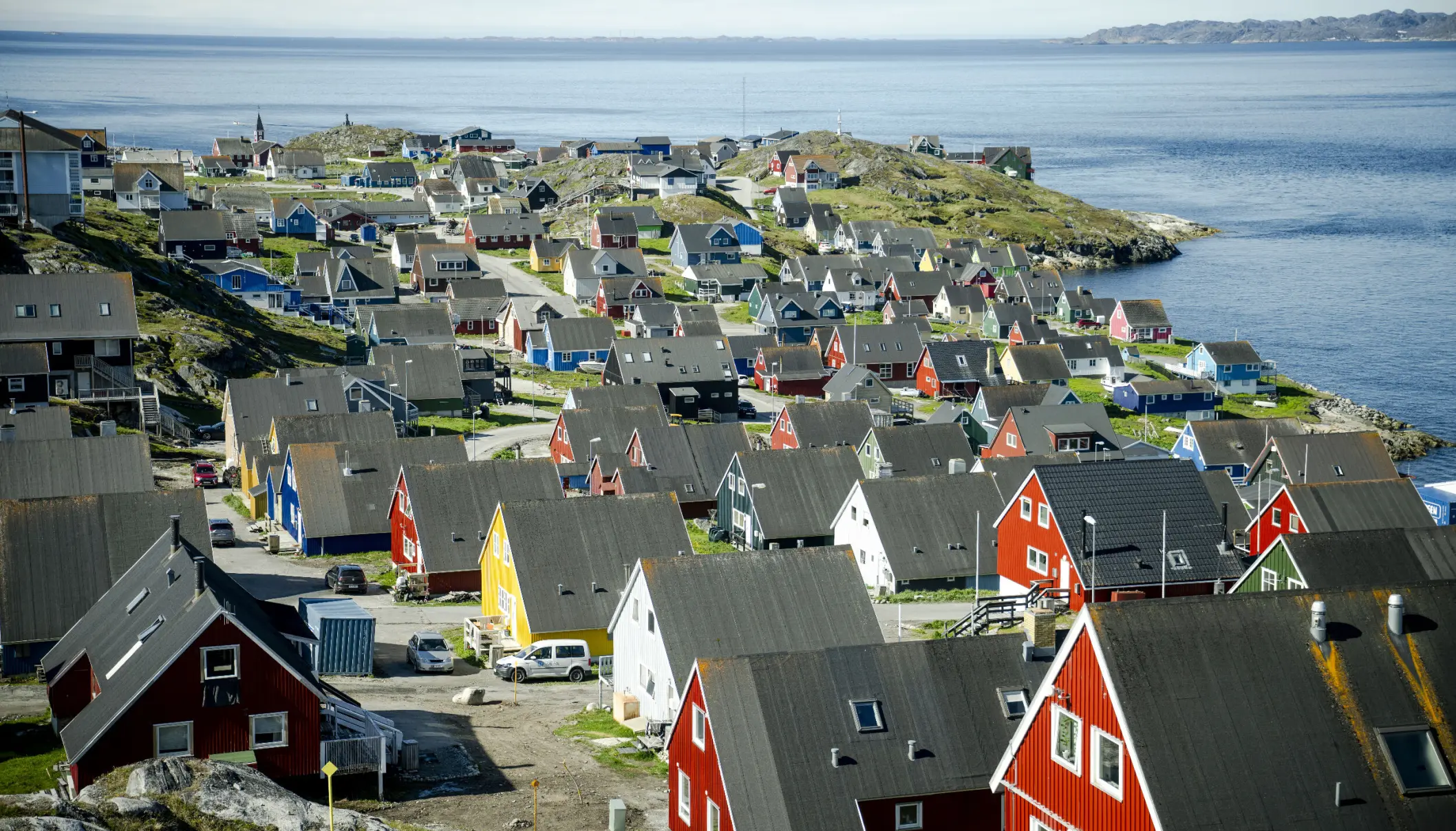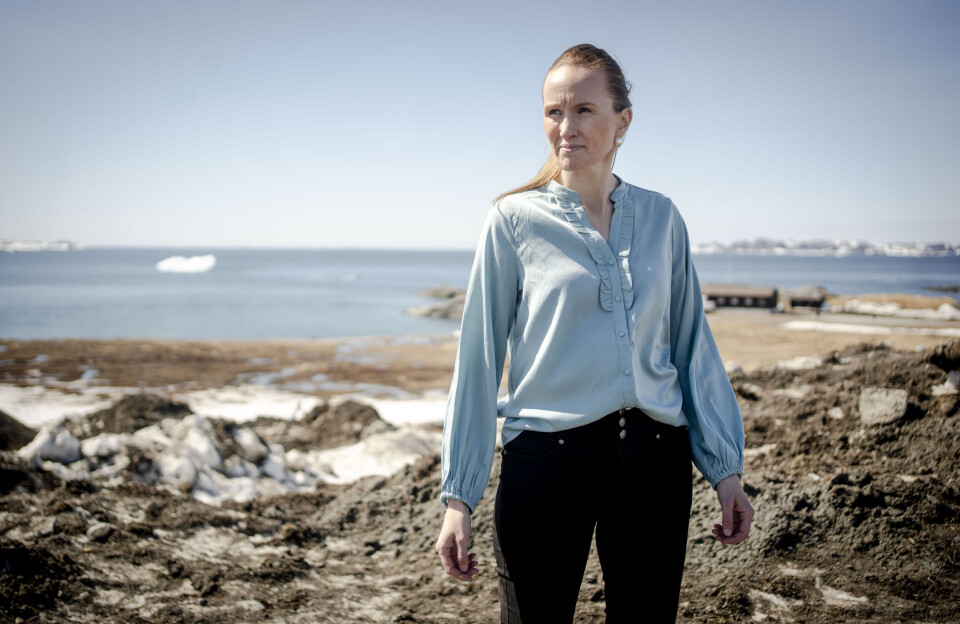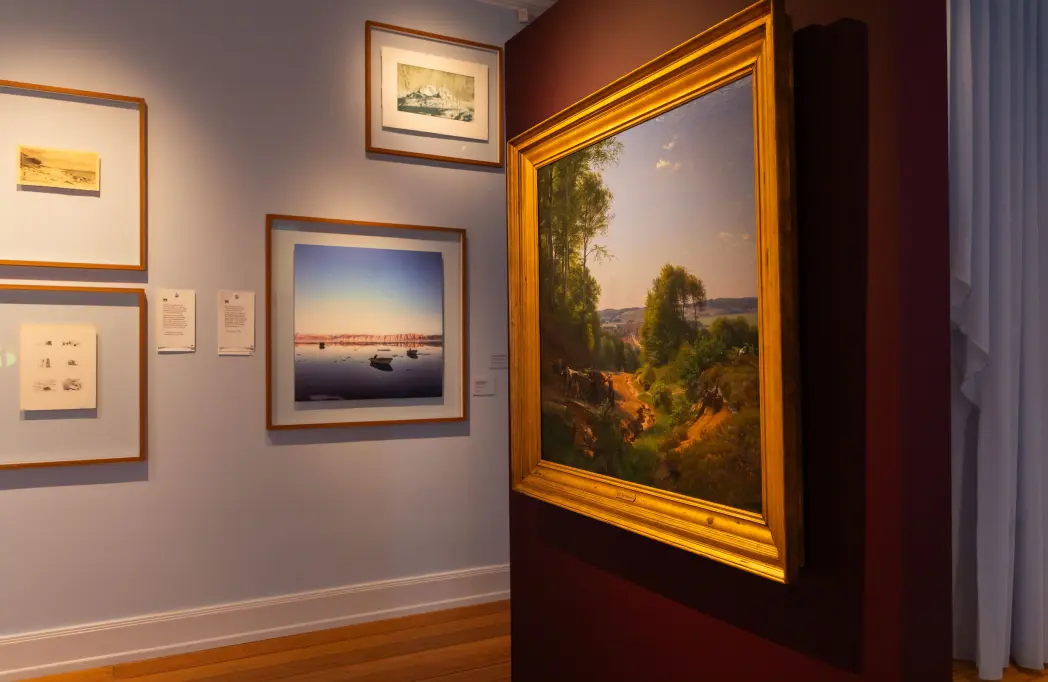
There are small boats scattered in the still water.
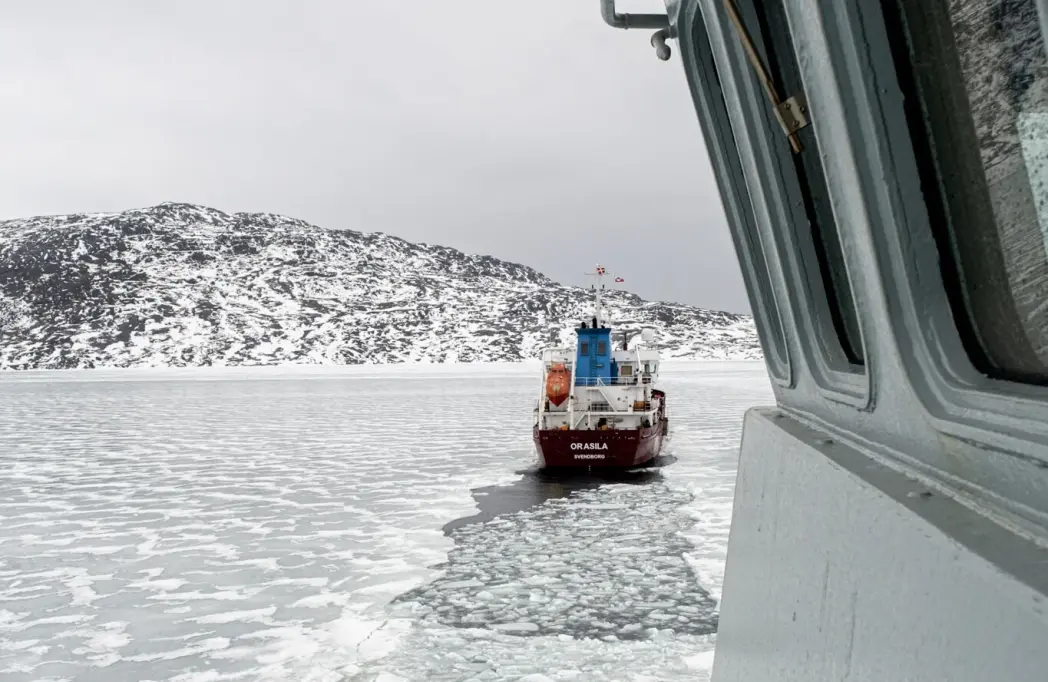
Flakes of ice slowly drift by, and in the background the mountains rise in a pale light that is neither quite night nor day. It is a picture of calm – but also of life. Of something lived, not staged.
In Inuuteq Storch's picture, the homeland is not something to be embellished. It is something to be felt.
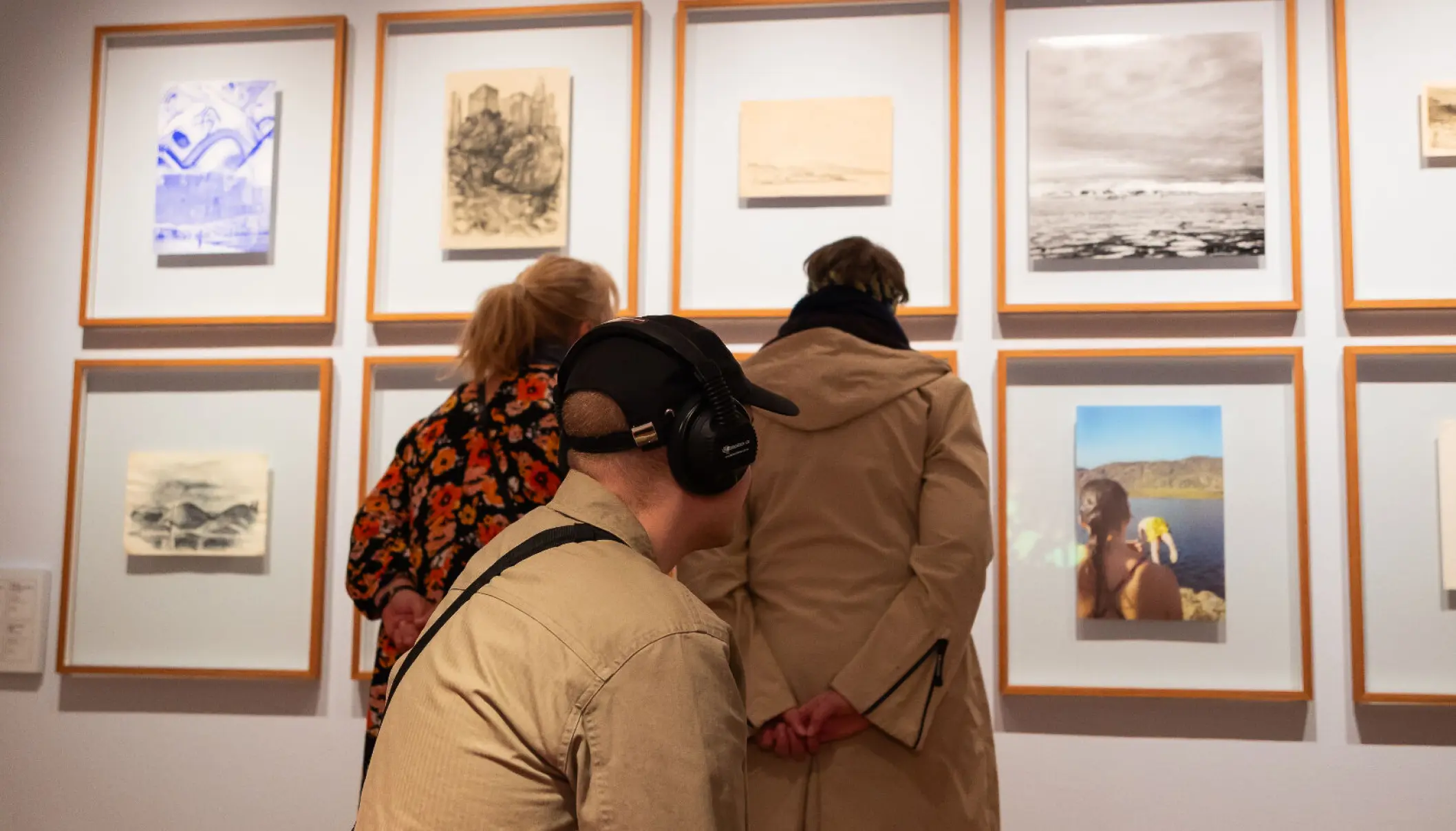
At Vejle Art Museum, his photographs are now included in the new collective exhibition "Homeland" (hjemlandet, ed.), where they hang side by side with Danish Golden Age paintings.
The so-called Golden Age covers the first half of the 19th century and is a central period in Danish art history, where artists such as C.W. Eckersberg and Christen Købke created idealized images of the landscape and the nation – in a time characterized by crises, war and loss. An art historical conversation across time – and across views.
Whereas the artists of the Golden Age painted Denmark as an idealized fatherland, Storch shows a Greenland that is both beautiful, raw and recognizably human.
- The artists of the Golden Age constructed a narrative about Denmark, where they turned the knobs to make the landscape appear as uniquely wonderful as possible, explains art historian Line Brædder from Vejle Art Museum.
Storch has taken a different approach. She continues:
- He breaks with the beautified way of portraying his homeland. There is a great love for the place, but also an honesty. Everyday life, youth, cigarettes and cranes are placed side by side with the beautiful landscapes.
This does not make the homeland any less attractive – quite the contrary.
A look from the inside
Storch's photographs draw on a longer photographic tradition in Greenland, where John Møller in particular from the late 19th century onwards documented the country through the camera. Møller's images are today an important part of the visual history of Greenland – but they are also created with an outsider's perspective, influenced by the visitor's fascination.
With Inuuteq Storch, the perspective is shifted.
- The decisive is that he sees Kalallit Nunaat from the inside, says Line Brædder.
It is not just a geographical difference, but an artistic one. Where early photographs often record and perpetuate it, Storch works more with a form of
This is precisely the approach that places Storch in the tension between documentation and experience. The images record reality, but they do so through a personal and sensual presence, where relationships, moods and situations are allowed to remain open. This gives the photographs a special resonance. They are anchored in a specific place – Kalaallit Nunaat – but at the same time speak to something universal. We experience that guests from very different backgrounds are moved. They recognize the feeling of belonging, says Line Brædder. She mentions a tour where a woman from the Middle East spontaneously found a photo from her phone. She said that Storch's images reminded her of her own life in the Middle East, and showed a picture of her children bathing from the rocks. At that moment, the distance is eliminated. Greenland does not become a distant motif, but an experience that can be reflected in other lives. This is perhaps precisely where Storch's images differ most significantly from the older tradition: They do not just show a place - they activate a sense of belonging.
More than idyll In the exhibition, Storch's photographs hang side by side with the landscapes of the Golden Age. Beech forests, fields and coasts - images that have helped shape the idea of what it means to belong to a place for generations.
But the encounter between the two expressions also opens up a realization.
- The images from the Golden Age period show a constructed and limited section of what a homeland is. We need more voices and more perspectives, says Line Brædder.
In Storch's work, the gaze shifts. Not away from the landscape - but into it.
His works expand rather than criticize. They show that belonging is not only linked to nature and national symbols, but equally to people, relationships and everyday situations. That what we associate with “home” encompasses both the beautiful and the worn, the quiet and the restless.
And perhaps most importantly: that it is experienced differently – depending on who you are and where you stand.
- His images bring in a voice that we have dealt with too little with in Danish art history – a look from inside Greenland, she says.
It is precisely in this shift that the exhibition finds its strength: When more looks are given space, the story of where we belong also becomes larger.
A common question
Ultimately, the exhibition revolves around a single question: Where do you belong?
With the Golden Age painters, the answer was often clear and comprehensive. The sense of belonging was linked to the nation, the landscape and a shared narrative about the Danish. The paintings pointed in one direction.
With Inuuteq Storch, the answer is less clear – and perhaps precisely for that reason more recognisable. Here, belonging is not something fixed, but something that is lived and experienced. Something that can be linked to several places at once and that cannot be reduced to one narrative.
It is not a rejection of the previous images, but an expansion.
Perhaps that is precisely why Storch's photographs remain with the viewer.
Not as a response – but as a feeling.
Abonnementer
Sermitsiaq.gl - web artikler
- Adgang til alle artikler på Sermitsiaq.gl
- Pr. måned kr. 59.00
- Pr. år kr. 650.00
Sermitsiaq - E-avis
- Adgang til Sermitsiaq e-avis som udkommer hver fredag
- Adgang til alle artikler på Sermitsiaq.gl
- Pris pr. måned kr. 191
- Pris pr. år kr. 1.677
AG - Atuagagdliutit E-avis
- Adgang til AG - Atuagagdliutit e-avis som udkommer hver onsdag
- Adgang til alle artikler på Sermitsiaq.gl
- Pris pr. måned kr. 191
- Pris pr. år kr. 1.677
Sermitsiaq.AG+
- Adgang til AG - Atuagagdliutit e-avis som udkommer hver onsdag
- Adgang til Sermitsiaq e-avis som udkommer hver fredag
- Adgang til alle artikler på Sermitsiaq.gl
- Adgang til Arnanut e-magasin
- Adgang til Nutserisoq.gl
- Ved interesse send en mail til abonnement@sermitsiaq.gl
Kære Læser, Velkommen til Sermitsiaq.gl – din kilde til nyheder og kritisk journalistik fra Grønland. For at kunne fortsætte vores vigtige arbejde med at fremme den frie presse og levere dybdegående, kritisk journalistik, har vi indført betaling for udvalgte artikler. Dette tiltag hjælper os med at sikre kvaliteten af vores indhold og støtte vores dygtige journalister i deres arbejde med at bringe de vigtigste historier frem i lyset. Du kan få adgang til betalingsartiklerne fra kun kr. 59,- pr. måned. Det er nemt og enkelt at købe adgang – klik nedenfor for at komme i gang og få fuld adgang til vores eksklusive indhold. Tak for din forståelse og støtte. Dit bidrag hjælper os med at fortsætte vores mission om at levere uafhængig og kritisk journalistik til Grønland.