
Turkish kebabs with reindeer meat. A burger made from game birds. And Filipino-inspired dishes with horseradish.
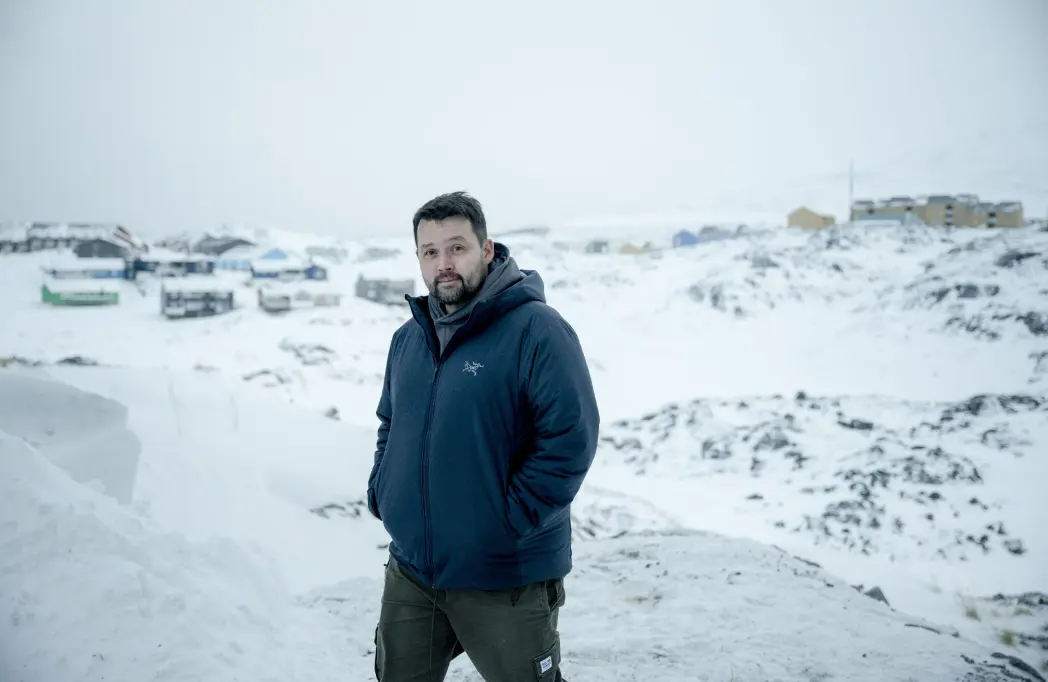
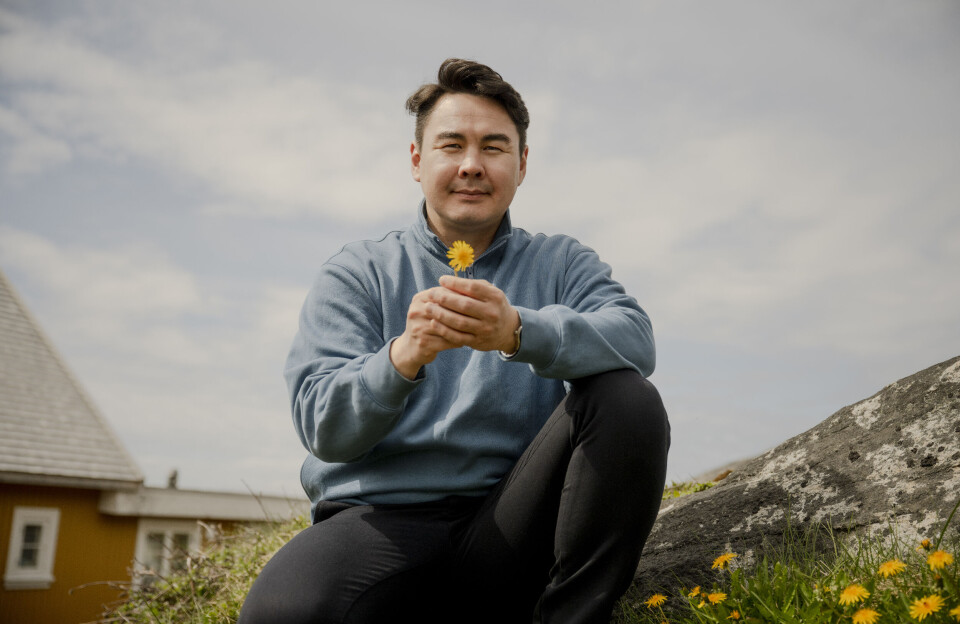
Recreational fisherman Ivaaq Kriegel loves to experiment with his own catches and combine them with international food traditions.
Since he was a child, he has followed his father, William Kriegel, on hunts. Father and son, side by side, in the same dinghy. They have always shared their time at sea - even today, when they still sail out in their boat and search for catch together.
- All the knowledge I have about fishing comes from my father, says Ivaaq Kriegel.
It has always been normal for him to see a seal being torn apart, a fish being split open, and a reindeer being skinned.
"That's how I was raised. I remember when I was a child that I loved fishing with a fishing rod. I collected fish hooks and had a big collection of them," he says.

Back then, it wasn't so much about the food, but the curiosity of the animal. It was about the catch, the adrenaline and the excitement.
- When I was growing up, I loved to fish and shoot. But today I hunt mostly because of the food. Of course, I still like hunting, but the motivation lies in the food, says Ivaaq Kriegel, who is currently the director of the Katuaq cultural center in Nuuk.
When asked what his favorite food is, his answer is simple: Something you have caught and prepared yourself.
- You know where the animal was caught, you know that it has lived in great freedom in nature, and then you have prepared the animal yourself. That is the best, he says.
This time is game bird season.
- Birds at sea, such as guillemots and eiders, are some of the things I usually hunt at this time, as well as seals, he says.

Experience of a lifetime with aanaa
Although Ivaaq Kriegel loves experimenting with Greenlandic food, he also thinks a lot about which types of food are slowly being forgotten.
Many traditional dishes are at risk of being forgotten, especially in line with globalization and changes in eating habits. Ivaaq Kriegel therefore sees food not only as something creative, but also as part of cultural heritage.
- How can you preserve them? Are there some types of food that are not 'normal' to eat anymore and what can you do about it?, asks Ivaaq Kriegel.
He himself has had an experience with his grandmother that he has never forgotten.
It is 1990s Nuuk and Ivaaq goes with his aanaa (grandmother, ed.) to the board in Nuuk's city center. Aanaa buys reindeer liver, which has been semi-digested in the contents of the reindeer's stomach. With the bag in hand, they go up to a mountain knoll and sit down. Aanaa starts eating the liver, and Ivaaq can see how much she enjoys it.
“Do you want to taste?” she asks.
Little Ivaaq, curious as always, says yes. But the liver is not to his taste, it tastes bitter and strange. So he sits there on the hill with an unpleasant taste in his mouth, while aanaa relishes every bite.
This little experience has never been forgotten by Ivaaq Kriegel. As an adult, he has often thought about the liver and wondered: Did it really taste that bad? He decided to try it again. Now he understands why aanaa loved it, it has an intense and powerful flavor that takes courage to appreciate.
Watch the video below of Ivaaq's experiment with reindeer liver semi-digested in the stomach contents.
Important to maintain old eating habits
- It is very important to try to preserve the old eating habits, says Ivaaq Kriegel.
He uses catch quotas as an example.
- Overall, I have nothing against fishing quotas at all, he emphasizes.
But Ivaaq Kriegel believes that it is also important to consider how much the quotas affect our old eating habits.
- There is a lack of focus on it. I am not saying that we should drop the quotas. Quite the opposite. I just want people to consider to what extent the quotas affect our food, he says.
Let's take the horse as an example.
- For example, my aanaa has always said that the ride tastes best in the spring. That's something we risk losing if we don't take care of the old habits. It's the little details that make the food something special. My point is that there is a lack of focus on the old eating habits, he says.

Ivaaq Kriegel is trying to do something about it himself. Both out of desire and necessity, he shares small video clips and pictures of the catch. He has noticed how little knowledge there is about our food and culture, especially outside Greenland.
- When I started posting pictures of, for example, a torn seal, I received outright death threats in my messages, he says.
- But it only made me even more motivated to show our food culture. And it's also something I find fun to share, he says.
Onward to the children
An important part of food culture is also involving children. Ivaaq Kriegel is the father of two children, aged nine and eleven, and for him it is crucial that they grow up with an understanding of where their food comes from.
- It is very important to teach children about hunting, as it is a big part of our culture. If our ancestors had not been hunters, we would not be standing here today, says Ivaaq Kriegel.
For him, it is important to teach children that it all starts with death.
"My children need to learn that if they eat meat, it starts with death. Hunting is an important part of how we raise our children," he says.
Watch the video below of Ivaaq's daughter's first catch.
When the children have slaughtered their first animal, it brings great joy to Ivaaq.
"It's almost a celebration for us. It brings great joy and pride, both to the child and the adults," he says.
His daughter and son shot their first snow hare and grouse this spring.
- I have hidden the animals because I am thinking of cooking them with a friend who is a chef and making some nice food out of them sometime in the future, says Ivaaq Kriegel.
Abonnementer
Sermitsiaq.gl - web artikler
- Adgang til alle artikler på Sermitsiaq.gl
- Pr. måned kr. 59.00
- Pr. år kr. 650.00
Sermitsiaq - E-avis
- Adgang til Sermitsiaq e-avis som udkommer hver fredag
- Adgang til alle artikler på Sermitsiaq.gl
- Pris pr. måned kr. 191
- Pris pr. år kr. 1.677
AG - Atuagagdliutit E-avis
- Adgang til AG - Atuagagdliutit e-avis som udkommer hver onsdag
- Adgang til alle artikler på Sermitsiaq.gl
- Pris pr. måned kr. 191
- Pris pr. år kr. 1.677
Sermitsiaq.AG+
- Adgang til AG - Atuagagdliutit e-avis som udkommer hver onsdag
- Adgang til Sermitsiaq e-avis som udkommer hver fredag
- Adgang til alle artikler på Sermitsiaq.gl
- Adgang til Arnanut e-magasin
- Adgang til Nutserisoq.gl
- Ved interesse send en mail til abonnement@sermitsiaq.gl
Kære Læser, Velkommen til Sermitsiaq.gl – din kilde til nyheder og kritisk journalistik fra Grønland. For at kunne fortsætte vores vigtige arbejde med at fremme den frie presse og levere dybdegående, kritisk journalistik, har vi indført betaling for udvalgte artikler. Dette tiltag hjælper os med at sikre kvaliteten af vores indhold og støtte vores dygtige journalister i deres arbejde med at bringe de vigtigste historier frem i lyset. Du kan få adgang til betalingsartiklerne fra kun kr. 59,- pr. måned. Det er nemt og enkelt at købe adgang – klik nedenfor for at komme i gang og få fuld adgang til vores eksklusive indhold. Tak for din forståelse og støtte. Dit bidrag hjælper os med at fortsætte vores mission om at levere uafhængig og kritisk journalistik til Grønland.