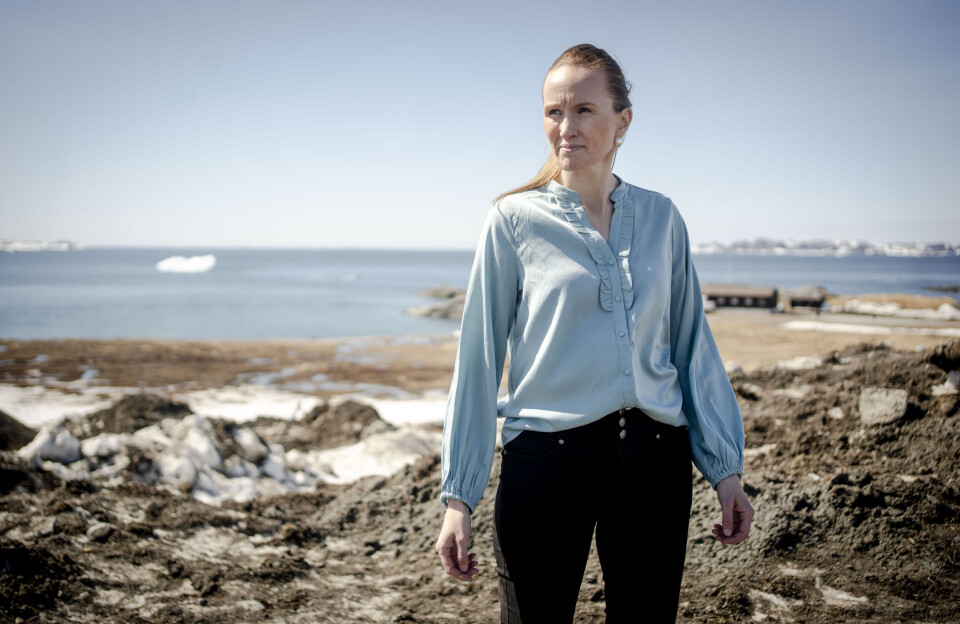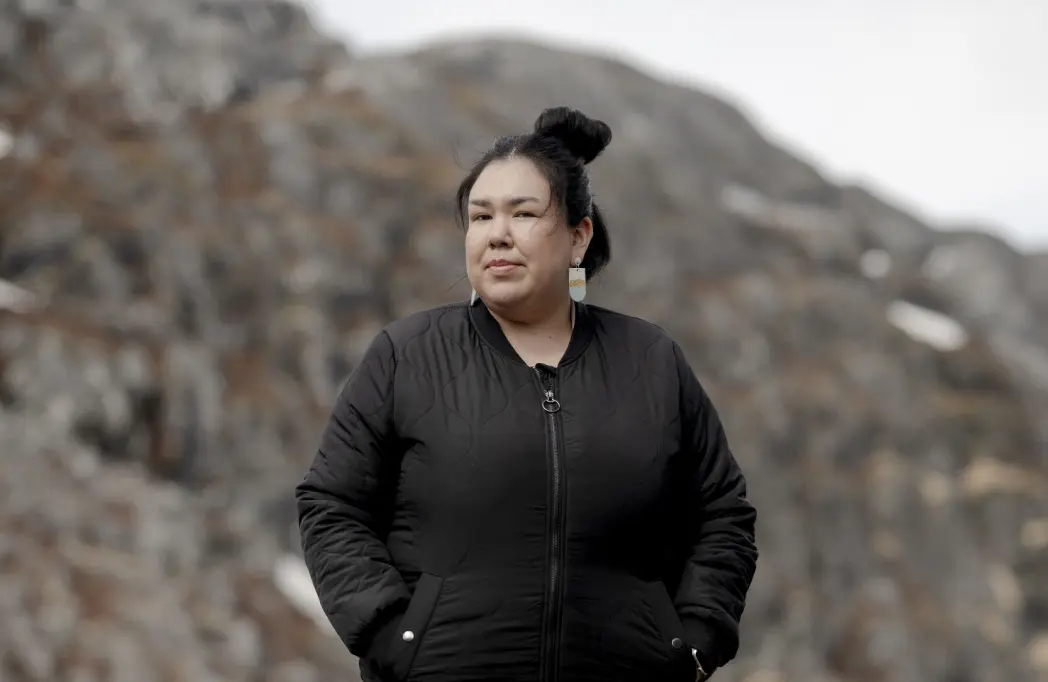


The door to KNR’s large Toyota slams shut, and Sikkersoq Rosing Karlsen settles into the passenger seat.
On her lap she has her bag with a small clip-on microphone, an iPhone, an external internet connection, adapters and various cables.
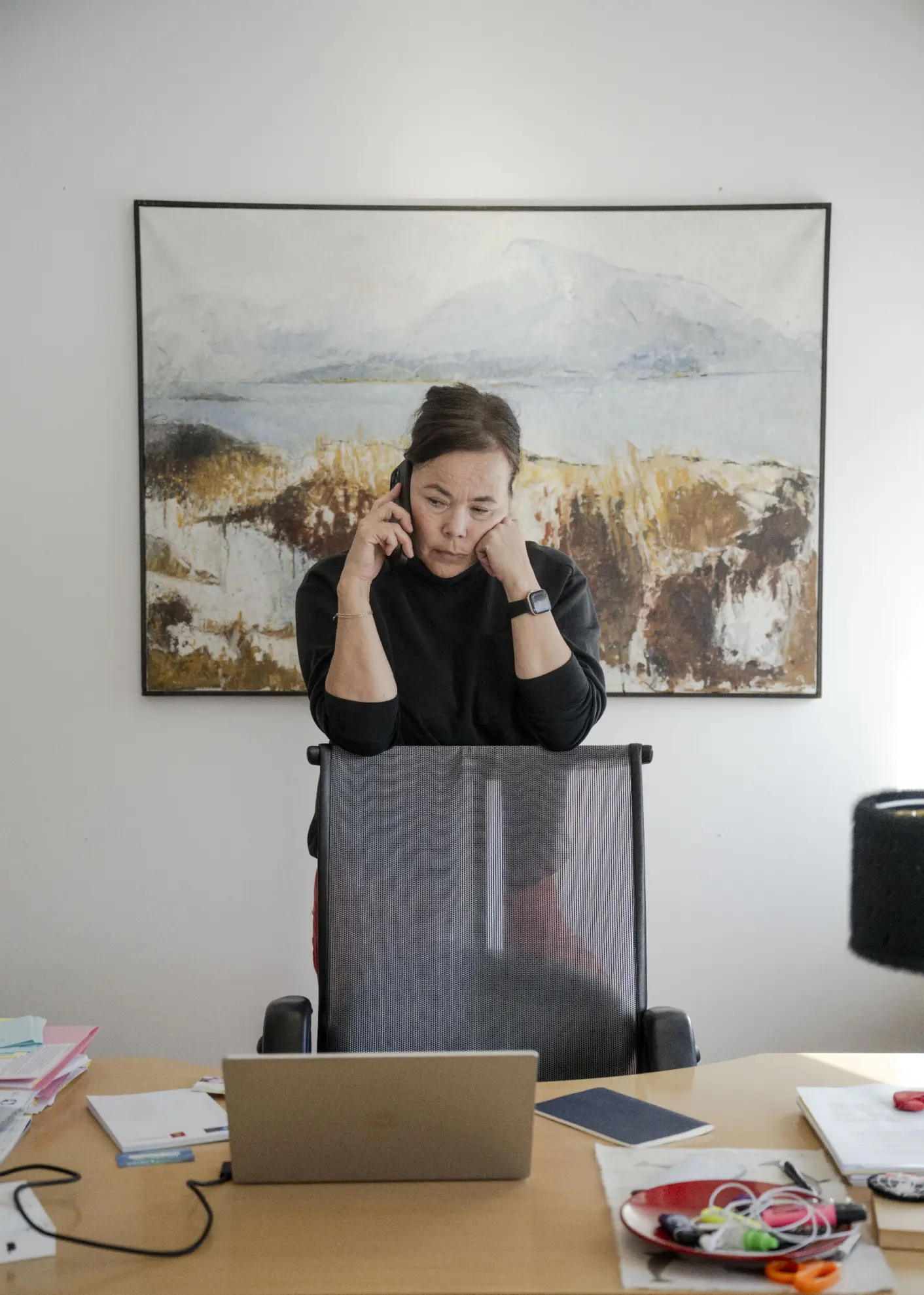
Sikkersoq Rosing Karlsen is a SoMe journalist at KNR, where she produces video stories for the media’s social platforms daily. In addition, she is also the one who broadcasts live on Facebook to KNR’s 33,000 followers when big and important events happen.
The day Sermitsiaq meets her, she is on her way to the center of Nuuk, where there will be a demonstration against the current time zone, which has been in place since March 2023, at noon.
If many people show up, Sikkersoq Rosing Karlsen will broadcast live. If not, she will collect enough material to make a reel (a short, edited video format, ed.) for Instagram and TikTok.
- I don't know how many people will show up. Many people are at work, she says, looking down at her phone.
KNR started creating content for Instagram in March last year. Six months later, the media outlet also got a TikTok profile. It was Sikkersoq Rosing Karlsen who helped start it all from scratch. Today, it is especially on the TikTok platform that many people go in and watch the videos she posts.
- We get the most viewers when I've been out in real life to film and talk to people, she says, adding:
- And they love drama too.
In the car, she scrolls down through the comments section of a video she made the week before about the new alcohol regulations. 21,700 have watched it.
She laughs. Some have commented with memes and GIFs.
- It's so funny. Oh my god, she says.
The Toyota finally arrives at the Amisut sculpture in the city center, and she jumps out of the car. It's dripping a little from above.
Sikkersoq Rosing Karlsen looks around. A couple of children are playing on the sculpture, but otherwise there are no people so far.
Bubble Struggle and Facebook
Sikkersoq Rosing Karlsen was born on May 23, 1997 in Nuuk. The following year, the family moved to Kangaatsiaq, but they returned to Nuuk after two years, where they have lived ever since.
In 2001, her mother and father divorced. It is limited how much contact Sikkersoq Rosing Karlsen has had with her biological father. Four years later, her mother met him, whom Sikkersoq Rosing Karlsen and her two younger siblings today call ataata.
Sikkersoq Rosing Karlsen was a very shy child, and she didn't say much around other people. Neither at coffee breaks with the family nor at school. She remembers crying on her first day of school at Atuarfik Samuel Kleinschmidt (ASK).
- When we were called in for homeroom discussions, the teacher always said that I was too quiet and didn't raise my hand in class, she says.
She had few friends – but they were close.
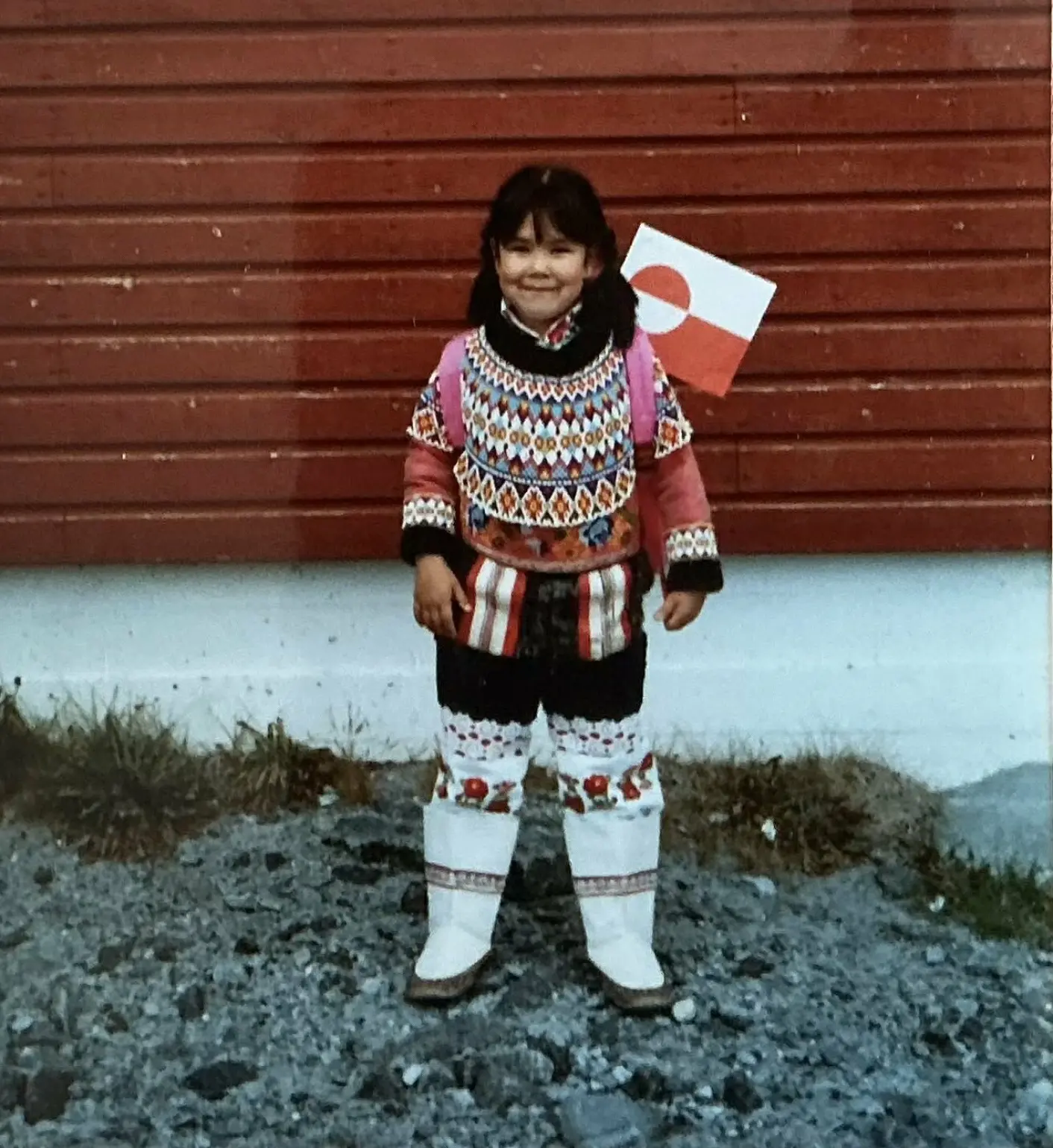
Technology and the internet were something that Sikkersoq Rosing Karlsen – like many others from her generation – was slowly introduced to as she grew older.
When she was seven years old, she got her very first mobile phone. A Nokia, which she used for nothing but to get in touch with her mother.
A little later, in the late 00s, she started listening a lot to music from the rap group Prussic. With a pair of large earphones around her ears, she could sit for long periods at the large desktop computer at home with her mother and father and listen.
- I was a big fan back then, she says.
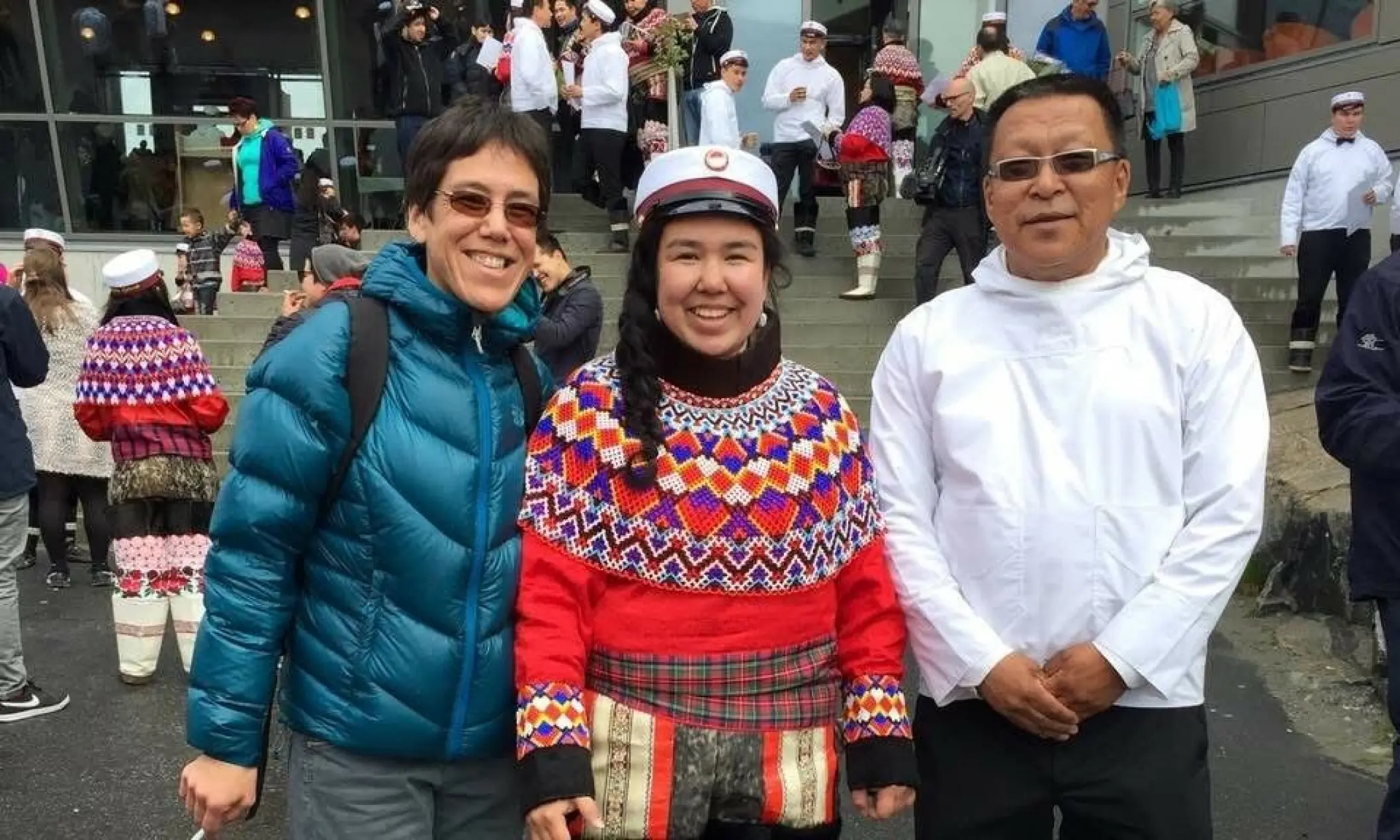
Facebook and online games were the very first encounter she had with the internet. She played Bubble Struggle with her friends in the school library, and once a day – because that’s what the internet connection was capable of – she went on Facebook at home.
- We mostly posted on each other’s walls, she remembers.
It was also on Facebook that many years later – at the age of 19 – she began writing with her current boyfriend and the father of her daughter.
When you were a child and growing up, did you imagine that you would end up working in journalism – and with social media?
- No. I didn’t think about that at all – at all, she replies.
The journalism study pushed boundaries
At 11:33, former Naleraq politician and influencer Qupanuk Olsen arrives, who has taken the initiative for the demonstration.
Sikkersoq Rosing Karlsen begins by finding her equipment and checking the sound on her small microphone, which she quickly connects to her iPhone.
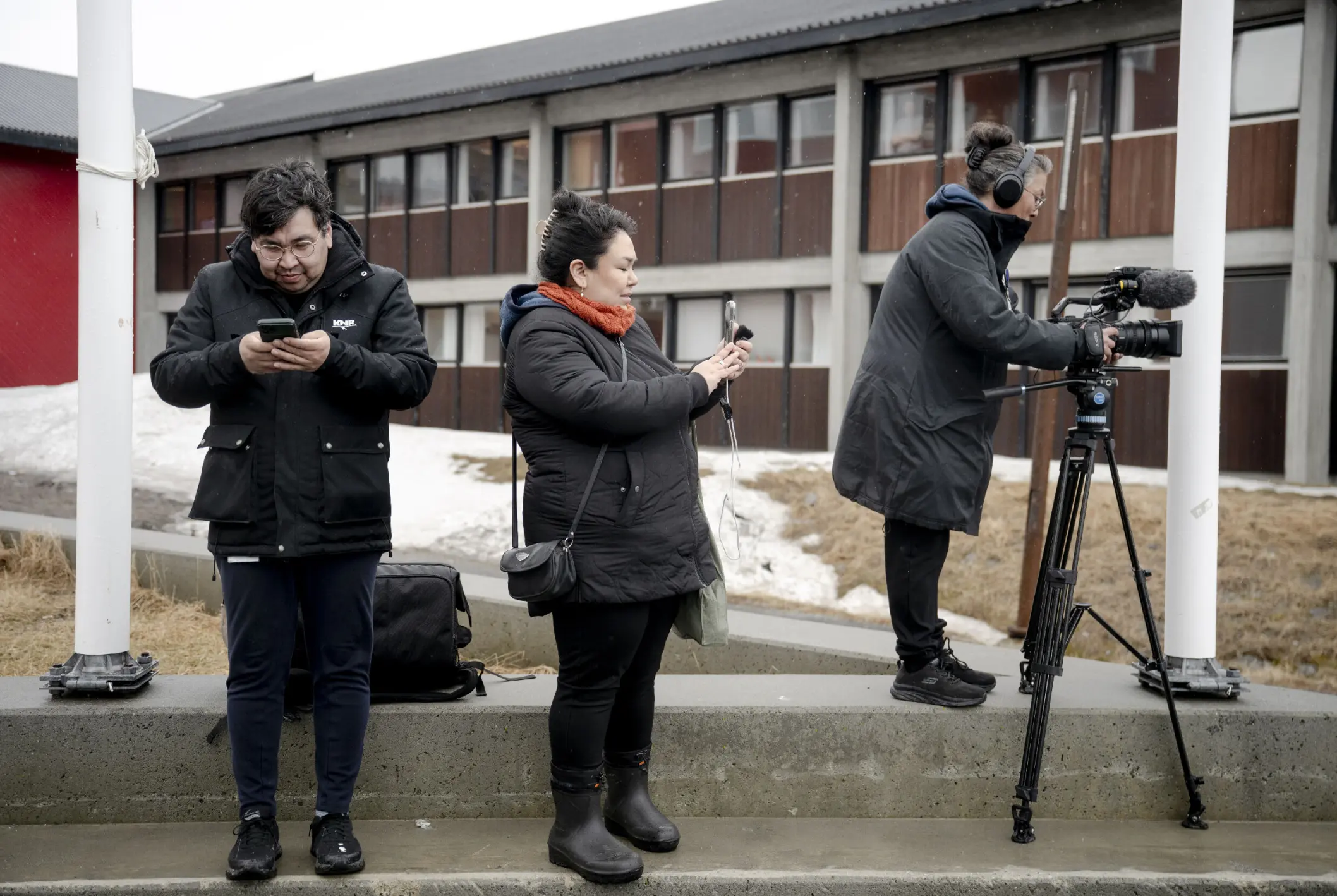
Meanwhile, two others from KNR arrive with microphones and a large camera bag. Because the story about the demonstration will also be published on KNR's other platforms – Qanorooq, radioavisen and knr.gl.
- The more attention the better, comments Qupanuk Olsen.
When the camera and tripod are ready and the interview begins, Sikkersoq Rosing Karlsen stands and films with his iPhone.
A single passerby stops and watches the whole thing from a distance.
When the interview is over, there are ten minutes left until the demonstration is scheduled to start. So far, no one but Qupanuk Olsen and the journalists has shown up. Qupanuk Olsen checks his phone. Sikkersoq Rosing Karlsen films.
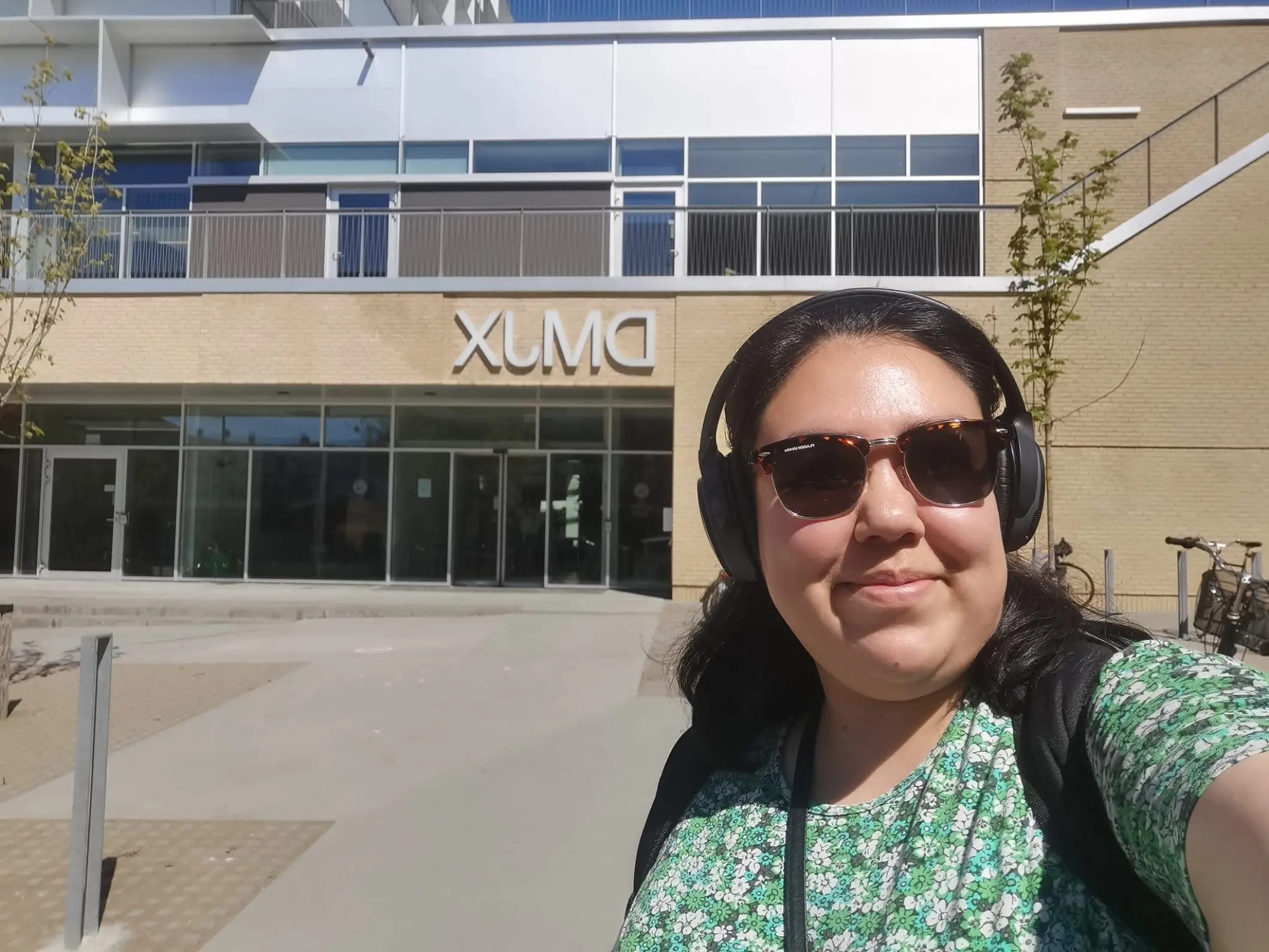
Shyness is something that Sikkersoq Rosing Karlsen felt compelled to grow out of.
She began to open up more and become more outgoing in high school, but it was not until she started the journalism program at Ilisimatusarfik in 2016 that she really learned to let go of the urge to hide away.
- The first time I had to contact sources myself and ask if they wanted to be interviewed was very challenging, she says.
For the first story she had to write in her studies, she had to talk to some of the homeless people who were staying in one of the shelters in Nuuk. She was very nervous beforehand – but the people she spoke to were very calm, she remembers. The further she got with her studies and the more interviews she got, the more confident she became. I learned to think that we are all just people. Even politicians – regardless of our job: we are just people, she says. During her last semester in her studies, she saw that KNR was looking for two SoMe journalists who would help get the media’s news and stories out on social platforms. The position was completely new and it sounded exciting. I would really like to help start it up from scratch, she says.
For Sikkersoq Rosing Karlsen, it also made sense that KNR would like to be present on platforms like Instagram and TikTok.
- Young people in Greenland use social media a lot, and if you want them to follow the news, there are better ways to reach them there, she says.
So she applied for the job, and she was hired together with another journalist. On March 6, they posted their first video on Instagram.
The only SoMe journalist in Greenland
At the Amisut sculpture, the clock strikes 11:57, and finally something happens. An entire school class, it seems, has been dragged along by their teacher. Small groups of other people are also crowding together on the pedestrian street, shrugging off the rain.
With a piece of paper in hand, Qupanuk Olsen stands up and begins to speak. When she finishes, people applaud, and the gathering begins to move down to Inatsisartut.
Sikkersoq Rosing Karlsen, who has been standing still to film the group walking, starts running to follow.
Since December last year, she has been the only one in the position as a SoMe journalist. Since then, it has been Sikkersoq Rosing Karlsen alone who has had to add a voice and face when news has been to be communicated to social media.
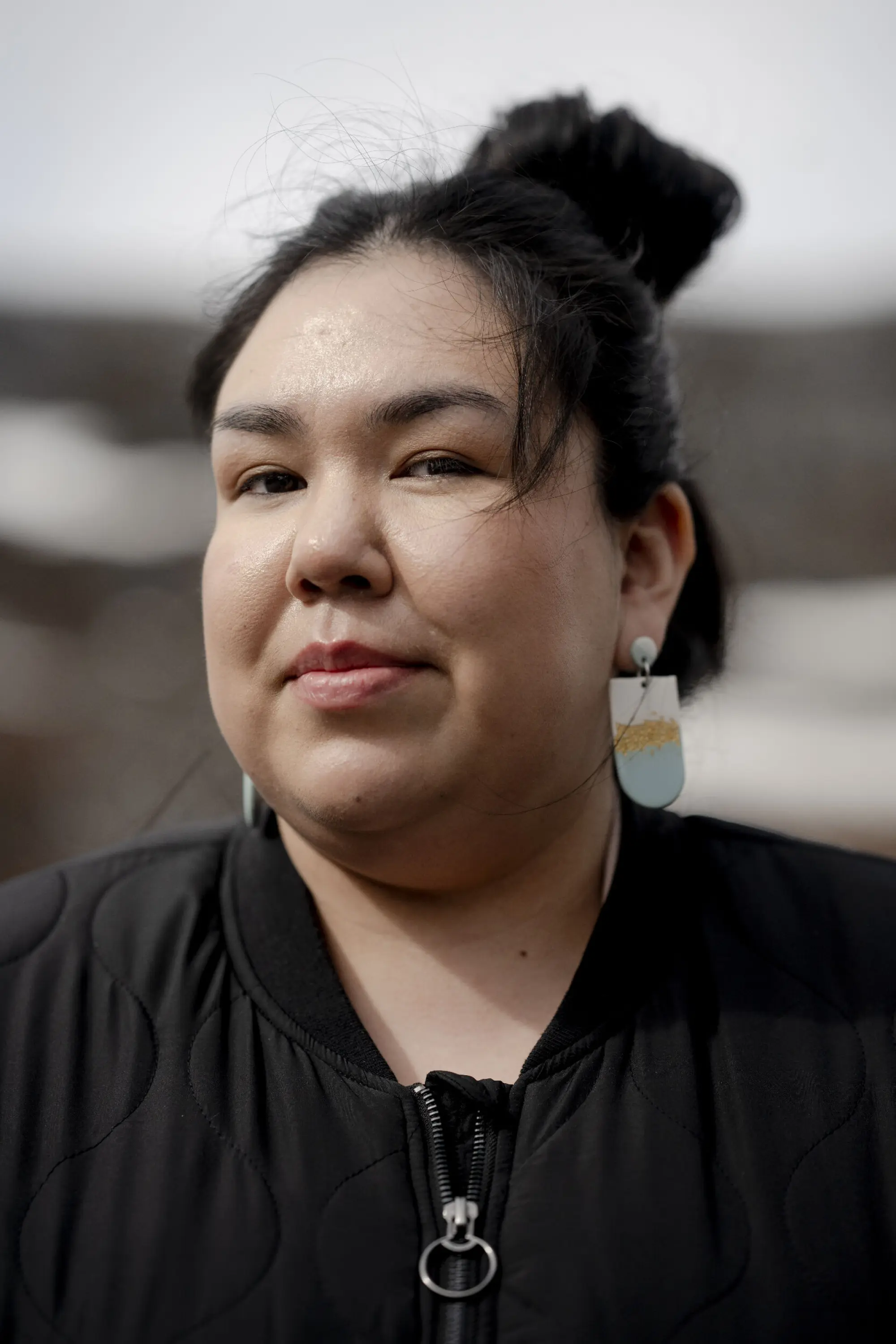
In addition to the posts for TikTok and Instagram, she also often broadcasts live on Facebook when important events happen.
Among others, on January 17, when what seemed like the whole of Nuuk and several other cities – with the world press as witnesses – demonstrated against Trump's plans to take over Greenland.
- I got chills, she remembers.
Since then, Trump's threats have been lurking beneath the surface, while he has been busy with other things. This has made room to tackle other stories, such as today's demonstration.
At Inatsisartut, the politicians step out to meet Qupanuk Olsen and the small group of protesters, spectators and journalists.
While the politicians are sheltering from the rain under the canopy at the entrance to the building, Qanorooq has begun interviewing a single protester who would like to be interviewed. Sure enough, Rosing Karlsen is on the scene with his iPhone again.
Making journalistic stories for social media is an important job, she says, when Sermitsiaq asks.
- You can't avoid SoMe anymore, she adds.
But even though the job is important, fun and exciting, it's also a tough job to be the only SoMe journalist in Greenland.
Sikkersoq Rosing Karlsen has, since she was left alone at the post in December, had to handle most of it herself. She acts as both photographer and reporter when she's out filming for her stories – and at home in the editing room, she is a producer and host.
- It's a big responsibility to bear by yourself, she says.
- I think that's the hardest part; that I can't really talk and work with anyone about the task.
Being one person – or very few – to cover the things that happen in Norway is a condition that the country's journalists and media professionals have long had to live with.
In KNR's news department, where Sikkersoq Rosing Karlsen currently works on her features, her colleagues have to deliver features to Qanorooq daily.
According to Sikkersoq Rosing Karlsen, this task rests, at the time of writing, on three journalists, three editors and three technicians.
- It's very, very stressful, she says.
Dreaming of a colleague
Half an hour has passed with political speeches and sporadic booing, and the wind has gradually picked up outside the Inatsisart building. Most of those present have pulled their hoods up over their heads.
Sikkersoq Rosing Karlsen tries to shake off some heat in her bare fingers.
- I forgot my touch gloves, she explains.
The demonstration is over at 12:30. The school class has long since left, and the remaining protesters are breaking up. Sikkersoq Rosing Karlsen tries at the last minute to catch someone for a short comment, but she fails.
- The weather is bad, people want to go in, so I understand, she says.
Now she herself will return to KNR and make a feature from the day.
For those who are active on one of the three social platforms – Facebook, TikTok or Instagram – Sikkersoq Rosing Karlsen has become the face of KNR. A reality that seems light years away from the shy little girl who cried on the first day of school.
What was it like seeing your own face on TikTok and Instagram for the first time?
- It was so strange to see myself on the screen, she replies.
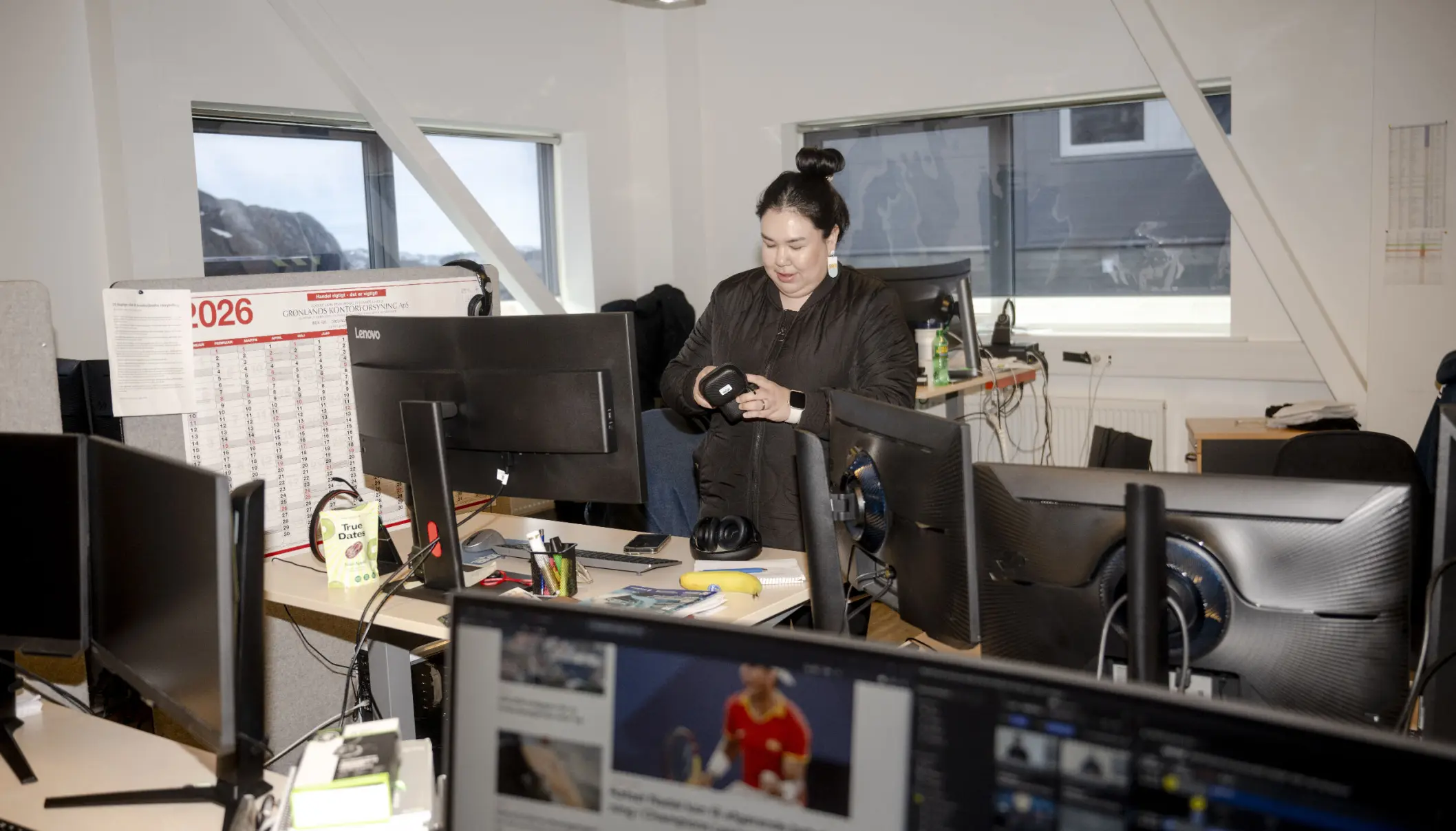
But she quickly got used to it. And besides the fact that she occasionally gets the feeling that people recognize her when she goes shopping, her prominent role is not something she thinks about any further.
On the other hand, she dreams, both for herself and for her industry, of much better conditions. In addition to a hope of getting a new colleague to share the SoMe opportunity with, she has a feeling that she can do much more to create great content for social media if she is allowed and has the means to do so.
Also from places other than the capital.
- I hope that in ten years we journalists will be able to travel more often to the other towns and settlements, and tell the stories that they have there – because that is important, she says.
- Greenland is not just Nuuk.
Abonnementer
Sermitsiaq.gl - web artikler
- Adgang til alle artikler på Sermitsiaq.gl
- Pr. måned kr. 59.00
- Pr. år kr. 650.00
Sermitsiaq - E-avis
- Adgang til Sermitsiaq e-avis som udkommer hver fredag
- Adgang til alle artikler på Sermitsiaq.gl
- Pris pr. måned kr. 191
- Pris pr. år kr. 1.677
AG - Atuagagdliutit E-avis
- Adgang til AG - Atuagagdliutit e-avis som udkommer hver fredag
- Adgang til alle artikler på Sermitsiaq.gl
- Pris pr. måned kr. 191
- Pris pr. år kr. 1.677
Sermitsiaq.AG+
- Adgang til AG - Atuagagdliutit e-avis som udkommer hver fredag
- Adgang til Sermitsiaq e-avis som udkommer hver fredag
- Adgang til alle artikler på Sermitsiaq.gl
- Adgang til Arnanut e-magasin
- Adgang til Nutserisoq.gl
- Ved interesse send en mail til abonnement@sermitsiaq.gl
Kære Læser, Velkommen til Sermitsiaq.gl – din kilde til nyheder og kritisk journalistik fra Grønland. For at kunne fortsætte vores vigtige arbejde med at fremme den frie presse og levere dybdegående, kritisk journalistik, har vi indført betaling for udvalgte artikler. Dette tiltag hjælper os med at sikre kvaliteten af vores indhold og støtte vores dygtige journalister i deres arbejde med at bringe de vigtigste historier frem i lyset. Du kan få adgang til betalingsartiklerne fra kun kr. 59,- pr. måned. Det er nemt og enkelt at købe adgang – klik nedenfor for at komme i gang og få fuld adgang til vores eksklusive indhold. Tak for din forståelse og støtte. Dit bidrag hjælper os med at fortsætte vores mission om at levere uafhængig og kritisk journalistik til Grønland.