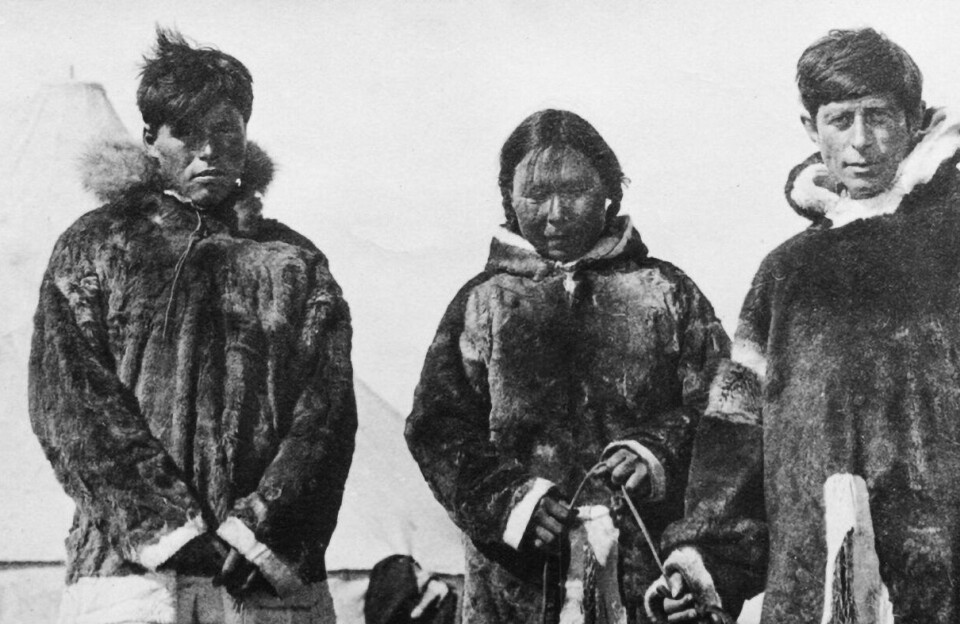
There has been a real surge of interest in Arnarulúnguaq in recent years.
Exhibitions, podcasts, articles and portraits have given new life to the young woman from Thule, who in the early 1920s set out on the Fifth Thule Expedition with, among others, Knud Rasmussen and photographer Leo Hansen. So why another book? What new can Professor Emeritus of Anthropology Kirsten Hastrup add to the story of the woman who neither wrote a diary, nor left letters or notes – and who only appears as a silent echo in Rasmussen's extensive works?
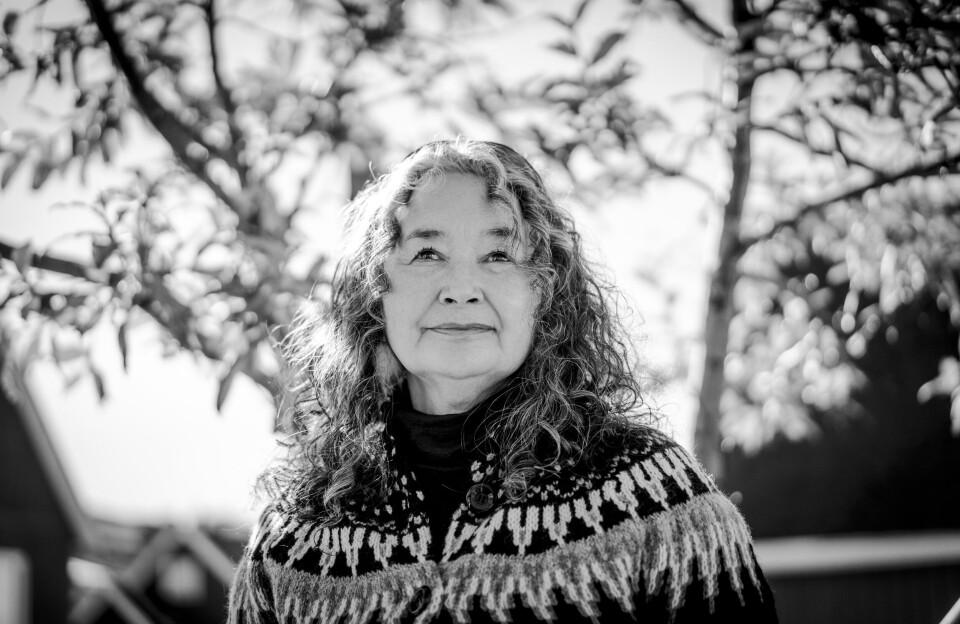
- She left nothing behind, says Kirsten Hastrup, who is currently working on the book “The Little Woman – Arnarulúnguaq and the Great Sledding Journey” – and continues:
- Everything we know comes from the men around her. You have to read Knud Rasmussen very closely to find the little clues – a remark here, a glimpse there. She quickly disappears again in the heavy descriptions of what they did.
The Invisible Women of Thule
In the Thule area at the beginning of the 20th century, women were almost always voiceless. They didn't write diaries, they didn't write letters – they kept the everyday life going. They sewed clothes, looked after the children and made the cooking fires, cooked.
- They were constantly moving, but at the same time invisible, explains Kirsten Hastrup, who has been researching the Arctic region for decades – including the critically acclaimed publication Knud Rasmussen – The Heart of Winter.
According to the experienced professor emerita, there are almost no female testimonies from that time.
- They are a function of everyday life – indispensable, but silent, she says.
Writing a book about a woman like Arnarulúnguaq therefore required patience, perseverance and imagination. The author has read KnudRasmussen and Leo Hansen with a magnifying glass to find the slightest hints of Arnarulúnguaq's personality.
- You can sense her, says Hastrup.
- She is not just the one who sews. She helps build houses, pitch tents, cook – and she becomes completely indispensable to Knud Rasmussen. The two of them are together for a year and a half on their own journey. They become a unit.
Grief, strength and determination
When she set out, Arnarulúnguaq had lost both her brother and her husband. For Hastrup, the expedition is also a story of grief, survival, and perhaps healing.
- Knud Rasmussen thought she should return home, but she refused. She didn't want to go back. That says something about her strength, she says, and continues:
- She grew along the way, listened, learned. When she said something, it was gifted and precise – and the others appreciated her. KnudRasmussen saw her as an equal.
She did not emerge through big words, but through action. Her authority lay in what she did – and that, according to Hastrup, makes her surprisingly modern.
A meeting with the world
When I read about Arnarulúnguaq's journey to the USA and Europe in Hastrup's book, I imagine that the experience must have been like something taken from Crocodile Dundee – the old Hollywood classic where a bushman from Australia is thrown into the bustling metropolis of New York. The same mixture of curiosity and amazement must have characterized Arnarulúnguaq when she suddenly stood in the middle of Western civilization – surrounded by skyscrapers, cars and people in suits.
Kirsten Hastrup acknowledges the comparison, but emphasizes that her interpretation is based on concrete evidence in the texts:
- There is a place in Knud Rasmussen's book where he describes Arnarulúnguaq's experience from a tall skyscraper in New York, says Hastrup.
- She stood there in European clothes, which she was not used to, and looked up at a world that was so different that it was almost incomprehensible. But she did not lose her footing – she took it all in, curiously, calmly.

Subsequently, she and Knud Rasmussen were in Copenhagen for a long time, but she became ill and had to spend almost a year in hospital before she could return to North Greenland.
- You sense that she was going somewhere else – both physically and mentally. She had experienced something that changed her forever. She had become part of a global story – and yet not.
Prisoners in time
Knud Rasmussen described Arnarulúnguaq as a “persistent and wise woman”. In his books one senses respect, but also a distance. He does not write how she felt, only what she did. Hastrup has tried to read between the lines: to find the moments when she stepped out of the shadows.
- There is something touching about the way she participates in the community, says Hastrup.
- She had no children and no husband anymore – she had the time and energy to go along. She was curious and brave. And she knew all the practical things that made it possible for them to survive.
For Hastrup, she represents the silent knowledge that many of the Arctic's women carried within them: the ability to observe, work, remain silent and act.
- There is so much we don't see because they don't say it out loud, she says and concludes:
- But you feel their presence.
Famous for the long sled track
A hundred years later, Arnarulúnguaq has become a symbol of strength. Exhibitions were held about her on the anniversary of the Fifth Thule Expedition, and in 2028 she will grace a new Greenlandic banknote.
- It's fantastic, says Kirsten Hastrup.
- But it is also thought-provoking that she became a cult figure precisely because she was silent. She represents all the women who carried on with their lives without writing themselves into history. That is probably what we reflect on today – the strength of silence.
Arnarulúnguaq said almost nothing. She sewed, pitched tents, kept the fire alive. And yet it is she we remember. Perhaps because her silence became her testimony. She became famous on the long track – or, to put it differently: on the long sledge trail.
Kirsten Hastrup agrees and adds:
- There is something timeless about her. She is both part of an old world and of our own. She is a small person in the big world, but she stands firm. And perhaps that is why she still speaks to us.
Abonnementer
Sermitsiaq.gl - web artikler
- Adgang til alle artikler på Sermitsiaq.gl
- Pr. måned kr. 59.00
- Pr. år kr. 650.00
Sermitsiaq - E-avis
- Adgang til Sermitsiaq e-avis som udkommer hver fredag
- Adgang til alle artikler på Sermitsiaq.gl
- Pris pr. måned kr. 191
- Pris pr. år kr. 1.677
AG - Atuagagdliutit E-avis
- Adgang til AG - Atuagagdliutit e-avis som udkommer hver onsdag
- Adgang til alle artikler på Sermitsiaq.gl
- Pris pr. måned kr. 191
- Pris pr. år kr. 1.677
Sermitsiaq.AG+
- Adgang til AG - Atuagagdliutit e-avis som udkommer hver onsdag
- Adgang til Sermitsiaq e-avis som udkommer hver fredag
- Adgang til alle artikler på Sermitsiaq.gl
- Adgang til Arnanut e-magasin
- Adgang til Nutserisoq.gl
- Ved interesse send en mail til abonnement@sermitsiaq.gl
Kære Læser, Velkommen til Sermitsiaq.gl – din kilde til nyheder og kritisk journalistik fra Grønland. For at kunne fortsætte vores vigtige arbejde med at fremme den frie presse og levere dybdegående, kritisk journalistik, har vi indført betaling for udvalgte artikler. Dette tiltag hjælper os med at sikre kvaliteten af vores indhold og støtte vores dygtige journalister i deres arbejde med at bringe de vigtigste historier frem i lyset. Du kan få adgang til betalingsartiklerne fra kun kr. 59,- pr. måned. Det er nemt og enkelt at købe adgang – klik nedenfor for at komme i gang og få fuld adgang til vores eksklusive indhold. Tak for din forståelse og støtte. Dit bidrag hjælper os med at fortsætte vores mission om at levere uafhængig og kritisk journalistik til Grønland.