Then the anthropologist Kirsten Hastrup in her time wrote Vinterens heart about Knud Rasmussen, she was praised for her ability to connect scientific insight with literary sense.
With "The little female human being - Arnarulúnguaq and The great sledge journey" she returns to the Thule region and to the 5th Thule expedition, which brought Greenland closer a hundred years ago to the attention of the scientific world. This time the focus is on one of the expedition's most notable participants: Arnarulúnguaq.
Then the anthropologist Kirsten Hastrup in her time wrote Vinterens heart about Knud Rasmussen, she was praised for her ability to connect scientific insight with literary sense.
With "The little female human being - Arnarulúnguaq and The great sledge journey" she returns to the Thule region and to the 5th Thule expedition, which brought Greenland closer a hundred years ago to the attention of the scientific world. This time the focus is on one of the expedition's most notable participants: Arnarulúnguaq.
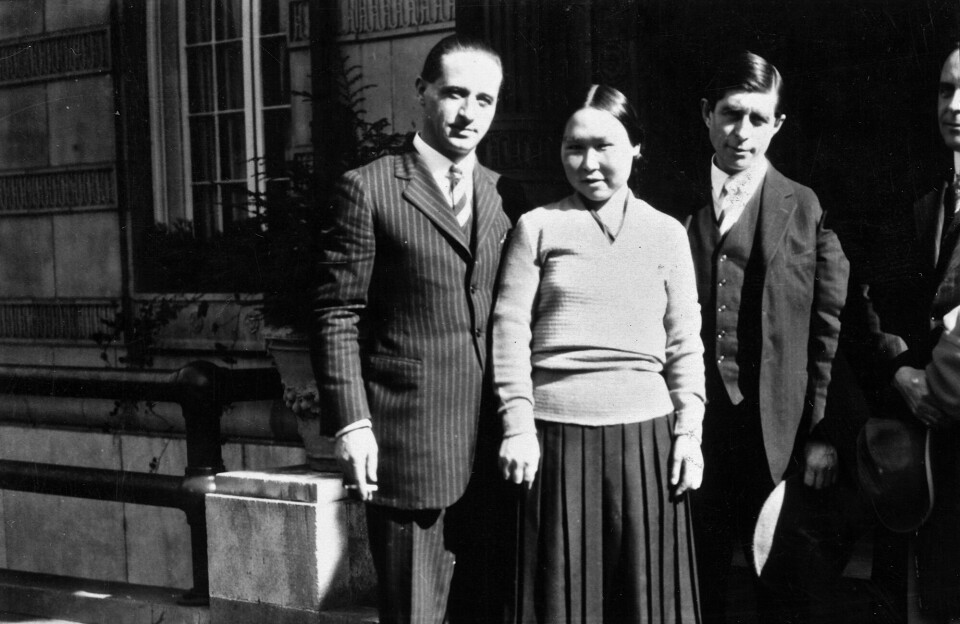
She was only in her twenties when she and Knud Rasmussen embarked on the long journey across the North American continent. a journey, who has since become mythological – not only for his discoveries, but for his rawness human endurance. Today, Arnarulúnguaq stands as an icon in Greenland cultural history: the quiet but indomitable woman who survived everything from storms and hunger for the endless snow.

Expectations for the book are therefore high. Finally one opportunity to get closer to her, the person behind the myth - and maybe get one glimpses of what she thought and felt along the way. But unfortunately that doesn't happen.
Hastrup is knowledgeable, well-considered and respectful, but hers basic problem is the source material. Arnarulúnguaq left no diary, no one letters, no own words. Her voice exists only indirectly – through preference Knud Rasmussen's diaries and partly the expedition's photographer Leo Hansen. The result is that she remains a figure from the outside.
The author tries to leave small scenes and journey stages open the story: we follow the sled team through storms, sickness and frost, and the descriptions of the inhuman hardships of the expedition are excellent. Hastrup writes with both a sense of geography and of human relationships extreme climate. But precisely because it is Knud's and Leo's gaze that we see all the time through, Arnarulúnguaq disappears as an independent human being.

Where the book stands strongest is in its presentation of the context: how Greenlandic participants like Arnarulúnguaq and her cousin Qaavigarssuaq himself was shaped by a life in the Arctic and thus had prerequisites to survive where others had to give up. Hastrup convincingly shows how the two brought practical know-how and local knowledge, which became decisive for the success of the expedition - and at the same time she reveals how little that time recognized the role of women in the whole.
When the expedition reaches New York and Copenhagen, aner one a new dimension: the meeting between Thule and the West, between an Inuit understanding of the world and the modernity of the big city. Here you are seriously missing out Arnarulúnguaq's voice. What was she thinking as she stood in the midst of all this strangeness? What did she feel when she returned home? We will never know - and the book can't invent what she didn't leave behind.
In return, Hastrup succeeds in giving Arnarulúnguaq a kind justice. She places her in the story as a central player, not just one helps. She shows that without Arnarulúnguaq, Knud Rasmussen's expedition would hardly have been possible became the legendary success we know today.

As a reader, you are therefore left with a double feeling: admiration for the author's insight and communication skills - and disappointment at the inevitable absence of Arnarulúnguaq's own voice. The small Woman Man thus becomes a book that both honors and misses its subject.
If one wants to understand the 5th Thule Expedition, its geography, difficulties and the people who endured them is Hastrup's book one excellent introduction. But if you hope to get closer to the enigmatic woman who pulled her sled through the snow - and with humble stubbornness signed in in Greenland's history – one must still be content with other people's words.
Abonnementer
Sermitsiaq.gl - web artikler
- Adgang til alle artikler på Sermitsiaq.gl
- Pr. måned kr. 59.00
- Pr. år kr. 650.00
Sermitsiaq - E-avis
- Adgang til Sermitsiaq e-avis som udkommer hver fredag
- Adgang til alle artikler på Sermitsiaq.gl
- Pris pr. måned kr. 191
- Pris pr. år kr. 1.677
AG - Atuagagdliutit E-avis
- Adgang til AG - Atuagagdliutit e-avis som udkommer hver onsdag
- Adgang til alle artikler på Sermitsiaq.gl
- Pris pr. måned kr. 191
- Pris pr. år kr. 1.677
Sermitsiaq.AG+
- Adgang til AG - Atuagagdliutit e-avis som udkommer hver onsdag
- Adgang til Sermitsiaq e-avis som udkommer hver fredag
- Adgang til alle artikler på Sermitsiaq.gl
- Adgang til Arnanut e-magasin
- Adgang til Nutserisoq.gl
- Ved interesse send en mail til abonnement@sermitsiaq.gl
Kære Læser, Velkommen til Sermitsiaq.gl – din kilde til nyheder og kritisk journalistik fra Grønland. For at kunne fortsætte vores vigtige arbejde med at fremme den frie presse og levere dybdegående, kritisk journalistik, har vi indført betaling for udvalgte artikler. Dette tiltag hjælper os med at sikre kvaliteten af vores indhold og støtte vores dygtige journalister i deres arbejde med at bringe de vigtigste historier frem i lyset. Du kan få adgang til betalingsartiklerne fra kun kr. 59,- pr. måned. Det er nemt og enkelt at købe adgang – klik nedenfor for at komme i gang og få fuld adgang til vores eksklusive indhold. Tak for din forståelse og støtte. Dit bidrag hjælper os med at fortsætte vores mission om at levere uafhængig og kritisk journalistik til Grønland.