When the national anthem is to be sung, sometimes the song “Nunarput utoqqarsuangoravit” (Our ancient land, ed.) written by Henrik Lund is sung.
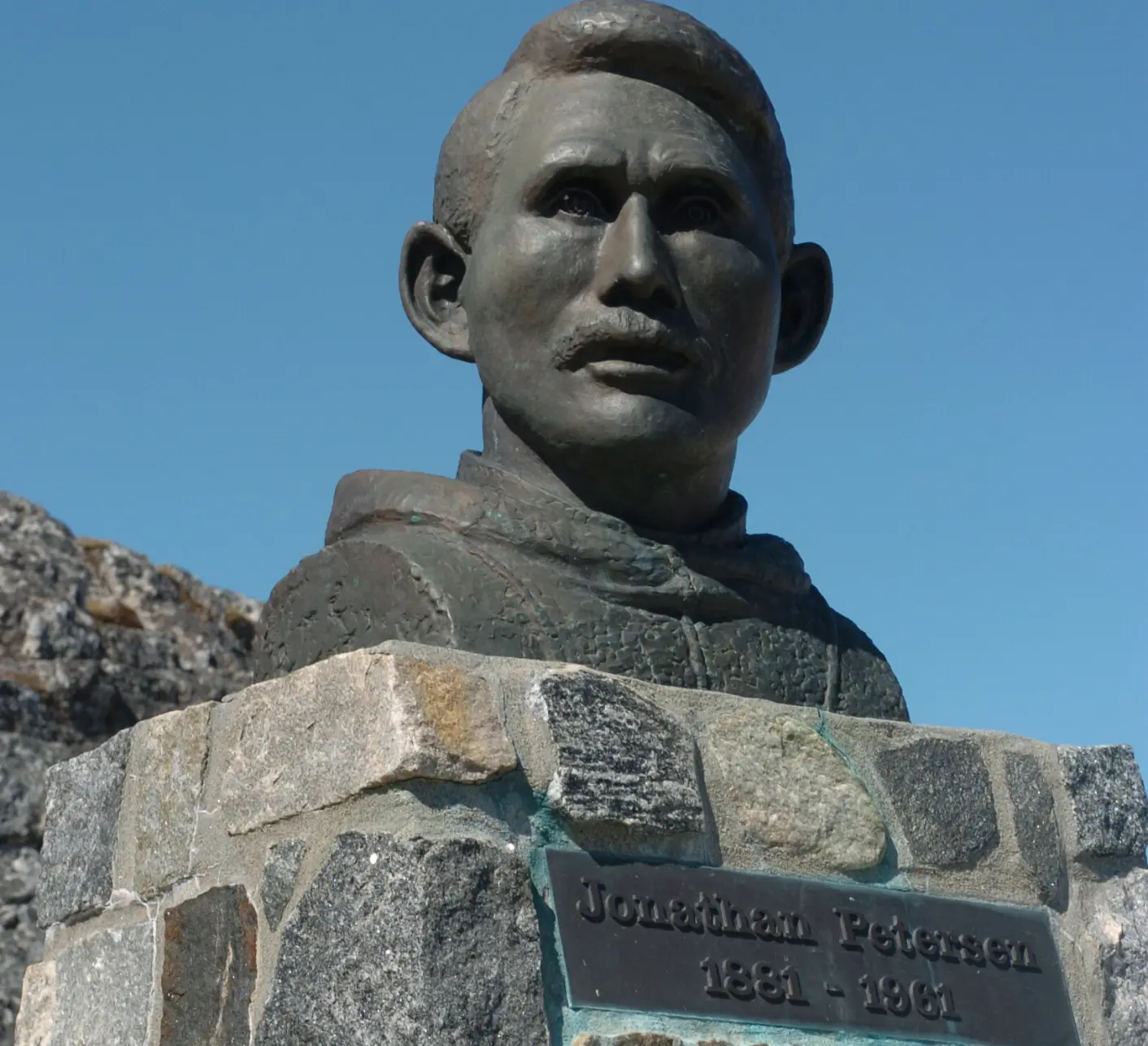
Other times it is “Nuna asiilasooq” (A huge rocky land, ed.) by Jonathan Petersen.
And it's a mess, says the chairman of the Atassut party, Aqqalu Jerimiassen, who, among other things, has noticed that "Nuna asiilasooq" was played at a handball match, even though the Greenland Sports Association normally uses "Nunarput utoqqarsuangoravit".
He has therefore brought the issue of Greenland's national anthem up for discussion in Inatsisartut.
- In a time like now, when the USA is trying to take our country, it is important to be united around our national symbols - and have a common national anthem, he says.
The two songs have been competing for the title of national anthem since sometime in the 1970s - in the years leading up to the introduction of Home Rule in 1979. But the debate about the national anthem goes back even further and involves an avid linguist, a forgotten melody and two Nordic national anthems.
You old, you free and a lovely land
The two national anthems were both composed in 1910, while the two poets were in Denmark. Henrik Lund was wintering after being sent as a catechist (assistant priest/teacher) to East Greenland. Jonathan Petersen studied to be an organist at the Royal Danish Academy of Music in Copenhagen. Lund did not complete his poem until 1912, but according to cultural researcher Karen Langgård, the first verse of the song was found in a notebook from 1910.
In addition to the year, the two songs have in common that they were written using other national anthems as a model. Lund's “Nunarput utoqqarsuanngoravit” is written to the melody of the Swedish national anthem “Du gamla, du fria, du fjällhöga nord”, while Petersen's “Nuna asiilasooq” is written to “Der er et yndigt land”, which can be sensed, among other things, by the repetition of the third line.
Jonathan Petersen later composed melodies for both songs: “Nuna asiilasooq” in 1920, “Nunarput utoqqarsuanngoravit” in 1933.
The poet and the composer
Henrik Lund and Jonathan Petersen are two important names in cultural history. Both graduated from the seminary in Nuuk. Lund was later ordained a priest and served on the South Greenland Council in 1923-32. Petersen was trained as an organist and worked as an organist in Nuuk, while also being employed as a teacher at the seminary.
Together they set out to write the first patriotic songs. Jonathan Petersen has told in the newspaper Avangnâmioĸ how the seminary's director had told him that Greenlanders obviously did not have patriotism, since they did not have patriotic songs. Together with Lund, he initiated an extensive production of patriotic songs in response. Today, it would not be entirely out of place to call Henrik Lund Greenland's national poet and Jonathan Petersen the national composer, even though this has never been an official fact.
Debate about the future
When Henrik Lund wrote "Nunarput utoqqarsuanngoravit", he did not intend for it to become Greenland's national anthem. According to a letter to the editor in Atuagagdliutit from 1949 written by national council member Frederik Lynge, Henrik Lund has explained that it was really not his intention for it to be the national anthem, but that others had used it that way. On the other hand, the song was written as a contribution to the social debate, where newspaper columns were eagerly discussing the future of Greenland in the period 1919-1920.
In the verses, Henrik Lund calls the Greenlanders children of the country - in contrast to children of Denmark, as they were often called at the time. He urged his compatriots to follow what was happening outside Greenland, and to drop all restraint and believe in themselves.
“Kalaallit, siumut makigitsi!” (Greenlandic people, get up and go forward!, ed.), he writes.
Whether Jonathan Petersen had a dream that “Nuna asiilasooq” should be the national anthem is more difficult to determine. The choice of melody points in that direction. The same goes for the title, which could sound like a paraphrase of “There is a beautiful land” to “(There is) a wonderful land”, and here and there in the text, the inspiration from the Danish national anthem shines through, for example in the line “Kalaallimmi pigaat soraajuerlutik” (“from now on and forever it is the land of the Greenlanders”, ed.), which could be reminiscent of “And old Denmark will endure”.
The case in The Hague
None of the national anthems has ever been officially designated. When “Nunarput utoqqarsuanngoravit” first became the national anthem, it was primarily due to the linguistic and cultural researcher William Thalbitzer, who was a professor of Eskimo at the University of Copenhagen (today: Greenlandic and Arctic Studies, ed.).
Thalbitzer was very interested in Henrik Lund's song, which he translated into Danish in several different versions, and as early as 1917 in an article in the magazine Ymer he designated it as "the Greenlanders' national anthem to the melody of the Swedish one". However, the idea only really took hold after Politiken in 1933 published an article about the national anthem written by Thalbitzer with his translation of Lund's verses. The occasion was that two days earlier a verdict had been given in the case in The Hague.
For two years, Norway and Denmark had been fighting a nerve-wracking legal battle over the right to the part of East Greenland that the Norwegians had annexed and named Eirik Raude's Land. When the verdict was handed down on April 5, and Denmark was granted full sovereignty over Greenland, it took up almost all of the space in the newspapers.
In the article, Thalbitzer describes how the national anthem rang out over both East and West Greenland to mark the joy of the verdict. It should be noted in parentheses that he could not have witnessed this, as he was not in Greenland in 1933. Nevertheless, the Danish newspapers adopted the term, and in the years that followed, there are several examples of “Nunarput utoqqarsuanngoravit” being referred to in Denmark as the Greenlandic national anthem.
It was also performed several times, including at the 25th anniversary of King Christian X's reign in 1937, where it was also printed in a songbook along with the national anthems of the Faroe Islands and Iceland.
Meager and pitiful
In Greenland, people were a bit reserved. In Atuagagdliutit, editor Kristoffer Lynge wrote in 1933: “Nunarput utoqqarsuanngoravit is considered to be the Greenlandic national anthem, and it is especially interpreted as such when it is published in translation in Denmark.”
Not everyone was equally enthusiastic about the fact that this particular song had been proclaimed the national anthem of Greenland. In Avangnâmioĸ in 1936, two employees of the bailiff of North Greenland, Peter Dalager and Peter Nielsen - both of whom were later elected to the Landsrådet - write that the song's content is far too poor to be a national anthem, and that it is "pitiful" that the song was written with the Swedish national anthem as a model.
The forgotten melody
In Denmark, composer Kristen Steensen, who was a music teacher at Jonstrup Statsseminarium, read a newspaper article about the national anthem, and he thought it was a shame that it did not have its own melody. Therefore, he composed a new melody for the song, which was published in Atuagagdliutit in 1933. Lund himself thanked in the article for the melody and recommended that it be used in the future, but the melody never caught on. Jonathan Petersen's, which was also written in 1933, did, however. In an article in Atuagagdliutit a few years later, Petersen explained that he thought the melody should have been composed by a Greenlander.
After a somewhat shaky start, "Nunarput utoqqarsuanngoravit" began to gain traction in Greenland - and was especially used during the Second World War.
Criticism of the national anthem never ceased, however. A national anthem should pay tribute to the country, not flatter the population, stated regional council member Frederik Lynge in a letter to the editor in Avangnâmioĸ in 1949. The metaphor "the children of the country" is un-Greenlandic, according to the author and artist Hans Lynge in Tidsskriftet Grønland in 1954.
"Like middle children"
When Lund's text has been criticized again and again, it is connected with the traces of cultural stage thinking that can be traced in the verses. The idea that different cultures are at different stages of development. “Akullequtaasutut merlertutut ilinni perortugut tamaani”, writes Lund. Directly translated, it means: “We, who grew up with you as middle children”. In Thalbitzer's translation, it became: “As immature children, we are the fruit of your soil”. In his 1985 translation (the one found in the College Songbook, ed.) the priest Mads Lidegaard tried to smooth things out a bit by changing the word immature to semi-adults, but it is still not quite good. “Inersimalersut ingerlanerat tungaalitsiterusuleqaarput” writes Lund. (“We have begun to strive for the progress of the mature ones”, ed.).
Lund tried to instill greater faith in his countrymen. According to cultural researcher Karen Langgård, the last verse of the song was most likely written as a reply to W. Dreyer's book, Naturfolkenes liv, which Knud Rasmussen had translated into Greenlandic and published under the title, Silarsuarmiulersaarutit, in 1912.
Lund agreed with Rasmussen as far as the Greenlanders should develop. But he did not place Denmark as the one responsible for this development - rather the Greenlanders themselves.
Kalaallit Nunaat - Kalaallit pigaat
The second national anthem, “Nuna asiilasooq”, first gained ground as a much-loved patriotic song around the same time that “Nunarput utaqqarsunanngoravit” began to be used as the national anthem. But in the years leading up to the introduction of Home Rule in 1979, “Nuna asiilasooq” also began to be used as a national anthem. The last lines of the song, “Kalaallimmi pigaat soraajuerlutik!”, which emphasize the Greenlanders’ right to the land, were quoted again and again, including on the front page of a party newspaper for Siumut.
However, it was Atassut, in an attempt to make his mark on the new national symbolism, who made the first political proposal to make the song the national anthem. Despite a newspaper vote, the establishment of a national anthem committee, and a composer’s competition, the matter never came to a conclusion.
At the first celebration of Greenland's newly introduced National Day in 1985, when the newly designed flag Erfalasorput was raised for the first time, “Nunarput utaqqarsuanngoravit” was sung as the national anthem right after the flag raising, and “Nuna asiilasooq” as the common song, and on official occasions there has been a tendency ever since for “Nunarput utoqqarsuanngoravit” to be preferred.
But it was “Nuna asiilasooq” that Aviaja Lumholt sang in front of the US embassy during the demonstration on 17 January this year, where the slogan “Kalaallit Nunaat - Kalaallit pigaat!” (Greenland belongs to the Greenlanders, ed.) was subsequently shouted as an echo of the song's last lines.
Referendum on the national anthem
The issue of Greenland's national anthem has been discussed in the Inatsisartut a total of seven times, before it was determined in 2017 that "a decision on the national anthem shall arise from the population's use and customs of the songs."
But that non-decision no longer holds, believes Atassut's chairman, Aqqalu Jerimiassen. Although he grew up with an experience of "Nunarput utaaqqarsuanngoravit" as the right national anthem, he prefers both the lyrics and the melody of "Nuna asiilasooq."
"It is about our country and our people, so I think it is more beautiful. But in reality I would probably prefer a third song," he says, suggesting that another composer's competition be held where musicians and poets could submit proposals for a new national anthem or new lyrics for one of the existing ones.
He suggests that the text for a new national anthem could reflect the languages primarily spoken: Kalaallisut (West Greenlandic, ed.), Inuktun (North Greenlandic, ed.), iivi oraasia (East Greenlandic, ed.) and Danish.
Naalakkersuisut is not opposed to Aqqalu Jerimiassen's proposal. Naalakkersuisut for Culture, Nivi Olsen, in her response note, floats the idea of a referendum where the population can choose between the two existing national anthems or a third one.
- Such a process would ensure democratic legitimacy and give the population an active role in a decision that has great symbolic significance for the country's identity and for nation building, the response note states.
Abonnementer
Sermitsiaq.gl - web artikler
- Adgang til alle artikler på Sermitsiaq.gl
- Pr. måned kr. 59.00
- Pr. år kr. 650.00
Sermitsiaq - E-avis
- Adgang til Sermitsiaq e-avis som udkommer hver fredag
- Adgang til alle artikler på Sermitsiaq.gl
- Pris pr. måned kr. 191
- Pris pr. år kr. 1.677
AG - Atuagagdliutit E-avis
- Adgang til AG - Atuagagdliutit e-avis som udkommer hver onsdag
- Adgang til alle artikler på Sermitsiaq.gl
- Pris pr. måned kr. 191
- Pris pr. år kr. 1.677
Sermitsiaq.AG+
- Adgang til AG - Atuagagdliutit e-avis som udkommer hver onsdag
- Adgang til Sermitsiaq e-avis som udkommer hver fredag
- Adgang til alle artikler på Sermitsiaq.gl
- Adgang til Arnanut e-magasin
- Adgang til Nutserisoq.gl
- Ved interesse send en mail til abonnement@sermitsiaq.gl
Kære Læser, Velkommen til Sermitsiaq.gl – din kilde til nyheder og kritisk journalistik fra Grønland. For at kunne fortsætte vores vigtige arbejde med at fremme den frie presse og levere dybdegående, kritisk journalistik, har vi indført betaling for udvalgte artikler. Dette tiltag hjælper os med at sikre kvaliteten af vores indhold og støtte vores dygtige journalister i deres arbejde med at bringe de vigtigste historier frem i lyset. Du kan få adgang til betalingsartiklerne fra kun kr. 59,- pr. måned. Det er nemt og enkelt at købe adgang – klik nedenfor for at komme i gang og få fuld adgang til vores eksklusive indhold. Tak for din forståelse og støtte. Dit bidrag hjælper os med at fortsætte vores mission om at levere uafhængig og kritisk journalistik til Grønland.