
The Economic Council's report for the first half of 2025 documents that urbanization and regional inequality are driven by strong economic forces, and that it is not realistic to create the same opportunities in all municipalities and settlements.
“Urbanization is a condition that also applies in Greenland,” is the main message in the report’s section on settlement and regional conditions.
According to the report, the population is increasingly concentrated in the larger cities, especially in Nuuk. This development is related to the structure of the labor market, educational opportunities, and access to health, culture, and public services – conditions that are familiar from virtually all high-income countries.
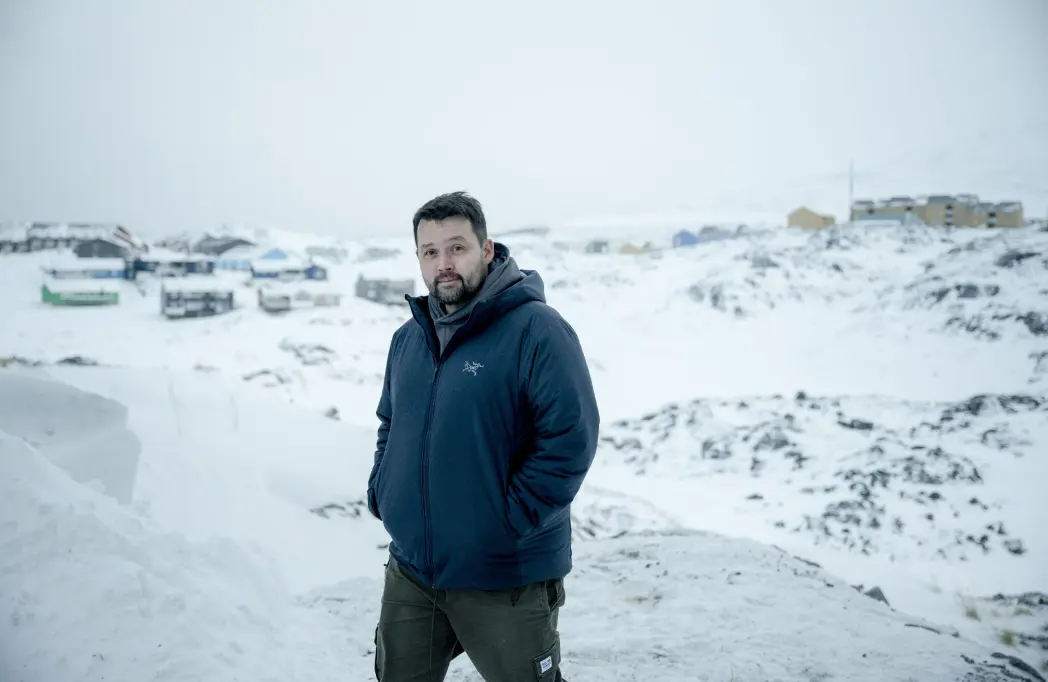
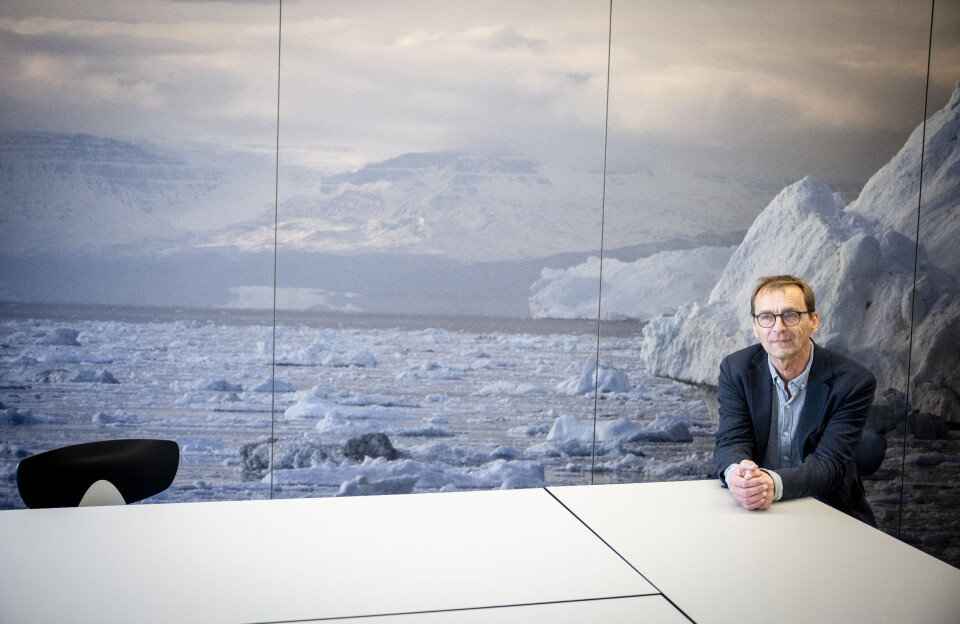
Chairman of the Economic Council, Torben M. Andersen, emphasizes that Greenland's large geography and small population amplify the consequences:
- When you don't have the opportunity to commute between your home and workplace, the differences between municipalities become clearer, and the movement patterns become more important, he says.
Small-scale farming disadvantages are at the heart of inequality
The report points to small-scale farming disadvantages as a main explanation for the geographical inequality, which is also documented in the Naalakkersuisoq for Finance Múte Bourup Egede's (IA) response to Inatsisartut member Anders Olsen (S), where the economic and demographic inequalities are highlighted. The same is stated in the Economic Council's report.
In municipalities and settlements with few inhabitants, the average costs will be high because fixed costs for schools, healthcare, elderly care and utilities must be distributed on a limited population basis.
- It is not the municipal structure itself that creates the problems. The challenge is that small units with few citizens and large distances have higher costs and fewer opportunities, says Torben M. Andersen.
Many municipalities and settlements are vulnerable
The Economic Council's report shows that many settlements – especially the smallest ones – are today both economically and socially vulnerable. Emigration and an unbalanced age composition with more elderly people and fewer economically active people weaken the municipalities' economic carrying capacity.
According to the chairman, vulnerability is closely linked to a lack of business foundations:
- Where fishing and trapping opportunities have dwindled, it is very difficult to develop an alternative business base. This is directly reflected in who moves – and who stays, says Torben M. Andersen.
Business is the prerequisite for development
The report states that the lack of a sustainable business base is the biggest challenge for settlement in many municipalities. Where there is access to fishing, tourism or mining opportunities, there are better conditions for local development. In other places, the opportunities are much more limited.
- It is difficult to discourage relocation if there are no real business opportunities. It is a pattern that is seen globally, says Torben M. Andersen.
Political choices about distribution and responsibility
According to the Economic Council, the solutions are ultimately political. It is about how much you want to redistribute between the municipalities and how the support is structured. The report points out that support should be visible and have an active aim linked to business and employment. Passive schemes can ensure the standard of living, but do not in themselves create development.
- Redistribution is a political decision. The decisive thing is what goals you want to achieve and what responsibility comes with the funds, says the Chairman of the Economic Council.
Centralization and local responsibility
The report also highlights the potential for digitalization and centralization of certain tasks to exploit economies of scale and free up resources. The point is not that everything should be centralized, but that a division of labor can make it possible to support development locally.
- If everything has to be solved locally, it will be very expensive, and the average standard will fall. There is a need for a balance where some tasks are solved centrally, and others close to the citizens, so that the resources are used to create local development and jobs, says Torben M. Andersen, pointing out that local action is crucial:
- Development will not succeed if it is only driven from the top. Municipalities and settlements must take ownership and exploit the opportunities that actually exist locally, he says.
An inevitable political debate
The Economic Council concludes that the current settlement pattern cannot be maintained unchanged and that it is not realistic to offer the same opportunities in all municipalities. According to the Council Chairman, this makes the debate inevitable:
- The question is not whether political decisions should be made, but which ones. It is political choices that determine how development in the municipalities will look in the future, says Torben M. Andersen.
He also points out that tax policy measures can also be used as a tool if one politically wishes to support business development outside the largest cities. The Economic Council has not analyzed specific models, but Torben M. Andersen emphasizes that there is international experience with geographically differentiated tax and subsidy schemes.
- However, with the clear premise that they are designed so that they actually support activity and settlement and are not abused through proforma addresses, he says.
Need for clear priorities
The Greenlandic Government has adopted business policies that point to development potential in other municipalities and outside Nuuk.
- Tourism, raw material extraction and parts of fishing are industries that have their natural weight outside the capital, he says, explaining that the challenge is not a lack of political objectives, but that they are accompanied by clear priorities, responsibility and coherence between business policy, tax policy and the overall distribution between the municipalities.
Abonnementer
Sermitsiaq.gl - web artikler
- Adgang til alle artikler på Sermitsiaq.gl
- Pr. måned kr. 59.00
- Pr. år kr. 650.00
Sermitsiaq - E-avis
- Adgang til Sermitsiaq e-avis som udkommer hver fredag
- Adgang til alle artikler på Sermitsiaq.gl
- Pris pr. måned kr. 191
- Pris pr. år kr. 1.677
AG - Atuagagdliutit E-avis
- Adgang til AG - Atuagagdliutit e-avis som udkommer hver onsdag
- Adgang til alle artikler på Sermitsiaq.gl
- Pris pr. måned kr. 191
- Pris pr. år kr. 1.677
Sermitsiaq.AG+
- Adgang til AG - Atuagagdliutit e-avis som udkommer hver onsdag
- Adgang til Sermitsiaq e-avis som udkommer hver fredag
- Adgang til alle artikler på Sermitsiaq.gl
- Adgang til Arnanut e-magasin
- Adgang til Nutserisoq.gl
- Ved interesse send en mail til abonnement@sermitsiaq.gl
Kære Læser, Velkommen til Sermitsiaq.gl – din kilde til nyheder og kritisk journalistik fra Grønland. For at kunne fortsætte vores vigtige arbejde med at fremme den frie presse og levere dybdegående, kritisk journalistik, har vi indført betaling for udvalgte artikler. Dette tiltag hjælper os med at sikre kvaliteten af vores indhold og støtte vores dygtige journalister i deres arbejde med at bringe de vigtigste historier frem i lyset. Du kan få adgang til betalingsartiklerne fra kun kr. 59,- pr. måned. Det er nemt og enkelt at købe adgang – klik nedenfor for at komme i gang og få fuld adgang til vores eksklusive indhold. Tak for din forståelse og støtte. Dit bidrag hjælper os med at fortsætte vores mission om at levere uafhængig og kritisk journalistik til Grønland.